Ever wonder how the gold standard worked and why we decided to abandon it? That's a great question! Imagine a time when your money had a value directly tied to a precious metal: gold. Together, we'll explore this monetary system, how it shaped our economy, and the reasons that led to its abandonment. Prepare for a journey through the history of finance!
Key Takeaways
- The gold standard tied the value of a currency to a fixed quantity of gold, allowing the convertibility of banknotes into the precious metal.
- This system ensured exchange rate stability between countries and imposed a certain discipline on governments in terms of monetary issuance.
- Major economic crises, such as the Great Depression, and the financial needs of the world wars challenged the flexibility of the gold standard.
- The Bretton Woods agreements attempted to restore a form of stability with the dollar as the pivot, but this system eventually gave way to floating exchange rates.
- Today, gold retains its role as a safe haven and store of value, even though it is no longer directly linked to current currencies.
Gold, a precious metal at the heart of monetary history
The origins of the use of gold
Gold, this rare and brilliant metal, has accompanied humanity since the dawn of time. Its use is believed to date back to the end of prehistory, making it the second most commonly known metal after copper. The oldest gold objects found date from the Varna necropolis in Bulgaria. Originally, gold was mainly used to adorn important people and during religious ceremonies. Its vibrant color, durability, and resistance to corrosion quickly made it a symbol of status and wealth.
Gold as currency and symbol of wealth
Over time, gold transcended its ornamental role to become a preferred medium of exchange. As early as ancient times, the kings of Lydia, around the 8th century BC, minted the first gold coins, marking a key milestone in its monetary history. Its intrinsic value, fungibility (it is interchangeable), and ease of identification contributed to its adoption as currency. Gold has become the benchmark, the standard meter of value. It represented wealth, power, and stability—concepts that have spanned the ages and civilizations. Even when other forms of currency emerged, gold often served as collateral or a store of value.
The Golden Age of the Gold Standard
The gold standard, a system in which the value of a currency is directly linked to a fixed quantity of gold, reached its peak in the 19th and early 20th centuries. Most industrialized countries adopted it, creating a relatively stable exchange rate system worldwide. This period is often seen as a golden age for international monetary stability, facilitating trade and investment. Gold, by its very nature, imposed a certain discipline on governments, limiting their ability to print money excessively and cause inflation. It was a time when confidence in money was strongly anchored in the physical presence of this precious metal.
How the gold standard works
The gold standard is a bit like the monetary system that has proven itself for a long time. Basically, it means that the value of your country's currency is directly linked to a fixed amount of gold. It's as if every bill you have in your hand is a promise that it can be exchanged for a certain amount of this precious metal. Pretty reassuring, right?
Definition and principles of the gold standard
Simply put, the gold standard is a system where a country's monetary unit is defined by a specific weight of gold. This means that the country's central bank agreed to exchange its currency for gold at a fixed rate. It was this convertibility that gave the currency its value. Gold therefore served as a universal reference, much like a standard meter for lengths.
Convertibility and stability of exchange rates
Thanks to this convertibility into gold, the exchange rates between the different currencies of the countries that used the gold standard were incredibly stable. Imagine two countries, say France and England. If the pound sterling was worth so much gold and the French franc so much gold, the exchange rate between the two was set by the simple ratio of these quantities of gold. This greatly simplified international trade, because you knew exactly how much your trade was going to cost you, with no surprises.
The Benefits of Monetary Discipline
One of the great strengths of the gold standard was that it imposed a certain discipline on governments. They couldn't print money endlessly, because each issue had to be covered by gold reserves. This limited inflation and prevented arbitrary devaluations. In theory, it made money sounder and more reliable. It was a bit like having a safeguard to prevent fiscal excesses.
Reasons for abandoning the gold standard
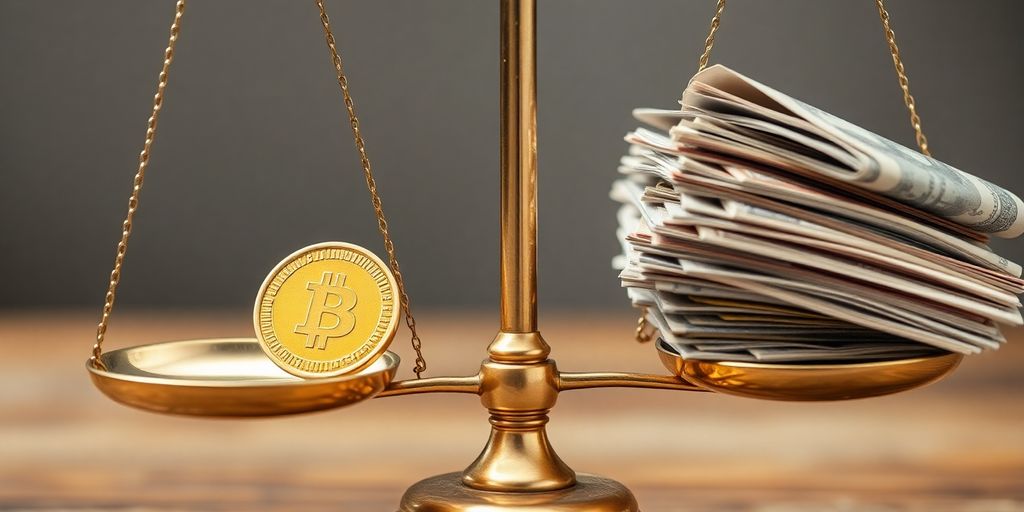
The gold standard, which had seemed so solid during the 19th century, began to show its limitations in the 20th. Several major factors led to its gradual abandonment. First, the two world wars put enormous pressure on economies. Governments needed to finance massive war efforts, which often meant printing more money without having the corresponding gold. It was a way of financing destruction, as it is sometimes said.
Then came the Bretton Woods Agreement in 1944. The idea was to stabilize exchange rates by pegging the US dollar to a certain amount of gold. Other currencies were then tied to the dollar. This worked for a while, but growing US trade deficits began to cause problems in the 1960s. Basically, there were more dollars in circulation than gold to back them. Finally, in 1971, the US suspended the convertibility of the dollar into gold. This was a bit of a straw that broke the camel's back.
This change marked the end of the gold standard as we knew it. Currencies became fiat, meaning they relied on trust in the issuer (the government or central bank) rather than on a physical reserve of gold. It was a bit like replacing tangible value with a promise.
Economic crises and world wars
The major conflicts of the 20th century had a devastating impact on the ability of nations to maintain the discipline of the gold standard. Financing wars required massive expenditures, often covered by issuing currency without sufficient gold counterpart, thus weakening the system.
The end of fixed parity with the Bretton Woods agreements
Although designed to stabilize the international monetary system, the Bretton Woods Agreement ultimately led to the suspension of the dollar's convertibility into gold in 1971. This decision marked the beginning of the end for the gold standard, as the United States could no longer guarantee the fixed parity of its currency.
The Disconnection of Gold and Fiat Currencies
Following the abandonment of convertibility, currencies gradually evolved towards a purely fiat system. The value of the currency is no longer based on a gold reserve, but on the trust placed in the issuing authority, paving the way for more flexible but also potentially more inflationary monetary management.
The legacy of the gold standard in today's financial system
Even though the gold standard is no longer the dominant monetary system, its influence is still felt today. You may wonder how an ancient monetary system can still impact our finances today. Well, it's quite fascinating to see how the principles and perceptions associated with gold persist.
Gold as a safe haven and store of value
Gold is still considered a safe haven. When things go wrong in the financial markets, or when there is economic uncertainty, many people turn to gold. It's almost as if, in the midst of chaos, gold is the only thing that retains its value. That's why we say it's a store of value. Central banks, for example, still hold a significant portion of it in their reserves. It's a kind of guarantee of stability for them, even if it's no longer the basis of their currency. It's a kind of insurance against the unexpected.
The role of central banks and gold reserves
Central banks, you know, the ones that manage a country's currency, always have gold reserves. In the United States, for example, there are enormous quantities of gold stored. In 2003, it was estimated that central banks held about a quarter of all the gold on the planet. That's a lot, when you think about it. This gold no longer serves to guarantee the value of banknotes as it used to, but it remains a symbol of financial solidity. It's a bit like having a safe full of precious things; it's reassuring. Central banks also buy and sell gold, which influences its price. It's an active market, even without the gold standard.
Contemporary debates on a return to the gold standard
Sometimes you'll hear people talk about a possible return to the gold standard. They believe the current system, based on fiat currencies (i.e., currencies that are worth what the government says they are, without having intrinsic value like gold), is too unstable. They cite economists who believe that without gold as an anchor, we risk rampant inflation and even societal collapse. It's a pretty bleak view, but it shows that the idea of gold as a monetary base isn't completely dead. Others believe it's an outdated idea and that the current system, despite its flaws, is better suited to our modern economy. This is a debate that comes up often, especially when economic crises hit hard.
Silver, a precious metal with many facets
Silver, though often overshadowed by its more famous cousin, gold, has an equally rich history and an importance that deserves special attention. You know, since ancient times, silver hasn't just been used to make pretty jewelry. It's been the mainstay of trade, the foundation of many currencies around the world. The Greeks, the Romans, and many other civilizations relied on it for their transactions. Unlike gold, which was often reserved for the elite, silver was the metal of the common people, the one that facilitated everyday commerce and great explorations.
Silver, historical currency and industrial metal
Silver has a double life, in a way. On the one hand, it has a long history as currency. Think of the silver coins that circulated in the Roman Empire or the Middle Ages. It was so widespread that it became the monetary metal par excellence. But that's not all! Today, silver is also super important in industry. It's used in lots of high-tech things: solar panels, electronics, even in the medical field. This growing industrial demand is what ensures its long-term value.
Money as a safe haven and diversification tool
Looking to protect your savings? Silver can be a good option. Cheaper than gold, it allows you to invest in precious metals without breaking the bank. It's a bit like a gateway to the world of tangible assets. Plus, it's fairly easy to resell, whether to professionals or individuals. It's a nice way to diversify your assets, to avoid putting all your eggs in one basket, you see.
Characteristics of silver ingots and coins
When you buy physical silver, you'll often find it in the form of ingots or coins. Ingots, for example, are generally certified by recognized foundries, such as those certified by the LBMA. They have a guaranteed purity, often 999,9‰, and come with a certificate of authenticity. This is a kind of guarantee of quality. Silver coins also have their own history and numismatic value. You have to pay attention to their condition, weight, and purity to properly assess their price. It's a bit like collecting little pieces of history that also have intrinsic value.
Silver, that shiny metal, isn't just pretty to look at. It has many different uses and can even be a great way to invest your moneyIt's a bit like a treasure hunt for those who love things of value. Want to learn more about how money can help you make your money grow? Come discover our website for all the information!
So what can we learn from this?
So, that's the whole story of the gold standard. We've seen how it worked, why it was used for a while, and then why it was no longer possible to continue like that. It's true that it seems simple when you think about it: gold as a base provided a certain stability. But the world changes, as do needs, and this system showed its limits, especially when world events became more complicated. Today, we have other ways of managing money, and even if gold remains important, it no longer has the central role it once had. It's interesting to see how things evolve, isn't it?
Frequently Asked Questions
What is the gold standard, basically?
The gold standard was a bit like a game where the value of the money you used (bills, coins) was directly linked to a fixed amount of gold. Imagine that each bill you had could be exchanged for a small amount of gold at the bank. This made the currency more stable and trade between countries easier because their value was compared against gold.
Why did countries stop using the gold standard?
Countries abandoned the gold standard mainly because of wars and economic crises. It was difficult to maintain this gold standard when a lot of money had to be spent on war or to help people during a crisis. The Bretton Woods Agreement tried to reinstate it, but it didn't last.
Does gold still matter today?
Gold is always considered a safe bet, especially when there are economic problems. It's like insurance for your money. Central banks also keep it in their vaults, a bit like a safety reserve.
What is the difference between gold and silver?
Silver is a bit like gold, but it also has other uses. It has been widely used to make coins and for trade. Today, it is also used in new technologies, such as solar panels and telephones. It is therefore both a valuable object and a useful material.
Could we return to the gold standard?
Yes, there are people who think we should return to a gold-based system. They say it would make money more stable and prevent governments from overspending. But others think it's too complicated and not suited to today's world.
Why does the condition of an old coin change its value?
When it comes to the value of an antique coin, its condition is extremely important. A well-preserved coin, without too many scratches or wear, will be worth much more than a damaged one. It's a bit like collectibles.