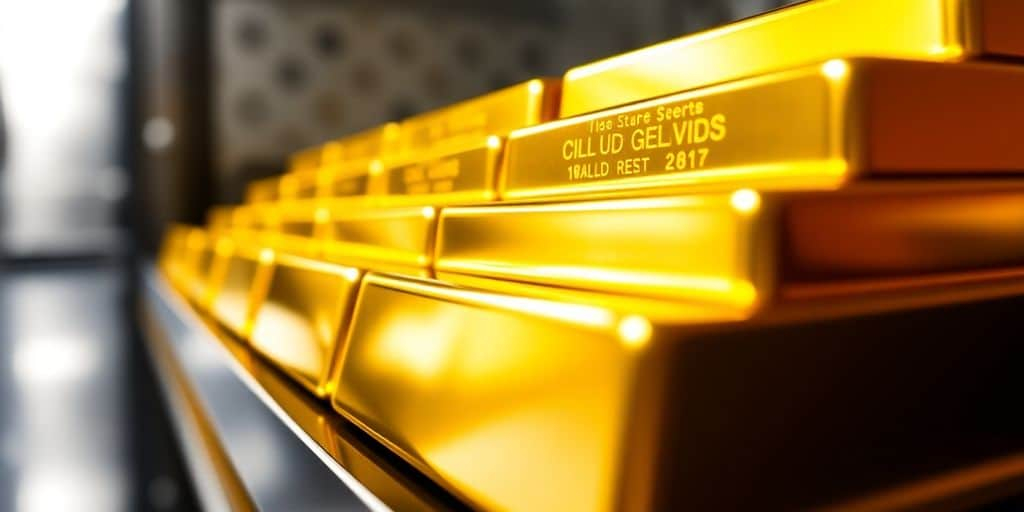
Gold has always played a crucial role in the global economy, especially for central banks that view it as a store of value. This article explores why these financial institutions hold gold, the impact of gold on national economies, and the evolution of gold reserves over time. In addition, we will examine how gold is perceived as a safe haven in times of crisis and its importance in the current geopolitical landscape.
Key Points to Remember
- Central banks hold gold to diversify their reserves and reduce their dependence on the dollar.
- Gold is considered a safe haven, especially in times of economic crisis.
- The world's gold reserves are largely concentrated in a few countries, notably the United States and Germany.
- Gold plays a vital role in the economic and monetary stability of nations.
- The evolution of gold reserves reflects geopolitical tensions and the economic strategies of countries.
Gold and Central Banks
Why Central Banks Hold Gold
Central banks hold gold for several reasons. It is a way to diversify their reserves and not to depend solely on currencies like the dollar. In fact, gold is considered a safe investment which can stabilize a country's economy in times of crisis. Here are some reasons why they hold them:
- Financial security : Gold is an asset that does not depend on a single nation.
- Protection against inflation : In times of rising prices, gold attracts investors.
- Diversification of reserves : This helps balance the risks associated with currency fluctuations.
Gold as a Safe Haven
Gold is often seen as an insurance for savings. When markets fall or currencies lose value, gold tends to rise. This makes it a popular choice for central banks looking to protect their assets. In 2023, several banks, such as those in the China and Poland, have strengthened their gold reserves, thus showing the importance of this precious metal in global finance.
The Impact of Gold on National Economies
Gold plays a crucial role in economic stability. In fact, it can influence exchange rates and monetary policies. For example, when central banks buy gold, it can drive up its price, which has a direct impact on the markets. Here are some notable effects:
- Currency stability : Gold can help maintain the value of a currency.
- Investment attraction : A strong gold stock can attract foreign investors.
- Reducing dependence on the dollar : By diversifying their reserves, countries can reduce their vulnerability to dollar fluctuations.
In short, gold is much more than just a precious metal. It is a pillar of economic stability for many nations.
World Gold Reserves
The Largest Gold Reserves
Did you know that central banks around the world hold approximately 34 000 tons gold? Here is a small overview of the largest reserves:
| Country | Gold reserves (tons) |
|---|---|
| USA | 8 133,5 |
| Germany | 3 351,5 |
| Italie | 2 451,8 |
| France | 2 436,9 |
| Russia | 2 335,9 |
| China | 2 264,3 |
Geographic Distribution of Reserves
Gold is distributed unevenly across the globe. Countries like the United States and Germany dominate, but other nations, like China and the Russia, increase their reserves to diversify their assets. Gold is seen as a safe haven in times of economic uncertainty.
The Evolution of Gold Reserves
Over the years, the trend is clear: central banks are buying more and more gold. For example, recently, the Gold price hits new record high at $2. This shows that gold remains a popular choice for banks looking to protect themselves against economic fluctuations.
Gold is more than just a precious metal; it is a symbol of security and stability in an uncertain world.
Gold in History
Gold in Antiquity
Gold has always been a symbol of wealth and power. In ancient times it was used to mint the first coins by the Lydian kings, around the 8th century BC. Gold bars, on the other hand, were mentioned in the writings of Tacitus, where he speaks of a place full of gold. It's fascinating to think that gold was used as currency long before our era!
Gold in the Middle Ages
In the Middle Ages, gold continued to play a crucial role. It was often used to store wealth. Here are some key points:
- Sealed : The gold bars were sealed to ensure their authenticity.
- Allocated : Each ingot had a unique number.
- Certified : A certificate of authenticity accompanied each ingot.
Gold in the Modern Era
In modern times, gold has taken on a new dimension. It has become an investment asset. Today, gold is considered a protection against inflation, attracting investors in times of rising prices. Central banks, such as those of the China and India, show an increased demand for gold, thus influencing its price on the world market.
Gold is more than just a precious metal; it is a symbol of security and stability in an uncertain world.
Gold and Finance
Gold in the Financial Markets
Gold is a very valuable asset popular in the financial markets. It is often seen as a barometer of economic health. When times get tough, investors turn to gold to protect their money. Here are some key points:
- Gold is traded on exchanges such as New York and London.
- Its price fluctuations may be influenced by geopolitical events.
- Central banks play a crucial role in buying and selling gold.
The Role of Gold in Times of Crisis
In times of crisis, gold becomes a safe haven. People buy gold to protect themselves against inflation and economic uncertainty. Here’s why:
- Safety : Gold retains its value even when other assets fall.
- Liquidity : It is easy to buy and sell.
- Diversification : Having gold in a portfolio helps reduce risk.
Gold and Exchange Rates
Gold also has an impact on exchange rates. When gold rises, it can affect the value of currencies. For example, if gold becomes more expensive, it can mean that the dollar loses value. Central banks monitor this closely to adjust their monetary policies.
In short, gold is much more than just a precious metal. It is an essential financial tool that helps navigate the troubled waters of the global economy.
Conclusion
Gold remains a key player in the world of finance. Whether it is to protect one's wealth or to diversify one's investments, it still has its place in the market. By keeping an eye on trends, investors can better understand how gold can influence their financial decisions.
Highlight: The gold market is regulated in Europe, which ensures transaction security and transparency.
Central Banks and Gold Today
Recent Gold Purchases
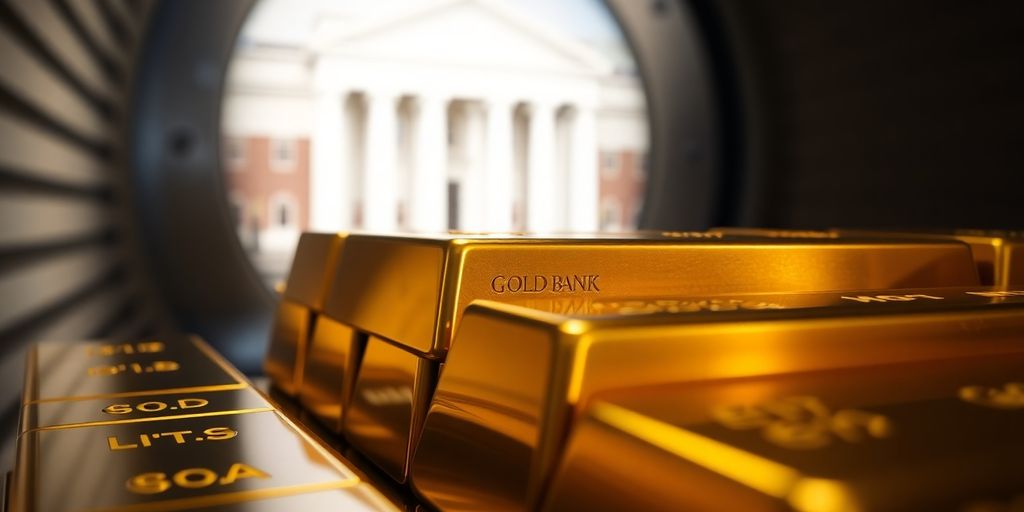
In recent years, central banks have stepped up their gold purchases. In 2023, the People's Bank of China added 224,88 tons to its reserves. This shows a growing interest in gold as a way to diversify their assets. Here are some reasons why they are buying gold:
- Diversification of reserves : Avoid depending solely on the dollar.
- Safe investment : Gold is seen as a safe asset in times of uncertainty.
- Affirmation of sovereignty : Countries like Russia and China are seeking to reduce their dependence on the US dollar.
Gold Sales by Central Banks
Although purchases are on the rise, some central banks have also been selling gold. This may be due to liquidity needs or portfolio adjustments. For example, Turkey sold part of its reserves after massive purchases. This shows that gold reserve management is dynamic and dependent on economic conditions.
Central Bank Strategies
Central banks are adopting different strategies regarding gold. Here are some of the trends observed:
- Increase in gold reserves : To build confidence in their currency.
- Strategic selling : To meet immediate financial needs.
- Investing in physical gold : To ensure tangible value in the event of a crisis.
Gold has become a key element in the strategy of central banks, especially in the face of financial market dynamics and geopolitical uncertainties.
| Métal | Price (in €) | Change (%) |
|---|---|---|
| Or | € 2 | + 0,00% |
| Silver | from €31,18 | + 0,41% |
| Base Plate | from €954,05 | - 0,36% |
| Palladium | € 1 | + 3,36% |
Gold and Geopolitics
Gold and International Conflicts
Gold plays a crucial role in international conflicts. It is often used as a means of financing wars. Countries at war can sell their gold to obtain financial resources. For example, nations like Russia have built up their gold reserves to prepare for possible economic sanctions.
Gold and Economic Sanctions
Economic sanctions can block access to dollar reserves, making gold even more valuable. Countries are looking to diversify their reserves to avoid being too dependent on the dollar. This has led to increased gold purchases by central banks, especially in a context of geopolitical tensions.
Gold as a Tool of Power
Gold is also seen as a symbol of power. Countries that hold large gold reserves can influence global markets. This gives them a certain autonomy in the face of economic fluctuations. In times of uncertainty, gold becomes a safe haven for investors, further increasing its importance on the global stage.
In summary, gold is much more than just a precious metal; it is a key player in international relations and the economic strategies of states.
Gold Reserves in France
The Bank of France and its Reserves
France is the fourth largest country in the world in terms of gold reserves, just behind the United States, Germany and Italy. The Bank of France is responsible for managing these reserves, which are kept in a super secure location known as “La Souterraine,” located 27 meters underground. It’s a place that even received an award for its underground architecture!
The History of French Gold Reserves
Since 2009, the amount of gold held by the Banque de France has remained stable, at approximately 2 tonnes. This figure represents a value of approximately 436,8 billion euros, but it can fluctuate depending on the price of gold. In fact, gold is considered a active reserve essential for the financial solidity of the State.
Gold Reserve Management
The Banque de France does not just manage the government's gold. It also stores gold for other institutional clients, such as foreign central banks. However, the share of this gold is relatively small compared to its own reserves. Here are some key points:
- Safety : The gold is kept in a very secure place.
- Stability : Reserves have not changed since 2009.
- Independence : Gold contributes to the credibility of the Banque de France in its missions.
Gold is more than just a precious metal; it is a symbol of stability and security for the French economy.
Famous Gold Coins
There are famous gold coins throughout history, such as the Canadian Maple Leaf, that play an important role in national reserves. These coins are often valued for their purity and value as investments, especially in times of crisis.
| Room Type | Weight (g) | Approx. Value (€) |
|---|---|---|
| 20 Swiss Francs | 6,45 | 491,09 |
| 20 US Dollars | 33,44 | 2 523,15 |
| Sovereign Gold George V | 7,99 | 620,24 |
| 50 Mexican Gold Pesos | 41,67 | 3 159,19 |
Gold and Economic Independence
Gold as a Guarantee of Independence
Gold is often seen as a soutien to the economic independence of a country. By owning gold, a nation can protect itself against currency fluctuations and economic crises. Having solid gold reserves helps ensure a certain financial stability.
Gold and Monetary Sovereignty
Central banks buy gold to reduce their dependence on the US dollar. This allows them to better control their monetary policy. Here are some reasons why gold is crucial:
- Diversification of reserves : Don't put all your eggs in one basket.
- Protection against sanctions : Gold is an asset that cannot be frozen like dollar assets.
- Universal value : Gold is recognized all over the world.
Gold and Diversification of Reserves
For central banks, gold is a way to diversify their reserves. This helps reduce the risks associated with dependence on a single currency. Here is a table that shows the distribution of gold reserves in some countries:
| Country | Gold Reserves (tons) |
|---|---|
| USA | 8,133 |
| Germany | 3,362 |
| Italie | 2,451 |
| France | 2,436 |
| Russia | 2,298 |
Gold is an asset that has proven its value throughout history, especially in times of crisis. Central banks use it to secure their economic future.
In summary, gold plays a vital role in the economic independence of nations, providing them with protection against financial uncertainties and strengthening their monetary sovereignty.
Gold and Economic Crises
Gold during Financial Crises
Gold has always been considered a refuge in times of crisis. Indeed, when markets collapse, investors turn to gold to protect their wealth. It is an asset that retains its value even when everything else falters. For example, during the 2008 financial crisis, the price of gold skyrocketed, reaching historic highs.
Gold and Economic Recessions
During recessions, central banks often increase their gold reserves. This helps stabilize economies during times of uncertainty. Here are some reasons why gold is favored:
- Safe investment : Gold is less volatile than other assets.
- Protection against inflation : Gold tends to increase in value when inflation rises.
- Diversification of reserves : Central banks seek to reduce their dependence on the dollar.
Gold as Insurance Against Inflation
Inflation can erode purchasing power. Gold, on the other hand, has historically maintained its value. Here is a chart that shows how the price of gold has changed during periods of inflation:
| Year | Gold Price (in €) | Inflation rate (%) |
|---|---|---|
| 2000 | 300 | 1.5 |
| 2008 | 600 | 3.3 |
| 2012 | 1,200 | 2.0 |
| 2020 | 1,800 | 0.5 |
Gold is therefore an effective way to protect against economic crises and inflation. In times of uncertainty, it remains a wise choice for investors and central banks.
In short, gold plays a crucial role in managing economic crises, providing security and stability to investors and nations.
Gold and Investments
Why Invest in Gold
Investing in gold is a bit like putting your money in a safe which never loses value. Gold is considered a safe investment, especially in times of economic crisis. It is a way to protect one's assets against inflation and market fluctuations.
The Different Forms of Gold Investment
There are several ways to invest in gold:
- Gold ingots : These are pure gold bars, often purchased by serious investors.
- gold coins : Pieces like the Napoleon or the Krugerrand are popular and easy to resell.
- gold paper : This includes ETFs (exchange traded funds) that track the price of gold without having to physically store it.
The Tax Benefits of Investing in Gold
Investing in gold can also have tax advantages. In France, gold is not subject to VAT when purchased, which makes it even more attractive. In addition, capital gains made when selling gold can benefit from an advantageous tax regime.
In summary, investing in gold can be a smart strategy to diversify your portfolio and protect yourself against economic uncertainties. Gold remains a solid asset in an ever-changing world.
Gold Price Chart (example)
| Gold Type | Price per kg (in €) |
|---|---|
| 1kg gold bar | 77,100 |
| Napoleon coin | 340 |
| Gold ETFs | Varies by market |
Gold is therefore an investment to be seriously considered!
Gold and Modern Technologies

Gold in Electronics
Gold is an essential material in the world of electronics. It is used for its exceptional conductive properties. Here are some examples of applications:
- Connectors : Gold connectors provide better conductivity and corrosion resistance.
- Printed circuits : Gold is often used in circuit boards to ensure a reliable connection.
- Phone components : Many mobile phone components contain gold, which improves their performance.
Gold and New Technologies
With the rise of new technologies, gold plays a crucial role. For example, in the field of nanotechnology, gold is used to create nanoparticles that can be applied in medicine and electronics. Here are some key points:
- Medicine : Gold nanoparticles are used to target diseased cells.
- Energy : Gold is used in solar cells to improve efficiency.
- Information technology : Gold is essential for the manufacture of high-performance components.
Gold and Industrial Innovation
Industrial innovation cannot ignore gold. This precious metal is often at the heart of new discoveries. For example, research on Gold and central bank digital currencies show how gold can coexist with new forms of money. Gold remains a safe haven, even in the face of the rise of cryptocurrencies.
| Application | Use of Gold |
|---|---|
| Electronics | Connectors, printed circuits |
| Medicine | Targeted nanoparticles |
| Energy | Solar cells |
| Information technology | High performance components |
Gold continues to be a pillar in technological development, proving that it still has much to offer in the future.
Gold, a precious metal, is at the heart of new technologies. Whether for jewelry, investments or bullion, it is essential to understand its role in our modern economy. Learn more about how invest in gold and secure your assets, visit our site!
Conclusion
Basically, gold remains a real treasure for central banks. It is like an insurance against economic crises. Even if gold is no longer used as money, it still has a great value. Banks buy gold to diversify their reserves and protect themselves from currency fluctuations. In addition, with the current geopolitical tensions, more and more countries are turning to gold to secure their economy. So, even if we don't see it often, gold plays a super important role in today's financial world.