Are you tired of seeing your euro funds stagnate? Are you looking for a solution to protect your savings from inflation and crises? Physical gold may be the answer. Together, we'll see why this precious metal is an interesting option for diversifying your assets, and how to go about it without making mistakes. It's a bit like going back to basics, but with modern tools. Hold on tight, as we'll break it all down!
Key Takeaways
- Physical gold is a safe bet that stands the test of time and through crises. It protects your money when currencies lose their value.
- Le gold price It moves depending on a lot of things: the global economy, central banks, and even tensions between countries. You have to understand this before you buy.
- Gold can be purchased in different forms: bars, coins, or even through financial products like ETFs. Each option has its advantages and disadvantages.
- Even on a small budget, you can invest in gold. Small coins or ingots are a good way to get started without breaking the bank.
- Buying gold requires careful consideration of safety, fees, and taxes. It's important to choose reliable sellers and do your research to avoid unpleasant surprises.
Why physical gold is an alternative to euro funds
Euro funds, long considered safe investments, are showing signs of weakness with declining returns. In light of this situation, physical gold is emerging as an attractive alternative for diversifying your assets and seeking a degree of stability. The idea isn't to completely replace euro funds, but rather to add an additional component to your investment strategy.
Gold, a historic safe haven
For centuries, gold has been seen as a safe haven, especially in times of economic uncertainty or financial crisis. Unlike fiat currencies, whose value can be affected by inflation or monetary policies, gold retains intrinsic value. This characteristic makes it a sought-after asset when stock markets are turbulent or interest rates are low. History shows that gold has often played a stabilizing role in investment portfolios, providing protection against monetary erosion. It's a bit like having insurance against unpleasant economic surprises.
The scarcity of physical gold compared to fiat currencies
One reason gold is considered a safe haven is its scarcity. Unlike fiat currencies, which can be printed at will by central banks, the amount of gold available is limited. This relative scarcity helps maintain its value over the long term.
Physical gold, as a tangible asset, offers protection against currency devaluation. Quantitative easing policies pursued by central banks can lead to an increase in the money supply in circulation, which can potentially depreciate the value of currencies. In this context, gold, which is in limited supply, can serve as a hedge against inflation.
Gold in the face of geopolitical tensions
Periods of geopolitical tension are often synonymous with economic uncertainty. At such times, investors tend to gravitate toward assets considered safe, and gold is one of them. Conflicts, political crises, or threats of war can lead to an increase in demand for gold, which generally translates into a rise in its price. It's almost as if gold acts as a barometer of global concerns. It's important to note that the impact of geopolitical tensions on the Gold prices may be temporary, but it can offer interesting investment opportunities for those who know how to anticipate market movements.
Understanding the price of gold and its evolution
Before you put your money into gold, you need to understand why its price fluctuates so much. For those looking for a secure short-term savings, understanding these mechanisms can make the difference between a win and a nasty surprise.
Factors influencing the price of an ounce of gold
Several factors affect the price of gold at the same time:
- Inflation and monetary policy: When prices rise, gold attracts those who want to preserve their purchasing power.
- Geopolitical tensions: conflicts, diplomatic crises or political instability often increase demand for gold.
- Dollar strength: A weak dollar makes gold cheaper for foreign currency buyers.
- Speculation and volatility: Upside or downside bets by funds or traders can cause a roller coaster ride.
- Physical supply and demand: mining production, recycling, industrial needs (electronics, jewelry) also weigh on the price.
Keeping track of these movements is a bit like keeping an eye on the weather before going out: it helps you avoid thunderstorms.
The role of central banks in the gold market
Central banks alone hold several thousand tons of gold. They intervene in two ways:
- Regular purchases to diversify their reserves.
- One-off sales to adjust their balance of payments.
These operations weigh heavily on the price because they send a strong signal to the market. When a major central bank accumulates gold, investors see it as a bet against paper money. Conversely, a massive selloff can cause the price to plummet.
The different types of gold pricing
There are three main rating methods:
| Type of course | Description | Schedule |
|---|---|---|
| fixing | Reference price fixed twice in London | 10:30 a.m. and 15:00 p.m. GMT (business days) |
| Continuous courses | Real-time quotation, permanent fluctuation | 24 hours a day from Sunday evening to Friday midnight |
| CPOR (unofficial) | Reference of a private company in France | Posted between 13 p.m. and 14 p.m. |
The price of an ounce of gold often reacts more to market emotions than to economic fundamentals.
The best forms of gold investment
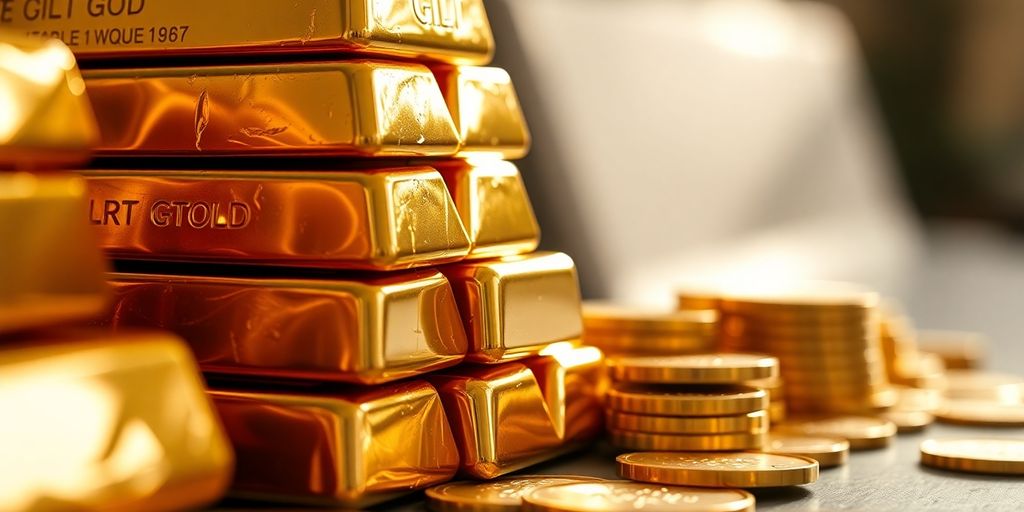
Investing in gold offers several options, each with its own advantages and disadvantages. The choice will depend on your budget, goals, and risk tolerance. Let's take a closer look.
Physical gold: bars, coins and jewelry
Physical gold is the most tangible form of gold investment. You can opt for gold bars, coins, or even jewelry. Each option has its own specificities in terms of purity, cost and liquidity. Bullion bars are generally considered the purest and most economical form of gold, but they require secure storage. Gold coins, such as Napoleons or Sovereigns, are more easily tradable and may have numismatic value in addition to their gold value. Jewelry, while less pure, can be worn and appreciated before being resold. Be careful of the premium, which can be higher on coins and jewelry than on bullion.
Paper gold: ETFs, mining stocks and specialist funds
Paper gold represents a more practical alternative to physical gold. It involves investing in financial instruments that track the Gold prices, without having to store the precious metal. Gold ETFs (Exchange Traded Funds) are exchange-traded funds that track the performance of the gold price. They offer high liquidity and are accessible with relatively low starting capital. Mining stocks are securities of companies that extract gold. Their performance is linked to the price of gold, but also to the company's management and results. Gold-focused funds invest in a basket of mining stocks or other gold-related assets. This is a good way to diversify your wealth without worrying about storage.
Gold Derivatives for Informed Investors
Gold derivatives, such as options and futures, are complex financial instruments that allow you to speculate on the price of gold. They offer significant leverage, meaning you can control a large amount of gold with relatively little capital. However, they are also very risky and can lead to significant losses if the price of gold moves in the opposite direction of your predictions. These instruments are reserved for sophisticated investors with a good understanding of the financial markets and a high risk tolerance.
Investing in gold, regardless of the form chosen, requires a good understanding of the markets and the associated risks. It is important to seek professional advice and not invest more than you can afford to lose.
Here is a comparative table of the different forms of gold investment:
| Form of investment | Benefits | Drawbacks |
|---|---|---|
| physical gold | Tangible, safe haven, no counterparty risk | Storage, insurance, high premium, less liquid |
| Gold ETFs | Liquid, accessible, no storage | Management fees, counterparty risk, follows the price of gold but not 100% |
| Mining stocks | High return potential, diversification | Business risk, volatility, depends on gold price |
| Gold derivatives | Leverage, high earning potential | High risk, complex, reserved for experienced investors |
Gold investment options to suit every budget
The idea that investing in gold is reserved for the wealthy is outdated. Today, there are solutions for every budget, allowing everyone to build a gold portfolio, even with small amounts. We will see together how to do it.
Fractional gold coins for small budgets
Fractional gold coins are an ideal entry point. Instead of buying a whole coin, you can acquire a fraction, which significantly reduces the initial cost. For example, a one-tenth ounce coin is much more affordable than a full ounce. It's a simple way to start investing in physical gold without breaking the bank. These coins are easy to find and resell, making them very convenient.
Miniature ingots: an affordable solution
Miniature ingots, often available from a few grams, are another attractive option. Although the price per gram is generally higher than for larger ingots, they remain affordable for those on a tight budget. They're a great way to own physical gold and diversify your assets without investing large sums. They're easily found at gold dealers specialized.
Gold exchange-traded funds (ETFs)
ETFs (Exchange Traded Funds) are funds that replicate the price of gold. Investing in a gold ETF allows you to gain exposure to the gold market without having to physically store the precious metal. With a small budget, you can buy shares in these funds and profit from fluctuations in the gold price. It's a simple and liquid solution, ideal for beginner investors.
Investing in gold, even on a limited budget, requires patience and caution. It's important to research the various options available and choose the one that best suits your goals and risk profile. Don't hesitate to consult a financial advisor to guide you through this process.
Practical aspects and precautions before investing in gold
Gold liquidity: easy to resell or forced to anticipate
The liquidity of gold is an essential aspect to consider. Although gold is generally considered a liquid asset, selling it can sometimes take longer than expected. It all depends on the form of gold (bars, coins), the economic context, and the resale channel used. For example, reselling gold coins investment is often faster than finding a buyer for a large ingot.
Here are some points to consider:
- Gold type: Common gold coins are easier to resell than rare bars or antique jewelry.
- Economic situation: In times of crisis, demand for gold increases, making it easier to resell.
- Resale channels: Jewelers, numismatists, banks, and online platforms offer different options, each with their own timeframes and fees.
Anticipating your cash needs is crucial. Don't invest all your savings in gold if you expect to need that money in the short term. Gold investing is a long-term strategy.
Conservation and security risks
Storing physical gold involves significant risks. Theft is the main concern, but you also have to consider degradation (scratches, oxidation). Here are some storage options, each with its own advantages and disadvantages:
- Personal safe: Practical, but risky in case of burglary. Requires good insurance.
- Bank safe: Safer, but incurs annual rental fees.
- Specialized company: Expensive solution, but offering maximum security.
It's imperative to take proper security measures. Never disclose that you own gold, and make sure your home insurance adequately covers this type of property. Consider making a detailed inventory of your gold possessions.
Tax and regulatory risks to monitor
Gold taxation is a complex area, and it's important to stay informed about current regulations. In France, for example, two tax regimes apply when reselling gold:
- Precious metals tax: A flat rate of 11,5% (flat rate tax of 11% + CRDS of 0,5%) on the sale price, without taking into account the capital gain.
- Capital gains tax: Taxation of capital gains realized, with a 5% reduction per year of ownership beyond the second year. Total exemption after 22 years.
Properly reporting your gold transactions to the tax authorities is crucial. Failure to comply with tax obligations can result in financial penalties. Additionally, certain large transactions may be subject to specific reporting requirements. It is therefore advisable to consult a tax expert to optimize your situation and avoid unpleasant surprises. Keep track of your purchases. physical gold and your sales to facilitate your tax declarations.
Tips for Successful Investing in Physical Gold
Choosing the right professional for buying gold
Finding a trustworthy gold seller is a bit like finding a good mechanic: it requires a little research. We don't want to get ripped off, especially when it comes to our money. The most important thing is to check that the professional is authorized to sell goldThis is an essential first step to avoid unpleasant surprises.
Next, don't hesitate to compare prices between different sellers. Prices can vary, and it's always a good idea to make sure you're getting the best possible price. Also, look at online reviews; they can give you a good idea of the seller's reputation. A transparent and honest professional will always be ready to answer your questions and provide you with all the necessary information about the gold they sell.
Understanding the costs of gold investing
When investing in gold, there's more to consider than just the price of gold. There are also all the additional costs that can quickly add up. For example, storage fees, if you don't keep your gold at home. You also need to think about insurance costs, to ensure you're covered in case of theft or loss. And then there are the commissions charged by intermediaries, whether buying or selling. All of these costs can impact your return, so it's important to understand them before taking the plunge.
Here is a summary table of current costs:
| Fee type | Indicative amount | Frequency |
|---|---|---|
| Storage costs | 0,5% to 1,5% per year | YEARLY |
| Insurance costs | 0,1% to 0,3% per year | YEARLY |
| Buy/Sell Commissions | 1% to 3% | By transaction |
Be wary of overly tempting offers
If an offer seems too good to be true, it probably is. In the world of investing, and especially when it comes to gold, you always have to be cautious. Scams are unfortunately common, and it's easy to fall for them if you're not careful. Be wary of promises of exceptional returns or limited-time offers that pressure you to invest quickly. Always take the time to do your own research and verify the information before making a decision. authorized professional will never force your hand.
It's important to remember that investing in gold, even physical gold, carries risks. The price of gold can fluctuate, and there's no guarantee of making a profit. Therefore, it's essential to only invest money you can afford to lose and to diversify your investments to limit risks.
Here are some additional tips for successful investing:
- Define your objectives : Why invest in gold? What return do you expect?
- Diversify your portfolio : Don't put all your eggs in one basket.
- Stay informed : Follow economic and financial news to anticipate fluctuations in the gold market.
Physical gold: an asset for diversifying your assets

Gold as a hedge against inflation
Inflation, this silent erosion of our purchasing power, is a constant concern. We see prices rising at the supermarket, at the pump... it's stressful! Gold, on the other hand, tends to maintain its value, or even increase it, when inflation rises. It's not magic, but it's a kind of shield against the depreciation of silver.
Imagine, you have euros that are losing value due to inflation. If you had part of your savings in gold, this part would somehow compensate for the losses due to inflation. It's a way to preserve your capital over the long term. By the way, if you want to know more, you can read this article onprecautionary savings in physical gold.
Gold's stability in times of economic crisis
When stock markets collapse and the global economy falters, gold often tends to shine. It's what's known as a safe haven. Investors, panicked by the crisis, rush to buy gold, which drives up its price. It's a bit like a survival reflex.
Gold isn't a miracle investment, but it has proven time and again its ability to weather economic storms. It's a bit like having a good old-fashioned umbrella when it's pouring with rain: it doesn't solve every problem, but it helps keep you dry.
Gold, an asset uncorrelated with financial markets
One of the major advantages of gold is its low correlation with other financial assets like stocks or bonds. Basically, this means that when stocks fall, gold doesn't necessarily fall, and vice versa. This is extremely important for diversifying your portfolio and reducing risk.
Here is a simple example:
- If you have all your money in stocks, you are at the mercy of stock market fluctuations.
- If you have a portion in gold, you smooth out the performance of your portfolio. If stocks decline, gold can compensate, and vice versa.
- It's a way to sleep soundly, even when the markets are choppy.
In short, physical gold can be a valuable ally for diversifying your assets and protecting you against economic downturns. It's not a miracle solution, but it's an asset worth serious consideration.
Gold is a bit like an anchor for your money. It helps keep your financial "boat" steady, especially when the seas are rough. It's a simple and safe way to avoid putting all your eggs in one basket. To learn more about how gold can protect your money, visit our site and discover our solutions for "Invest in Gold".
In summary: physical gold, a wise choice for your savings
We've seen together that physical gold is a bit like the good old oak tree in an investment forest. It's there, solid, and it doesn't move too much, even when the wind blows hard. Unlike euro funds, which have their limits, gold retains its value. It's a security, especially when the economy is playing up. Of course, you have to think about how to keep it safe, but that's a small detail compared to the peace of mind it brings. So, if you're looking to protect your money over the long term, physical gold is an option not to be overlooked. It's simple, it's concrete, and it's proven itself for centuries.
Frequently Asked Questions
Why is gold considered a safe haven?
Gold is a safe investment because, unlike paper money, it retains its value even when the economy is struggling. It is rare and cannot be produced in larger quantities, which makes it valuable.
What causes the price of gold to fluctuate?
The price of gold changes depending on several things: supply and demand, what central banks do (whether they buy or sell gold), and world events such as wars or crises.
What are the different ways to invest in gold?
To invest in gold, you can buy physical gold (bars, coins), or 'paper' gold, such as shares in gold-tracking funds (ETFs). There are also more complicated products for experts.
Can you invest in gold with little money?
Yes, even on a small budget. You can buy small gold coins or mini bars. It's also possible to buy shares in gold ETFs, which are like stocks that track the price of gold.
What are the important things to know before buying gold?
You need to think about how to keep your gold safe (at home, in a bank, or with a specialist). You should also be aware that reselling it can take some time and that there are taxes to pay.
How to make a good investment in physical gold?
To invest wisely, choose a reputable gold dealer. Watch out for hidden fees and don't believe offers that seem too good to be true.