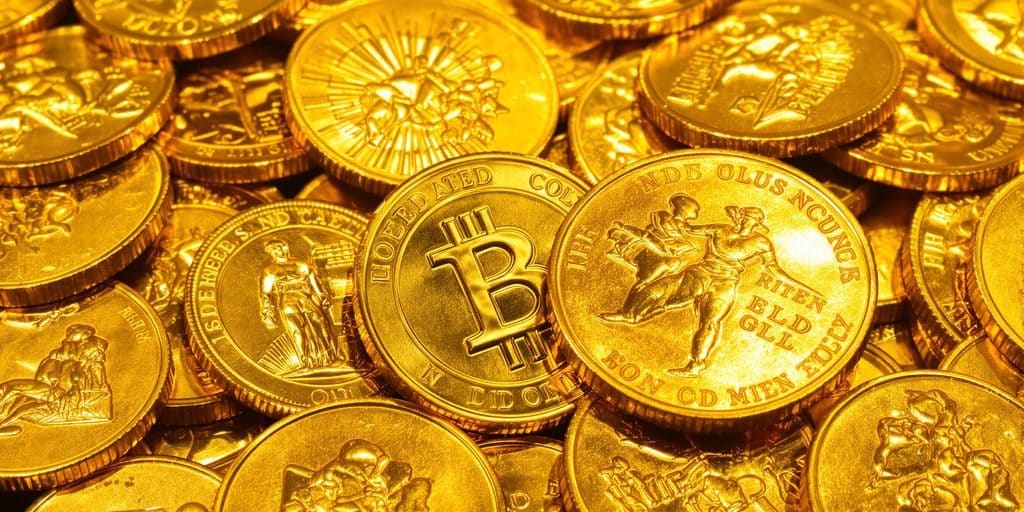
You may be wondering why gold has fascinated people so much for millennia. It's simple: this precious metal has survived the ages as much more than just an object of desire. It has been at the heart of civilizations, influencing their power, spirituality, and even their economic exchanges. In this article, we will explore together the fascinating history of gold, from ancient civilizations to our modern era. Prepare yourself for a journey through time, where you will discover how gold has shaped the world we know today.
Key Takeaways
- Since ancient times, gold has been a symbol of power and spirituality, used in rituals and by leaders to assert their status.
- The first gold coins, created by the Lydians, marked a turning point in economic history, facilitating trade.
- The quest for gold has been a major driving force behind great explorations and conquests, influencing the global economy and causing conflict.
- The gold standard structured international finance for a period, and today gold remains an essential safe haven in times of crisis.
- Beyond its financial aspect, gold finds valuable applications in industry, electronics and even medicine.
Gold through the ages: from ancient civilizations to the present day
Gold, this yellow metal that has shimmered and fascinated since the dawn of time, has played a central role in the development of civilizations. You've probably heard of fabulous treasures or kingdoms built on gold. Well, it's not just a legend! Since ancient times, this precious metal was not just a sign of wealth, but much more than that. It was seen as a direct link to the divine, a symbol of absolute power and eternity. Ancient peoples venerated it, used it in their most sacred rituals, and reserved it for the most important figures, whether religious or royal.
Gold, a symbol of power and spirituality in Antiquity
In ancient civilizations, gold was far from a mere decorative object. It embodied divinity, immortality, and supreme power. Think of the Egyptians, who considered gold the flesh of the gods, or the Incas, who saw it as the tears of the sun. This metal was incorporated into religious practices, offerings, and funerary rites, intended to accompany souls into the afterlife or to honor deities. Its vibrant color and resistance to corrosion made it the perfect material to represent eternity and perfection.
Gold as a badge of power and cultural influence
Beyond its spiritual dimension, gold was an undeniable social marker. Rulers wore gold crowns and ornaments to assert their royal status and authority. The minting of gold coins by kings, such as the Lydians, materialized their economic power and sovereignty. Artists and artisans crafted this precious metal to create objects of striking beauty, from jewelry to funerary masks, which still bear witness to the creative genius and beliefs of past civilizations. Gold thus spanned cultures, influencing art, economics, and politics.
The first gold coins: the Lydian heritage
You know, the invention of money revolutionized trade, and the first gold coins come to us from Lydia, an ancient region of Asia Minor (present-day Turkey), around the 7th century BC. These early coins, often made of electrum (a natural alloy of gold and silver), bore symbols like a lion's head, an emblem of royal power. This Lydian legacy marked a turning point, facilitating trade and laying the foundations for what would become the global monetary system. Gold, from then on, was no longer just a symbol, but a tangible tool of wealth and power.
Gold and the Great Discoveries: Expansion and Conflict
The Gold Rush: Driving Exploration and Conquest
The lure of gold has undeniably been a powerful driving force behind the great explorations and conquests that have marked history. Imagine European navigators, gazing fixedly at the horizon, driven by the promise of untold riches. Gold was the light that guided their ships across unknown oceans, toward distant and mysterious lands. This frantic quest opened new sea routes and connected continents, but it was also the scene of major conflicts and upheavals.
- Gold as a symbol of power and cultural influence
Beyond its intrinsic value, gold has always been an outward sign of power. Rulers wore golden crowns, affirming their supreme status. Monarchs used gold to mint their currency, demonstrating their economic power. Artists and artisans, meanwhile, fashioned this precious metal into objects of stunning beauty, from sophisticated jewelry to funerary masks, which still stand as testaments to human genius and tell fascinating stories today. - The first gold coins: the Lydian heritage
Did you know that the first gold coins come to us from the ancient Lydians? Around the 8th century BC, they minted coins, often adorned with a lion's head, marking a crucial step in economic history. This Lydian legacy laid the foundation for the use of gold as a standardized medium of exchange, a practice that would spread and evolve over the centuries.
Gold in Europe: From the Middle Ages to Modern Finance
Gold in the Middle Ages: Currency, Art and Spiritual Symbol
During the Middle Ages, gold continued to play a central role in Europe, far beyond its mere material value. It was the backbone of the economy, serving as the preferred currency for important transactions and international trade. Kingdoms minted their own gold coins, such as the florin or the noble, which became symbols of their power and prestige. These currencies circulated widely, forging economic ties between different regions.
But gold wasn't just a commercial commodity. It adorned the finest works of art, from illuminated manuscripts to liturgical objects, bringing a touch of divine splendor to churches and palaces. Its golden glow was often associated with the sacred, purity, and divine presence in religious art. It was also found in the jewelry of nobles, marking their high social status.
The brilliance of medieval gold was not just a matter of ostentatious wealth; it carried within it a deep spiritual dimension, connecting the earthly with the heavenly through art and symbolism.
The gold standard and international monetary stability
Later, gold became the foundation of global monetary stability with the establishment of the gold standard. This system, which reached its peak in the Victorian era, tied the value of national currencies to a fixed quantity of gold. This greatly facilitated international trade by creating a framework of trust and predictability.
The advantages of the gold standard were numerous:
- It limited inflation by forcing governments not to print more money than they had gold in reserve.
- It promoted trade by stabilizing exchange rates.
- It offered investors a degree of security, knowing that their currency had intrinsic value.
However, this system also had drawbacks. Its rigidity made it vulnerable to major economic shocks, as seen during the Great Depression. Countries struggled to adjust their monetary policy to meet the needs of their economies, which ultimately led to the gradual abandonment of the gold standard in the 20th century.
Gold in Contemporary Finance: Safe Haven and Investment
Although the gold standard is no longer in effect, gold retains a prominent place in modern finance. It is still considered the ultimate safe haven, a tangible asset that protects against inflation, economic crises, and financial market instability. You can invest in gold in various forms, such as bullion bars or investment coins, which are recognized worldwide.
Central banks still hold significant gold reserves, and private investors use it to diversify their assets. The price of gold is closely monitored and can fluctuate depending on many factors, but its demand remains constant, particularly in countries like India and China, where it is also highly prized for jewelry. It's a way to secure your capital and maintain a safe value over time.
The evolution of the price of gold and its economic role
The price of gold is a bit like a roller coaster, isn't it? There are times when it skyrockets, and others when it seems to slow down. Several things can move this price. Think of central banks buying or selling their gold reserves; this has a direct impact. Demand for jewelry, especially in India and China, also plays a role. And let's not forget industry, which uses gold for electronics, for example. All of this affects the price of an ounce of gold, which is our main unit of measurement.
Factors influencing the fluctuation of gold price
Le gold price is not fixed once and for all. It changes constantly, much like the stock market price. Central banks, for example, may decide to sell some of their enormous gold reserves, which increases supply and can lower the price. Conversely, if they buy more, demand increases and the price can rise. Demand from jewelers, especially in India and China, is also a major driver. When people buy more jewelry, the price of gold rises. Industry, which uses gold for its conductive properties in electronics or dentistry, also contributes to this demand. Finally, speculation in the financial markets, where some bet on the rise or fall of the price of gold, can create significant movements, especially in times of uncertainty.
Gold as an economic barometer and safe haven
It's often said that gold is a bit like a thermometer for the global economy. When things go wrong, whether it's an economic crisis or a period of political instability, people tend to turn to gold. Why? Because it's a safe haven. This means that even if traditional currencies like the dollar or the euro lose value, gold tends to hold its own, or even gain. It's a bit like, in a storm, gold is the only safe haven to put your money in. Central banks know this; they keep huge amounts of gold to stabilize their economies. It's a bit like the ultimate symbol of wealth that has endured through the ages.
The impact of crises and wars on the gold market
Times of crisis, whether economic or military, have always had an impact on the price of gold. When there are wars, for example, countries often need to finance their armies, and gold is one way to do this. This increases demand and therefore the price. Furthermore, conflicts can disrupt gold mining, reducing supply. Think of the great periods of conquest when gold from newly discovered territories flowed into Europe; this had enormous consequences for economies. Even today, during financial crises, we often see the price of gold rise. It's as if, in difficult times, gold becomes the most precious and sought-after commodity.
Forms of gold: ingots, coins and jewelry
The history and characteristics of gold bars
You know, gold isn't just a shiny metal you find in jewelry. It has a super long history, and ingots are one of the oldest forms of gold exchange. We find traces of it as far back as ancient times, in Mesopotamia for example, where they used it for rituals and to show the power of kings. The Lydians, around the 6th century BC, were even the first to mint gold coins, but before that, gold was already melted and molded to make it easier to transport and store. That's how ingots were born, basically.
Today, when you buy an ingot, there are quite strict rules. For it to be internationally recognized, it must meet the standards.
Gold in industry and medicine
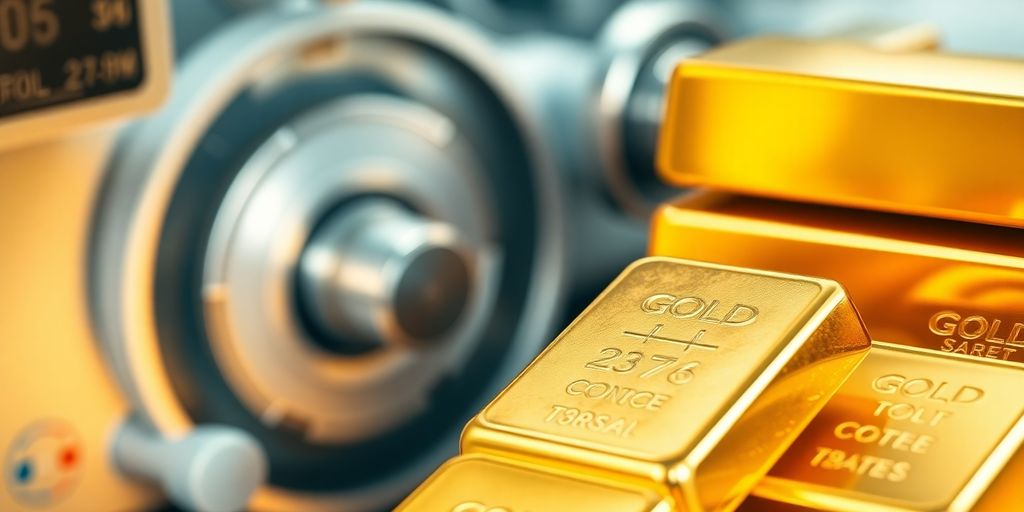
Gold, this precious metal with shimmering reflections, is not limited to jewelry or a store of value. Its unique properties make it an indispensable material in several industrial and medical sectors. You might be surprised to discover how present gold is in our daily lives, far beyond what you might imagine.
The conductive properties of gold in electronics
Did you know that gold is an excellent conductor of electricity and heat? It's true! While it's not the best conductor (silver and copper are better), its exceptional resistance to corrosion and oxidation makes it irreplaceable for certain applications. Imagine your electronic devices: smartphones, computers, televisions... inside, tiny contacts and connectors are often plated with a thin layer of gold. Why? Because even after years of use, these gold contacts will not oxidize and will continue to transmit electrical signals reliably. It is this durability that justifies its use in critical components where the slightest failure can have significant consequences.
The use of gold in dentistry and medicines
Gold also has a long-standing place in medicine. In dentistry, for example, you may have seen or heard of gold dental crowns or bridges. This metal is biocompatible, meaning it is well tolerated by the human body and does not cause allergic reactions. Furthermore, its malleability allows dentists to precisely shape it to fit the patient's mouth perfectly. But that's not all! Gold is also used in certain medications. For example, gold compounds can be administered to treat certain forms of rheumatoid arthritis, helping to reduce inflammation and slow the progression of the disease. It is even found in cancer treatments, where gold nanoparticles can be used to specifically target tumor cells and deliver treatments more effectively.
Gold isn't just beautiful, it's also very useful in the workplace and for health care. It's used in so many things, even in medicines! It's amazing how this precious metal can help so much. Want to know more about different ways to use gold ? Come and discover our website for all the information.
Gold, a golden thread through time
So, we've taken a great look at gold, from its beginnings in ancient civilizations to today. It's amazing how this metal has survived through the ages, influencing empires, economies, and even our everyday lives. Whether it's for its beauty, its value, or its history, gold continues to fascinate us. We hope you enjoyed this journey and that it gave you a new perspective on this special metal. Who knows what the future holds for gold, but one thing is certain: it will continue to shine in our history.
Frequently Asked Questions
Since when has man used gold?
Gold has been used since the end of prehistory, thousands of years ago. It was one of the first metals that humans learned to work with, after copper.
What was gold used for in ancient civilizations?
In ancient times, gold was primarily used to make objects for kings and chiefs, as well as for religious ceremonies. It was seen as a symbol of power and connection with the gods.
Who invented the first gold coins?
The first gold coins were created by the Lydians, a people of ancient Türkiye, around the 8th century BC. This was a major step for trade.
What is the gold standard?
The idea behind the gold standard was that the value of a country's currency was directly tied to a certain amount of gold. This helped stabilize trade between countries for a time.
Why is gold said to be a safe haven?
Today, gold is still seen as a safe place to invest money, especially when the economy is struggling. It is called a 'safe haven' because it retains its value even in times of crisis.
What are some of the uses of gold today besides jewelry and investment?
Gold is used in many modern things, such as telephones and computers, because it conducts electricity well and doesn't rust. It is also used to some extent in medicine, for example, in dental crowns.