You might be wondering what role gold plays in our high-tech gadgets? Well, this precious metal, often associated with jewelry and bullion, is actually an essential component of modern electronics. Its presence, though discreet, is fundamental to the proper functioning of our everyday devices, from smartphones and computers to the most cutting-edge technologies. Let's explore together why gold has become an indispensable material in this field.
Key Takeaways
- Gold is used in electronics for its exceptional electrical conductivity, corrosion resistance and malleability, properties that guarantee the reliability of components.
- You will find gold in your smartphones, computers, printed circuit boards and microprocessors, ensuring the performance and durability of these devices.
- In critical environments such as aerospace, gold protects components from radiation and extreme conditions, ensuring the proper functioning of satellites and spacecraft.
- Gold also finds its place in medical technologies, particularly for instruments and nanoparticles used in diagnostics, as well as in green energies such as photovoltaic cells.
- Recycling gold from electronic devices is an increasingly important source of this metal, offering a more cost-effective and less impactful alternative to traditional mining.
The unique properties of gold in electronics
When we think of gold, we often picture shiny jewelry or ingots in vaults. But did you know that this precious metal plays an equally important, if not more important, role in the world of technology? It's a bit like a hidden superhero for our electronic devices. Its characteristics are truly special, which is why we find it in so many of the components that surround us.
Unrivaled electrical conductivity
Gold is a champion at conducting electricity. It's second only to silver and copper in this regard, but it has a huge advantage: it doesn't oxidize. You know that thin layer of rust or tarnish that can appear on other metals? Gold stays clean and continues to conduct electricity well, even after years. This is incredibly important for ensuring your devices function properly and for a long time. Imagine a connector that degrades over time—it would cause connection problems, wouldn't it? With gold, this worry disappears.
Exceptional corrosion resistance
This is somewhat related to what I just said, but it's worth emphasizing. Gold is incredibly resistant to corrosion. It doesn't react with most chemicals and doesn't degrade with moisture or air. Think about the harsh environments where some devices have to operate: gold is there to ensure reliability. It doesn't corrode, it doesn't tarnish, it remains stable. It's this stability that makes it so valuable for electronic components that need to function flawlessly, even in less than ideal conditions.
Malleability and ductility for a variety of applications
Gold is also a very malleable metal. It can be drawn into extremely thin wires, called gold wire, or flattened into very thin sheets, called gold foil. This ability to be worked in different ways opens the door to a wide range of uses. For example, these very thin wires are perfect for connecting tiny components in microprocessors. And gold foil can be used to coat surfaces and improve their conductivity or resistance. It is this versatility that makes it possible to create increasingly smaller and more powerful electronic components.
Gold isn't just beautiful; it's also incredibly useful in technology. Its natural properties, like its ability to conduct electricity well without degrading, make it a material of choice for manufacturing reliable and durable electronic devices. It's a bit of a well-kept secret to the performance of our gadgets.
Gold at the heart of modern electronic components
When we think of gold, we often picture jewelry or ingots, not really the inner workings of our high-tech gadgets. Yet, you'd be surprised to see how ubiquitous this yellow metal is in the electronics you use every day. It's not just for show, you know. Gold has properties that make it absolutely essential for your devices to function properly, and above all, to last.
Presence in smartphones and computers
Look at your smartphone, your tablet, or your laptop. Inside, there's gold—and quite a lot of it. It's found in the connectors, those little plugs where you connect your cables, but also in the electronic chips, like the processor. Why? Because gold is an excellent conductor of electricity. This means that the electrical signal passes through it with very little resistance. And since it doesn't oxidize, unlike copper for example, your connections remain reliable even after years of use. It's a bit like having super-smooth highways for electricity, without any traffic jams or potholes.
Role in printed circuit boards and microprocessors
Printed circuit boards, those green or blue cards covered in tiny traces, are a bit like the nervous system of your devices. Gold is often used to coat these traces, especially in critical areas where the signal must be transmitted with high fidelity. Think of computer motherboards or graphics cards: gold ensures ultra-fast, lossless data transmission. In microprocessors, where billions of transistors are packed onto a tiny chip, gold is used for internal connections. Its ability to be drawn into incredibly thin wires (a process called ductility) and its resistance to corrosion are major advantages for manufacturing ever smaller and more powerful components.
Importance for connected objects and miniaturization
With the rise of connected devices (smartwatches, speakers, various sensors), we need increasingly smaller, lighter, and more energy-efficient components. Gold plays a key role in this. Its thinness when plated allows for smaller connectors and circuits. Furthermore, its reliability ensures that these small devices, often used in a variety of conditions, will continue to function flawlessly. It is thanks to materials like gold that we can have such compact and high-performance electronic devices today.
Gold, although rare and expensive, is chosen for electronics not for its prestige, but for its unparalleled technical performance which guarantees the reliability and longevity of devices, especially when miniaturization and performance are paramount.
Basically, the next time you use your phone or computer, think about that little bit of gold working hard inside to make everything run smoothly. It's not just a precious metal; it's a secret ingredient of modern technology.
Gold, a guarantee of reliability in critical environments
When we think of electronics, we often picture our smartphones or laptops. But there are areas where the slightest malfunction can have far more serious consequences. That's where gold comes in, like a discreet but indispensable hero.
Applications in aerospace and satellites
Imagine a satellite in orbit, or a rover exploring Mars. These vehicles are subjected to extreme conditions: enormous temperature variations, intense cosmic radiation, and of course, no possibility of easy repair. In this context, reliability is not an option, it is an absolute necessity. Gold, thanks to its exceptional resistance to corrosion and chemical inertness, protects sensitive electronic components from these hostile environments. It forms a protective barrier against oxidation and electromagnetic interference, ensuring that signals remain clear and circuits function as intended, even after years of exposure.
- Radiation protection: The gold layers on the circuits help to mitigate the harmful effects of cosmic rays.
- Thermal regulation: Its ability to reflect infrared heat is used to maintain a stable temperature for sensitive instruments.
- Sustainable connectivity: Gold-plated connectors ensure reliable data transmission over the long term, without degradation.
Use in space vehicles and radiation protection
Beyond satellites, gold also finds its place in the spacecraft themselves. For example, astronauts' helmet visors are often coated with a thin layer of gold. This isn't for style, far from it! This thin film of gold acts as a high-performance sunscreen, protecting astronauts' eyes from the intense glare of the sun in the vacuum of space and reducing heat absorption. It's a perfect example of how gold's physical properties are harnessed to ensure the safety and smooth operation of space missions.
Gold, although expensive, is often the only material capable of meeting the reliability and durability requirements of space missions and other critical applications. Its performance under extreme conditions justifies its use where even the slightest failure is unacceptable.
Component reliability under extreme conditions
In the military field, for example, electronic equipment must function flawlessly, whether in the scorching desert or the frigid Arctic. Gold, as a noble metal, does not react with most chemicals and does not degrade over time. This inherent stability makes it ideal for connectors, contacts, and printed circuit boards that must withstand shocks, vibrations, and significant temperature variations. Its ability to maintain stable electrical conductivity, even under difficult conditions, makes it a preferred choice for applications where reliability is absolutely paramount.
Gold in medical and advanced technologies
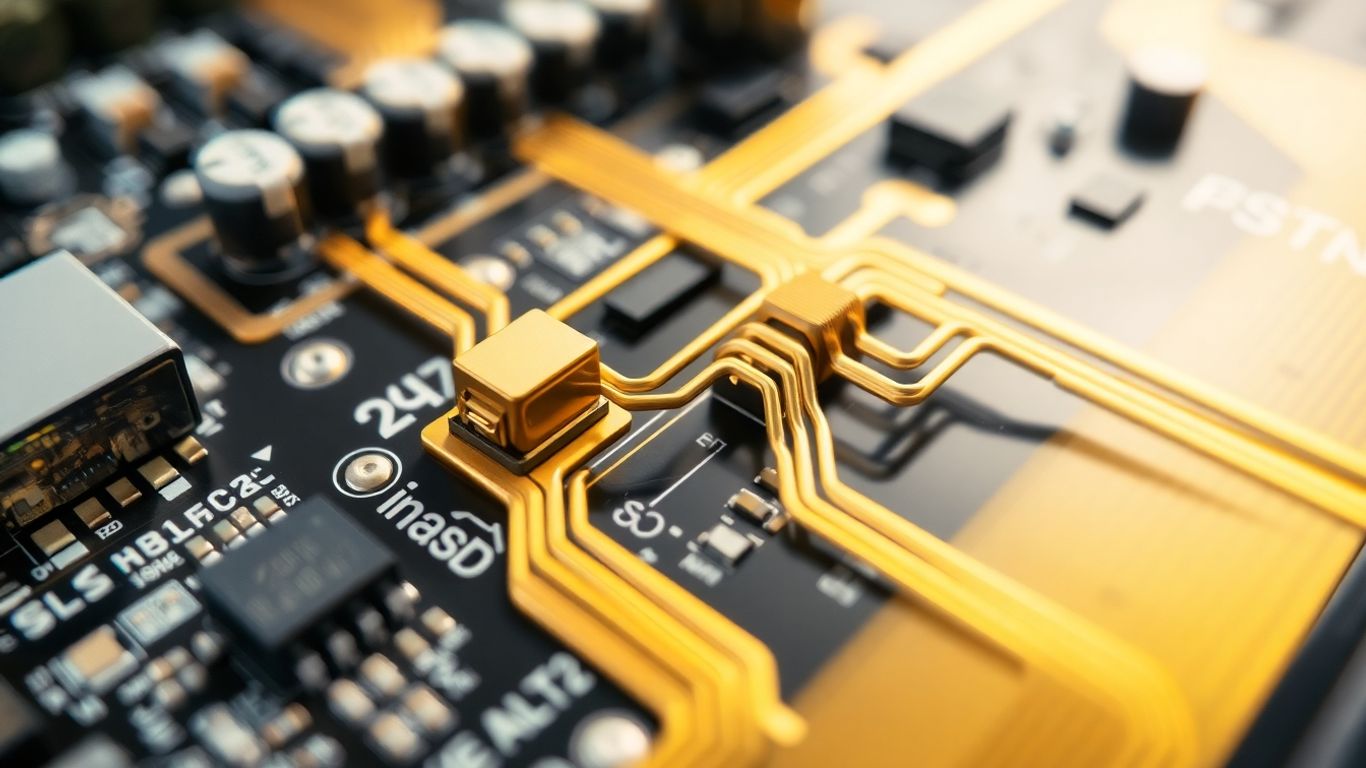
You know, gold isn't just for jewelry or shiny ingots. It plays a crucial role in fields where precision and reliability are absolutely paramount, like medicine and cutting-edge technology. It's quite fascinating to see how such an ancient metal can be at the heart of innovation today.
Use in medical and dental instruments
In the medical field, gold is highly valued for its ability to remain unaffected by the human body. It's a bit like a silent guest that does its job without causing any problems. It can be found in quite a few instruments:
- Scalpels and surgical instruments For clean and precise cuts, where every millimeter counts.
- Electrodes Used for diagnostics or stimulation, their stability is essential.
- Dental implants and crowns Its biocompatibility and durability make it a top choice for dental care.
- Life support devices In critical devices, its reliability is a guarantee.
It's true that its cost can sometimes deter its use, but the advantages it offers in terms of performance and safety are often hard to match with other materials. Healthcare professionals know this well.
Gold nanoparticles for imaging and diagnostics
Where it gets really interesting is with gold nanoparticles. Imagine gold particles so small they're invisible to the naked eye, but they open incredible doors in medicine. They're used for:
- Improving medical imaging They can help to better visualize tissues or tumors, making diagnoses clearer.
- Targeted treatments They can be used to transport drugs directly to diseased cells, such as cancer cells, thus limiting side effects on the rest of the body.
- Detecting diseases early They are used in rapid diagnostic tests, allowing diseases like HIV or even COVID-19 to be detected faster and with greater accuracy.
It's a bit like science fiction becoming reality, thanks to this precious metal.
Role in green energy and photovoltaic cells
And that's not all! Gold also plays a role in the energy transition. You might be wondering, "Gold and green energy, what's the connection?" Well, it's used in high-performance components:
- Photovoltaic cells : In some high-end solar panels, gold improves the conductivity and lifespan of the cells, making them more efficient.
- Fuel cells It can act as a catalyst in certain clean energy production technologies.
- Next-generation batteries It is found in certain components to optimize energy storage.
Gold, far from being a mere precious metal, is a discreet yet essential player in the development of technologies that shape our future, whether for healing, diagnosis, or cleaner energy production. Its unique combination of properties makes it irreplaceable in many cutting-edge applications.
It's truly impressive to see how versatile and indispensable this metal is in our modern world, far beyond what one might initially imagine.
Gold and the technologies of the future
So, we've seen how gold is already incredibly prevalent in our electronic lives and even in more specialized fields like medicine and aerospace. But what about tomorrow? Well, it turns out gold hasn't finished surprising us and will likely be at the heart of some technological revolutions we can barely imagine today.
Contribution to artificial intelligence and quantum processors
Are you familiar with artificial intelligence (AI) and quantum computing? These fields demand absolutely insane computing power. To run these machines of the future, you need ultra-high-performance components, and guess what? Gold plays a role. In quantum processors, for example, gold is used for its superconducting properties. It helps maintain the stability of 'qubits,' these incredibly fragile units of quantum information. Without gold, these ultra-sensitive quantum states would be too volatile to function correctly. It's as if gold creates a calm and stable environment so that quantum calculations can run smoothly.
Applications in nanotechnology and smart sensors
Have you ever heard of nanotechnology? It's the art of manipulating matter at the infinitesimally small scale. Gold, in the form of nanoparticles, is incredibly interesting for this. It's already used in medical research to target diseased cells, but it goes much further. Imagine ultra-miniature sensors capable of detecting incredibly subtle things in the environment or in our bodies. Gold, thanks to its reactive surface and its ability to interact with other molecules, is perfect for creating these smart sensors. They could help us monitor air quality, detect pollutants, or even track our health in real time, non-invasively.
Potential in blockchain and decentralized storage
Blockchain is the technology behind cryptocurrencies like Bitcoin. But blockchain can be used for many other things besides virtual currencies. Gold could very well play a role in its evolution. There's talk of gold 'tokenization,' which means creating digital versions of physical gold managed by the blockchain. This would make gold more accessible to investors and facilitate its exchange. Furthermore, the idea of decentralized storage, where physical gold serves as collateral for digital assets, is also being explored. This could offer a safer and more transparent alternative to current financial systems.
Gold, far from being a mere precious metal of the past, is positioning itself as a key material for tomorrow's technological innovations. Its conductivity, stability, and unique properties at the nanoscale are opening doors to advances we are only beginning to imagine.
Gold recycling in electronics
A more profitable source of gold than mining
You know, we tend to throw away our old electronic devices without giving it much thought. But imagine, these everyday objects, from smartphones to laptops, are full of precious metals, including gold. It's a bit like having a small gold mine right at your fingertips, but in our drawers! Did you know that a ton of circuit boards can contain up to 1 kg of gold? That's far more than we could hope to extract from a ton of ore. Mining, on the other hand, is becoming increasingly complicated and expensive, not to mention its disastrous environmental impact. Recycling, meanwhile, is becoming a necessity to meet global demand and preserve our resources.
The challenges and dangers of traditional extraction
So, how do you recover this gold? The traditional method, frankly, is no walk in the park. First, you have to identify and sort the components that contain it. Then, things get seriously complicated with the use of very aggressive chemicals, like aqua regia. It's a mixture of highly corrosive acids, capable of dissolving metals like gold or platinum. That's why it's really not recommended to try this at home. It's dangerous for your health and for the environment. It's best to leave it to the professionals who have the equipment and expertise to do it safely.
Innovations for cleaner recycling
Fortunately, things are changing. There's a growing search for more environmentally friendly ways to recycle these precious metals. Researchers are working on new techniques, for example, using materials like graphene. The idea is to be able to capture the gold present in solutions, even in very small quantities, using electrochemical processes. It sounds a bit like science fiction, but it could truly be a game-changer for recovering gold from our electronic waste without causing further pollution. This is a major challenge for the future, ensuring that our technologies don't come at too high a cost to the planet.
Recycling the gold contained in our electronic devices is not just a matter of economic profitability, it is also a concrete step to reduce the environmental impact of mining and preserve natural resources for future generations.
Did you know that the gold hidden in your old electronic devices can be recovered It's a smart way to give these precious materials a new life. Think of all the phones and computers we throw away! They contain small amounts of gold that, when combined, represent real value. It's a bit like a modern-day treasure hunt, but with benefits for the planet and your wallet. To learn more about how to turn your electronic waste into gold, visit our website today!
So what can we learn from this?
So, as you can see, gold isn't just for jewelry or for making safes shine. It's kind of like the Swiss Army knife of modern technology, you know? It's everywhere, from the smartphones in our pockets to the satellites that help us navigate. It's pretty amazing to think that such an ancient metal is still so essential today, isn't it? Its ability to conduct electricity so well without being damaged is a game-changer for so many components. So, the next time you use your phone or watch a program about space, think about it: there's probably a little gold in there, quietly doing its job. It's not just a precious metal; it's kind of the unsung hero of our high-tech world.
Frequently Asked Questions
Why is gold used in electronic devices?
Gold is an excellent conductor of electricity. It allows current to flow easily through your devices, like your phone or computer, without being damaged. Plus, it doesn't rust, which is great for ensuring your devices last a long time!
Is gold really that valuable to technology?
Yes, absolutely! Its excellent electrical conductivity and corrosion resistance make it an irreplaceable material for small electronic components. Without it, many of our gadgets wouldn't be as efficient.
How is gold used in connected devices?
In connected devices, which are often very small, gold is used for its thin conductive layers. It allows wireless signals to pass through and ensures that these small devices remain reliable, even when miniaturized.
Is gold used in airplanes or satellites?
Absolutely! In space or on airplanes, it's extremely hot, cold, and there's radiation. Gold protects electronic components from these extreme conditions. It also helps regulate the temperature of sensitive devices, which is vital for safety.
Is gold used in medical technologies?
Yes, gold is also used in medicine! It's found in some surgical instruments because of its reliability. Furthermore, tiny gold particles are being studied to improve vision within the body or to target specific diseases, thanks to its compatibility with our organism.
Can we find gold in our old electronic devices?
That's an excellent question! Yes, there is gold in your old phones, computers, and other devices. That's why recycling these items is important: this precious metal can be recovered, which is sometimes more profitable than extracting it from mines.