In the jewelry world, the hallmark is often considered a guarantee of authenticity and quality. But is it really necessary to pawn a piece of gold jewelry? This article explores the legal and practical implications of hallmarking gold jewelry and how it affects its value in the lending market.
Key points
- A hallmark is mandatory for gold jewelry weighing more than 3 grams in France.
- The hallmark guarantees the purity and authenticity of the jewel, which is crucial for pawning.
- The absence of a hallmark can reduce the resale value of a piece of jewelry and complicate transactions.
- There are different types of hallmarks, each with a specific function in certifying jewelry.
- When pawning jewelry, lenders often require seeing the hallmark to assess the item's value.
The hallmark: definition and importance
What is a punch?
A hallmark, in the field of jewelry and goldsmithing, is a bit like a piece of jewelry's identity card. It's a mark, often discreet, affixed to precious objects, generally made of gold, silver, or platinum. This mark serves to certify the precious metal content, basically, to guarantee that what you have is what you think you have. It's a bit like a seal of quality. We can say that the hallmark is a quality sealed.
Why is it important?
The hallmark's importance lies in several aspects. First, it guarantees the authenticity of the precious metal. Imagine buying a piece of gold jewelry only to discover later that it's actually gold-plated! The hallmark prevents this kind of disappointment. Second, it ensures a certain traceability. The hallmark can indicate who made the jewelry, where, and when. Finally, it facilitates transactions. Whether selling, buying, or pawning a piece of jewelry, the presence of a hallmark reassures and simplifies the process. It's a guarantee of trust, for both the seller and the buyer.
Types of punches
There are different types of hallmarks, each with a specific meaning. The main ones are:
- The master's mark: It identifies the maker of the jewelry. It's their signature, so to speak. It often takes the form of a diamond containing the maker's initials or a distinctive symbol.
- The guarantee hallmark: It certifies the title, that is to say the quantity of precious metal contained in the alloy. For example, for gold, it indicates the number of thousandths of pure gold (e.g.: 750 for 18 carat gold).
- The responsibility hallmark: It is affixed by the importer of the jewel, if it was manufactured abroad. It has an oval shape.
In France, legislation requires hallmarking for gold, silver, or platinum jewelry weighing more than 3 grams. This requirement aims to protect consumers and combat counterfeiting. The absence of a hallmark can lead to difficulties when selling or pawning the jewelry.
In short, the hallmark is an essential element in guaranteeing the authenticity and value of a precious metal jewelry piece. It is a reliable reference for professionals and individuals alike.
Legal obligations regarding the hallmark
Gold jewelry weighing more than 3 grams
In France, the law is clear: gold jewelry weighing more than 3 grams must bear a hallmarkIt is a legal requirement that aims to protect consumers and guarantee the authenticity of the precious metal. This hallmark serves as an identity card for the jewelry, indicating its composition and the identity of the manufacturer. It's a bit like the label on a garment, but for gold.
Exceptions to the rule
Of course, there are always exceptions. The law stipulates that gold jewelry weighing less than 3 grams is not required to be hallmarked. Why? Because affixing a hallmark to such a small area could damage the jewelry. However, even without a hallmark, these pieces are still subject to inspection by warranty services. It's a bit like saying, "No hallmark, but we'll keep an eye on it anyway!"
The consequences of the absence of a punch
The absence of a hallmark on a piece of jewelry that should have one can lead to several problems.
- Difficulty in proving the authenticity of the jewel.
- Devaluation of the value of the jewel.
- Suspicion of counterfeiting.
Imagine trying to sell a car without papers. It's pretty much the same thing. Without a hallmark, it's difficult to prove that your jewelry is indeed gold and has the advertised purity. This can make selling or transferring gold more complicated, and even lead to suspicions of selling counterfeit gold.
Basically, the hallmark is a bit like a birth certificate for your gold jewelry. Without it, things can get complicated.
The role of the punch in the pledge
How the hallmark affects the value
The hallmark plays a decisive role in the evaluation of a gold jewel when pawning. It attests to the purity and authenticity of the precious metal, which directly influences the amount the lender is willing to advance. A piece of jewelry with a clear and recognized hallmark will inspire more confidence and will therefore be valued at its fair value. The absence of a hallmark, or one that is difficult to identify, can lead to an undervaluation, because the lender will take into account the potential risk linked to uncertainty about the quality of the gold. Basically, it's like having a certificate of authenticity for a painting: it reassures and adds value.
Lenders' requirements
Pawnbrokers have specific requirements for the gold jewelry they accept. These requirements often relate to the presence and legibility of the hallmark. Typically, they will check:
- The presence of a master's mark, which identifies the manufacturer.
- The presence of a guarantee hallmark, which indicates the fineness of the gold (for example, 750 for 18-carat gold).
- The clarity and sharpness of the hallmarks, to avoid counterfeiting.
Lenders may reject a piece of jewelry if the hallmark is missing, illegible, or if it raises doubts about its authenticity. They may also require an additional appraisal to confirm the jewelry's value, which may result in additional fees for the borrower.
Risks associated with the absence of a punch
The absence of a hallmark on a gold jewel when pawning carries several risks:
- Undervaluation: Without a hallmark, the lender may estimate the value of the jewel downwards, as a precaution.
- Refusal of pledge: Some lenders categorically refuse unhallmarked jewelry.
- Suspicions of counterfeiting: The absence of a hallmark may lead to suspicion that the jewel is a counterfeit or that it does not contain the quantity of gold announced. It is possible to sell a gold crown without punch, but it will affect the price.
In short, the hallmark is an essential element in guaranteeing the value of a piece of gold jewelry when pawning. Its absence can lead to difficulties and financial loss for the borrower.
How to recognize a hallmark on a piece of jewelry
It's true that finding the hallmark on a piece of jewelry can sometimes be a bit like a treasure hunt! But once you know where to look and what you're looking for, it becomes much simpler. The hallmark is a bit like the jewelry's identity card; it tells us a lot about its composition and authenticity.
The different types of punches
There are a variety of hallmarks, each with a specific meaning. They can be classified into several main categories:
- Master's marks: They identify the maker of the jewelry. They often take the form of a diamond containing the goldsmith's initials. It's a bit like a signature.
- Warranty hallmarks: They indicate the precious metal content (gold, silver, platinum). These hallmarks are affixed by an official body and guarantee the quality of the metal. For example, for gold, you can find hallmarks indicating 750 (18 carats), 916 (22 carats) or 999 (24 carats).
- Responsibility hallmarks: They identify the importer of the jewelry, if it was made abroad. They have an oval shape.
It is important to note that the presence of these hallmarks, particularly the guarantee hallmark, is mandatory for gold jewelry weighing more than 3 grams sold in France. This is a protection for the consumer, who thus has the assurance of purchasing a piece of jewelry that conforms to what is advertised.
Where can I find the punch?
The location of the hallmark varies depending on the type of jewelry. Here are some guidelines:
- Rings: Usually inside the ring.
- Necklaces and bracelets: Near the clasp, on a jump ring.
- Earrings : On the hook or rod.
- Watches: Under the case.
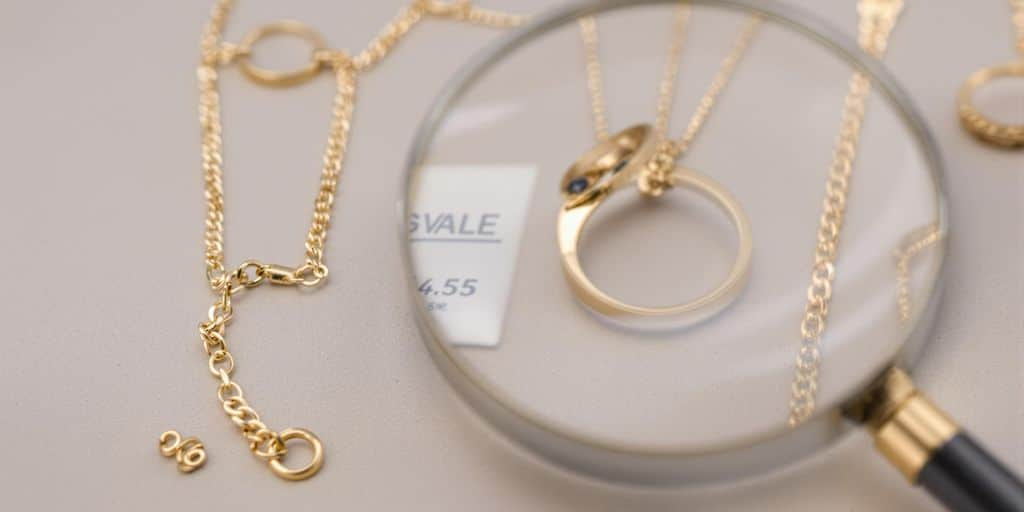
You may need a magnifying glass to clearly see the hallmark, as it is often very small. Don't hesitate to carefully inspect all parts of the jewelry, even the most discreet ones. If you have trouble finding it, ask a jeweler for advice. They can help you locate and identify the hallmark.
Interpreting the punches
Once you've found the hallmark, you need to know how to decipher it. Each hallmark has a specific shape and symbol that helps identify it. For example, the maker's mark is often a diamond with initials, while the hallmark for 18-carat gold is an eagle's head. For silver jewelry, you will often find a Minerva hallmark.
If you have any doubts about the meaning of a hallmark, you can consult reference tables available online or in specialist books. You can also seek the advice of a jewelry expert. They will be able to provide you with precise information on the origin and composition of your jewelry.
In summary, Recognizing a hallmark requires a little observation and knowledge, but it is a sure way to verify the authenticity and quality of a gold jewel.
The consequences of the absence of a punch
Impact on sales
The absence of a hallmark on a piece of gold jewelry can seriously complicate its sale. Potential buyers, whether individuals or professionals, are often reluctant to acquire an unhallmarked piece of jewelry. This is because the hallmark is a guarantee of the jewelry's quality and gold content. Without a hallmark, it's difficult to verify the authenticity of the metal, which can significantly devalue the jewelry or even make it impossible to sell. Imagine trying to sell a car without papers—it's a bit like that.
Difficulties when pledging
When it comes to pawning gold jewelry, the lack of a hallmark also poses a problem. Pawn shops, such as the Municipal Credit, generally require that jewelry be hallmarked to ensure its value. Without a hallmark, it is difficult to accurately assess the amount of gold in the jewelry, increasing the risk for the lender. Therefore, an unhallmarked piece of jewelry will either be rejected or appraised at a price much lower than its actual value.
Risks of counterfeiting
The absence of a hallmark significantly increases the risk of counterfeiting. Unhallmarked jewelry may actually be gold-plated, or contain a much lower proportion of gold than advertised. It is therefore essential to exercise caution when buying or selling unhallmarked jewelry.
The absence of a hallmark does not necessarily mean that the jewelry is a counterfeit, but it does make verifying its authenticity much more difficult. It is therefore recommended to have the jewelry appraised by a professional before any transaction.
The punching process
When and how is punching done?
Hallmarking is a bit like fingerprinting a piece of jewelry. It's generally done at two key moments: either during the jewelry's manufacture or when it enters French territory. Imagine a jeweler who has just finished a magnificent gold ring. Before it leaves his workshop, he will affix this famous hallmark. This is a crucial step in guaranteeing the authenticity of the precious metal. It's a bit like sell jewelry with an identity card.
The tools used
To make a hallmark, we use a tool called a punch (logical, right?!) and a small hammer. The punch is a sort of steel stamp engraved with the pattern or letters that will identify the jewel. The craftsman places the punch on the jewel, then strikes it with the hammer. The force of the strike must be just right: neither too weak, otherwise the punch will not be clean, nor too strong, so as not to damage the jewel. Sometimes it is even necessary to strike the same spot several times, orienting the punch differently each time, to be sure that the mark is clearly visible.
Quality standards
Hallmarking isn't done haphazardly. There are very strict quality standards to ensure that the hallmark is clear, legible, and durable. These standards concern both the quality of the hallmarks themselves (the precision of the engraving, the hardness of the steel) and the way they are applied. The idea is that the hallmark should withstand the wear and tear of time and remain identifiable even after several years. It's a bit like a quality sealed for your jewelry.
Hallmarking is much more than just a formality. It's a guarantee of quality and authenticity for the buyer, and a protection against counterfeiting. This is why it's so important to fully understand the process and the standards that govern it.
The different types of state hallmarks
Maker's mark
The master's mark is a bit like the jeweler's signature. It is diamond-shaped and contains the designer's initials. This hallmark certifies that the jeweler is responsible for the title (the quantity of precious metal) and the quality of the jewel. This is a guarantee for the buyer, as it means that the jewelry was made by an identified professional and meets certain standards.
Guarantee stamp
The guarantee hallmark is affixed by the customs service or an approved inspection body. It clearly indicates the fineness of the precious metal used, expressed in thousandths. For example, for gold, it must be at least 375 thousandths to be marketed. This hallmark guarantees purity of the metal used and its compliance with legal standards. For some professionals, such as Lepage, an approval agreement allows this hallmark to be affixed directly in the workshop, which demonstrates rigorous quality control.
Responsibility stamp
The responsibility hallmark is oval in shape and identifies the importer of the precious metal or object. If the jewelry was manufactured abroad, this hallmark indicates who is responsible for its conformity within France. This is important information for the traceability of the jewelry.
In France, precious objects made of gold, silver, and platinum weighing more than 3 grams must be marked with three hallmarks: the maker's mark, the responsibility mark, and the guarantee mark. It's the law!
Here are some examples of punches you might encounter:
- Eagle head: 750 thousandths (18 carat) gold jewelry
- Seahorse: Pure gold jewelry (24 carats)
- Head of Mercury or Amphora: Silver jewelry
- Shell: 585 thousandths gold jewelry (14 carats)
- Clover: 375 thousandths gold jewelry (9 carats)
The importance of traceability of gold jewelry
Guarantee authenticity
Gold jewelry traceability is extremely important to ensure you're buying what you think you're buying. Without a way to verify where the gold comes from and how it's been crafted, it's easy to get ripped off with counterfeits or inferior jewelry. A clear hallmark and complete documentation allow the history of the jewel to be traced, from the mine to the jewelry store. It's a bit like having a birth certificate for your jewelry, it's reassuring.
Ensure quality
Traceability not only serves to prove that it's gold, but also to guarantee its quality. A piece of jewelry with good traceability is more likely to be made with quality materials and according to strict standards. This means it will last longer and is less likely to break or be damaged easily. It's a long-term investment, in other words.
Facilitate resale
If you ever want to resell a piece of gold jewelry, traceability is a major asset. A piece of jewelry with proper paperwork and a clearly visible hallmark will be much easier to sell and will have more value than one whose origin is unknown. Buyers are more confident when they know what they're buying, and they're willing to pay more for it. Think about it, it's like bequeath gold : the clearer the better.
Traceability is a bit like having a GPS for your jewelry. It lets you know where it comes from, how it was made, and it makes it easier to resell. It's a sign of trust for the buyer and an advantage for the seller.
Here are some elements that contribute to good traceability:
- A clear and legible punch
- A detailed certificate of authenticity
- An invoice with all the important information
- A transparent manufacturing history
Gold jewelry traceability is essential to ensure its authenticity and provenance. This allows buyers to know where their jewelry comes from and ensures it was ethically made. By choosing traceable jewelry, you support responsible practices and protect your investment. To learn more about our gold jewelry and its traceability, visit our website!
Conclusion
In short, the hallmark on a piece of gold jewelry isn't just a matter of style; it's also a legal requirement in France for pieces weighing over 3 grams. This marking guarantees the quality and purity of the metal. If you're considering pawning a piece of jewelry, having a hallmark is often an asset, as it reassures lenders of the authenticity of your item. However, even without a hallmark, it's possible to pawn a piece of jewelry, but it can complicate things. Ultimately, it's always best to do your research and make sure your jewelry is properly identified to avoid any surprises.
Frequently Asked Questions
What is a hallmark on a piece of jewelry?
A hallmark is a small mark that proves that the jewelry is made of gold, silver, or platinum. It guarantees the quality and purity of the metal.
Do all gold jewelry need to be hallmarked?
In France, gold jewelry weighing more than 3 grams must have a hallmark. For those weighing less, this is not necessary.
Why is the hallmark important when pawning jewelry?
The hallmark proves that the jewelry is authentic and of good quality. This helps lenders assess its value.
How to find the hallmark on a piece of jewelry?
The hallmark can be located inside a ring, near the clasp of a necklace, or under a watch. You have to look carefully.
What happens if a piece of jewelry doesn't have a hallmark?
Jewelry without a hallmark may be more difficult to sell or pawn, as it raises doubts about its value and authenticity.
How is a piece of jewelry hallmarked?
Hallmarking is usually done at the time the jewelry is made. A craftsman uses a special tool to mark the jewelry.