Are you wondering if gold is really a good way to protect your money when prices rise? It's a question many people ask, especially with inflation taking hold. We often hear that gold is a safe haven, a kind of shield against the loss of purchasing power. So, is that true? Let's take a closer look together to see how this precious metal can play a role in your savings strategy.
Key Takeaways
- Gold is considered a safe haven asset because it tends to retain its value, or even appreciate, when inflation erodes the purchasing power of traditional currencies.
- Its intrinsic scarcity and universal demand, both industrially and as a store of value, support its stability in the face of economic fluctuations.
- Investing in gold, whether in physical form (ingots, coins) or via financial instruments, can be a strategy to diversify your assets and protect yourself against currency devaluation.
Gold, a safe haven in the face of economic crises
When times become uncertain, whether due to a financial crisis or runaway inflation, many wonder where to put their money to keep it safe. Gold has had a reputation for being a safe haven for millennia. Consider this: when stock markets crash, as we saw during the 2008 crisis, the gold price It often tends to rise. This is not a coincidence. It's because people seek to protect their capital when other investments become too risky.
Gold's stability in the face of inflation
Inflation is that little thing that gradually erodes your purchasing power. Your euros will be worth less tomorrow than they are today. Gold, on the other hand, behaves differently from traditional currencies. Its value doesn't simply vanish. In fact, when prices rise everywhere, the price of gold often tends to follow, or even exceed, inflation. Over the long term, we've seen the price of gold rise quite impressively, far outpacing inflation at certain times. That's why it's said to protect your savings.
- It retains its intrinsic value: Unlike currency, which can be printed at will, the amount of gold on Earth is limited. This gives it a natural solidity.
- It is less linked to the stock markets: When stocks and bonds go on roller coasters, gold often remains calmer, or even increases in value as people seek refuge in it.
- A constant demand: Whether for jewelry, industry, or as a reserve for central banks, gold is always in demand.
Gold has this unique ability to transcend eras and crises without losing its fundamental value. It's a bit like an anchor in an ocean of financial uncertainty.
Protection against currency devaluation
Currency devaluation occurs when the value of your currency falls relative to other currencies or goods. This often happens when a country has too much debt or prints too much money. Gold, however, is not the currency of any particular country. It is universal. Therefore, when a currency loses value, gold retains its international value. This is why central banks hold large quantities of it in their reserves. For you, as an individual, owning gold is a bit like having insurance against poor economic decisions made by your government or the upheavals of the global financial system. It's a way to protect a portion of your wealth from currency fluctuations.
The mechanisms that support the value of gold
So how is it that gold retains its value, especially when everything else seems to be collapsing? It's a question many people ask, and the answer lies in a few key points. It's not just a matter of fashion or belief; there are real reasons behind gold's enduring strength.
Limited supply and inherent scarcity
Imagine a treasure that you can't simply decide to create more of. That's kind of what gold is. You can't manufacture more of it on demand, unlike silver or other currencies. You have to mine it, and deposits are what they are: limited. This scarcity is the primary reason why gold has always been valuable. Even if new veins are discovered, extraction becomes increasingly complicated and expensive. It's a bit like a unique work of art; its value comes in part from the fact that there aren't tons of them lying around.
- Complex extraction: Finding and extracting gold requires considerable time, money, and effort.
- Depleted deposits: Gold reserves on Earth are not infinite, which limits the available supply.
- Production cost: The extraction and refining process has a cost, which influences the selling price.
The scarcity of gold is a bit like salt in a recipe: a small amount makes all the difference to the taste, and you can't put in as much as you want without it losing its value.
An industrial and universal demand
Gold isn't just for making jewelry or ingots. It also has very practical uses in industry. Think of electronics, for example. Gold is an excellent conductor; it doesn't rust, making it perfect for certain components. And then there's global demand. Some people buy gold to protect themselves against inflation, others for its beauty, and still others because it has been a safe haven for millennia. This consistent demand, coming from all over the world and for various reasons, helps maintain its price, even when financial markets are volatile.
- Electronics: Gold is used in connectors, printed circuit boards, and other components for its conductivity and corrosion resistance.
- Medicine : It has applications in certain dental or medical treatments.
- Jewelry: Demand for gold jewelry remains strong in many cultures.
- Investment: As we see in this article, gold is a preferred investment for securing one's assets.
Investing in gold to secure your assets
In the face of economic turmoil, gold stands out as a wise choice for protecting your assets. This precious metal, recognized worldwide, offers a stability that other assets may lack. By incorporating it into your strategy, you add a layer of security to your wealth, much like building a solid wall around your savings.
The different forms of investment in gold
When it comes to investing in gold, there are several possible paths. It's not just one option, but rather a range of choices available to you, each with its own characteristics. Think of it like choosing between different doors to enter a house.
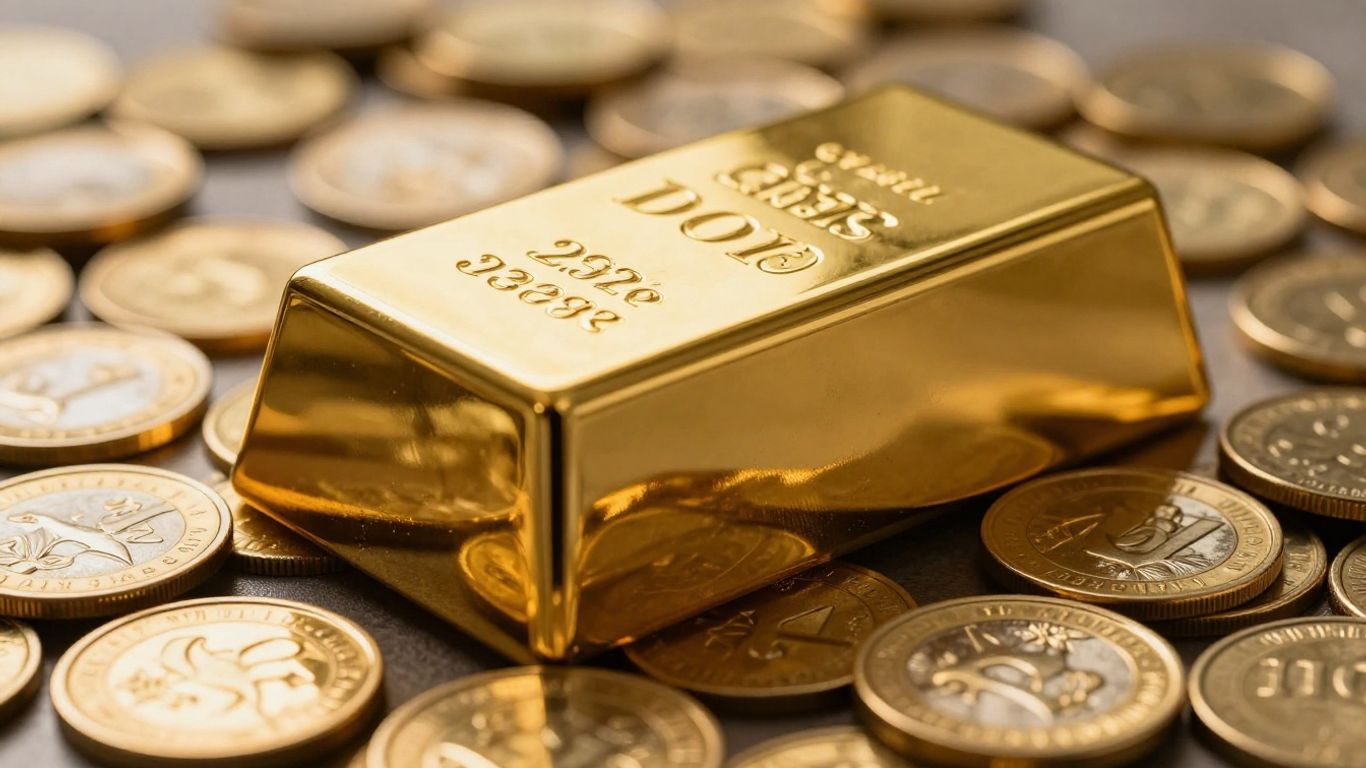
- Physical gold: This is the most direct option. You buy gold bars or coins. You literally hold them in your hands. They're tangible, you can touch them, you can see them. It's a bit like owning a work of art, but with an intrinsic value recognized everywhere.
- Gold-backed ETFs: Here, we are talking about exchange-traded funds that track the Gold pricesIt's more liquid, easier to buy and sell through your securities account. But be aware, you don't physically own the gold; it's a representation.
- Gold mining company stocks: This is another way to invest in gold, but indirectly. You buy shares in companies that mine gold. The price of these shares can rise if gold increases in value, but there are also risks specific to each company (management, production, etc.).
Each method has its advantages and disadvantages. The choice will depend on your risk tolerance, your objectives, and how you prefer to manage your money.
Physical gold: a tangible and transferable asset
Owning physical gold means possessing something tangible. Imagine a beautiful, heavy ingot, or an antique gold coin. It's a bit like having a personal treasure. What's interesting is that its value doesn't depend on a company or a government that could go bankrupt. Gold has intrinsic value, recognized for millennia.
Physical gold offers a security that goes beyond mere numbers on a screen. It is an asset that has survived through the ages and crises, retaining its purchasing power.
When you buy physical gold, such as bars or investment coins, you have several options. For example, coins like the Napoleon 20-franc coins or the Sovereign are very popular. They are easy to resell because many people know them and want them. Gold bars, on the other hand, are often preferred for larger sums. They come in various sizes, from small 50-gram bars to one-kilo bars. The choice of size will depend on your budget and how you plan to manage your investment. And then there is another significant advantage: physical gold can be passed down. It is an asset you can bequeath to your children or grandchildren, a kind of tangible inheritance that retains its value.
Invest in goldIt's a smart way to protect your money. Gold is like a natural safe that retains its value even when things go wrong elsewhere. It's a bit like having insurance for your savings. Want to learn more about how gold can help keep your money safe?
Come and discover all our tips on our website!
So, is gold your best ally against inflation?
Ultimately, it's clear that gold has a formidable reputation when it comes to protecting against rising prices. It has stood the test of time as a safe haven, and for good reason. When silver loses value, the precious metal often tends to hold its own, or even appreciate. It's a kind of safety net for your money. But be careful, it's not a magic wand either. Its price can fluctuate, and there are fees to consider. So, if you're thinking of investing in gold to protect yourself against inflation, do your research, see what suits you best, and don't hesitate to seek advice. It's a bit like choosing the right piece for a puzzle: it has to fit well with the rest of your financial strategy.
Frequently Asked Questions
Why is gold said to be a safe haven?
Gold is considered a safe haven asset because it retains its value even when the economy is struggling. Unlike banknotes, which can lose value, gold has always been precious. When there are crises or when prices rise sharply (inflation), people buy gold to ensure their money doesn't disappear. It's like a safe for your money.
How does gold help protect against inflation?
When there's inflation, prices for everything rise, and your money can buy less. Gold, however, tends to appreciate when prices go up. This is because it can't be created more easily like money. Its limited supply keeps it valuable, thus protecting your purchasing power.
Is gold the only way to protect oneself against inflation?
No, gold isn't the only way, but it's one of the best-known and oldest. Other things like real estate or certain company stocks can also help. However, gold has the advantage of remaining stable and being less affected by problems in banks or governments, making it a solid choice for many.