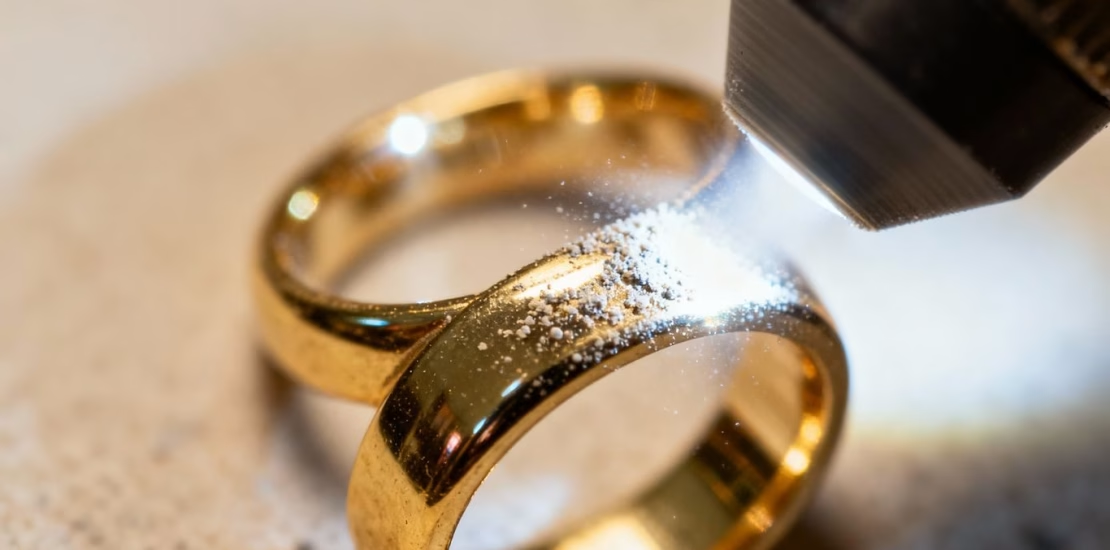
Do you have a gold piece of jewelry that has lost its shine? Don't panic, it's entirely possible to restore its former luster. Whether you prefer DIY solutions or the help of a professional, this article will guide you. We'll see together how to polish and finish a gold piece of jewelry to achieve a perfect shine, without damaging your precious treasure.
Key Takeaways
- Before you begin, identify the type of gold in your jewelry and assess its condition. Also, gather all the necessary materials so you're not caught off guard.
- For traditional polishing, you can use a rotary wheel, adjusting the abrasive force. Polishing can be done dry or with a little water.
- Simple methods exist at home: soap and water, baking soda, toothpaste or even white vinegar can help revive the shine of your gold.
- Certain finishing issues or white gold jewelry may require professional intervention to avoid damage.
- To keep your jewelry looking its best, adopt simple daily habits, clean it regularly and store it away from moisture and shocks.
Prepare your gold jewelry for polishing
Before you begin polishing your gold jewelry, a little preparation is necessary. It's a bit like painting a picture: the canvas needs to be clean and ready. Skipping this step risks doing more harm than good to your precious piece.
Identify the type of gold in your jewelry
The first step is to determine whether you're dealing with yellow, white, or rose gold. Each type of gold has its own characteristics, which can influence the polishing method used. Pure gold (24 karats) is very soft and scratches easily, which is why it's rarely found in its pure form in jewelry stores. Most jewelry is made of alloys, such as 18-karat gold (75% pure gold) or 14-karat gold (58,5% pure gold). White gold, for example, is often rhodium-plated, a thin layer that gives it its shine but can wear off over time.
Assess the current condition of your jewelry
Take a close look at your jewelry. Is it just a little dull, or does it have deep scratches, dents, or even bent parts? For a simple lack of shine, gentle cleaning and polishing will suffice. But if the flaws are more significant, you may need to consider more advanced techniques or even consult a professional. It is important not to underestimate the condition of your jewelry before you begin.
Gather the necessary materials for polishing
To properly prepare your jewelry, here's what you might need:
- Soft cloths: several, preferably microfiber, to clean and polish without scratching.
- Mild soap or dishwashing liquid: for initial cleaning.
- Lukewarm water : for rinsing.
- Soft toothbrush: to reach the nooks and crannies without damaging the metal.
- Baking soda or non-abrasive toothpaste: for light polishing (use with caution).
- Rubber gloves: to protect your hands and avoid leaving fingerprints.
Remember that gold, even when alloyed, remains a relatively soft metal. Patience and a gentle touch are your best assets for restoring the shine to your jewelry without damaging it.
Traditional polishing techniques for gold
To restore your gold jewelry to its original shine, traditional methods often require specific tools. While effective, these techniques demand a certain level of expertise and the right equipment. If you'd like to try it yourself, here's what you need to know.
Use a rotating polishing wheel
Traditional polishing relies heavily on the use of a polishing machine, often called a 'polishing wheel'. This machine spins a wheel at high speed. You then hold the piece of jewelry against this wheel to polish it. There are several types of wheels, each with a specific function. You generally start with harder, abrasive wheels to remove deeper scratches, then move on to softer wheels with increasingly finer polishing compounds to achieve a high shine. It's a bit like sanding and buffing, but with much more precise tools.
Adjust the abrasive force of the wheels
The secret to a good polish lies in choosing the right wheel and polishing compound. Wheels are made of various materials, such as felt, cotton, or leather, and their density varies. Polishing compounds contain abrasives whose particle size decreases with each stage of the polishing process. Pastes like tripoli paste are often used for the initial roughing, followed by rouge or zamponi paste for the final mirror finish. It is crucial never to switch from a coarse paste to a finer paste without thoroughly cleaning the jewelry and the wheel.Otherwise, you risk transferring abrasive particles and creating new scratches.
Here is a brief overview of the typical steps:
- Roughing out: Using a hard wheel (e.g., compressed cotton) with an abrasive paste such as tripoli paste to remove major defects and deep scratches.
- Polishing: Switching to a softer wheel (made of soft cotton or felt) with a less aggressive paste, such as zirconium paste or chrome paste, to refine the surface.
- Mirror: Finishing with a very soft wheel (in flannel or buffalo hide) and a very fine finishing paste (red paste) to obtain a brilliant shine.
Mastering wet and dry polishing
Polishing can be done 'dry' or 'wet'. Dry polishing simply involves applying the polishing compound to the wheel and buffing the piece of jewelry. Wet polishing, on the other hand, uses a lubricant, often water or a specific product, which is applied to the wheel or directly to the jewelry. This lubricant helps reduce friction, dissipate heat, and distribute the polishing compound more evenly. It also helps limit gold dust, which can be harmful if inhaled. Most professionals prefer wet polishing for better control and a finer finish.
It's important to know that these techniques require practice. The first attempts may be frustrating, but with patience, you'll master these techniques and restore the shine your jewelry deserves.
Home polishing methods for a perfect shine
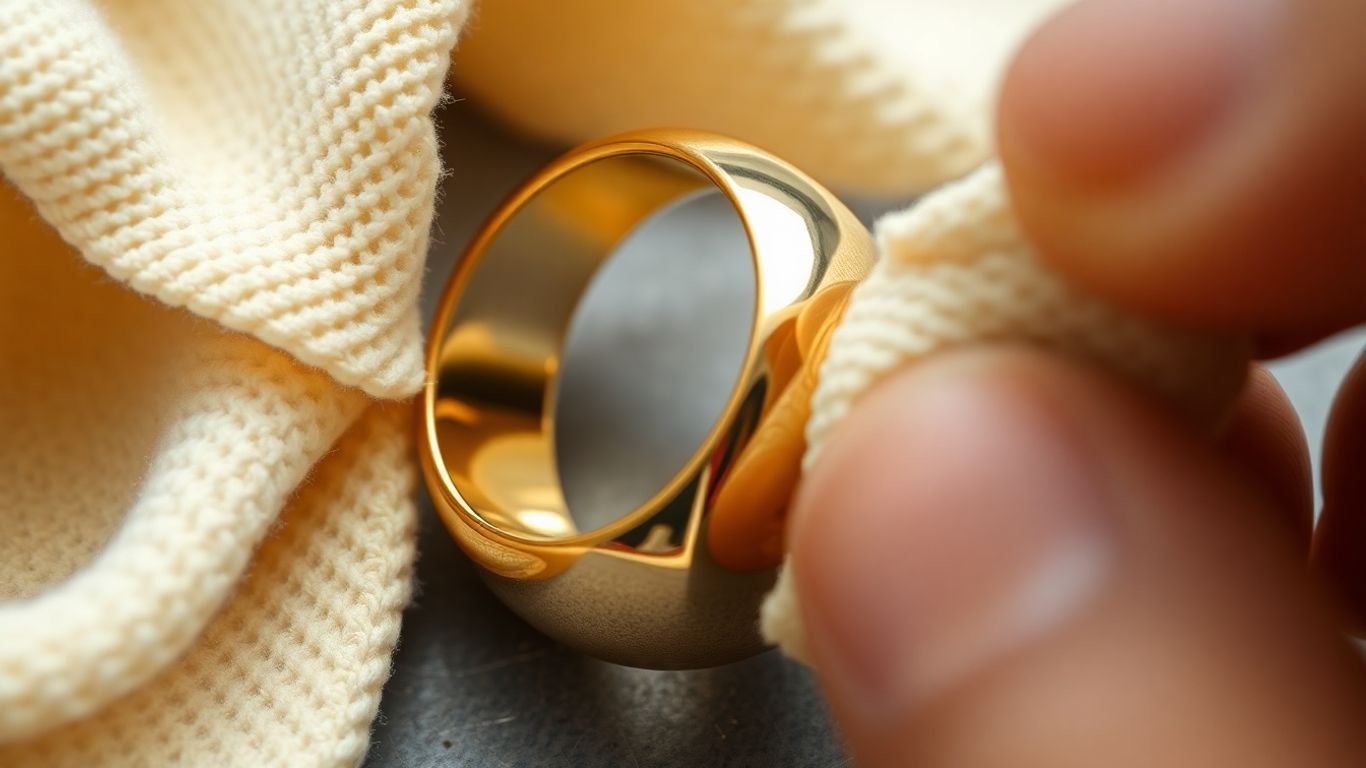
Sometimes, you don't need to be an expert to revive your gold jewelry. There are simple tricks you can do at home to restore that shine you love. It's a great way to care for your treasures without spending a fortune.
Clean the gold with soap and water
This is the foundation, the first step before anything else. Take a little mild soap, like dish soap, and mix it with warm water. Soak your jewelry in it for a few minutes. Then, use a soft toothbrush—really very soft—to gently scrub the nooks and crannies. Rinse with clean water and dry with a soft cloth. This very simple method eliminates accumulated dust and grease. It's perfect for regular maintenance.
Use baking soda to revive the shine
Baking soda is a bit like the Swiss Army knife of cleaning. For your gold, make a paste with baking soda and a little water. Apply this paste to the jewelry with your fingers or a soft cloth. Rub gently, without rubbing too hard. Rinse well and dry. This helps remove minor marks and restore your jewelry's shine.
Toothpaste, an unexpected ally for smooth gold
Yes, toothpaste! But be careful, you must choose a white, grain-free, and non-abrasive toothpaste. Put a small amount on a soft cloth and rub your jewelry in a circular motion. Toothpaste contains agents that can lightly polish the metal. Rinse thoroughly and dry. This technique works well on flat, smooth surfaces.
White vinegar for deep cleaning
For a more thorough cleaning, white vinegar can be helpful. Mix one part white vinegar with two parts water. Let your jewelry soak for about ten minutes. Then, gently brush with a soft toothbrush, rinse with clean water, and dry thoroughly. Caution: this method should be used sparingly.Because vinegar is acidic and could, over time, damage certain gold alloys, especially if they are old or fragile. It's always a good idea to check its compatibility with your type of gold, especially if you have fine gold, which is very malleable.
It's important to remember that these home remedies are designed for minor repairs. If your jewelry has deep scratches or significant damage, these tips won't be enough and could even worsen the situation. In those cases, it's best to refrain from attempting them and consider a more professional solution.
Here is a quick summary of the products you should have on hand:
- Mild soap
- Baking soda
- Non-abrasive white toothpaste
- White vinegar (use with caution)
- Soft cloths (ideally microfiber)
- Soft toothbrush
These simple tips will help you keep your gold jewelry sparkling every day, without having to rush to the jeweler for every little tarnish. It's a lovely way to care for your favorite pieces.
When to call in a professional to polish your jewelry
Home remedies can certainly give your jewelry a new lease on life. But let's be honest, there are limits. If your piece has deep scratches, damaged enamel, or is antique and fragile, it's best to leave it to the experts.
Identify the limitations of home methods
Grandma's remedies, like toothpaste or baking soda, are perfect for surface cleaning and a quick shine. They can revive the luster on gold that has simply lost its luster over time. However, they can't repair more serious damage. Think about it: rubbing a deep scratch with toothpaste won't make it disappear; on the contrary, it might even stretch it a little and make it more noticeable. Similarly, for jewelry that's heavily tarnished in hard-to-reach places, gentle methods may not be enough.
The advantages of polishing by a jeweler
A jeweler, on the other hand, has the equipment and expertise to go further. They use specialized tools, such as polishing lathes with discs of varying abrasiveness, and polishing compounds tailored to each metal. They can not only restore your jewelry's incredible shine but also repair minor imperfections. It's a bit like going to the hairdresser for a cut and treatment: you leave with a professional result you couldn't have achieved on your own.
- Professional tools: Use of lathes, various polishing discs, and polishers.
- Suitable products: Specific polishing pastes for gold, silver, platinum, etc.
- Know how : Mastery of techniques to avoid damaging even the most fragile metal.
- Repair : It is possible to correct scratches and minor defects.
Rhodium plating for white gold
White gold is somewhat of a special case. Its brilliant white color comes from a process called rhodium plating, which involves coating the jewelry with a thin layer of rhodium. Over time and with wear, this layer wears away, and the piece can take on a slightly yellowish tint. Only a professional can reapply this treatment. They will first polish the piece to remove the old rhodium layer, then apply a new layer to restore its original shine. This is an essential step to keep your white gold jewelry looking its best.
If your white gold jewelry has lost its shine, it probably needs to be rhodium-plated again. This is a process that only jewelers can perform.
Maintaining the polished finish of your gold jewelry
Once you've managed to restore your gold jewelry to that shine worthy of the finest display cases, you'll naturally want to keep it that way for as long as possible. That's perfectly understandable! But let's be honest, gold, precious as it is, isn't indestructible. It's exposed to the wear and tear of daily life, to the little things that can gradually dull its brilliance. So, how can you ensure that all that polishing work isn't in vain? It's all about adopting a few good habits—simple yet effective.
Daily steps to preserve the radiance
To keep your jewelry looking beautiful day after day, the best thing to do is prevent it from getting too dirty or scratched. It seems obvious, but we don't always think about it. For example, when you're washing dishes or cleaning, remove your rings and bracelets. Household cleaning products, even mild ones, can damage the metal over time. Similarly, if you're playing sports or going to the pool, it's best to leave your jewelry at home. Perspiration can dull the finish, and the chlorine in swimming pools is a sworn enemy of gold.
- Remove your jewelry before housework or gardening.
- Avoid contact with cosmetic products (perfumes, hairsprays, creams) which can leave residues.
- Take off your jewelry before sleeping to avoid friction and twisting during the night.
Ideal frequency for cleaning and polishing
Regular cleaning is key. No need to bring out the big guns every day, far from it! A quick wash with warm soapy water and a mild soap (like Marseille soap or dish soap) using a very soft toothbrush, followed by rinsing with clean water and drying with a soft cloth, is all you need for routine maintenance. Do this once a month, for example. For a more thorough polish that truly restores your jewelry's shine, it depends on how often you wear it and how much it's exposed to wear. If you wear it every day, a quick wipe with a soft cloth after each use is already a good start. A deeper polish, like the kind you might have done with a soft paste or a specific product, may be necessary every six months to a year, or even less frequently if the piece is worn a lot.
Beware of misconceptions: some home remedies, like using toothpaste or baking soda and rubbing vigorously, may seem effective at first, but they are actually slightly abrasive. Use them with extreme caution, and only if you know what you're doing, to avoid scratching the surface of your jewelry.
Store your gold jewelry properly
The way you store your jewelry is also important. Ideally, store pieces separately to prevent them from bumping against each other and scratching one another. Use soft fabric pouches, compartments in a jewelry box, or even small individual bags. If you have pieces with stones, make sure they aren't in direct contact with other jewelry that could scratch or damage them. A well-designed case protects not only from dust but also from bumps and scratches. Keep this in mind; it's a small step that makes a big difference to the longevity of their shine.
To keep your gold jewelry looking brilliant, a easy maintenance That's all. A little regular cleaning with a soft cloth will help them stay looking like new. Remember to store them separately to avoid scratches. To learn more about how to care for your gold treasures, visit our website!
To finish in style
There you have it, you now have all the tools you need to restore your gold jewelry to its former glory. Whether you've opted for gentle methods at home or prefer to entrust your most precious pieces to a professional, the important thing is not to neglect this little boost. A well-maintained piece of jewelry retains its beauty and value over time. So, don't hesitate any longer, bring out your treasures and make them shine!
Frequently Asked Questions
How can I tell if my jewelry is pure gold or an alloy?
To determine if your jewelry is pure gold, look for a small hallmark. This hallmark, often shaped like a seahorse for 18-karat gold or an eagle's head for 24-karat gold, indicates its purity. If you don't see anything, it's possible it's an alloy, meaning gold mixed with other metals to make it more durable or change its color.
Can I use any product to clean my gold jewelry?
No, you have to be careful! Harsh products like bleach or metal cleaners can damage your jewelry. For gentle cleaning, use lukewarm water with a little mild soap or dishwashing liquid. You can also try baking soda diluted in water; it's a good way to restore its shine safely.
My white gold jewelry has lost its shine, what should I do?
White gold often has a thin layer of rhodium to make it whiter and shinier. Over time, this layer can wear away. To restore its shine, the best solution is to take it to a jeweler. They can clean it thoroughly and reapply the rhodium layer so it shines like new.
Does toothpaste damage gold?
Toothpaste can be used with caution on gold, especially on smooth jewelry. It acts as a very mild abrasive. Use just a small amount on a soft toothbrush and brush gently. Rinse thoroughly afterward. However, be careful; it's best to avoid using toothpaste on jewelry with stones or very fragile pieces.
How often should I clean and polish my gold jewelry?
To keep your gold jewelry looking beautiful and shiny, a gentle cleaning once a month is often enough. If you wear it every day, you can do it a little more often. Polishing is different. You shouldn't do it too often, as this wears down the metal. Once a year, or when you see that it has really lost its shine, is generally sufficient.
How can I prevent my gold jewelry from getting scratched?
To avoid scratches, the easiest way is to store them separately in small fabric pouches or in a jewelry box with compartments. Avoid wearing them when you're playing sports or doing housework that could damage them. And if they do get scratched, a jeweler can often fix it with polishing.