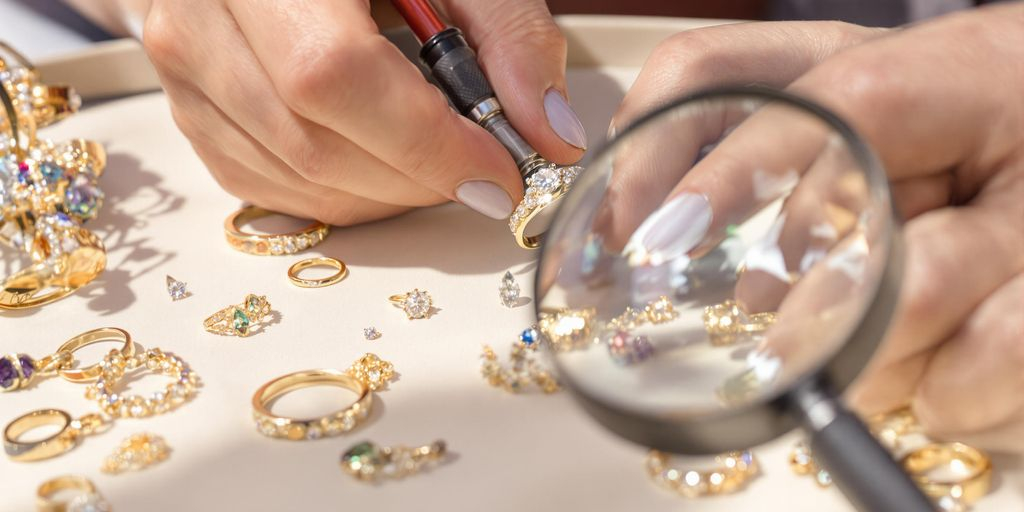
Evaluating a piece of jewelry may seem complicated, but there are actually several simple criteria to consider. Whether you're selling a family heirloom or simply want to know the value of your accessories, this article will guide you through the essential elements to consider for an accurate appraisal. Here's how to determine the value of your jewelry.
Key points
- The materials used are fundamental to the evaluation.
- The rarity and originality of a piece of jewelry strongly influence its price.
- The general condition of the jewelry must be taken into account in the estimate.
- Gemstones add significant value, depending on their quality and size.
- Hallmarks can provide valuable information about the composition and authenticity of the jewelry.
The basic criteria for evaluating a piece of jewelry
Okay, so you want to know how much that old piece of jewelry you've been sitting in your drawer is worth? It's not always easy, but there are a few basic things to consider before you panic and run to an expert. We're going to break it down together, we promise, it's less complicated than it seems. We'll talk about materials, rarity, and overall condition. Hold on tight, here we go!
The importance of materials
The first thing to do is identify what the jewelry is made of. Is it gold? Silver? Platinum? It changes everything! An 18-karat gold jewel will have a value Much higher than something gold-plated, that's logical. And then, you have to see if there are stones. Diamonds, rubies, emeralds... each stone has its own value, which depends on its size, its purity, and its color.
- Gold (different carats)
- Silver (925, etc.)
- Base Plate
- Precious stones (diamonds, emeralds, rubies, sapphires)
- Semi-precious stones (amethyst, topaz, etc.)
Rarity and originality
Next, you need to consider whether the piece of jewelry is rare or not. Is it a unique piece made by a well-known designer? Or is it something mass-produced and found in every jewelry store? Scarcity drives up prices. Antique jewelry, especially if it's in good condition and has an interesting history, can be worth a small fortune. Originality is the same. If the design is unique and out of the ordinary, it can attract collectors.
Imagine you inherited a brooch that belonged to your great-grandmother. If this brooch was made by a famous jeweler or has a unique design, it could be worth much more than just the price of the materials. That's the magic of rarity and originality!
The general condition of the jewel
Finally, you need to look at the condition of the jewelry. Is it in good condition? Are there any scratches, dents, or missing stones? A damaged piece of jewelry will be worth less than one in perfect condition. You should also check whether the clasp works properly, whether the stones are properly set, and whether there are any signs of repair. A quick cleaning can help, but be careful not to use harsh products that could damage the jewelry. If in doubt, it's best to seek professional advice. A piece of jewelry in perfect condition is a piece of jewelry that has more value.
| Jewelry Condition | Impact on value and so on. The list is endless. But the main thing is to know what you are doing. And if you don't, ask for help. There are plenty of people who are willing to help you. You just have to ask.
Understanding Carat and Its Meaning
Karat is a bit like the secret code of gold. We often talk about it, but what does it mean exactly? That's what we're going to unpack here. We'll see how karat influences the value of your jewelry, and how to identify it.
Definition of carat
The karat is the unit of measurement that indicates the purity of gold. Imagine a cake cut into 24 slices. If your jewelry is made of 24-karat gold, that means it is composed of 24 parts pure gold out of 24. In other words, it is 99,9% pure gold! The lower the karat number, the more other metals are mixed with the gold. This is important to understand, because it directly affects the price and quality of the jewelry. 24-carat gold will be more expensive than 18-carat gold because it contains more pure gold.
How to identify the carat of a jewel
There are several ways to determine the number of carats in your jewelry. The easiest way is to look for the hallmark. A hallmark is a small mark engraved on the jewelry that indicates its gold content. For example, a three-leaf clover or the number 375 indicates 9-carat gold. An eagle's head is 18-carat gold (750). A seahorse is 24-carat gold (999). If you can't find a hallmark, or if you're unsure, it's best to have your jewelry appraised by a professional. They can accurately determine the number of carats and give you a reliable estimate.
Differences between carats
The main difference between karats is the amount of pure gold they contain. But it doesn't stop there. The higher the karat, the softer and more malleable it is. This is why 24-karat gold is rarely used for jewelry that will be worn every day. It would be too fragile and scratch easily. 18-karat gold, on the other hand, is a good compromise between purity and strength. It is pure enough to be precious, but strong enough to be worn without risk. 9-karat gold is the least expensive because it contains the least amount of pure gold, but it is also the most durable.
It's important to note that the color of gold can vary depending on the number of karats and the metals mixed into it. For example, rose gold is made by adding copper to pure gold. White gold is made by adding palladium or nickel.
Here is a summary table of the different carats and their composition:
| Carat | Percentage of pure gold | Indicative hallmark | Common use |
|---|---|---|---|
| 24 carats | 99,9% | Seahorse (999) | Bullion bars, investment coins |
| 22 carats | 91,6% | Eagle head surrounded, 916 or 22K | Indian jewelry, gold coins |
| 18 carats | 75% | Eagle head (750) | Traditional jewelry |
| 14 carats | 58,5% | Scallop (585) | Jewelry, watches |
| 9 carats | 37,5% | 3-leaf clover (375) | Costume jewelry, entry-level jewelry |
In short, understanding carat is essential for properly assessing the value of a piece of jewelry. It allows you to make informed choices and avoid unpleasant surprises.
The Impact of Gemstones on Value
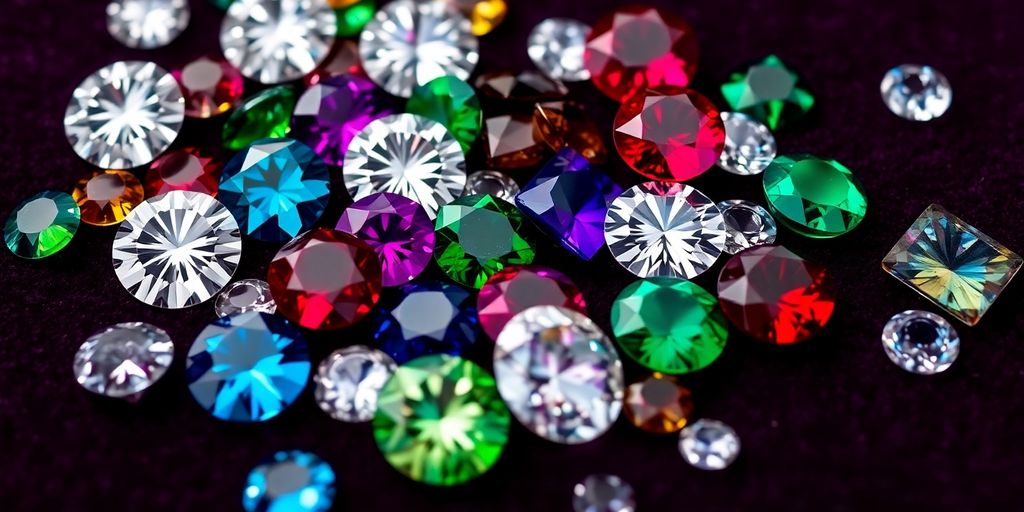
Gemstones can transform a simple piece of jewelry into a coveted work of art. But how do you properly assess their impact on the final price? It's a complex question that deserves careful consideration.
Evaluate the quality of stones
The quality of a gemstone is determined by several factors, often grouped under the acronym “the 4 Cs”: Carat (weight), Clarity, Color, and Cut. A one-carat diamond will not have the same value as another if its clarity is lower or its color tends toward yellow. It's a bit like comparing two cars: the same model, but one has all the options, and the other is the base model.
- Carats: The bigger the stone, the rarer it is, and therefore the more expensive it is (in general).
- Clarity: The fewer inclusions (internal defects) there are in the stone, the purer it is and the more it is worth.
- Color: For diamonds, for example, the more colorless the stone, the more highly valued it is. For other stones, such as sapphires, some colors are more sought-after than others.
- Chopped off: The way the stone is cut influences its brilliance and sparkle. A good cut maximizes the light that reflects through the stone.
Types of stones and their value
There are a multitude of precious and semi-precious stones, each with its own market value. Diamonds, rubies, sapphires, and emeralds are generally considered the most valuable, but other stones such as opals, tourmalines, and genuine gemstones can also fetch high prices, especially if they are rare or of exceptional quality. The value of a piece of jewelry can increase depending on the gems that set it.
The Importance of Size and Fit
The size and cut of a gemstone are crucial to maximizing its beauty and value. A poorly cut stone can appear dull and lackluster, even if it is otherwise of good quality. The cut must be appropriate for the type of stone and its optical properties. A good cut allows light to optimally reflect within the stone, creating maximum brilliance.
It's important to note that the value of a gemstone is subjective and can fluctuate based on market trends, demand, and supply. Additionally, the stone's origin can also influence its price. For example, a Kashmir sapphire will generally be more expensive than one from another source, even if the two stones have similar qualities. Therefore, it's important to do your research before buying or selling any gemstone jewelry.
Here is a simplified comparison chart of the relative value of some common gemstones:
| Precious Stone | Relative Value (out of 10) | Influential Factors the 18-carat gold jewelry is highly dependent on the stones that set it. The operation is difficult, even if there are some tips to identify a real diamond or recognize a natural pearl. To know if your gold ring is set with a real diamond, you can in particular be attentive: • To its hardness • To its light reflection capacity (100%) • To its coldness • To the immediate evaporation of the mist on its surface If you think you recognize a real gemstone, only the expertise of gemologists will however make it possible to estimate its value, and therefore that of the 18-carat gold jewelry that adorns it.
Professional appraisal methods
When you get to the point where you really want to know how much a piece of jewelry is worth, it's time to call in the pros. We're not talking about looking at prices online or guessing anymore. We're talking about a proper appraisal, done by people who know their stuff inside and out. It's a bit like going to the doctor instead of looking up symptoms on the internet: it's more reliable, and it prevents unnecessary panic.
Jewelry expertise
Jewelry expertise is more than just a passing glance. It's a skill built over years of experience and a deep understanding of materials, styles, and eras. An expert will be able to identify the authenticity of a piece of jewelry, identify the details that make it valuable, and give you an accurate estimate. It's a bit like a detective investigating a valuable item. They can also help you understand the value of your pre-owned jewelry.
The tools used for the evaluation
Experts don't just rely on their experience. They also use specific tools to accurately assess jewelry. These include binocular loupes for examining stones, precision scales for weighing precious metals, and spectrometers for analyzing the composition of alloys. It's a bit like an analysis laboratory, but for jewelry. These tools provide objective and reliable data, which serves as the basis for the appraisal. For example, to determine the carat count of my gold, they use specific techniques.
The stages of estimation
A professional jewelry appraisal takes place in several steps. First, the expert examines the jewelry in detail, noting its characteristics, condition, and particularities. Next, they use their tools to measure and analyze the materials. They then compare the jewelry with similar pieces on the market, taking into account trends and demand. Finally, they establish an estimate of its value, clearly explaining the reasons behind it. It's a rigorous and transparent process that allows you to understand how the price is determined. It's important to note that the appraisal is often free and without obligation. If you're looking to sell jewelry, the appraiser will make you an offer based on their estimate.
Having your jewelry appraised by a professional ensures you receive a fair and accurate assessment based on objective criteria and in-depth knowledge of the market. It's an investment that can help you avoid unpleasant surprises and allow you to sell or insure your jewelry with complete confidence.
Compare with the current market
Analyze similar selling prices
When trying to determine the price of a piece of jewelry, it's super important to look at what's already selling on the market. Not just to get a general idea, but to really understand where your piece stands in relation to others. Look at the prices of similar pieces in terms of materials, design, and age. This will give you a solid foundation to start from.
- Check out online jewelry stores.
- Visit local jewelry stores and check their prices.
- Explore auctions to see what people are willing to pay.
The importance of market trends
Market trends are constantly changing. What was fashionable five years ago may not be today. It is therefore necessary to keep up to date with the latest trends in order to correctly evaluate a piece of jewelry. For example, minimalist jewelry is super popular right now, whereas a few years ago, it was all about big, blinged-out pieces. These trends directly influence demand and, therefore, price.
Assess demand for specific styles
Some jewelry styles are in higher demand than others, and this has a huge impact on price. A piece from a sought-after luxury brand will be worth much more than a similar piece from a lesser-known brand. Similarly, a piece of antique jewelry in perfect condition can be worth a fortune if it's in high demand among collectors. Therefore, it's important to carefully assess the demand for your specific style of jewelry. If you're looking to sell jewelry, it's important to consider these factors.
Understanding today's market is a bit like being a detective. You have to observe, analyze, and deduce to arrive at an accurate estimate. Don't just look at a single price; do your research and compare different offers. This is the key to avoiding getting ripped off and selling your jewelry at the best possible price.
Here is an example of a gold price comparison chart gold value estimate depending on the carat:
| Carat | Price per gram (estimated) |
|---|---|
| 14 k | €35 |
| 18 k | €45 |
| 24 k | €60 |
Hallmarks and their role in evaluation
Hallmarks on jewelry are a bit like artists' signatures. They tell us a story about the jewelry's origin and quality. This is something you shouldn't overlook when evaluating a piece of jewelry, as they can greatly influence its value. Let's see how to decipher these little symbols.
Understanding the different punches
So, what exactly are hallmarks? They are marks affixed to precious metals to guarantee their purity and origin. Basically, it's an identity card for the jewel. There are several types of hallmarks, each with its own meaning. For example, the master hallmark identifies the craftsman or workshop that created the jewelry, while the guarantee hallmark indicates the precious metal content (gold, silver, etc.). In France, the government is responsible for stamping and issues hallmarks on jewelry. It's a bit like a quality label.
How hallmarks influence value
Hallmarks have a direct impact on the value of a piece of jewelry. A piece of jewelry with a recognized and respected hallmark will have more value than one without a hallmark or with a questionable hallmark. Why? Because the hallmark is proof of the authenticity and quality of the precious metal. It's a bit like buying a luxury watch with its certificate of authenticity. Without the hallmark, it's difficult to prove that it's 18-carat gold and not just a simple plating.
Identify the hallmarks on your jewelry
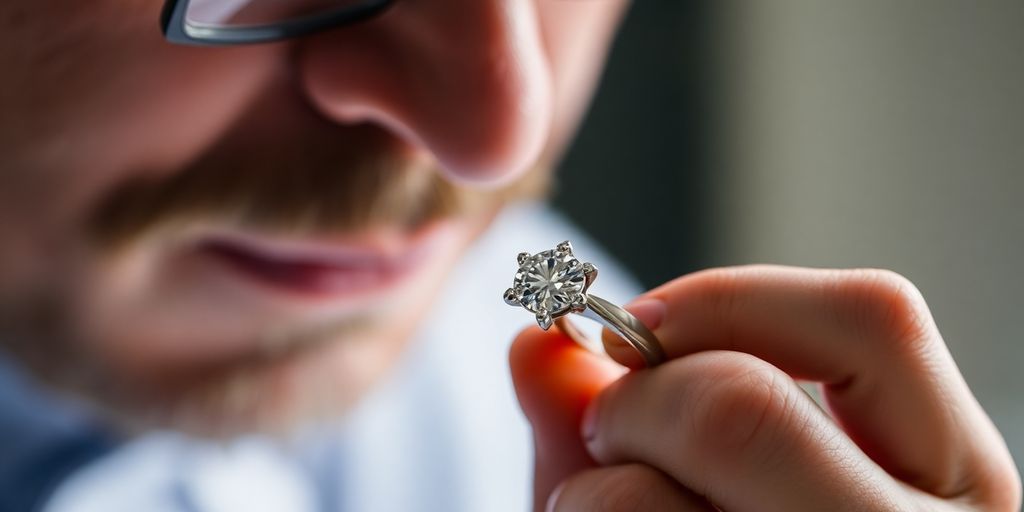
Identifying hallmarks requires a little practice and a keen eye. They're often tiny and difficult to see with the naked eye. A jeweler's loupe is essential. Here are some tips:
- Look for the symbols and numbers: Hallmarks can be geometric shapes, animals, letters, or numbers. Each symbol corresponds to a type of metal and a purity level. For example, an eagle's head often indicates 18-karat gold. 9-karat gold is indicated by a three-leaf clover or the 3 series.
- Consult reference tables: There are charts that list the different hallmarks used in each country and era. These charts are a wealth of information for identifying the origin and date of manufacture of a piece of jewelry. For silver objects, the purity of the metal can be identified using recent hallmarks.
- Call an expert: If you have any doubts, don't hesitate to seek the advice of a jeweler or precious metal expert. They are experienced in handling and examining jewelry, and they will be able to accurately identify hallmarks. They can also help you sell jewelry if you wish it.
Hallmarks are valuable indicators, but they are not infallible. There are fake hallmarks, and some antique jewelry may not have any at all. This is why it is important to cross-reference information and exercise caution.
In short, hallmarks are key elements in assessing the value of a piece of jewelry. They tell us about the quality of the metal, the origin of the piece, and the craftsman who created it. Learning to identify them gives you the means to make informed choices and avoid unpleasant surprises. And if you have any doubts, don't hesitate to seek professional advice. Prevention is better than cure, as they say!
Common mistakes to avoid when evaluating
Don't rely on weight alone
It's tempting to think that a piece of jewelry's value boils down to its weight, especially if it's gold or silver. This is a common mistake! Weight is a factor, of course, but it doesn't tell the whole story. The quality of the stones, the craftsmanship of the artisan, the rarity of the design, and even the history of the jewelry can significantly increase its value. A lightweight piece of jewelry, but one from a top designer, can be worth much more than a basic, chunky gold chain. Think about it!
Ignoring the importance of authenticity
Authenticity is paramount. A fake piece of jewelry, even if it looks like the real thing, will be worth almost nothing. It is therefore crucial to check hallmarks and signatures, and to be wary of imitations. If you have the slightest doubt, have your jewelry appraised by a professional. It's better to pay for an appraisal than to get ripped off by selling a fake for next to nothing. Besides, if you want to sell jewelry, make sure they are authentic.
Underestimating the impact of brands
A piece of jewelry's brand can have a huge impact on its value. A piece of jewelry by Cartier, Van Cleef & Arpels, or Tiffany & Co. will be worth much more than a similar piece without a signature. The brand's reputation, history, and prestige are all reflected in its price.
It's important to note that even a lesser-known brand, but one with a strong identity and recognized expertise, can positively influence the value of a piece of jewelry. Don't neglect this aspect when evaluating it.
Here are some elements to consider when assessing brand impact:
- Brand awareness
- The quality of his creations
- Its presence on the market
- Its history and heritage
When evaluating a property, it's easy to make mistakes. For example, not checking market prices or relying solely on unreliable sources can lead to poor decisions. To avoid this, be sure to do your research and compare offers. To learn more about best practices for evaluating properties, visit our website!
Conclusion
Evaluating a piece of jewelry is a bit like a puzzle. There are several elements to consider: the type of metal, the stones, the overall condition, and even the history of the piece. Don't rush; take the time to carefully examine every detail. If you're unsure, don't hesitate to seek professional advice. Ultimately, whether you're selling or simply want to know the value of your jewelry, a good appraisal can make all the difference.
Frequently Asked Questions
How do you know if a piece of jewelry is gold?
To check if a piece of jewelry is gold, you can look for a hallmark on the piece. For example, a hallmark in the shape of an eagle's head indicates that it is 18-karat gold.
What is carat?
Karat is a unit that measures the purity of precious metals. For example, 24 karat means that the gold is 100% pure.
Why do gemstones increase the value of a piece of jewelry?
Precious stones like diamonds or emeralds are rare and beautiful, making them highly sought after, thus increasing the value of the jewelry.
How to estimate the value of an antique jewel?
To value an antique piece of jewelry, you must consider its condition, style, and reputation of the creator, as well as the quality of the materials.
Does it cost money to have a jewelry appraised?
Often, a jewelry appraisal is free, especially in professional jewelry stores.
What documents are needed to sell a piece of jewelry?
To sell a piece of jewelry, you usually don't need documents, but having certificates of authenticity can help prove its value.