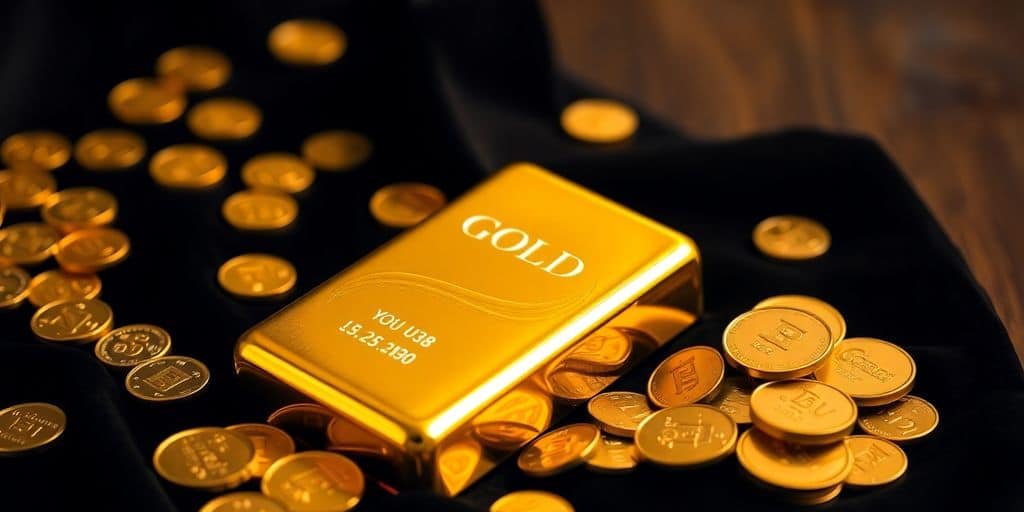
This article explores why countries accumulate gold reserves, focusing on its history, economic impact, and the countries that hold the most gold. Gold has always been considered a safe haven, and its management by central banks plays a key role in economic stability.
Main Teachings
- Gold is an essential asset for the economic security of countries.
- Gold reserves influence exchange rates and monetary policies.
- The United States holds the largest gold reserves in the world, followed by Germany and Italy.
The History of Gold Reserves
The First Uses of Gold
Gold has always fascinated humanity. Used since prehistoric times, it was mainly reserved for the powerful and for ceremonies. The Lydian kings, around the 8th century BC, even struck the first gold coin. It is a real symbol of wealth!
Antiquity and the First Ingots
In ancient times, gold took on another dimension. The first gold bars were mentioned by Tacitus. These bars were often used to store wealth. At that time, gold was already considered a valuable asset.
Evolution in the Middle Ages
During the Middle Ages, gold continued to evolve. People began to use bullion in different forms. This helped keep their wealth safe. Gold reserves really took off during this time.
Modern Gold Reserves
Today, gold reserves are essential for states. They guarantee economic security and stability in times of crisis. Central banks accumulate gold to protect their economies. Gold is still perceived as a safe investment against inflation and economic crises.
| Country | Gold Reserves (tons) |
|---|---|
| USA | 8,133.5 |
| Germany | 3,362 |
| France | 2,436 |
| Italie | 2,451 |
Gold remains an essential asset for modern economies, playing a key role in global economic stability.
The Reasons for the Constitution of Gold Reserves
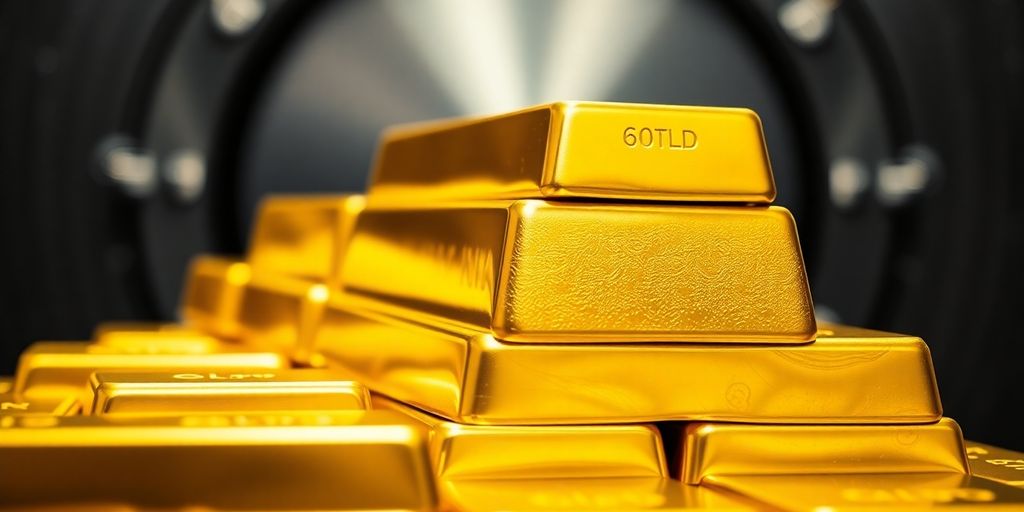
Economic Security
Countries accumulate gold to ensure their economic security. In times of crisis, gold is a active which retains its value. This allows nations to protect themselves against economic fluctuations.
Diversification of Assets
Having gold reserves helps diversify a country's assets. This means that countries are not solely dependent on currency or other investments. Here are some of the benefits of this diversification:
- Risk reduction : Gold can offset losses in other sectors.
- Stability : Gold is less volatile than other assets.
- Trust : Gold reserves boost investor confidence.
Stability in Times of Crisis
In times of crisis, gold is often considered a safe haven. When markets fall, gold tends to increase in value. This helps countries maintain the stability of their economies.
Economic Independence
Owning gold allows countries to have a certain independence economic. This means that they can act without depending on other nations. In the event of sanctions or international crises, gold reserves can serve as a shield.
In summary, gold reserves are essential for economic security, asset diversification, stability in times of crisis, and economic independence. They play a crucial role in the global economy, influencing exchange rates and monetary policies.
The Impact of Gold Reserves on the Global Economy
Influence on Exchange Rates
Gold reserves have a direct impact on exchange rates. When a country has a lot of gold, it can strengthen the value of its currency. In times of crisis, investors turn to gold, which can stabilize or even increase the value of the national currency.
Role in Monetary Policies
Central banks use gold to support their monetary policies. For example:
- Selling gold to inject liquidity into the economy.
- Buying gold to withdraw money from circulation.
- Maintaining economic stability and managing inflation.
Effect on Financial Markets
Gold is often considered a safe haven, especially in times of crisis. Fluctuations in gold reserves can therefore have a direct impact on financial markets. Investors closely monitor movements in gold reserves to anticipate market trends. An increase in reserves can signal a prudent economic policy, while a decrease can indicate urgent liquidity needs.
In summary, gold reserves are not only a symbol of wealth, but a strategic tool to influence the global economy.
Gold as a Safe Haven
Gold is seen as a essential asset for European countries, providing economic security and protection against inflation. Gold reserves influence economic stability and investor confidence. In times of crisis, gold is particularly prized, strengthening its role in central banks' investment strategies.
The Largest Gold Reserves in the World
The United States in the lead
The United States is the Champions in terms of gold reserves, with an impressive total of 8 tons. In fact, this represents approximately 133,5% of the world's gold and currency reserves. The majority of this gold is stored at Fort Knox, a well-known fortress in Kentucky.
Germany and its Reserves
Germany ranks second with 3 tons of gold. The country has a rich history of gold reserves, having started building up its stockpile after World War II. Some of this gold is still held abroad, but Germany has repatriated a good portion of its reserves in recent years.
France's Position
France is not far behind, with 2 tons of gold. This precious metal plays a key role in the country's economic stability. The Bank of France manages these reserves, which are essential for confidence in the national currency.
Other Notable Countries
Here is a summary table of the largest gold reserves in the world:
| Country | Gold reserves (tons) |
|---|---|
| USA | 8 133,5 |
| Germany | 3 366,8 |
| Italie | 2 451,8 |
| France | 2 436,9 |
| Russia | 2 332,7 |
| China | 2 191,5 |
In short, these gold reserves are not just numbers, but a symbol of economic power and security for these nations.
Discover the largest gold reserves around the world and learn why this precious metal is so important. If you want to invest in gold or sell your jewelry, visit our site for more information and expert advice. Don't miss this opportunity to secure your financial future!
Conclusion
In conclusion, gold reserves are super important for countries. They provide financial security and help maintain confidence in times of crisis. Central banks use them to stabilize their currencies and reassure investors. Whether it is to protect a country’s wealth or to influence markets, gold remains a valuable asset. So, the next time you hear about gold reserves, remember how essential they are to the global economy.