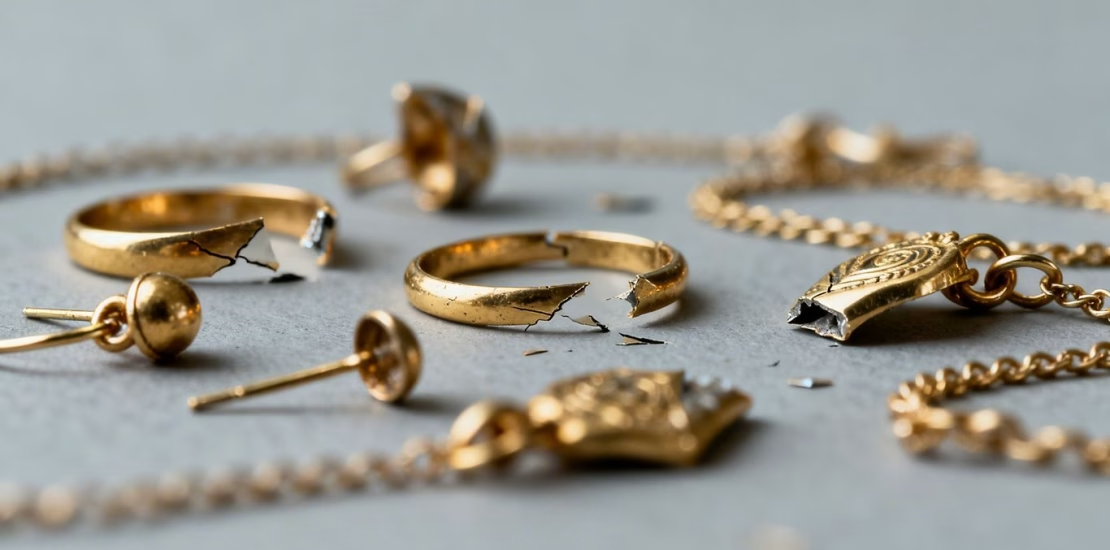
You're probably wondering where to sell broken gold jewelry that's been gathering dust in a drawer. Maybe you found an old broken chain or a bent ring and you'd like to make some money from it. It's normal to want to understand how it works, who to contact, and how to make sure you don't get scammed. We'll look at the options, tips, and things to check before you get started.
Key points to remember
- Specialized jewellers buy back most gold items, even broken ones, but you should always ask for a free appraisal before selling.
- The buyback price depends mainly on the weight, the carat and the price of gold on the day, not on the appearance or shape of the jewelry.
- Before selling, remember to sort your jewelry, check its purity, and prepare an identity document to ensure a quick and clear transaction.
Where to sell broken gold jewelry at specialized jewelry stores
If you have gold jewelry that's broken, outdated, or simply no longer worn, a specialized jewelry store can be an excellent place to sell it. These professionals know how to properly assess the value of your gold, even if it's no longer in perfect condition. They are accustomed to buying all kinds of gold items, from old chains and damaged rings to single earrings and even gold watches.
What types of gold items do jewelers accept?
In general, jewelers specializing in buying gold accept a wide range of items. This includes, of course, gold jewelry, regardless of its condition: whether bent, broken, or even incomplete (like a single earring). They also buy gold coins, whether investment or collectible, as well as small ingots. What matters to them is the quantity and purity of the gold in the item. Even if a piece of jewelry has set gemstones, the jeweler can remove them before weighing the gold. It's good to know that gold items, even if no longer wearable, retain intrinsic value thanks to the precious metal they contain.
Here is a non-exhaustive list of what you can generally sell:
- Gold rings, bracelets, necklaces and chains (even broken ones)
- Earrings (even if you only have one)
- Gold watches (dial and bracelet)
- Investment gold coins (such as Napoleons, Louis d'or, Krugerrands)
- Small ingots or ingots
It is important to note that to sell gold, you must be of legal age and be its legal owner.
How does the appraisal and buyback process work in the store?
When you arrive at a jewelry store with your gold items, the process is usually quite simple and transparent. First, the jeweler will weigh your items in front of you, often on a precision scale. Next, they will determine the purity of the gold, usually indicated by a hallmark (such as 18K, 14K, etc.) or by chemical testing if necessary. Weight and purity are the two main factors that determine the value. The jeweler will then make you an offer based on the current price of gold. If you accept the offer, the transaction is usually completed quickly, often with payment in cash or by check. It is common to be asked for identification to record the transaction, which is a standard security measure.
Here are the typical steps:
- Bring your jewelry : Visit a specialized jewelry store.
- On-site expertise The jeweller weighs and assesses the purity of your gold items.
- Buyback offer A proposal is made to you, based on the weight, purity and price of gold.
- Payment If you accept, you will receive your payment.
Don't forget to bring a valid form of identification, as it is often required to complete the sale.
The criteria that influence the value of your broken gold jewelry
When you want to sell your broken gold jewelry, you often find yourself facing a real puzzle: what makes the price go up (or down)? We often think that a beautiful piece of jewelry will be worth more, but in reality, everything depends on a few very specific criteria. Here's what really matters.
Weight, purity and carats: understanding the evaluation
The price of a gold jewel is almost always based on its weight and purity. Whatever you wear around your neck will definitely have a hallmark (the small official stamp) indicating the number of carats. The higher the carat, the more pure gold it contains, and the better the buyback price will be.
| Carats | % pure gold | Approximate value vs 24k |
|---|---|---|
| 24 carats | 99,9% | 100% |
| 18 carats | 75% | Up to 75% |
| 14 carats | 58,5% | Up to 58% |
| 9 carats | 37,5% | Up to 37% |
Some steps in the estimation process:
- The jewelry is weighed on a small, special (certified) scale.
- We check the punch mark or perform a chemical test if necessary.
- The daily rate for gold is applied according to the carat.
Even a broken, mismatched or worn piece of jewelry still retains value because of its metal.
Take into account the price of gold and the condition of the jewelry
Weight and purity are good, but you have to keep an eye on two other points:
- Gold prices It changes every day, so checking the price when you come to sell is crucial. Most shops use the real-time market rate (like for a Philharmonic gold coin).
- General condition Frankly, for most broken jewelry, the condition matters little. Except for collector's items or signed jewelry, where the condition, authenticity, and rarity can significantly boost the estimate.
- The market If it's just the weight of the gold that matters, the jeweler will want to melt it down. But for designer or antique jewelry, he might resell it because of its history or rarity.
| Postman | Impact on value |
|---|---|
| Weight | Tops |
| Purity (carat) | Tops |
| Gold prices | Very high (variable) |
| Signature/brand | Raised so highly regarded |
| Condition/rarity | Strong if collection |
| Fashion | Low (except vintage) |
Tip: Get estimates from several buyers, you can compare and avoid unpleasant surprises.
When you're preparing to sell your gold, keep these criteria in mind. It's not the shine of the jewelry that will drive up the price, but what's inside – the metal matters most, except in the case of exceptional pieces.
Preparing broken gold jewelry before selling
Properly organizing the sale of your broken gold jewelry really makes a difference when negotiating. Good preparation limits surprises and speeds up the transaction in the jewelry store. You never know what you're going to find in your jewelry drawer, so it's best to check everything before you go!
Practical tips for optimizing the transaction
Here are a few simple steps to prepare your articles without any hassle:
- Gather all your broken gold jewelry, even single earrings or bent chains.
- Sort them by category (rings, necklaces, bracelets…) and group the pairs together.
- Don't waste your time cleaning them: jewellers evaluate items in their current condition.
- Check for hallmarks (marks indicating the carat of the gold) to know what is really gold.
- Leave the set stones in place, unless otherwise instructed by the jeweler.
Organizing a little before the sale saves you a lot of unnecessary discussions at the counter and allows you to have more leverage in the negotiation.
Supporting documents and precautions to take
To avoid unpleasant surprises or delays, remember to:
- Bring a valid form of identification (mandatory and systematically checked in jewelry stores).
- Bring any relevant documents: invoices, certificates, warranties, or old jeweller's boxes.
- Verify that you are the rightful owner of the jewelry and of legal age, otherwise the sale will be refused.
- Make a quick estimate at home, by weighing the items on a small kitchen scale and noting the carat when it is visible.
| Document to bring | Necessary ? | Trick |
|---|---|---|
| Pièce d'identité | Yes | Preferably use an identity card |
| Invoice/Certificate | Optional | Can facilitate estimation |
| Proof of legitimacy | Yes (owner) | Check during preparation |
Taking these precautions is very simple, but it changes everything when you actually do it.
Do you have damaged gold jewelry lying around? Don't throw it away! It's entirely possible to give it a second life by selling it. Before you part with it, a little cleaning and sorting They can make all the difference in getting the best price. Prepare them carefully to maximize their value. To learn how to present them effectively and get a fair estimate, visit our website now!
So, ready to transform your old gold?
There you have it, now you know where and how to sell your broken gold jewelry. Whether you want to free up some space in your drawers or make some extra cash, there are plenty of options. Remember to research the current gold price before you start, and above all, trust your instincts to choose the right buyer. It's a small step that can pay off big, so don't hesitate!
Frequently Asked Questions
What types of broken gold jewelry can I sell?
You can sell almost anything made of gold, even if it's broken! This includes rings, necklaces, bracelets, earrings, and even gold watches. The important thing is that they are made of gold, because their value depends primarily on the weight and purity of the metal, not their condition.
How can I find out how much my broken gold jewelry is worth?
The value of your jewelry depends primarily on three things: its weight (how much it weighs in grams), its purity (how much gold it contains, measured in carats), and the gold price on the market at the time of sale. The jeweler will weigh your jewelry and check its purity to make you an offer.
Do I need to clean my jewelry before selling it?
No, there's no need to make any effort to clean your jewelry. Jewelers appraise it as is. The most important thing is to gather it together, perhaps separate any pieces that aren't gold, and have some form of identification with you for the transaction.