When you wonder where central bank gold is stored, you probably picture enormous vaults hidden underground or in ultra-secure buildings. The reality isn't far off. Government gold is a bit like the ultimate safe: it provides reassurance, protection, and symbolizes a country's wealth. But where do these gold bars lie? Why do some countries prefer to keep their gold abroad? And how do they ensure everything is safely stored where it belongs? We'll explore all of this together, without any fuss.
Key points to remember
- Central bank gold is stored in highly secure locations, often underground, such as at the Bank of France in Paris, Fort Knox in the United States, or in London and Moscow.
- Many countries choose to keep some of their gold abroad, for reasons of security, strategy and to facilitate international transactions.
- The management of these reserves is very strict: security standards, regular audits, and transparency are essential to ensure that each ingot is where it should be.
Where are central banks' gold reserves stored around the world?
So, you're wondering where on earth central banks are hiding all that gold? It's a legitimate question, especially when we're talking about astronomical quantities. Imagine tons and tons of precious metal, and you wonder where it all ends up. Well, it's not in a safe under the mattress, believe me.
The Bank of France and its underground vaults in Paris
Let's start with our own backyard. The Bank of France, for example, has a rather impressive hiding place. Part of France's gold is kept 27 meters underground, beneath the Hôtel de Toulouse in Paris. It's a super-secure location, and it's been like that since 1927. They say that this space could hold all the gold in the world, which is pretty crazy when you think about it. It's a bit like having your own Fort Knox, but under the streets of Paris.
International strongholds: Fort Knox, New York, London and Moscow
But not all gold is kept at home. For strategic and security reasons, many countries choose to store part of their reserves abroad. That's where the big names come in.
- Fort Knox, United States: This is probably the most famous. Located in Kentucky, it's a military fortress that houses an enormous amount of American gold. We're talking thousands of tons, guarded as if it were the national treasure (which it is).
- New York, United States: The Federal Reserve Bank of New York, located in its basement in Manhattan, is another key location. It's where many foreign central banks entrust their gold. It's somewhat like a central bank for central banks, at least for gold.
- London, United Kingdom: The Bank of England in London is also a key center for gold storage. It's a global financial hub, so it makes sense to have reserves there.
- Moscow, Russia: The Bank of Russia also has its own secure facilities to store its gold, a symbol of its economic power.
These locations are chosen for their maximum security, political stability, and access to international financial markets. It's a bit like having bank accounts at different banks to spread risk, but with physical gold.
It's important to know that these places are extremely well protected. You can't just visit for a look. Access is very tightly controlled, and the facilities are designed to withstand everything from theft and natural disasters to conflicts. It's serious business.
Basically, if your gold belongs to a central bank, it's probably in a very discreet, very secure place, and often far from your home. It's quite a journey for a gold bar!
Why do central banks choose to keep some of their gold abroad?
You might wonder why a central bank, which is supposed to represent a country's sovereignty, would store its gold anywhere other than its own territory. Well, there are several reasons for this, and they are often related to prudence and strategy.
Strategic and security motivations for international storage
Imagine for a moment that your country is facing a major crisis, whether it be armed conflict or political instability. In such situations, it's safer not to put all your eggs in one basket. This is where storing gold abroad comes in. By diversifying storage locations, central banks protect themselves against the risk of having their reserves frozen, confiscated, or damaged. We have seen historical examples where gold had to be moved urgently for safekeeping, such as during World War II.
Furthermore, certain international financial centers, such as London and New York, are major hubs for gold transactions. Having gold stored in these centers can greatly simplify the process. Instead of physically moving tons of precious metal for each transaction, the gold can simply change ownership on the ledger. It's faster, less risky, and more efficient.
Finally, let's be realistic: not all central banks have storage facilities as modern and secure as those of the world's major financial centers. Gold's value is immense, and its protection requires very expensive and sophisticated infrastructure. It is therefore sometimes wiser to entrust your gold to institutions that have already proven their ability to keep it safe.
The operations to repatriate gold, a symbol of sovereignty
Despite the advantages of storing gold abroad, a growing number of countries are considering bringing their gold back home. It's a bit like wanting to retrieve one's most precious possessions and have them readily available. This approach is often motivated by a desire to strengthen national sovereignty and increase both domestic and international confidence.
When a central bank repatriates its gold, it sends a strong signal to its citizens and the financial markets. It demonstrates that the country has complete control over its assets and is not dependent on other nations for the security of its reserves. Germany, for example, has conducted significant gold repatriation operations in recent years, even displaying gold bars on television to reassure its population. This is a way of proving that the reserves do exist and are safe within the country.
This trend toward repatriation can also be a reaction to geopolitical tensions. In a world where economic sanctions have become commonplace, holding gold at home reduces the risk of having assets frozen or blocked, as has happened in some international disputes. It's a way to protect oneself against external pressure and guarantee the country's financial independence.
How is central bank gold protected and managed on a daily basis?
Security standards and storage protocols
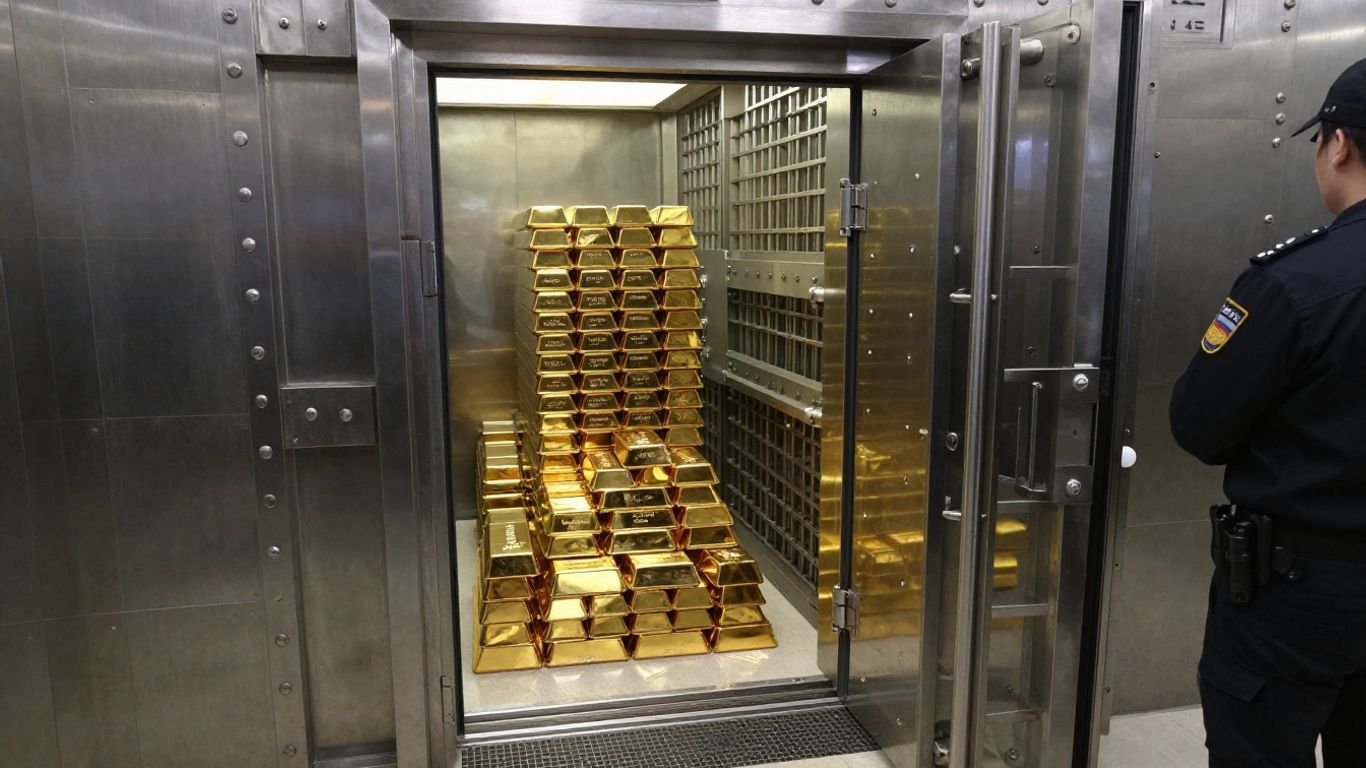
You're probably wondering how all that gold is kept safe. Well, central banks take the protection of their reserves very seriously. We're talking security systems worthy of the best spy movies! Vaults are usually located in ultra-secure locations, often underground or in fortified buildings, with extremely controlled access. Think armored doors, sophisticated surveillance systems, armed guards, and measures to counter natural disasters or malicious acts. It's as if every gold bar is under constant, 24/7 surveillance.
- Strict access control: Only a few authorized people can access the storage areas.
- Ongoing monitoring: Cameras and sensors monitor every corner.
- Disaster preparedness measures: The facilities are designed to withstand earthquakes, floods, and even attacks.
- Secure storage: Gold is often stored in specific containers, stacked stably to prevent any accidents.
The security of these reserves is paramount, as they represent a significant portion of a country's financial stability. It's not just a few gold bars, but massive quantities that must be protected at all costs.
The role of audits and transparency in the management of gold reserves
To ensure everything is in order, regular audits are conducted. These checks are carried out by independent experts who verify that the gold is present, authentic, and properly managed. It's a bit like a technical inspection for gold reserves. While the precise details of these operations remain confidential for security reasons, transparency is key. Central banks generally publish reports on their reserves, providing a general overview of the amount of gold held. This combination of physical security and regular controls aims to ensure confidence in the management of these valuable assets.
- External audits: Specialized companies verify the existence and quality of the gold.
- Public reports: Central banks report on the volume of their gold reserves.
- Traceability: Systems are in place to track the origin and movements of gold, although this remains very regulated.
The gold held by central banks is very well protected. Every day, employees check and count the bars to ensure their safety. These simple measures are effective. To learn more about the security and gold managementVisit our website and discover our expert advice!
So, where does all that gold go?
So, now you know where a good portion of central bank gold is hidden. It's not just a pile of ingots in a vault; it's a symbol of stability for nations. It's kept in highly secure locations, sometimes even underground! And if you're wondering why some countries prefer to keep their gold elsewhere, it's often for security reasons or to facilitate trade. It's a bit like having a well-protected bank account, but on a national scale. Gold is truly a serious matter that has stood the test of time.
Frequently Asked Questions
Where do central banks keep their gold?
Central banks store their gold in highly secure locations, such as underground vaults or ultra-protected strongrooms. In France, some of the gold is stored 27 meters underground at the Banque de France. Other countries, such as the United States, use facilities like Fort Knox or reputable central banks abroad, such as the Federal Reserve Bank of New York or the Bank of England in London.
Why do central banks store gold abroad?
Sometimes, central banks choose to store some of their gold abroad for strategic reasons. This may be to protect it in the event of conflict or political crisis, to facilitate international trade because these locations are important financial centers, or simply because they do not always have the most suitable security infrastructure within their own territory.
How is central bank gold protected on a daily basis?
Central bank gold is protected by very strict security measures. These include high security standards, rigorous storage protocols, and often facilities designed to withstand all kinds of threats. Furthermore, regular audits are conducted to ensure everything is in order and to guarantee transparency in the management of these valuable reserves.