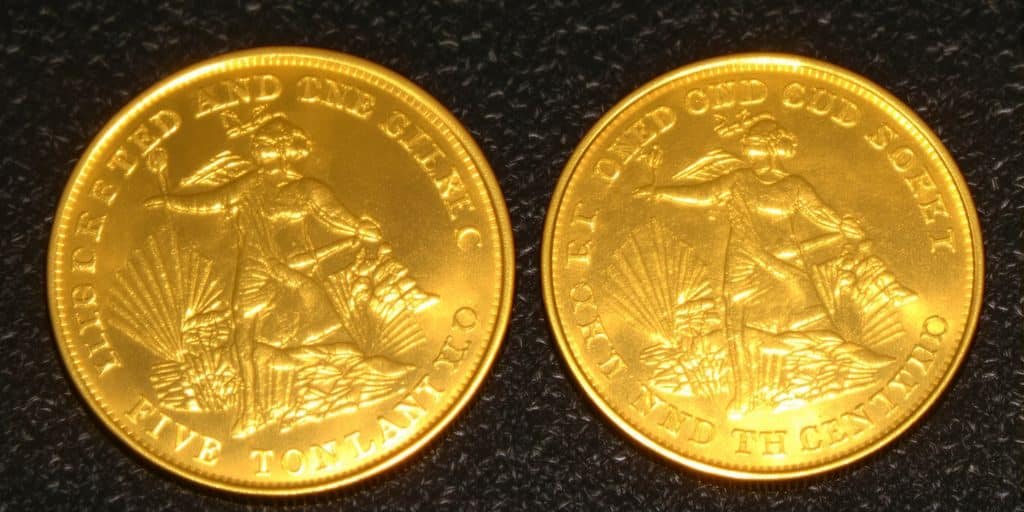
You may be wondering what the difference is between a Louis d'or and a Napoleon d'or? These two French gold coins are often confused, but they have very distinct histories, characteristics, and values. If you're interested in numismatics or investing in gold, it's helpful to know these differences. So, let's dive in together to discover what makes each coin unique.
Key Takeaways
- The Louis d'Or, minted between 1640 and 1792, is an older coin, often prized for its rarity and numismatic appeal, which raises its price beyond the simple value of the gold.
- The gold Napoleon, issued from 1803, is more recent and more common, making it more accessible to investors seeking a direct safe haven on the Gold prices.
- In terms of physical characteristics, the Louis d'Or weighs approximately 7,65g with a purity of approximately 91,7%, while the Napoleon weighs 6,45g with a purity of approximately 90%.
- The designs differ: the Louis d'Or features the portrait of the Louis kings, while the Napoleon features the effigy of Napoleon or other republican symbols.
- The Louis d'Or could be made by hand, contributing to its rarity, while the Napoleon benefited from more mechanized production, ensuring greater uniformity.
Understanding the origins of the Louis d'Or and the Napoleon
To fully understand the difference between a Louis d'or and a Napoleon, we must go back to the origins of these emblematic coins of French monetary history. Understanding their origins is already a big step toward appreciating their value and symbolism.
The ancient history of the Louis d'Or
The Louis d'Or is a coin that has left its mark on its era. Its history begins during the reign of Louis XIII in 1640. The idea was to create a French gold coin that could rival those of other major European powers, such as Spain and England. It was partly a matter of prestige, but also of economic power. To replace the old gold écu, a renowned engraver, Jean Warin, was called upon. He created this coin using mechanized minting techniques, a novelty for the time, which allowed for better quality and more consistent production. There were the half-Louis d'Or, the Louis d'Or itself, and the double Louis d'Or. These coins continued to circulate under Louis XIV, XV, and XVI, but the French Revolution put an end to their production in 1792. It is important to note that the true Louis d'Or is distinct from the Napoleon, even though they are often confused.
The emergence of the Napoleon coin
When the Louis d'Or disappeared, France did not stop producing gold coins. With the arrival of Napoleon Bonaparte and the proclamation of the First Empire in 1804, new reforms were introduced, including in the monetary field. This is how the coin called the Napoleon was born. It had the same value as the Louis d'Or and was minted until the First World War. Over time, several effigies adorned the Napoleon, including Napoleon I, Napoleon III, and even Marianne, giving rise to coins like the Napoleon Marianne Rooster.
The economic context of the two pieces
The creation of the Louis d'Or was part of a desire to strengthen France's economic position against its European rivals. It was a period when gold currency was a symbol of power and stability. Military spending and economic difficulties eventually weakened the monetary system, leading to the end of the Louis d'Or with the Revolution. The Napoleon, on the other hand, was born in a context of reconstruction and consolidation of power under the Consulate and then the Empire. It was designed to be a stable and recognized currency, contributing to the consolidation of public finances and economic recovery. Its adoption marked the transition from a royal to an imperial era, reflecting the major political and economic changes in France.
Distinctive physical characteristics
When we talk about French gold coins, the Louis d'Or and the Napoleon often come up. But beyond their common material, gold, their physical characteristics are quite different. It's important to know them, especially if you plan to acquire some or simply out of curiosity.
Dimensions and weight of the Louis d'Or
The Louis d'Or, you know, is the coin that has survived several reigns of French kings. As a result, its dimensions and weight have varied a little over time. Generally, its diameter is around 22 mm. As for the weight, it's often around 6,75 grams for the most common versions. Be careful, the weight can be a little less if the coin has circulated a lot and has worn out.
Dimensions and weight of the Napoleon
The Napoleon, often called the 20-franc gold coin, is a little more standardized. Its diameter is generally 21 mm, making it slightly smaller than some Louis d'Or coins. Its theoretical weight is 6,45 grams, with a minimal tolerance. This uniformity helps greatly in its identification and evaluation.
Differences in purity between the two
The purity of the gold determines the coin's intrinsic value. The Louis d'Or generally displays a purity of around 91,7% fine gold, which corresponds to 22 carats. The Napoleon, on the other hand, is a little less pure, hovering around 90% fine gold. The difference isn't huge, but it can play a small role in their market value.
Here is a small comparison table to help you see things more clearly:
| Characteristic | Louis d'Or (approx.) | Napoleon (20 francs) |
|---|---|---|
| Diameter | 22 mm | 21 mm |
| Weight | 6,75 gr | 6,45 gr |
| Purity | Up to 91,7% | Up to 90% |
Market value and price
Louis d'Or Review
The Louis d'Or, due to its age and relative rarity, sees its value determined by several factors. Of course, the price of gold is the starting point, but that's not all. Numismatic appeal plays a major role; certain years or types of Louis d'Or are much more sought after by collectors. The price of a Louis d'or can therefore be significantly higher than its simple intrinsic value in gold. For example, a Louis XIII gold coin, if in good condition, can be worth several thousand euros, well beyond what the weight of gold contained would suggest. The coin's condition should also be considered, as a well-preserved coin will always be more valuable.
Napoleon Assessment
The Napoleon, although more recent and minted in greater quantities, follows a similar valuation logic, but with nuances. Its price is also directly linked to the price of gold. However, its greater availability generally makes it less expensive than the Louis d'or, unless it is a particularly rare edition or from a specific year in high demand. Napoleons are often considered more investment coins.
Symbolism and iconography of the coins
The portraits on the Louis d'Or
The Louis d'Or, as its name suggests, proudly displays the portrait of the king who reigned at the time of its minting. Each monarch has left their mark, and these portraits offer a fascinating window into the history of the French monarchy. You can observe the evolution of hairstyles, costumes, and expressions over the reigns. It's a bit like having a gallery of miniature royal portraits at your fingertips.
The symbols on the Napoleon
The Napoleon, on the other hand, is a little more republican in its approach. Of course, it features the portrait of Napoleon Bonaparte, but also a plethora of imperial and republican symbols. The imperial eagle, a symbol of power and victory, sometimes sits alongside more discreet symbols like the laurel wreath, a sign of glory. The 20-franc Napoleon Rooster and Marianne even features the Gallic rooster, Marianne, and the motto "Liberty Equality Fraternity," a true concentration of French identity.
The historical significance of the motifs
These motifs are not there by chance. They were carefully chosen to convey a message, assert power, or recall important values. The Louis d'Or, with its king, embodies monarchical stability and divine right. The Napoleon, meanwhile, symbolizes imperial ambition and the grandeur of France. Understanding these symbols is a bit like deciphering a part of French history. It's a bit like reading a history book while watching a play.
The iconography of the coins is a valuable testament to the eras they span. They reflect the ideologies, ambitions, and values of the societies that produced them. By carefully studying these motifs, we can better understand the issues and mentalities of these periods.
Manufacturing methods and impact on rarity
The manual production of Louis d'Or
When we talk about the Louis d'Or, it's important to know that its production was a meticulous goldsmith's work. Each coin was struck by hand, and this went through several stages. First, the gold was melted, then transformed into ingots. These ingots were then passed through rolling mills to obtain gold sheets of the desired thickness. Blanks were cut from these sheets, and each blank was weighed individually to ensure that it met the standards. The next step was to strike each blank by hand with engraved dies, which imprinted the designs and inscriptions on the coin. This artisanal aspect made each Louis d'Or a little unique, with small variations in the striking and appearance. It was true know-how.
The mechanized production of the Napoleon
The arrival of the Napoleon coin coincided with the rise of industrial mechanization. Unlike the Louis d'or, the Napoleon was manufactured using machines. This change allowed for much faster and, above all, more uniform production. The flans were still prepared from gold bars, but presses powered by steam engines struck the coins with greater precision. This mechanization not only increased production volume, it also reduced costs and standardized the appearance of the coins. Essentially, more coins could be produced, faster, and with more consistent quality. It was a significant change from the handcrafted Louis d'or.
The impact on rarity and value
The difference in manufacturing methods had a significant impact on the rarity and value of these two coins. The hand-crafted Louis d'Or, while meticulous, was limited in volume. Natural variations in hand-minting make each coin unique, which greatly appeals to collectors. Conversely, the mechanized production of the Napoleon allowed for a much wider distribution, reducing its relative rarity. That said, some Napoleons, especially those with rare vintages or minor minting defects, can also command high prices on the numismatic market. It is important to remember that a coin's value depends not only on its rarity, but also on its condition, market demand, and historical significance.
Use and circulation throughout history
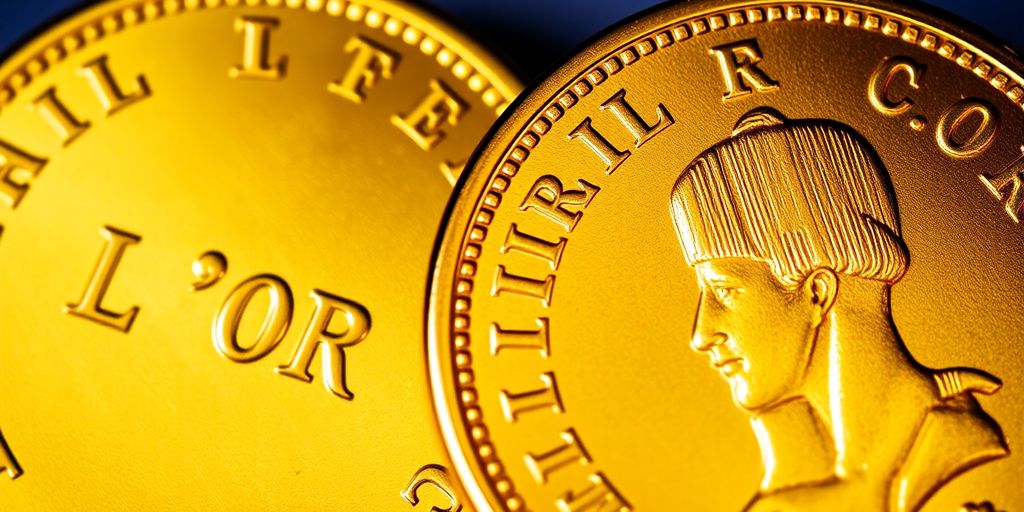
The Louis d'or, first minted in 1640 under Louis XIII, quickly established itself as the preferred means of exchange in France. It spanned several reigns, serving as common currency for important transactions and symbolizing the kingdom's financial power. It was used in trade, to pay troops, and was even hoarded by noble and bourgeois families. Its presence testifies to France's economic and political fluctuations through the ages.
As for the Napoleon, introduced by Bonaparte in 1803, it aimed to stabilize French currency after the Revolution. Its circulation extended well beyond French borders, facilitating trade and strengthening confidence in the European monetary system. It thus contributed to France's economic influence.
Here's a look at their circulation:
- Louis d'or: Mainly used in France as currency and a symbol of wealth, it was hoarded and circulated for several centuries.
- Napoleon: Designed for stability, it circulated widely in France and Europe, facilitating international trade and serving as a monetary reference in the Latin Union.
Currently, neither the Louis d'Or nor the Napoleon are in circulation as legal tender. Their value now lies in their numismatic interest and investment potential.
Collection and investment
The appeal for collectors
If you're passionate about history and enjoy touching on the past, the Louis d'Or and the Napoléon are for you. These coins aren't just gold; they're fragments of French history. Collectors seek them out for their rarity, their state of preservation, and sometimes even for small minting errors that make them unique. It's a bit like a treasure hunt, where each coin tells a different story, that of a bygone era. Finding a piece in perfect condition is the Holy Grail for many.
Investing in the Louis d'Or
Investing in a Louis d'Or coin is often a long-term investment. These coins can cost more than their weight in gold, due to their historical value and rarity. Some mintage years are much harder to find than others, which drives up their price. The coin's condition is also extremely important: a coin that has circulated extensively will be worth less than a nearly mint one. It's important to do your research before buying, and if possible, seek expert advice to make sure you don't get ripped off.
Investing in the Napoleon
The Napoleon, on the other hand, is often seen as a simpler and more accessible investment. It's easier to buy and resell because there are so many in circulation. As a result, the price you pay, in addition to the value of the gold, is generally lower than for a Louis d'Or. It's a bit like a safe bet when the global economy is going through difficult times. It's a good option if you want to diversify your assets without complicating your life.
Here is a small table for comparison:
| Characteristic | golden louis | Napoleon |
|---|---|---|
| Price (bonus) | Often higher | Generally lower |
| Ease of resale | Less easy | Easier |
| Scarcity | Potentially rarer | Less rare |
| Targeted audience | Collectors and investors | Mainly investors |
Want to make your money grow? Gold is a safe bet for investing your savings. Whether you're a beginner or an expert, we'll guide you through buying gold and making good investments. Come discover how invest in gold on our website!
So, Louis d'Or or Napoleon?
So, now you know what sets these two gold coins apart. The Louis d'Or is a bit like the ancestor, rarer, often more expensive, and it appeals especially to collectors passionate about history. The Napoleon is more recent, easier to find, and more geared toward direct investment in gold. If you're looking to diversify your assets or have an accessible safe haven, the Napoleon is often the simplest choice. But if history and rarity appeal to you, the Louis d'Or has undeniable charm. Weigh carefully what matters most to you before making your choice!
Frequently Asked Questions
What is the main difference between a Louis d'Or and a Napoleon?
The Louis d'Or is a French gold coin that was minted between 1640 and 1792. The Napoleon appeared later, from 1803. They have different designs and weights.
How can I recognize a Louis d'Or?
To recognize a Louis d'Or, look at its weight: it weighs approximately 7,65 grams and has a diameter of 24 mm. On the coin, you will also see the portrait of the king who reigned at the time.
How much does a Napoleon weigh?
A Napoleon weighs approximately 6,45 grams and measures 21 mm in width. It is made of 900 thousandths pure gold.
Why is the price of a Louis d'Or more expensive?
The price of a Louis d'Or is often higher because it is rarer and older. It was created several centuries ago.
Do both coins have the same value?
No, their value is not the same. The Louis d'Or generally costs more because it is rarer. The Napoleon has a more stable value.
Where can I buy Louis d'Or and Napoleons?
You can purchase these coins from antique coin dealers (numismatists), some specialty jewelry stores, or online. You just need to check that the coin is authentic.