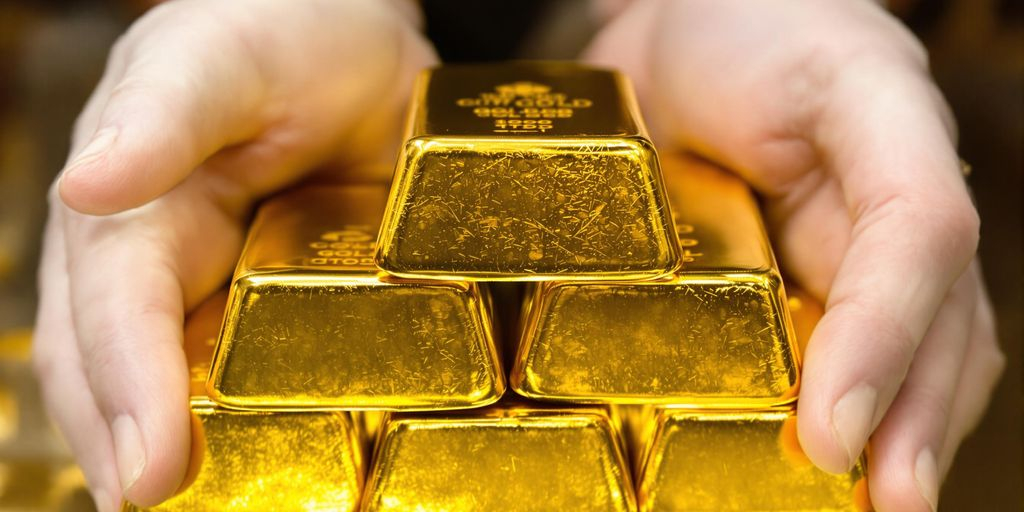
Investing in gold may seem super safe, especially when the economy is a bit shaky. But beware, it's not without risks. It's important to understand what can cause gold prices to move and the mistakes to avoid to keep your money safe. In this article, we'll take a closer look at the risks associated with investing in gold and how to minimize them.
Key points
- Le gold price moves a lot, it is influenced by many things like the global economic situation.
- Keeping gold at home costs money (storage, insurance) and there are fees when you buy or sell.
- Selling gold isn't always easy; you have to be careful of scams and have the right paperwork.
- Gold is subject to taxes on gains, and you may have to declare what you own, especially abroad.
- To limit risks, it is better not to put all your money into gold and to mix your investments well.
Understanding Gold Price Volatility
Risks associated with holding physical gold
Liquidity of investing in gold
When it comes to investing, liquidity is a bit like the ease with which you can turn your assets into cash without losing too much value. For gold, this is an important point to understand, because even though it's a safe haven, that doesn't mean you can sell it at the snap of your fingers.
Ease of resale of physical gold
Physical gold, whether bars or coins, is generally considered a highly liquid asset. You can sell it quite easily, often within minutes, especially if the price is favorable. It's not like real estate where you have to wait months to find a buyer. There are always buyers for gold, whether they're professionals, individuals, or even banks. The gold market is global, which means you can sell it almost anywhere in the world. This is a significant advantage, especially in times of economic uncertainty when other assets can become difficult to sell.
Gold has the unique feature of being universally recognized and accepted. Its value is not tied to a specific currency or banking system, which gives it great flexibility in times of urgent liquidity needs. It's a bit like having an emergency currency always at hand.
The importance of the certificate for the sale of gold
So, yes, gold is liquid, but there is a
The Tax Implications of Investing in Gold

Investing in gold also means considering taxation. This can seem a bit complicated, but it's important to understand it to avoid unpleasant surprises. In France, the taxation of physical gold is fairly straightforward, but there are some nuances to be aware of, especially when it comes to resale. There are two main regimes that can apply, and the choice often depends on how long you've held your gold and the documents you have.
Taxation on capital gains from gold
When you sell gold, the question of capital gains arises. Basically, it's the difference between the price you sold your gold and the price you bought it for. Tax is calculated on this difference. There is a flat-rate tax regime, the Precious Metals Tax (TMP), which is 11,5% (11% tax and 0,5% CRDS). This regime applies if you don't have proof of purchase or if you choose this option. But there is also the option of opting for the real capital gains regime, which is often more attractive if you have held your gold for a long time. With this system, a 5% reduction per year applies after the second year of ownership, which can lead to a total exemption after 22 years. This is a point that should not be overlooked for long-term investors. To manage this properly, it's essential to keep all invoices and certificates of authenticity. Without them, you risk automatically finding yourself subject to the TMP regime, even if you've held your gold for decades.
Gold taxation isn't inevitable, but rather a factor to factor into your strategy. A good understanding of the rules allows you to optimize your investment and avoid unnecessary costs. It's a bit like the weather forecast before a sea trip: you can't control it, but you can prepare for it.
Declarations of gold assets abroad
Now, this is a topic that can raise eyebrows. If you have physical gold stored abroad, or even gold accounts in other countries, you have reporting obligations in France. It's the same as for foreign bank accounts. The goal is to prevent tax evasion and money laundering. Failure to declare these assets can result in heavy penalties. Even though some countries don't tax precious metals when resold, France expects you to declare these assets and any capital gains realized, via form 2093, for example. This is a rule not to be taken lightly, as information exchange between countries is increasingly common. You must be transparent with the French tax authorities, even if your gold is thousands of kilometers away.
Tax advantages of certain gold coins
Yes, there are gold coins that benefit from a special tax regime, which can make their investment in gold Even more interesting. We're talking about investment gold coins. For a coin to be considered as such, it must meet several criteria:
- Having been struck after 1800.
- Have a title of at least 900 thousandths (90% pure gold).
- Have been legal tender in its country of origin.
- Be sold at a price that does not exceed by more than 80% the value of the gold it contains.
These pieces are exempt from VAT upon purchase, which is already a significant advantage. And upon resale, they can benefit from the real capital gains regime with the deduction for holding period, as mentioned above. This is why pieces like the Napoleon, the Sovereign or the Krugerrand are very popular with investors. They combine the intrinsic value of gold with a more lenient tax framework. This is an option to seriously consider if you are looking to optimize your investment.
The risks of government regulation
Minimize risks through an informed investment strategy
Investing in gold is a bit like sailing the high seas: you need a good map and a good boat. Without a clear strategy, you can quickly find yourself in trouble. The idea is not to just buy gold because everyone's talking about it, but to do it thoughtfully so that it truly serves your financial goals.
The Importance of Portfolio Diversification with Gold
It's often said that you shouldn't put all your eggs in one basket. This is especially true when it comes to investing. Gold is a safe haven, yes, but that doesn't mean it should be your only investment. Gold can act as a shock absorber when other markets are down, but it does not guarantee consistent returns. You have to think of it as one piece of the puzzle, not the whole puzzle. Consider spreading your assets across different types of assets: stocks, bonds, real estate, and of course, precious metals like gold and silver. This helps reduce the overall risk of your portfolio. If one sector takes a hit, the others can compensate. That's true security.
A well-diversified portfolio is more resilient to market fluctuations. Gold, with its low correlation to other assets, is an excellent tool for this diversification, providing protection against economic shocks.
The ideal percentage of gold in an investment portfolio
So, how much gold should you have? There's no one-size-fits-all answer; it depends on the individual. Your age, financial situation, and risk tolerance all play a role. But generally, experts suggest a range. Too little, and gold won't have a protective impact. Too much, and you could miss out on growth opportunities elsewhere. Here are some points to consider:
- Risk profile: If you are rather cautious, a higher percentage can be considered.
- Investment horizon: For the long term, gold can be a good stabilizer.
- Objectives: Are you looking to protect your capital, speculate, or both?
Generally, we often talk about 5% to 15% of the portfolio. Some go as high as 20% if the economic situation is very uncertain. But beyond that, it becomes risky. You also need to think about invest in silver for even further diversification.
Regular investment versus one-time investment
When you buy gold, you can do it all at once or little by little. A one-time investment is when you invest a large sum at once. This can be good if you think the price is low and will rise. But if you're wrong, you risk losing big. Regular investment is the opposite: you buy small amounts at regular intervals, for example, every month. This is called the "cost averaging" method.
Here's why regular investing is often preferred:
- Price smoothing: You buy at different prices, which reduces the risk of buying everything at the highest.
- Less stress: No need to constantly monitor the market to find the "right time."
- Discipline : It helps build long-term wealth without getting carried away by market emotions.
This is a calmer, safer approach, especially for beginners. It allows you to build a solid position without taking unnecessary risks.
Common Mistakes to Avoid When Buying Gold

Investing in gold is a bit like trying a new recipe: if you don't follow the steps and forget ingredients, the result could be disappointing. It's the same with gold. Many people dive in without really understanding the intricacies, and that's where the problems begin. There are some classic pitfalls you must avoid if you want your investment to be a success.
Ignoring the costs associated with holding gold
When you buy physical gold, you often think about the purchase price and resale. But there are other costs that can eat into your profits, and it's important to keep them in mind. It's a bit like buying a car: the purchase price is only part of the story; there's also insurance, maintenance, and fuel. It's the same with gold. You have to think about storage, insurance, and even purchase and resale premiums. These costs can really make a difference in the long run. For example, if you store your gold in a bank vault, there are annual fees. If you insure it, that's an additional expense. And then, when you buy or sell, there's often a small margin that the dealer takes. Not taking these costs into account means risking seeing your returns melt away like snow in the sun.
Here are some costs to consider:
- Storage fees (bank safe, private safe)
- Insurance costs against theft or loss
- Purchase premiums (difference between the market price and the reseller's selling price)
- Resale fees (commissions taken by the reseller)
- Secure transportation costs if you move your gold
Many novice investors focus solely on the price per gram or ounce, forgetting that physical gold is not a cost-free asset. These costs, even if they seem small at first, can add up and significantly reduce the profitability of your investment, especially if you plan to hold it for a long time.
Not diversifying your gold investments
It's a common mistake to put all your eggs in one basket. Some people buy only bars, others only coins, without really thinking about how they complement each other. Gold is a safe haven, yes, but it comes in different forms, and each has its pros and cons. Diversification isn't just about buying gold and stocks. It's also about diversifying within gold itself. For example, gold coins can offer better liquidity for small amounts, while bars are better for larger amounts. You also need to think about different sizes and weights. A 1 kg bar is fine, but if you need to sell a small portion of your gold, it's not very practical. Having a mix of bars and coins of different sizes can give you more flexibility. When selling gold, it's important to contact reliable professionals like Goldmarket.fr.
Underestimating the importance of the provenance and history of the pieces
When you buy gold, especially coins, you don't always think about where they come from or their history. Yet, it's super important. A coin with a clear provenance, a certificate of authenticity, is worth its weight in gold, so to speak. It's what guarantees its value and purity. Without it, you could end up with a counterfeit or a coin whose value is difficult to prove. It's a bit like buying a work of art without knowing who painted it or if it's authentic. No one would do that, right? It's the same with gold. You should always ask for certificates, check the seller's reputation, and if possible, have the coins appraised. A rare or historic coin, even if it has the same weight in gold as a common coin, can have a much higher numismatic value. But for that to happen, its history must be traceable and verifiable. Not doing these checks is taking an unnecessary risk.
Conclusion
So, that's all there is to it: we've covered the risks when investing in gold. It's clear that gold isn't a magic thing that will make you rich effortlessly. There are ups, downs, hidden fees, and even the government can get involved. But hey, that doesn't mean you should avoid gold like the plague. On the contrary, if you're smart, it can really help protect your money, especially when things are going to hell elsewhere. The trick is to not put all your eggs in one basket, to choose where you buy your gold carefully, and not to panic at the slightest change in price. Gold is a bit like a good old-fashioned life jacket: you hope you'll never need it, but you're glad to have it when the storm hits. So, do your research, be patient, and gold could well be a loyal friend for your savings.
Frequently Asked Questions
Why is gold considered a safe haven?
Gold is often considered a safe haven, meaning it can help protect your money when the economy is struggling. But be careful, its price can rise and fall quickly. It's important to do your research and not put all your money into gold.
What causes the price of gold to fluctuate?
The price of gold fluctuates all the time. It's influenced by several factors, such as global economic issues, central bank decisions, and even the demand for jewelry. For example, when there's a crisis, many people buy gold, and its price rises.
Are there any hidden fees when buying gold?
Yes, there are hidden costs. If you're buying physical gold (such as bars or coins), you need to consider the cost of keeping it safe (in a vault, for example) and insuring it. There are also often small taxes or fees when you buy and sell.
Is it easy to resell physical gold?
Selling physical gold can be quick, especially if you have the right paperwork (a certificate of authenticity). But you have to be wary of scams and always choose reliable sellers or buyers. Without a certificate, it can be more complicated.
Is investing in gold taxed?
Yes, investing in gold has tax rules. When you make money by selling gold (this is called a capital gain), you often have to pay taxes. There are also rules if you have gold abroad. Some gold coins may have tax advantages.
How to minimize risks when investing in gold?
To reduce risk, it's best not to invest all your money in gold. It's a good idea to diversify your investments, meaning you should also buy other assets like stocks or real estate. Buying a little gold regularly rather than all at once can also be a good strategy.