
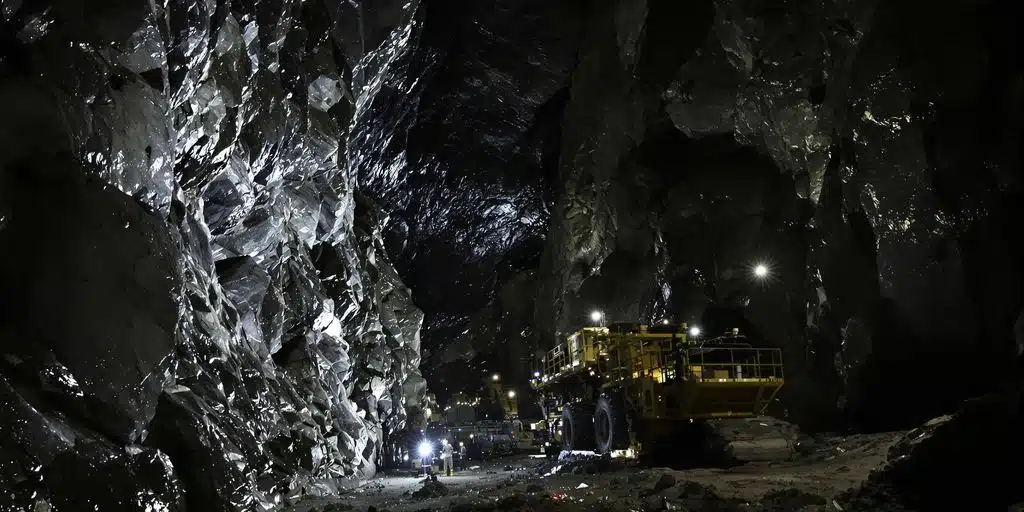
People often wonder where the largest silver mine in the world is located. This question arouses a lot of interest, especially when you consider the importance of this precious metal to our economy. Silver mines are fascinating, not only because of the quantities they produce, but also because of their history and the impact they have on the regions where they are located. This article will explore some of the largest silver operations and what makes them so special.
Key Points: The World's Largest Silver Mines
- The Saucito mine in Mexico is often cited as the largest silver mine in the world.
- Silver is often mined as a by-product of other mines, such as copper, lead, or gold.
- Mexico, Peru and Poland are among the major silver producing countries.
- Silver reserves could be depleted in less than 20 years at the current rate of extraction.
- Silver, like gold, is considered a safe haven in times of economic uncertainty.
The largest silver mines in the world
When we talk about the world's largest silver mines, we often think of impressive numbers and distant countries. But these mining sites are much more than just suppliers of the metal; they have a huge economic and social impact on the regions where they are located.
It's important to note that silver isn't always extracted on its own. It's often a byproduct of other mining operations, such as lead, copper, or gold. In fact, only 15% of the world's silver comes from mines dedicated exclusively to this metal. The main silver-producing countries are Mexico, Peru, and the United States, which extracted 2500, 2000, and 1500 tons respectively in 2021. Other countries like Bolivia, Russia, and Canada also play an important role.
Global silver reserves are estimated at around 250 tonnes. If mining continues at the current rate, these reserves could be depleted in less than 000 years. This is a factor to consider for the future.
The Saucito mine in Mexico
Located in the state of Zacatecas, the Saucito mine is often cited as one of the largest silver mines in the world. It alone produces approximately one-third of Mexico's annual output, which represents nearly 700 tons of silver per year. That's truly colossal.
The Escobal mine in Guatemala
In southeastern Guatemala, the Escobal mine achieved record production of 2016 million ounces of silver in 21,2. However, its operation was recently jeopardized by a decision by the Guatemalan Supreme Court that revoked its license. This is an example of the challenges facing large-scale mining operations.
The Dukat mine in Russia
Although the precise details of the Dukat mine are less well-publicized, it is recognized as a major silver mining site in Russia. Russia is one of the world's largest producers of this precious metal.
Mining, especially on a large scale, raises significant environmental issues. It is essential to strike a balance between economic needs and the preservation of our planet.
The importance of money in the global economy
Silver, this precious metal, is much more than just a piece of jewelry or a collectible. It plays a significant role in our global economy, much like gold. It's used in a wide range of industries, from electronics to photography to medicine. Its value has endured through the ages, serving as both a currency and a store of value.
The main silver producing countries
Several countries stand out for their silver production. Mexico, for example, often tops the list, with mines like Saucito that are true giants. Peru and China follow closely behind, with major operations that contribute massively to the global supply. Russia and Australia also have notable mines.
- Mexico
- Peru
- China
- Russia
- Australia
Silver mine reserves and their potential depletion
Silver reserves aren't infinite, of course. It's estimated there's still plenty left to extract, but the question of depletion looms large in the long run. New discoveries are less frequent, and exploiting existing deposits is becoming more complex and costly. It's a bit like a piggy bank that's slowly being emptied.
Money as a safe haven
When times are uncertain, whether in the financial markets or due to geopolitical tensions, many people turn to silver. It's seen as a safe asset, something that holds its value when other investments collapse. That's why it's called a safe haven. Transactions in precious metals, like silver, are often closely followed because they can provide insight into the health of the economy. If you're looking to diversify your assets, buying 1 oz silver bars may be an option to consider.
Silver, due to its stability and industrial utility, remains a pillar of the economy, even if its production is concentrated in a few countries.
It's important to know that the price of silver, like that of gold, is set on global markets, particularly in London, which is a major center for precious metals trading. Prices can fluctuate based on industrial and jewelry demand, as well as speculation and global economic events.
Extraction techniques and environmental issues
Silver mining, like most precious metals, is a complex process that can have significant environmental impacts. There are several methods for extracting silver, which is often used as a byproduct of other ores such as copper, lead, and zinc.
Silver mining as a by-product
The majority of silver mined worldwide does not come from pure silver deposits, but rather is recovered during the processing of other ores. The main metals with which silver is associated are copper, lead, and zinc. Techniques vary, but often involve flotation processes to concentrate the ore, followed by metallurgical methods such as smelting or electrolysis to separate the different metals. For example, in the hydrometallurgical process for copper, silver can be recovered from anode slimes during electrorefining.
The challenges of large-scale mining
Large-scale mining, whether surface or underground, presents considerable challenges. The construction of surface mines requires the movement of enormous quantities of rock and earth, drastically altering the landscape. Underground mines, although less visible from the surface, pose risks to workers and require complex ventilation and support systems. Furthermore, the management of mine water, often laden with heavy metals and chemicals from the extraction processes, is a major challenge to avoid groundwater contamination.
The environmental impact of silver mining
Silver mining can have several negative environmental impacts. Water consumption is often very high, which can lead to shortages in arid regions. Mining waste, called tailings, is stored in large quantities and can contain toxic substances. If not managed properly, this waste can contaminate soil and waterways through runoff or seepage. The use of chemicals, such as cyanide in some leaching processes, also poses risks in the event of a leak. Local biodiversity can be affected by habitat destruction, noise pollution, and dust generated by mining operations. It is therefore essential to implement strict measures to minimize these impacts, such as post-closure site rehabilitation and wastewater treatment. The sale of 1 oz silver bars is a way to invest in this metal without directly contributing to these extraction problems.
The History of Silver Mining
Silver, this precious metal, has a history that goes back to the dawn of time. It has been used for millennia, long before gold, in fact. The first traces of its use date back to the 3rd millennium BC. It was already a sign of wealth and status, used for jewelry and ceremonies. Ancient civilizations, such as the Egyptians, considered it a divine symbol. It's quite fascinating to think that this metal has spanned so many eras and cultures.
Over time, mining methods have evolved, of course. Initially, it was mainly a by-product of lead and copper mining. The techniques were fairly rudimentary, but they were able to meet the growing demand. Later, with technological advances, more complex deposits could be exploited and production increased.
The history of silver mining is also marked by major, game-changing discoveries. Consider the Potosi mine in Bolivia, discovered in the 16th century. It literally flooded Europe with silver for centuries. It was an incredible source of wealth, but also of economic and social upheaval. Other major discoveries have occurred, notably in Mexico and Peru, which are still major producers today.
Silver has also played a key role in the global monetary system. It has long been used as money, often alongside gold, as part of bimetallism. The gold standard, and then the silver standard, shaped the global economy for centuries. Although its monetary role diminished with the advent of fiat currencies, silver remains an important investment metal, often considered a safe haven, much like gold. Its value is still quoted on the markets, and its demand remains strong, both for industry and investors. It is a metal that has truly stood the test of time and continues to fascinate.
Future prospects for silver production
The future of silver production is a complex subject, influenced by numerous factors, ranging from technological advances to global market dynamics. There is a trend toward innovation in extraction methods, aimed at improving efficiency while reducing environmental impact. Techniques such as leaching, for example, continue to be optimized to recover more metal with fewer resources.
Sustainable management of silver resources is becoming increasingly important. Reserves are not infinite, and responsible mining is necessary to ensure future availability. This involves better management of mining waste and more efficient use of water, both of which are crucial for the environment.
The influence of global markets on silver production is undeniable. Demand in sectors such as electronics and renewable energy, particularly solar panels, plays a major role. Furthermore, silver maintains its safe-haven status, which can influence its production depending on overall economic conditions. Interestingly, silver is often a byproduct of other mines, such as copper or lead, meaning that silver production is also linked to the demand for these other metals. For example, increased demand for copper for electric vehicles could indirectly boost silver production.
Here are some key points to consider going forward:
- Technological innovation : Development of new extraction and processing methods to increase yields and reduce costs.
- Industrial demand: Growing demand in the electronics, renewable energy and electric mobility sectors.
- Role as a safe haven: Silver continues to be seen as a safe asset in times of economic uncertainty, which supports its demand.
- Production as a by-product: The production of silver is often linked to that of other metals, creating an interdependence.
Developments in mining technologies and environmental awareness will shape how silver is extracted and used in the coming years. A balance must be struck between meeting growing demand and preserving resources for future generations.
For those considering investing, it is good to learn about the different options available, such as buying silver bars or investment coins.
The future of silver production looks bright. New technologies and more efficient extraction methods are opening exciting opportunities for this precious metal. If you'd like to learn more about investment opportunities in silver, do not hesitate to visit our website to discover our offers.
So what is the biggest silver mine?
Ultimately, identifying the "largest" silver mine really depends on what you're looking at. When it comes to annual extraction volume, the Saucito mine in Mexico seems to lead the way, producing an impressive amount of this precious metal. But other mines, such as Escobal in Guatemala or Cannington in Australia, have also made history with their record production. What is certain is that the exploitation of these deposits is a significant economic driver for the regions concerned, while also raising questions about resource management and environmental impact. Silver, like gold, continues to fascinate and play a role in our economies, whether for industry, jewelry, or as a safe haven.
Frequently Asked Questions
What is the largest silver mine in the world?
The Saucito mine in Mexico is considered the largest silver mine in the world. It produces a huge amount of silver each year, representing a large portion of Mexico's total output.
Which are the main countries that produce silver?
Mexico, Peru, Poland, Australia, and China are among the countries that produce the most silver. These countries have large deposits and use methods to extract large quantities.
Is silver always mined alone?
Silver is often found along with other metals such as lead, copper, or gold. Therefore, it is often extracted as a by-product in mines seeking other precious metals.
What is the use of money in our daily lives?
Silver is very useful in many areas. It is used to make jewelry and decorative objects, but also in electronics and even in medicine for certain applications.
Since when has man used money?
The history of silver mining goes back a very long way. People were already using it in ancient times to make jewelry and coins. Techniques have evolved considerably since then.
Will the silver reserves soon disappear?
Scientists believe there is still plenty of silver to be found, but caution is needed. If we continue to mine it as we are today, the reserves could be depleted quite quickly, perhaps in less than 20 years.
