
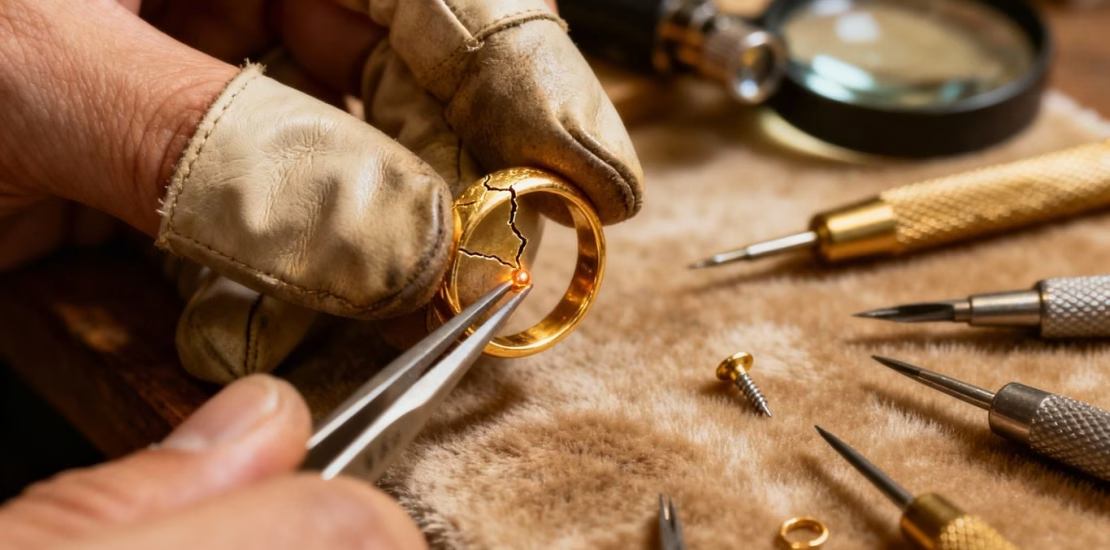
Have you noticed a small crack in your favorite gold jewelry? Don't panic, it's not necessarily the end of its story. As with many things, repair is often possible. But what exactly is the process for repairing a crack in gold jewelry? It can seem complicated, especially if you've never done it before. We'll look at how it works, from the initial steps to tips on when it's best to leave it to the professionals.
Key Takeaways
- Before any repair, it is important to properly identify the type of crack and assess its extent to know how to proceed.
- A meticulous cleaning of the jewelry is the first essential step to clearly see the damage and prepare the area to be repaired.
- Soldering is a common technique for closing a crack, but it requires precision and expertise to avoid damaging the gold.
- For more complex defects, such as significant deformations or the repair of settings, calling on a professional jeweller is often the best solution.
- The cost of a repair varies greatly depending on the complexity of the job, the time spent, and the materials required.
Understanding cracks in gold jewelry
Your gold jewelry, those little treasures that accompany you every day, can unfortunately show signs of wear over time. It's not uncommon to discover a small crack, a dent, or a scratch that dulls their shine. Before considering repairs, it's important to understand what can happen to your precious pieces.
Common types of damage to gold jewelry
Gold, while precious, is not indestructible. It is often alloyed with other metals to increase its strength, but this does not make it immune to damage. Here are the most common problems you might encounter:
- Scratches and scuffs: This is the most common type of damage. Simply wearing your jewelry, rubbing it against other objects, or even other jewelry can leave marks. They are often superficial, but they dull the shine.
- Teeth and deformities: A slightly too strong impact, a fall, or excessive pressure can bend or deform your jewelry, especially if it's delicate. A ring can deform more easily than a thick bracelet, for example.
- Loss of precious stones: If your jewelry is set with stones, these can become detached. The prongs that hold them can wear down over time or be damaged by an impact, leaving the stone vulnerable.
- Cracks: A crack can appear following a significant impact, repeated stress on a fragile area, or sometimes even due to manufacturing defects not initially visible. They can be more or less deep.
Identify signs of deterioration
The first step is to carefully examine your jewelry. Take the time to look at it in good lighting. Look for signs of wear:
- General appearance: Has the gold lost its shine? Does it have dull areas or subtle color changes?
- Living area : Look for scratches, small bumps, or areas that appear flattened.
- structure: Check the condition of the clasps, hinges (for bracelets or necklaces), and especially the stone settings. Are the prongs securely in place? Does the stone move?
- Visible cracks: Examine the joints, fold areas, or places that experience more stress. A crack can look like a thin line, sometimes almost invisible.
Assess the extent of the damage
Once you've identified the signs, you need to try to understand the severity of the problem. A small scratch on a flat surface won't have the same impact as a deep crack in a structural part of the jewelry.
It's important not to underestimate damage. A small crack can widen over time and with wear, and a deformation can weaken the entire piece. If you have any doubt about the durability of your jewelry, it's best to refrain from wearing it until a professional assessment is performed.
To help you assess the situation, you can perform a simple strength test. Gently hold the piece of jewelry and try to twist it very slightly. If you feel unusual resistance, excessive flexibility, or hear a cracking sound, it's a sign that the structure is compromised. For rings, check if the setting is still perfectly round or if it has become oval. For jewelry with stones, gently shake it to see if the stones are securely set. These observations will give you a clearer idea of the complexity of the repair required.
The preliminary steps to the repair
Before you even think about repairing a crack in your gold jewelry, there are a few preparatory steps you shouldn't overlook. It's a bit like laying the groundwork before building something solid. If you skip these steps, the repair might not hold or might not be as beautiful as you hoped.
Thorough cleaning of the jewelry
The first thing to do is thoroughly clean your jewelry. Dirt, dust, or product residue can hinder repairs, especially if you plan to solder. Gentle cleaning is usually sufficient. Take some lukewarm water, add a few drops of mild soap, and let your jewelry soak for about fifteen minutes. Then, use a soft-bristled toothbrush to gently remove dirt from any crevices. Rinse well with clean water and dry with a soft, lint-free cloth, such as a microfiber cloth. This also allows you to better see the exact extent of the damage.
Testing the structure's resistance
Once your jewelry is clean, you need to assess its durability. If the piece is old or already seems fragile, proceed with caution. Check if the metal moves, and look for other weak points. Sometimes, a crack can indicate that the metal is weakened in that area. If you feel the piece is very fragile, it's best to entrust the repair to a professional. Attempting to repair a weak structure could worsen it. This is an important step to determine whether you can continue the repair yourself or if you need to seek out a jewelry expert.
Prepare the necessary equipment
If you decide to do the repair yourself, make sure you have all the necessary materials on hand. For a simple solder joint, you might need a small blowtorch, solder rods suitable for gold, and pliers. If you're working on a scratch, gold polishing cream and soft cloths will be helpful. It's also advisable to have something to protect any gemstones in your piece, such as fine sand or refractory clay. Having everything within easy reach prevents interruptions and mistakes during the process. Also, consider a well-lit and ventilated workspace, especially if you're using tools that generate heat. If you need advice on tools, feel free to consult online resources. repair of gold rings.
It's always best to start with the simplest and least invasive steps. If you're unsure, it's better to stop and seek professional advice rather than risk further damaging your precious jewelry.
Repair techniques for cracks
The weld of the junction
When a crack appears, especially if it's located at an existing solder joint, the most common repair technique is soldering. It's a bit like gluing two pieces together, but with molten metal. First, the area to be soldered must be thoroughly cleaned to remove any traces of dirt or old material. Then, a blowtorch is used to heat the metal around the crack. While this is heating, a gold rod (or a gold alloy of the same color) is applied, which will melt and fill the gap. Precise control of the heat is crucial; too little and the solder won't adhere, too much and you risk melting the jewelry or damaging any stones. This operation requires a steady hand and a good understanding of metals.
Restoring a gold frame
Sometimes, it's not just a crack, but the entire structure of the setting that has been damaged. It may be bent, flattened, or show significant signs of wear. In this case, the repair goes beyond simple soldering. It involves restoring the piece of jewelry to its original shape. This may involve carefully straightening it, reinforcing weakened areas, or even adding metal to fill gaps. It's a job that requires patience and a good understanding of how gold bends and is worked. Specialized tools are often used to shape the metal without breaking it.
Restoring a surface crack
A surface crack is often a small, deep scratch or a mark that hasn't penetrated all the way through the metal. For this type of problem, polishing can sometimes be the solution. This involves very lightly sanding the damaged area to remove the cracked portion, then polishing to restore the metal's shine. It's a bit like sanding and varnishing a wooden piece of furniture. You need to choose the right grit of sandpaper (or rather, polishing compound) to avoid removing too much material. The goal is to make the surface smooth and uniform again. If the crack is more pronounced, you might need to use a filling technique before polishing, but for minor imperfections, polishing is often sufficient.
It's important to remember that gold is a relatively soft metal. Cracks and deformations are therefore quite common, especially with jewelry worn regularly. Each type of damage requires a specific approach to be properly repaired and restore the piece to its full beauty.
Specific repairs for jewelry defects

Correction of deformities and teeth
Sometimes, a bump or excessive pressure can leave marks on your gold jewelry. A ring might bend slightly, or a bracelet might develop a small dent. If the damage isn't too severe, it's sometimes possible to fix it yourself, but you must be very gentle. For a slightly bent ring, you can try laying it flat on a hard surface and applying gentle, even pressure to straighten it. For a bracelet, it's a bit more delicate; you really need to feel the metal and avoid forcing it to prevent breakage. If you're unsure of yourself, or if the deformation is significant, it's best to leave it to a professional. They have the tools and expertise to restore your jewelry to its original shape without further damaging it.
Refixing of precious stones
Sometimes the prongs holding a gemstone can wear down or loosen over time. If you notice a stone moving even slightly, it's important to act quickly before it falls out. The first thing to do is carefully examine the prongs. If they're just a little separated, you can try gently pulling them together with small, fine tweezers. Be careful not to scratch the gold or the stone. If the prong is broken or badly damaged, or if the stone has fallen out completely, you absolutely must consult a jeweler. They can repair the prong or create a new one, and most importantly, they will ensure the stone is securely fastened and won't move again. This is a delicate operation requiring precision.
Restoration of shine and polish
Over time and with use, even the most brilliant gold can lose some of its shine. Everyday scratches can dull the surface. To restore the luster to your jewelry, a good polish can work wonders. You can find polishing kits specifically designed for gold in jewelry stores or specialty shops. Generally, you just need to apply a small amount of product to a soft cloth and gently rub the area in a circular motion. Be patient and avoid applying too much pressure, especially if the piece has fine details or gemstones. After polishing, wipe with another clean cloth to remove any residue. If your jewelry has significant sentimental value or is very old, it's always best to consult a professional before attempting any repairs.
When to call a professional
Sometimes, despite your best efforts, certain gold jewelry repairs go beyond simple DIY. It's wise to know when to hand the job over to someone with experience.
Identifying complex repairs
If your jewelry has significant damage, such as a clean break or major deformation, simple soldering is unlikely to be sufficient. Antique or very fragile pieces also require special attention. Keep this in mind, especially if the jewelry has strong sentimental or historical value.
- Major disruptions: If part of the jewelry is broken off cleanly or if the structure is compromised.
- Severe deformities: When metal is bent or twisted to the point of losing its original shape.
- Antique or fragile items: Jewelry with a history or made of very fine metals requires expert handling.
- Complex inclusions: If the crack affects a precious stone or a delicate engraving.
The complexity of a repair should not be underestimated. Improper handling can sometimes worsen the problem, making the repair more expensive, or even impossible.
The skills of a good repairman
A skilled jeweler possesses specific expertise. They know how to handle gold without further damaging it, choose the right soldering technique, and ensure the repair is both strong and discreet. They also have the appropriate equipment, such as powerful loupes, precision tools, and suitable soldering equipment.
Find the right jewelry expert
To find the right person, don't hesitate to ask for recommendations from people you know or check online reviews. A trustworthy professional will be transparent about the repair process, the cost, and the timeframe. They will also be able to give you a clear estimate before starting the work. Remember that the quality of the repair depends largely on the skill of the craftsman.
The cost of repairing gold jewelry
So, let's talk money. How much will it cost to restore your favorite gold jewelry? It's a question everyone asks, and the answer, as is often the case, isn't so simple. It depends on many things, actually.
Factors influencing the price of repair
Several factors will influence the final price. First, the complexity of the work. A small repair on a fine chain is not the same as a complete restoration of an antique setting with intricate details. The size of the crack, its depth, and whether it affects a fragile part of the piece of jewelry—all of these factors are important.
Then there's the type of jewelry and its intrinsic value. Repairing a simple ring will generally be less expensive than restoring an ornate bracelet or a pendant with precious stones. The quality of the gold used (18 karat, 14 karat, etc.) can also have an influence, although it's often the craftsman's skill that matters most.
Here's a brief overview of the costs for common repairs, but keep in mind that these are estimates:
| Type of fault |
|—|—|
| Welding a joint | €30 – €60 |
| Crimping repair | €40 – €80 |
| Polishing and finishing | €20 – €40 |
| Surface crack repair | €50 – €100 |
| Refixing a stone | €50 – €200 (depending on the stone) |
Cost estimation for various defects
To give you a clearer idea, here are some concrete examples:
- A simple weld Repairing a small break in a chain or clasp can cost between 30 and 60 euros. It's often quite quick for a jeweler.
- Restoring a frame A ring that has been damaged, for example a slightly deformed ring, will require more work and could cost between 40 and 80 euros. If the deformation is significant, the price can be higher.
- Restoring a surface crack Repairing a more visible part of the piece, such as a ring or bracelet, will require meticulous soldering and polishing. Expect to pay between 50 and 100 euros, or even more if the crack is extensive.
- If a precious stone has come looseThe cost will depend heavily on the stone. Replacing a small zirconia will be much less expensive than resoldering a diamond or emerald. Expect to pay from 50 euros for imitation stones to over 200 euros for more expensive gems, not including the cost of the stone itself if it is lost.
It's always best to request a detailed quote before committing. A good professional will take the time to examine your jewelry and explain the necessary work, as well as the associated cost. Don't hesitate to compare quotes from several jewelers if you have any doubts.
Remember that the price often reflects the quality of the work and the craftsman's expertise. A gold piece of jewelry is an investment, and sometimes spending a little more for a quality repair will save you from future disappointments. Also, keep in mind that some professionals, such as those specializing in buying and selling gold, may have extensive knowledge of repairs or be able to direct you to the right experts. in jewelry.
Repairing gold jewelry can sometimes be expensive, but it's important to know that the price varies considerably. It depends on the complexity of the work and the materials used. If your favorite ring needs a little TLC or your chain is broken, it's a good idea to get some information. To find out the exact cost and get a personalized quote, visit our website today!
In short: breathe new life into your jewelry
There you have it, now you know how to approach repairing a crack in your gold jewelry. Whether you choose to tackle minor repairs yourself or entrust your piece to a professional for more complex work, the important thing is to proceed with care. Remember that regular maintenance is the best way to prevent damage and keep your jewelry sparkling. Take the time to pamper your treasures; they'll reward you!
Frequently Asked Questions
What are the most common problems with gold jewelry?
Your gold jewelry can sometimes get scratched, slightly bent, or even lose a small stone. Sometimes, the color may also appear less vibrant than before. These are normal things that happen with time and use.
How can I clean my gold jewelry at home?
For easy cleaning, you can use lukewarm water with a little mild soap. Soak your jewelry for a few minutes, gently scrub with a soft toothbrush, rinse, and dry with a soft cloth. It will look brand new!
Can I repair a small scratch myself?
For minor scratches, you can try using a special gold polishing cream with a soft cloth. Gently rub the scratched area. If the scratch is deep, it's best to seek professional help.
When should I absolutely consult a jeweller?
If your jewelry is badly damaged, if there's a significant crack, if a gemstone has fallen out, or if you're unsure of yourself, it's best to entrust the repair to a jeweler. They have the tools and expertise to do a perfect job without further damaging your piece.
How can I tell if a jeweler is competent to repair my gold jewelry?
Look for a jeweler with good reviews who specializes in gold jewelry repair. Don't hesitate to ask for quotes and look at examples of their work. A good repairer will be able to explain what they will do and give you an idea of the cost.
How much does it usually cost to repair a crack in a piece of gold jewelry?
The price can vary considerably. It depends on the size of the crack, the complexity of the repair, and the type of gold. A simple solder repair may cost less than one that requires replacing part of the setting. Always ask for a quote before starting any work.
