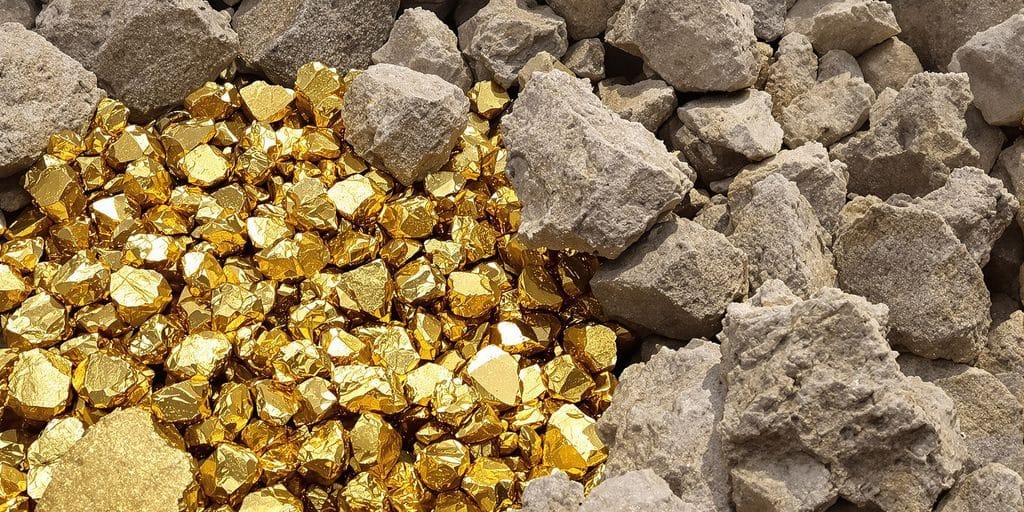
You may be wondering what the difference is between gold resources and reserves, or how these terms are classified internationally. This is an important question if you're interested in investing in gold or simply looking to better understand the market. This article will shed some light on these distinctions and the classification systems used.
Key Takeaways
- It is essential to distinguish resources (the geological potential) from reserves (the economically exploitable part), a fundamental difference in the evaluation of gold deposits.
- International frameworks such as CRIRSCO and UNFC provide standards for classifying gold resources and reserves, ensuring greater comparability and transparency of data.
- The assessment of gold resources and reserves takes into account various factors, including geology, confidence in the data, economic aspects such as market prices, and technical and operational considerations.
- A clear classification of gold resources and reserves is essential for investors, as it helps assess risks, compare opportunities and secure investments.
- The classification of physical gold also takes into account its purity, weight, certification, as well as aspects such as the state of preservation for collectible pieces, all of which influence its value and liquidity.
Understanding the distinction between gold resources and reserves
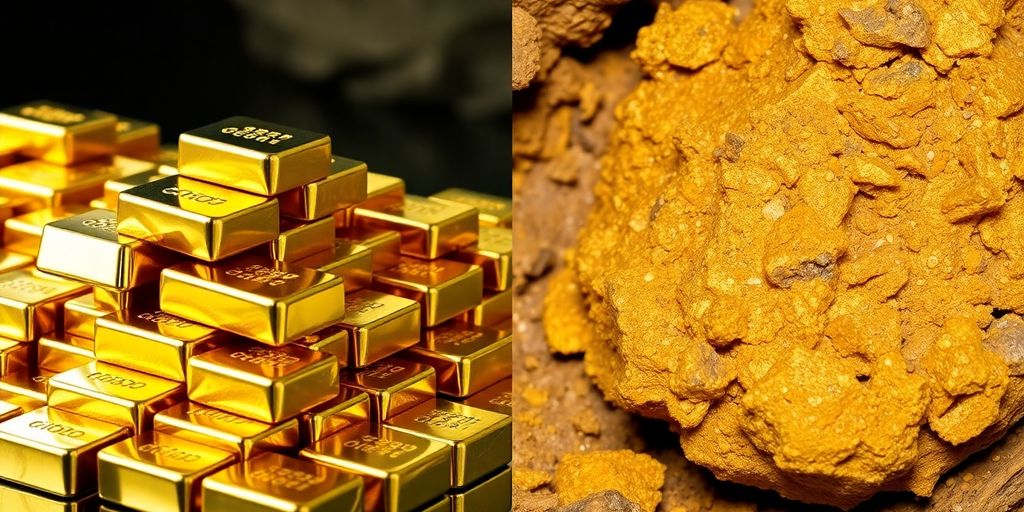
To fully understand the world of gold investing, it is essential to distinguish between the terms "resources" and "reserves." These two concepts, while related, do not refer to the same thing, and understanding them is fundamental to assessing the value and potential of a gold deposit or asset.
Definition of mineral resources
A mineral resource, in the context of mining, represents a concentration or occurrence of material of intrinsic economic interest in or on the Earth's crust. To be considered as such, there must be reasonable prospects for economic extraction. Resources are classified according to different levels of geological confidence, ranging from inferred to indicated to measured. The estimation of quantity, grade (or quality), and geological continuity is based on data collected by various techniques, such as outcrops, trenches, or drilling. The higher the level of confidence, the more reliable the data.
Definition of mineral reserves
Mineral reserves are the economically exploitable portion of a mineral resource. They are subdivided into probable reserves and proven reserves, reflecting an increasing degree of confidence. To move from a resource to a reserve, modifying factors must be applied, including technical, economic, legal, and environmental aspects. Broadly speaking, a reserve is a resource that can be confidently extracted and sold profitably. This is the key difference: a reserve is a resource that is economically viable to extract under current market conditions and with available technology. Gold, like other precious metals, is subject to these classifications.
The international classification of resources and reserves
To ensure global comparability and transparency, several classification frameworks have been developed. Perhaps the best known is the CRIRSCO (Committee for Mineral Reserves International Reporting Standards) code, which serves as the basis for many national codes such as Australia's JORC or Canada's NI 43-101. There is also the United Nations Resource Classification (UNFC). These systems aim to standardize how resources and reserves are reported, taking into account varying levels of geological confidence and economic and technical factors. They are essential for investors who want to assess the quality and quantity of gold deposits.
International classification frameworks for precious metals
To fully understand how gold resources and reserves are assessed, it's important to look at international classification frameworks. These systems are designed to ensure everyone speaks the same language, whether for mining projects or investments. They provide a clear framework for assessing the quantity and quality of deposits.
The role of CRIRSCO and its codes
CRIRSCO (Committee for Mineral Reserves International Reporting Standards) plays a central role. It is a committee that brings together several organizations from different countries, each with its own reporting code. Think of the JORC code in Australia, the CIM code in Canada, or the PERC code in Europe. CRIRSCO's goal is to harmonize these codes so that information on mineral resources is comparable worldwide. These codes define standards for the presentation of exploration results, resources and mineral reserves. They specify the criteria that must be met for reporting to be reliable and transparent, which is extremely important for investors who want to know where their money is going. Information on the historical development of these codes can be found on the PERC website. PERC Reporting Standard 2021.
The United Nations Classification of Resources (UNFC)
The United Nations Framework Classification for Resources (UNFC) is another important approach. It was developed by the United Nations Economic Commission for Europe (UNECE). The UNFC is broader than the CRIRSCO codes because it is not limited to minerals but covers all natural resources, including energy. It classifies resources according to three main axes: the degree of advancement of geological study, the level of feasibility assessment, and the criterion of economic viability. The idea is to create a unified framework to make national systems compatible and comparable, thus facilitating investment, particularly in economies in transition. It classifies resources according to their economic potential and technical maturity.
European and pan-European standards
Europe also has specific standards. The PERC (Pan-European Reserves & Resources Reporting Committee) code is a notable example. It aligns with the CRIRSCO principles and aims to provide a clear and accurate reporting framework for exploration results, resources, and mineral reserves in Europe. These standards are essential to ensure the consistency and comparability of data within the European market and with international standards. They are particularly useful for mining and exploration projects in the European Union, ensuring that the information reported is reliable for investors and stakeholders.
Criteria for evaluating gold resources and reserves
To fully understand the value and potential of a gold deposit, it is important to consider the criteria used to evaluate resources and reserves. It's not just a matter of raw quantity; several factors come into play to determine whether gold can be mined profitably.
Geological and trust factors
The first thing to consider is the geology of the deposit. We look at the concentration of gold (grade), the size of the mineralized zone, and how the gold is distributed. The more precise information we have on these aspects, the greater the confidence level in the estimate. There are several categories, ranging from inferred resources (the least certain) to measured resources and proven reserves (the most certain). International classification, such as CRIRSCO, uses these confidence levels to categorize deposits. It is important to understand that converting a resource into a reserve depends on the application of numerous factors, known as modifying factors. These factors include, but are not limited to, mining, ore processing, metallurgical, infrastructure, economic, marketing, legal, and even ESG (environmental, social, and governance) factors.
Economic and market factors
Of course, the gold price on global markets is a determining factor. If the price of gold is low, a deposit that was profitable yesterday may no longer be today. Price volatility and market forecasts must therefore be taken into account. Extraction and processing costs also play a major role. If these costs are too high compared to the potential selling price of gold, mining is not viable. It is also necessary to consider the demand for gold, whether for jewelry, industry, or as a safe haven. Sustained demand can positively influence the economic viability of a project. For example, industrial demand for gold in electronic components or solar panels can have an impact on its long-term value.
Technical and operational factors
The technical feasibility of extraction is another key consideration. Is the deposit accessible? What type of mine will be used (open-pit, underground)? Do available technologies allow for efficient and safe extraction? The costs of processing the ore to extract the gold must also be considered, as well as the necessary infrastructure: roads, energy, water, and qualified personnel. Mining waste management and compliance with environmental regulations are also important technical and operational aspects that can influence the overall profitability of a gold mining project. The purity and certification of bullion, for example, are standards that guarantee the quality and value of physical gold on the market, an important aspect for investors seeking to diversify their assets.
The Importance of Classification for Gold Investment
When you're investing in gold, how it's classified can really make a difference in your portfolio. It's not just a matter of knowing how much gold there is, but also understanding the reliability of those estimates and whether it's actually profitable to mine it. Think of it like a treasure map: some areas are well explored and treasure is almost guaranteed, while others are just clues. International classification is kind of what brings order to all of this.
Investment security and risk assessment
Classification helps you know what you're putting your money into. For example, "reserves" are generally considered safer because they're already proven economically viable. "Resources," on the other hand, are a bit more speculative. Understanding this difference is like knowing whether you're buying a house that's already built and inspected, or just the land with an idea of what you might build on it. It allows you to better assess the risks. For example, knowing that central banks hold huge reserves of gold in the form of bullion, often 400-ounce bars, shows a level of confidence in these physical assets.
Transparency and comparability of data
Thanks to frameworks like CRIRSCO and the United Nations Classification System (UNFC), information on gold deposits is becoming clearer and more comparable worldwide. Previously, each country had its own way of doing things, making comparisons difficult. Now, it's easier to know if a mining company is serious and if its resource estimates are reliable. It's a bit like having a common language for talking about gold.
Facilitation of international investments
When everyone speaks the same language thanks to these classifications, it becomes easier for investors, whether in France or elsewhere, to understand and compare opportunities. This makes cross-border investments smoother and safer. If you look at 250g gold bars, for example, their purity and certification often comply with international standards, making them easier to trade and evaluate on the global market.
Specifics of classification for physical gold
When we talk about physical gold, the classification takes a slightly different turn than that of mineral deposits. Here, we're not talking about tons of ore in the ground, but about finished products, whether ingots or coins. And for the latter, several aspects must be considered to properly classify them and understand their value.
Purity, weight and certification of bullion
Gold bars are a bit of a standard for physical investment. What matters most is their purity, generally expressed in "per mille" (‰). The target is 999,9‰, or 99,99% pure gold. This is called the fineness. Then there's the weight, which can vary: 1 gram, 5 grams, 1 ounce (approximately 31,1 grams), 50 grams, 100 grams, 250 grams, 500 grams, and even 1 kilo. The higher the weight, the more attractive the price per gram is generally, but the less flexible the bar is for resale. Every serious bar must be accompanied by a certificate of authenticity and bear a unique number to ensure its traceability. Internationally recognized bars are those that meet the "Good Delivery" standards of the LBMA (London Bullion Market Association). It's a bit like the bullion's identity card, guaranteeing its quality and acceptance in global markets. Think of it as a quality guarantee, much like when you buy certified products.
Features of investment coins
Gold coins are a different world. They have a history, a numismatic value that can be added to their intrinsic gold value. What differentiates them is their purity (often 900‰ or 920‰, like the Napoleon or the British Sovereign, because pure gold is too soft to withstand striking), their weight (which varies enormously, from the small gold Louis to the large Mexican 50 Pesos), their diameter, and of course, their year of minting. The rarity of a coin, its state of preservation (we speak of "quality" or "grade" in numismatics, with scales like Sheldon or descriptions like "SPL" for Splendid), and collector demand can drive up their price well beyond the simple price of gold. Some coins, like the George V Gold Sovereign, are highly sought after for their history and value.
State of conservation and numismatics
Condition is truly the key to collectible coins. A coin in perfect condition, called "FDC" or "Superb" (SUP), will be worth much more than a worn coin, even if they contain the same amount of gold. This is where specialized services come in, evaluating and encapsulating coins to guarantee their condition and authenticity. It's a bit like having a painting appraised before buying it. For common investment coins, we mainly look for a "Very Fine" (VF) or "Splendid" (SPL) condition so that they are considered "marketable," meaning they can be easily resold on the market, beyond their simple weight in gold. This is an aspect that requires a keen eye, because the price difference between one condition and another can be enormous.
Gold as a safe haven and its classification
Gold is often referred to as a safe haven, and for good reason. For millennia, it has proven its ability to weather economic crises and retain its value when fiat currencies collapse. It's a bit like having insurance for your assets. When markets crash, gold tends to hold its own, or even increase in value. That's why many people, including central banks, hold a significant portion of it in their reserves.
Gold in the face of inflation and economic crises
When inflation rises, the purchasing power of your money decreases. Gold, on the other hand, tends to keep pace with, or even outpace, inflation. It's almost as if gold is saying, "No worries, I'm here to protect your savings." During times of economic uncertainty, such as recessions or geopolitical tensions, investors often turn to gold. They're looking for a safe place to put their money, away from market turmoil. It's a bit like the "flight to quality" principle.
The role of central banks and gold reserves
Central banks around the world hold enormous amounts of gold. Think of it like a national vault. These gold reserves serve to stabilize a country's currency and strengthen its international credibility. It's a symbol of a nation's financial strength. Central banks buy and sell gold based on global economic conditions, and their movements can influence the price of gold. It's a complex game where gold plays a central role in global monetary stability. Gold is a recognized safe haven.
Liquidity and tradability of gold assets
One of the great things about gold is that it's easy to buy and sell anywhere in the world. Whether you have a bar, a gold coin like the Napoleon 20 Francs, or even shares in a mining company, gold is generally liquid. This means you can convert it into cash fairly quickly if you need to. Bullion coins, for example, are in high demand and easily traded on the market. It's like having an asset that has universal value, no matter where you are.
Gold is often seen as a safe bet when things are going badly in the world. It is classified as a safe investment, meaning it retains its value even when other things lose their value. It's a precious metal that has survived the ages, always valued for its beauty and rarity. If you'd like to learn more about how gold can help protect your money, visit our website for tips and offers.
In conclusion: what to remember
So, that's it. You see, there's a real difference between resources and reserves, even if we sometimes use the terms a little loosely. It's a bit like the difference between what you might do and what you Allez really do. Understanding these nuances is essential if you're even remotely interested in precious metals, whether it's for investing or just to know what we're talking about. I hope this has enlightened you and that you feel a little more comfortable with these concepts. Remember, the most important thing is to fully understand what you have in your hands.
Frequently Asked Questions
What is the difference between a resource and a gold reserve?
Resources are a bit like a large reserve of gold that we think we can find in the ground. Reserves are the part of these resources that we are sure we can extract and sell, because we know how to do it and it doesn't cost too much.
What is the role of CRIRSCO in classification?
CRIRSCO is a group that created rules to clearly describe where the gold is and how much can be extracted. It's like a guide so everyone speaks the same language when it comes to gold in the ground.
What are the criteria for evaluating the gold that can be extracted?
To determine whether we can actually extract the gold, we look at several things. Do we know where it is (geology)? Can we sell it for enough to cover the costs (economics)? And do we have the machines and techniques to do it (technology)?
How do you classify physical gold that you can buy?
When we talk about bars or coins, we look at their purity (how much gold they contain), their weight, whether they are properly certified, and whether they are in good condition. For older coins, their value can also depend on their rarity and history.
Why is gold said to be a safe haven?
Gold is seen as a safe bet when the economy is doing badly. If prices rise too high (inflation) or if banks run into problems, gold often retains its value. That's why central banks keep a large amount of it.
Are antique gold coins graded differently from bullion?
Yes, investment coins like Napoleons or Sovereigns are graded according to their gold weight, purity, and condition. Some older coins may be worth more due to their history and rarity, in addition to their gold value.