

You're probably wondering how much a gold Napoleon is worth these days. It's a question many people ask, especially when you think of gold as a safe investment. These pieces, steeped in history, have stood the test of time and continue to generate interest. But their value isn't fixed. It fluctuates with the market, much like a stock on the stock market, but with the added charm of old. So, to find out what the current price of a Napoleon in gold, you have to look at several things.
Key Takeaways
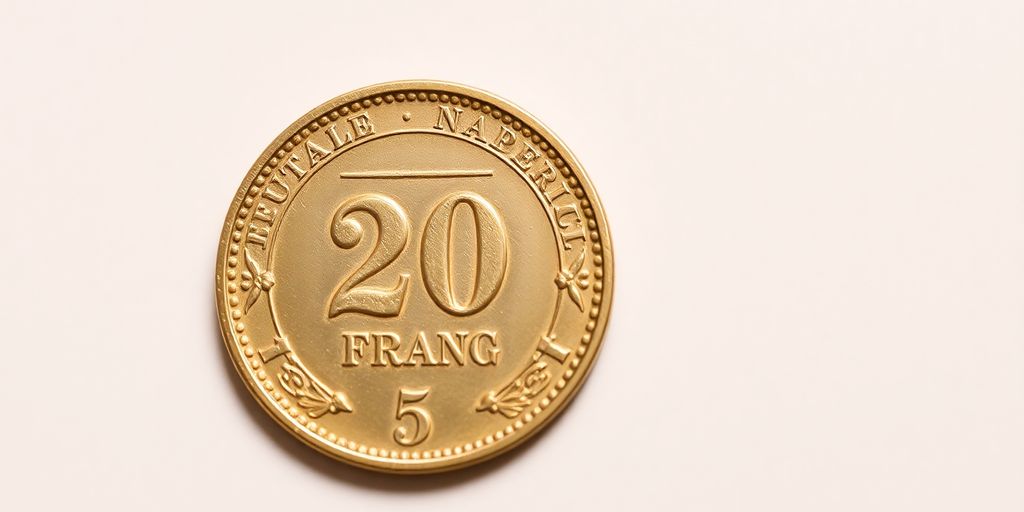
- The Napoleon 20 francs is a historic French gold coin, minted between 1803 and 1914, containing 5,80644 grams of pure gold and having been legal tender.
- The value of a gold Napoleon depends on the price of gold, but also on its premium, which varies according to its rarity, its state of preservation and market demand.
- Investing in a Napoleon is considered a safe haven, as these coins are easy to resell and allow you to diversify your assets.
- Taxation on the resale of a gold Napoleon can be done either by a flat rate tax of 11,5% or by the capital gains regime on movable property (36,2%).
- The different effigies (Napoleon I, Napoleon III, Marianne, Rooster) and specific vintages can influence the numismatic value of a Napoleon coin.
Understanding the value of a 20 Franc Gold Napoleon
The Napoleon 20 francs, a historic gold coin
The Napoleon 20 franc coin is much more than just a gold coin. It's a piece of French history, first minted in 1803 under the Consulate, then under the Empire and subsequent regimes. Its face value of 20 francs has survived the ages, and its gold composition makes it a sought-after collector's item and investment. These coins feature various effigies, from Napoleon Bonaparte himself to Marianne, including the Gallic Rooster. The coin was legal tender in France until the start of the First World War. Coins minted between 1898 and 1914, featuring the Marianne or Rooster effigies, are particularly sought after by collectors.
The current rate of the Napoleon 20 francs
The price of a 20-franc Napoleon fluctuates constantly, primarily based on the price of gold on international markets. Currently, prices range around €547 for a standard coin, but this figure can go much higher. It's important to note that this price is a base price, and several factors can increase it. For example, some coins, such as the 100-franc Napoleon, can fetch considerable sums, sometimes exceeding €90 for rare vintages in perfect condition. Therefore, always check the daily price before making a transaction.
Factors influencing the value of a 20 Franc Gold Napoleon
The value of a 20-franc Napoleon is not limited to its weight in gold. Several factors come into play:
- The price of gold: This is the most determining factor. When the gold price rises, the value of the coin follows.
- The bonus: This is a kind of additional cost added to the price of gold by weight. It takes into account the rarity of the coin, its condition, collector demand, and production costs.
- The state of conservation: A coin in perfect condition, without scratches or wear, will be worth more than a damaged one. Numismatists use precise classifications to assess this condition.
- Rarity and vintage: Some mintage years or mint marks (the place where the coin was made) are rarer than others. These rare coins can increase their value considerably among collectors.
- Numismatic value: Beyond the gold, the coin may have historical, artistic, or symbolic value that appeals to enthusiasts. This can drive the price well beyond its intrinsic value.
It is advisable not to buy gold on impulse. It is best to do your research and compare offers to make the best possible choice.
The different 20 Franc Gold Napoleons and their value
When we talk about the Napoleon 20 franc coin, it's important to know that there isn't just one coin. In fact, this French gold coin has gone through several regimes and changes of effigy, which makes it extremely interesting from a historical and collecting point of view. Each period has left its mark, a bit like an open book on the history of France.
The effigies and inscriptions of Napoleons
The 20 franc gold coins have seen several faces and inscriptions. We can find:
- Consulate : Bonaparte First Consul, with inscriptions such as "BONAPARTE PREMIER CONSUL" and "RÉPUBLIQUE FRANÇAISE". These issues are often very limited and sought after by collectors.
- First Empire: Napoleon I, either bareheaded or laureate, with "NAPOLEON EMPEROR" and "FRENCH EMPIRE". The value can vary considerably depending on the year and the mint.
- restoration: Louis XVIII or Charles X, with "KING OF FRANCE". The motto on the edge is often "DOMINE SALVUM FAC REGEM".
- July Monarchy: Louis-Philippe I, bearing "KING OF THE FRENCH" and "20 FRANC". The motto is "GOD PROTECT FRANCE".
- Second Republic: Louis-Napoléon Bonaparte, with a unique and sought-after issue, keeping the motto "GOD PROTECT FRANCE".
- Second Empire: Napoleon III, with either bare head (1853-1860) or laureate head (1861-1870). Here too, the value depends on the year and the mint, sometimes with an imperial eagle on the reverse.
- Third Republic: These include the Genie, Ceres, and the Rooster and Marianne. These coins are more common and represent a more stable investment value, especially the "Rooster" models.
Features and value of the different issues
Each issue has its own specific characteristics that influence its value. For example, coins from the Consulate or the First Empire, especially those minted in less common mints or in very small quantities, can fetch prices far higher than their weight in gold. This is where the collectible aspect comes into play. An 1809 coin from the Bordeaux mint (letter K), for example, of which only 2 were minted, is considered very rare.
It's important to note that even though the Napoleon 20 francs is a gold coin, its value is not limited to its metal content. Rarity, condition, and collector demand play a major role in its final price. This is called the numismatic premium.
The numismatic value of rare coins
The numismatic value is a bit like the icing on the cake for some of these coins. It adds to the intrinsic value of the gold. The coins most sought after by numismatists are often those with minting defects, engraving errors, or those that belong to very limited series. Sometimes, a coin can be worth several times its weight in gold simply because it is extremely rare and coveted by collectors. This is why it is always good to carefully identify the coin you own, because a simple difference in year or mint can radically change its value. If you are looking to buy a Napoleon, it is advisable to learn about the different issues and their specificities to make the best choice, perhaps even on websites specializing in French gold coins.
The key elements that determine the price of a 20 Franc Gold Napoleon
When we talk about the value of a Napoleon Gold 20 Francs, there are two big pieces to consider. First, there's the price of gold itself, this thing that goes up and down depending on a lot of things, like the global economy or political decisions. It's a bit like watching the weather, it changes all the time.
The importance of the gold price
The price of gold is really the basis. If the price of gold soars, the value of your coin will inevitably follow. This is the most obvious factor, the one that makes your coin worth at least its weight in precious metal. You have to keep an eye on the financial markets to understand how this is evolving. For example, in times of uncertainty, gold tends to be sought after, which drives up its price. It's a bit of a refuge for investors when things are going badly elsewhere. It's important to know that the price is generally expressed in dollars per ounce, so there's also the exchange rate to take into account if you're buying or selling in euros.
The bonus: an added value to consider
But be careful, a 20 Franc Gold Napoleon isn't just worth its weight in gold. There's also what's called the 'premium'. It's a kind of bonus added to the price of pure gold. This premium depends on several things. First, the rarity of the coin: certain years or certain mints are harder to find. Then, its condition plays a huge role. A coin that has been well kept, without too many scratches or wear, will be worth more than one that has circulated a lot. It's a bit like with classic cars; condition matters a lot. Demand from collectors and investors also influences this premium. If everyone starts wanting Napoleons from a certain year, their price will rise, even if the price of gold remains stable. This is what makes these coins interesting; they have an intrinsic value linked to gold, but also an additional value linked to their history and rarity. That's why it's worth looking beyond the price of gold when buying or selling a Napoleon. You also need to consider liquidity—how easy it is to resell. More common coins, such as those from the Third Republic, are generally easier to trade than very rare vintages. It's a balance between profit potential and ease of transaction. Consider looking at different Napoleon shows to understand these variations.
The state of conservation and its impact on the price
The condition of the coin is truly a crucial point. We are talking here about the quality of the mintage, the presence of defects such as scratches, shocks, or even wear due to circulation. Coins are often classified according to numismatic grades, ranging from 'very fine' to 'uncirculated' (which means it is perfect, as if it had just been minted). The higher the grade, the more valuable the coin is. A coin in 'uncirculated' condition can be worth much more than a coin in simply 'very fine', even if they are from the same vintage and have the same weight of gold. It's a bit like with old books; a copy in perfect condition will always be more sought after. It is therefore important to examine the coin carefully before buying or selling it. Look closely at the details, the brilliance of the gold, the clarity of the reliefs. This is what makes the difference between a common coin and a collector's item that can gain a nice amount of value.
Investing in a 20 Franc Gold Napoleon: a safe haven
When times get a bit turbulent, whether in the financial markets or the economy in general, many people turn to gold. It's a bit like insurance. Napoleon coins, because they're made of gold and have been around for a long time, are seen as a way to keep your money safe. Their value tends to rise when other investments fall, which can help protect your savings from inflation or major economic troubles. It's a way to diversify, to avoid putting all your eggs in one basket. The Napoleon 20 francs is a historic French gold coin, world-famous and unmissable.
The good thing about Napoleons is that they're pretty easy to sell. Everyone knows about these coins, and there are always people who want to buy them. So, if you ever need to get your money back quickly, it's usually not a problem. This is an advantage over other things that can be more complicated to exchange for cash. Adding Napoleons to your investment collection is a good idea to balance things out. Gold doesn't always move with stocks or bonds. Sometimes, when the stock market falls, gold rises, and vice versa. This can help reduce the overall risk of your portfolio. It's a strategy to make your investments more stable over the long term. To learn more about this topic, you can visit Gold Price: What is a Napoleon?.
Technical characteristics and composition of the 20 Franc Gold Napoleon
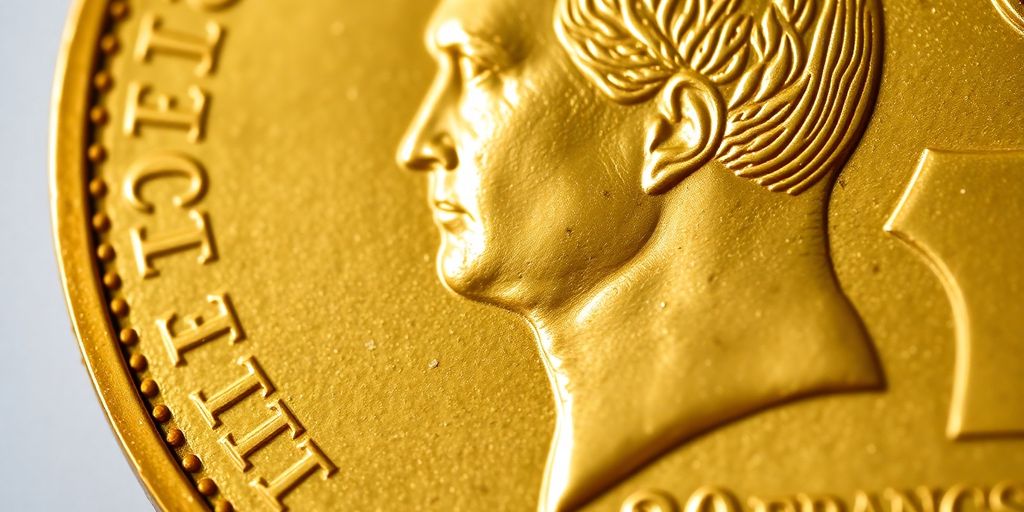
When discussing the 20 Franc Gold Napoleon, it is important to understand its physical characteristics and composition. These coins, although bearing the same name, may have slight variations depending on the year of minting and the mint. Overall, however, they share well-defined technical specifications.
Weight, diameter and thickness of the part
A 20 Franc Gold Napoleon coin weighs approximately 6,45 grams. Its diameter is 21 millimeters, making it quite handy, much like a modern coin. Its thickness is around 1,3 millimeters. These dimensions are fairly standardized, although minor variations may exist.
The pure gold content and alloy used
What makes these coins valuable is, of course, their gold content. A 20 Franc Napoleon contains approximately 5,81 grams of pure gold. This represents 90% of the coin's total mass. The remaining 10% is an alloy, usually composed of copper. This alloy is not there by chance; it makes the coin more resistant to daily wear and tear. Without this addition, pure gold, being very malleable, would deteriorate much more quickly.
The difference between pure gold and historical gold coins
It's important to understand that most antique gold coins, including Napoleons, are not 100% pure gold. This is a common misconception. The 90% fine gold for Napoleons (which corresponds to a fineness of 900 thousandths) was a standard to ensure the coins' durability. More modern coins, such as certain specific ingots or investment coins, can reach 99,9% pure gold, but they are also more fragile. Thinking about the difference between a pure gold ingot and a historical coin like the Napoleon is to understand why the latter has survived the test of time while maintaining its beautiful appearance. It's a bit like comparing a silver ingot to a beautiful silver coin; the alloy makes all the difference in terms of preservation.
Taxation and tax regime of the Napoleons Gold
When talking about gold Napoleons, you should know that their tax treatment is quite advantageous, especially when purchasing them. In France, these gold coins are considered investment gold. For a coin to be classified as such, it must meet a few criteria: it must have been minted after 1800, have a gold content of at least 900 thousandths, have been legal tender in France, and its sale price must not exceed the value of the gold it contains by more than 80%. Thanks to this, there is no VAT on purchase, which is already good news. This is an important point when thinking about investing in coins like the 20-franc Napoleon.
However, when you decide to sell your Napoleons, there is a tax. Gold coins like Napoleons are considered precious metals once they are no longer legal tender. In France, you have the choice between two tax regimes for resale:
Tax benefits when purchasing
The purchase of 20-franc gold Napoleons is exempt from VAT. This tax benefit applies to all coins that meet the following criteria: fineness greater than or equal to 900 thousandths, having been legal tender in the country of origin, minted after 1800, and traded at a price close to the gold value contained. Napoleons meet these criteria, whether purchased in a boutique or on specialized platforms. Please note that VAT applies if you purchase a coin mounted on a piece of jewelry or if the coin is very rare and considered a collector's item rather than an investment item.
Taxation options when reselling
When you sell your Napoleons, you have the choice between two tax regimes:
- Flat rate tax of 11,5% : This amount includes 0,5% CRDS. This is a fixed tax.
- Capital gains regime on movable property : Here, the rate is 36,2%. The advantage is that there is a 5% reduction per year of ownership beyond the second year. This can become very interesting if you keep your coins for a long time.
You need to do your due diligence to determine which of the two systems is best suited to your situation at the time of sale. Keeping your items in good condition can also influence their value, and therefore the calculation of the capital gain when reselling. It is important to choose the right time to sell to optimize your yield on gold.
Understanding the capital gains regime on movable property
This system is often the most attractive in the long run. The progressive tax reduction allows you to reduce your tax over the years. For example, after 22 years of ownership, you benefit from a 100% capital gain reduction, which means that the sale is then completely tax-free. You should carefully weigh the pros and cons of each option before deciding.
Wondering how Napoleon Gold coins are taxed? This is an important question for any investor. We'll explain it simply for you. Come and find out how the tax works. management of these gold coins on our website.
So, how much is your 20 franc Napoleon really worth?
To summarize, the value of a 20-franc Napoleon isn't just a matter of its weight in gold. Of course, the price of gold plays a role, but you also have to look at the condition of the coin, its year, and whether it's rare. Sometimes, a small premium is added, especially when times are a bit complicated economically. So, if you have one of these coins at home, it's best to check the current market prices. It's a bit like checking the weather forecast to see what the weather will be like tomorrow; you have to keep informed to know what your Napoleon is really worth.
Frequently Asked Questions about the 20 Franc Gold Napoleon
How do you know how much a gold Napoleon is worth today?
The price of a 20-franc Napoleon coin changes constantly. It depends primarily on the value of gold on the world market. However, be careful, the price can also be slightly higher than the value of the gold it contains. This is called the “premium,” which can vary depending on the rarity of the coin and its condition.
What are the different types of gold Napoleon coins?
There are several types of 20-franc Napoleons. They feature different images on them, such as Napoleon himself, Marianne, or a rooster. Older or rarer coins are often more expensive for collectors.
Is it worth buying gold Napoleons?
Yes, buying gold Napoleons can be a good idea. Gold is often seen as a safe way to maintain its value, especially in times of economic decline. They're also easy to buy and sell.
How are taxes going with the gold Napoleons?
When you buy gold Napoleons, you don't have to pay VAT. However, when you resell them, there is a tax. You can choose between a fixed tax or a tax on the profits you made.
How to recognize a real gold Napoleon and where to buy one?
To be sure you have a genuine Napoleon, you should check its condition and make sure it hasn't been damaged too much. It's advisable to buy them from trusted sellers to avoid fakes or pieces in poor condition.
Why be interested in the 10 franc Napoleon?
The 10-franc Napoleon, also known as the “half-Napoleon,” is a smaller and therefore less expensive coin. It's the perfect way to start investing in gold. Its value can also increase during times of crisis.