Investing in gold may seem like a great idea to secure your assets, but beware of the pitfalls! Many people take the plunge without really understanding the best practices, which can be costly. To help you navigate this world, we're going to take a look at the mistakes to avoid when investing in gold. Here's a look at the missteps to avoid.
Mistakes to avoid when investing in gold
- Don't rush into buying gold only when things are bad. Instead, consider a long-term strategy and buy gradually, even when the economic climate is calm. This allows you to smooth out prices better.
- Do your homework before you buy. Look for reliable sellers, check the gold's purity and certifications, and understand all fees. Don't be tempted by prices that seem too good to be true.
- Think of gold as a way to build your wealth over time, not as a way to make a quick buck. It takes time for your investment to cover the initial costs and start earning a return.
- Tailor your choice of gold products to what you're looking for: bars or coins? Each format has its advantages depending on your goals. Also consider the flexibility each size offers.
- Don't put all your eggs in one basket. Gold is a safe haven, but you need other types of investments too. Keep an eye on your portfolio to keep it balanced.
Avoid Impulse Gold Buying
Gold often attracts attention, especially when economic news is a bit choppy. It's understandable to want to protect your money. But be careful, rushing in without thinking can cost you dearly. You really want to avoid jumping into gold only when things are going badly, as that's often when prices are at their highest. Think of it as a long-term strategy, not a quick fix for immediate problems. You need to have a clear vision of what you want from gold in your assets. Don't get carried away by the emotion of the moment. A thoughtful approach is the key to making your investment truly profitable over the long term. Remember to diversify your investments and not put all your eggs in one basket, even if that basket is made of gold. It's important to do your research before making any purchase to be sure you're making the right choice and avoid unpleasant surprises. Getting started with gold requires some preparation to avoid falling into common pitfalls. Before you begin, clearly define your investment objectives and risk tolerance. Understand how gold can protect your savings, particularly against inflation. Invest in gold requires a measured and informed approach to get the most out of it in the long term.
The importance of research before investing
Before you jump into buying gold, it's really essential to do your homework. It's not like buying a new pair of shoes; it's an investment that requires some thought. If you don't take the time to do your research, you could end up with products that don't meet your expectations, or worse, get scammed by unscrupulous practices. Think of it like planning a trip: you wouldn't leave without knowing where you were going or how to get there, would you? It's the same with gold. Proper preparation will save you a lot of hassle and ensure your money is working for you in the best possible way.
Choosing a trusted dealer
Finding the right person or company to buy your gold is a lot like choosing a good mechanic. You want someone who is reliable, transparent, and knows their stuff. A trusted dealer will clearly explain the purity of the gold they sell, the fees associated with your purchase, and answer all your questions without hesitation. Be wary of those who are vague, rush you to make a decision, or demand payment before you've even seen the product. These behaviors are serious red flags. Take the time to compare several sellers, read reviews, and don't hesitate to ask for references. Your peace of mind is priceless.
Check the purity and certification of gold
Gold isn't always the same. Its value depends heavily on its purity, often expressed in carats or thousandths (like 999,9‰ for pure gold). An ingot or coin must have a certification that attests to its quality. Standards like those of the LBMA (London Bullion Market Association) are a guarantee of reliability. When you buy, make sure the product comes with a certificate of authenticity. This document must state the weight, purity, serial number of the ingot, and the name of the foundry. Without this information, it's difficult to ensure you're buying quality gold and that you can easily resell it later.
Understanding Market Fees and Prices
Le gold price Gold fluctuates daily, much like stock prices. It's important to know where the market stands before you make your purchase. But be careful, the price displayed isn't always the final price. Sellers often add a premium, which covers their costs (manufacturing, transportation, storage) and their margin. This premium can vary from seller to seller and by product type (bar, coin, weight). It's important to understand these costs to know how much you're actually paying for the gold itself. If you're buying a bar, for example, the price of gold will have to rise enough to cover this premium before you start making a profit. This is why a long-term view often makes more sense with gold.
Taking a long-term view on gold
When investing in gold, you really have to think about the future. It's not the kind of thing that's going to make you rich overnight—far from it. Think of it as a way to build your wealth over time, much like buying a house that appreciates in value over time. Gold fluctuates, of course, but historically, it tends to hold up well over the long term, especially when things are bad elsewhere in the economy. That's why you have to be patient.
Considering gold as a wealth building
Gold is a bit like insurance for your money. It doesn't earn interest like a stock or savings account, but it maintains its value, or even increases it, when other assets lose it. It's a way to protect your savings against inflation or crises. So, when you buy gold, don't expect to receive dividends. Think of it as an asset you're adding to your wealth, something that will be there for you in the years to come.
Understanding the time needed to cover initial costs
When you buy physical gold, whether it's a bar or a coin, there is always an additional charge, called the
Choosing the right gold product for your goals
When you decide to invest in gold, it's important to know that there are several forms in which you can acquire this precious metal. Each format has its own characteristics, advantages, and disadvantages. It's not a matter of choosing randomly, but rather of making an informed choice based on what you expect from your investment. Think of it like choosing the right tool for a specific job; you wouldn't pick up a hammer to tighten a screw, would you? It's a bit the same with gold.
Differentiate between gold bars and coins
The two most common forms of physical gold are bars and coins. Bars, often called
The crucial importance of diversification
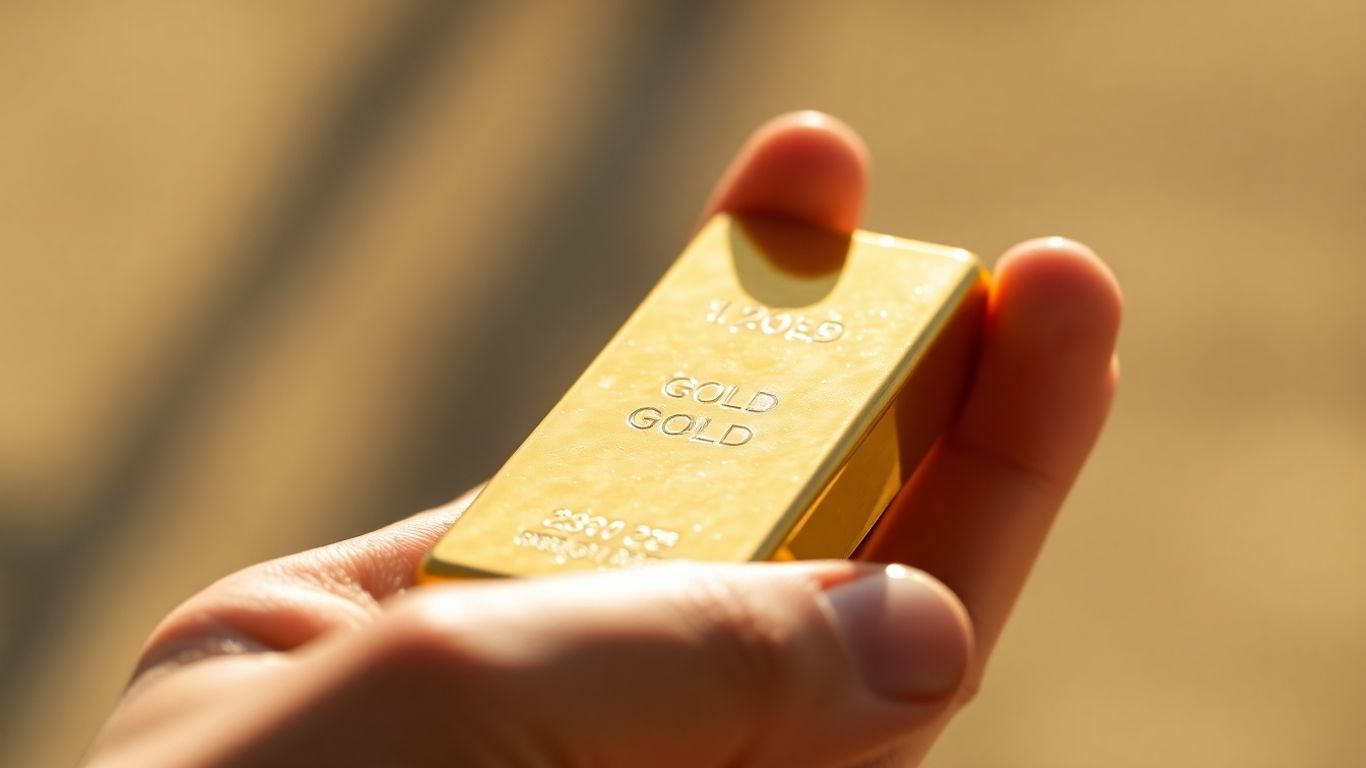
You know, we often hear that you shouldn't put all your eggs in one basket. Well, when you're investing in gold, that's even more true. It's easy to get carried away by the shine of the yellow metal and end up with a large portion of your savings concentrated solely in bars or coins. This is a mistake that can be costly. Diversification is about spreading risk and balancing your portfolio between what's safer and what's less safe. Gold is a great way to diversify because its price doesn't always move with stocks or other investments. Sometimes, when the stock market falls, gold rises, and vice versa. It's a bit like having insurance for your money.
Do not concentrate all your capital on gold
It's tempting, I know. Gold has this image of a safe haven, of something solid that weathers crises. But if you put absolutely all your money into it, you miss out on other opportunities and expose yourself to risk if, by some misfortune, the gold market takes a hit. Think of it like this: if you only have shares in one company, and that company goes bankrupt, you lose everything. With gold, it's the same, but on a larger scale. You have to think about different types of assets so that if one doesn't do well, the others can compensate.
Balancing your portfolio between risky assets and safe havens
The idea is to have a mix. You can have investments that have higher growth potential, but are also riskier, like certain stocks or funds. Alongside that, you put more stable things, like gold, which are there to protect your capital. It's often said that a good allocation is to have between 5% and 20% of your portfolio in precious metals, but it really depends on your risk tolerance and your goals. There's no magic formula that suits everyone.
Regularly reassess the composition of your portfolio
Just because you've diversified your portfolio once doesn't mean it's good forever. Markets change, and so do your personal circumstances. You need to take a look from time to time, say once a year, to see if everything is still well balanced. If you've had a lot of success with your stocks and they now represent too large a portion of your wealth, it might be time to sell some to buy more gold, or vice versa. It's a bit like maintaining your car: you need to check regularly that everything is working properly.
Vigilance on the purity and authenticity of gold
When investing in gold, it's absolutely essential not to overlook the purity and authenticity of the metal you're purchasing. It's a bit like checking the quality of ingredients before cooking a dish: without the right ingredients, the result won't be up to scratch. Gold, as an investment asset, has a direct relationship to its fine metal content. Ignoring this detail means you risk paying a premium price for something worth much less.
Understanding the impact of purity on value
Gold purity is generally expressed in carats or thousandths. The purest gold, 24-karat gold, is 99,9% fine gold. This type of gold is sought after for investment purposes because it is the most malleable and least likely to deteriorate over time. Alloys, such as 18-karat gold (75% pure gold), are more durable and often used in jewelry, but their intrinsic value is less for an investor. It is therefore essential to always check the title of the gold you buy.
| Purity (Carats) | Purity (Thousandths) | Main Composition |
|---|---|---|
| 24 carats | 999,9 ‰ | Fine gold |
| 22 carats | 916,7 ‰ | Gold (91,7%) + Copper/Silver (8,3%) |
| 18 carats | 750 ‰ | Gold (75%) + Copper/Silver/Zinc (25%) |
Ensure the provenance and certification of the gold
Beyond purity, provenance and certification are guarantees of trust. A gold bar or coin should ideally be accompanied by a certificate of authenticity. This document attests to its purity, weight, and sometimes even its origin. Recognized refiners, such as those certified by the LBMA (London Bullion Market Association), are a benchmark in the field. They guarantee that the gold meets strict quality and ethical standards. Trusting reputable sellers and requesting these documents gives you the means to avoid unpleasant surprises. You can consult the criteria for choosing a gold seller to help you.
Beware of abnormally low prices
Let's be honest, if a deal seems too good to be true, it often is. A gold price that's much lower than the current market price could be hiding several issues: lower purity than advertised, counterfeiting, or questionable provenance. Gold mining can sometimes be linked to illegal activities, and low prices can be a sign that the seller isn't following ethical or legal standards. Therefore, it's wise to shop around and be wary of overly attractive promotions. A good understanding of gold prices will help you assess whether the price being offered is realistic.
Protect yourself against scams and counterfeits
Investing in gold is great, but doing it safely is even better. Unfortunately, the gold market attracts its fair share of scammers looking to take advantage of less-savvy investors. Therefore, it's essential to know how to protect yourself. Never be seduced by prices that seem too good to be true, as this is often the first sign of a problem.
Favor reputable and certified resellers
To avoid unpleasant surprises, the first step is to choose your seller carefully. Choose companies with a good reputation, a good online reputation with positive customer reviews, and ideally, those certified by recognized organizations in the precious metals field, such as the LBMA (London Bullion Market Association). These labels are a guarantee of reliability and compliance.
Systematically check certificates of authenticity
Every gold coin or bar you purchase must be accompanied by a certificate of authenticity. This document is your best guarantee. It must clearly state the weight, the purity of the gold (expressed in carats or thousandths, such as 999.9‰), the manufacturer's name, and, if possible, a unique serial number. Take the time to verify this information, and if you have any doubts, don't hesitate to ask for clarification or compare it with reference certificates.
Pay attention to prices and conditions of sale
As mentioned, an abnormally low price is a red flag. Always compare the price offered with the current market price of gold. Also, pay attention to the terms of sale: hidden fees, unclear return policies, or a lack of transparency about the gold's origin are all points that should make you think twice. An honest seller will be transparent about all these aspects.
To avoid unpleasant surprises and imitations, it is essential to remain vigilant when shopping. Make sure you know the signs that differentiate a genuine product from a counterfeit. For more advice and to buy with confidence, visit our website today!
In conclusion: your journey in gold investing
There you have it, you now have all the information you need to approach investing in gold with greater peace of mind. We've looked at the pitfalls to avoid, such as rushing into crises or neglecting diversification. Never forget that gold is, above all, a long-term vision, a way to build your wealth over time. Take the time to choose your products carefully, compare offers, and, above all, educate yourself. A well-thought-out investment is a safer investment. So, go for it, but do it wisely!
Frequently Asked Questions
Why shouldn't I buy gold only when there is a crisis?
Buying gold only when things are bad is a bit like buying an umbrella when it's already pouring! You risk paying more and missing out on times when gold was more affordable. Gold is good for protecting your money over the long term, not just for when you're stressed. Think of it as security for your money, no matter how calm or stormy it is outside.
How do I know if my gold seller is reliable?
To be sure your seller is honest, you'll have to do a little detective work! Check if they're transparent about the purity of the gold, if they provide clear certificates, and if they clearly explain prices and fees. A good seller will answer all your questions without any problems and has a good reputation. Don't hesitate to compare several sellers before making your decision.
Is gold a good investment to make money quickly?
Gold is more like a fine wine—it improves with age! It's not a get-rich-quick scheme. It takes time for the price of gold to rise enough to cover what you initially spent. So, think of gold as a way to build your wealth over time, not as a magic piggy bank for quick profits.
Gold bars or coins: which one to choose?
It depends on what you want to do! Bullion is often more advantageous if you want to buy a large quantity of gold because the price per gram is lower. Coins are sometimes easier to resell in small quantities and can have historical or collector's value. Think about what seems simplest and best suited to your goals.
Why is it important not to put all your money in gold?
Putting all your money in gold is like putting all your eggs in one basket. If the price of gold ever drops, you lose everything! Your money should be spread across different types of investments (stocks, real estate, and a little gold, for example). This allows you to take less risk and better protect your money in case something goes wrong with just one of these investments.
What can make a gold price suspicious?
If a price seems too good to be true, be wary! An abnormally low price could mean the gold is not very pure, comes from questionable sources, or even a counterfeit. Gold must be of a certain purity to be valuable. If the price is much lower than the normal rate, there's a good chance there's a problem.