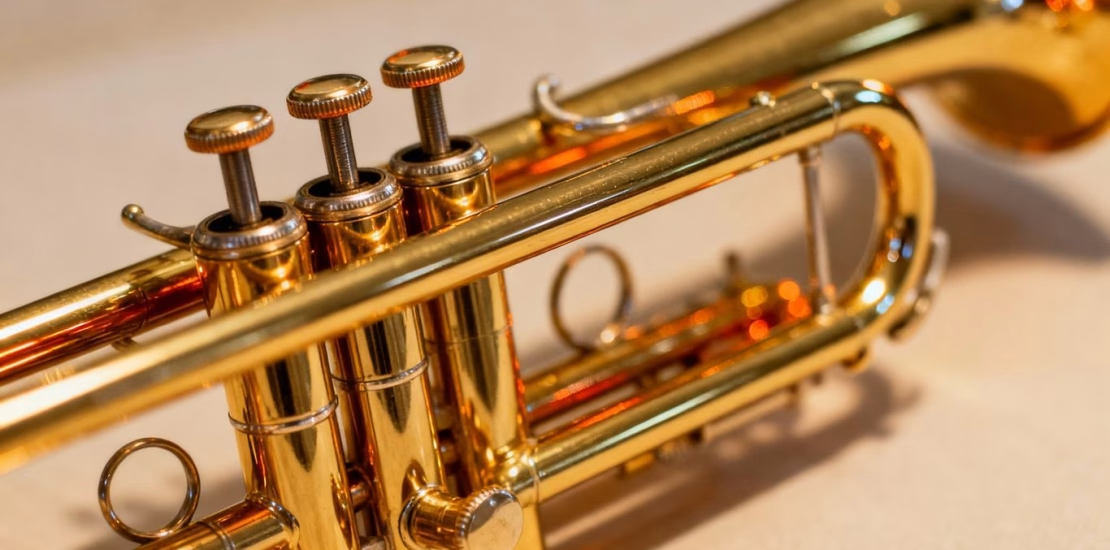
You might be wondering if gold, this precious metal, has a place in the world of music. It's an interesting question, as gold is often associated with jewelry or investment, not really with the instruments used to create melodies. Yet, you might be surprised to discover where and how gold can appear in the musical realm. So, let's dive in together to see if gold is used in musical instruments.
Key Takeaways
- Gold is not a primary material for constructing the majority of musical instruments, but it is sometimes used, often in the form of an alloy or plating, particularly for high-end instruments.
- In wind instruments, such as some flutes, gold may be used for the body or certain parts, potentially influencing the richness of sound and timbre.
- Gold is more frequently found in instrument accessories, such as keys, mouthpieces or coatings, improving both aesthetics and durability.
- The use of gold in instruments is often linked to prestige and symbolic value, adding an element of luxury and exclusivity.
- Although pure gold is too soft for most instrumental applications, its alloys (such as 14 or 18 carat gold) are preferred for their combination of tonal properties and strength.
Gold in lutherie and musical instruments
When we think of gold, we often picture jewelry, ingots, or perhaps even high-tech applications. But did you know that this precious metal also has its place in the fascinating world of musical instruments? It's quite surprising, isn't it? We're not talking about making a saxophone entirely out of pure gold, as that would be far too soft to be practical. But gold, in its various forms, can play an interesting role in the construction and sound of certain instruments.
Gold as a material for instruments
Pure gold is beautiful, but it's also very malleable. Imagine an instrument that warps just by being held! Not ideal for playing a tune. That's why, when gold is used, it's almost always mixed with other metals to form alloys. These alloys provide the hardness and strength needed for an instrument. For example, some headjoints of transverse flutes, or even the entire body of high-end flutes, can be made with gold alloys. It's a bit like choosing the right material for a precision instrument; you need a balance of properties. Furthermore, gold is also used in cutting-edge applications, such as dentistry, for its corrosion resistance, which clearly demonstrates its inherent qualities.
The impact of gold on the sound of instruments
So, does gold really change the sound? The short answer is yes, but it's subtle. Musicians and luthiers often talk about a richer tone, with more overtones. Some describe a warmer, rounder sound, or one with a different projection compared to other metals like silver or brass. The difference between pure gold and gold alloys is also a factor. For example, a 9-karat gold instrument (which contains less pure gold) will sound different from an 18-karat gold instrument. It's a bit like adjusting the proportions in a recipe to achieve the perfect flavor. The karat of gold, therefore, directly influences the tonal character.
Here's a brief overview of the sound differences you might encounter:
- 9 carat gold: An interesting balance, combining qualities of silver and gold.
- 14 carat gold: It begins to offer more harmonic richness.
- 18 carat gold: Generally associated with greater sonic diversity and more pronounced harmonics.
- 24 carat gold (pure): Too soft to be used alone in most instruments, but its presence in an alloy can provide some heat.
Gold in wind and string instruments
In wind instruments, gold is often found in flutes, particularly on high-end models. Flute heads, or even entire bodies, can be made of gold alloy. For brass instruments, the use of gold is less common, but it can sometimes be found as plating or in very specific alloys for parts like valves or slides, designed to improve smoothness and durability. For string instruments, gold is less common as a primary material, but it can appear in certain accessories or as plating on metal parts for aesthetic reasons or corrosion resistance. It's a bit like choosing luxury finishes for a car; it adds a special touch.
Gold alloys and their musical applications
Gold in instrument alloys
When discussing gold instruments, it's important to understand that pure gold, the famous 24-karat gold, is far too soft to be used as is. Just imagine: an instrument that would warp simply by being held! Not very practical, is it? That's why luthiers use alloys. They mix gold with other metals to give it the necessary strength while preserving its acoustic qualities. It's a bit like cooking, where you blend ingredients to create the perfect dish.
The difference between pure gold and gold alloys
Pure gold is 24 carats; it's gold in its purest form.
Gold as a symbol of prestige in instruments
The value of gold in instrument making
When we think of gold, we often picture jewelry, ingots, or perhaps even crowns. But did you know that gold also has its place in the world of music, and not just for its brilliance? The use of gold in instrument making, while less common than silver or brass, adds an undeniable dimension of prestige. Think about it: an instrument that is not just a tool for creating music, but also a work of art, a status symbol. It's a bit like owning a luxury car or a high-end watch; it says something about you, about your appreciation for quality and exclusivity.
Gold in wind and string instruments
Gold, as a precious metal, is often reserved for instruments that aim for the pinnacle of performance and aesthetics. It is most commonly found in wind instruments, such as high-end flutes. For example, some flute headjoints, or even the entire body in the most luxurious models, may be made of gold. The idea is not simply to make it look pretty, although that is certainly an advantage. Instrument makers explore how gold, with its unique physical properties, can influence the way sound is produced and perceived. It is a constant quest to achieve a particular tone, harmonic richness, or a more immediate response from the instrument. Of course, this comes at a price, and a considerable one at that. A pure gold instrument is a rare piece, often destined for world-renowned professional musicians or wealthy collectors.
Gold as a luxury gift for musicians
Beyond its direct use in manufacturing, gold can also appear in the form of finishes or specific components. Imagine gold-plated saxophone keys, or ornaments on a violin. These golden touches add visual elegance and can, according to some, subtly influence the feel of the instrument under the fingers. For a musician, receiving a gold instrument or accessory is often a sign of exceptional recognition, a luxury gift marking a significant milestone in their career. It's a bit like giving a famous writer a gold quill; it symbolizes excellence and the value placed on their art.
The perception of quality with gold
There's no denying that the presence of gold on an instrument instantly elevates its perceived quality and value. While the sonic impact of gold is a subject of ongoing debate among musicians and luthiers, its association with luxury and preciousness is universal. When you see an instrument with gold trim, your brain immediately associates it with something special and high-end. It's a bit like dark chocolate: the more cocoa it contains, the purer and higher quality it's considered to be. Gold, in the world of instruments, plays a similar role: it signals an intention to create something exceptional, both sonically and aesthetically. It's a choice that speaks to both the ear and the eye, and let's be honest, it always makes a statement.
The history of the use of gold in music
You might be wondering when gold first entered the world of music? Well, it turns out it's not a recent invention. Gold, this precious metal that shines brilliantly, has a rich history that goes back millennia, long before anyone even thought of making instruments from it.
The first uses of gold in instruments
The earliest evidence of gold being used in instrument making dates back to a very early period. We're talking about the end of prehistory, with objects discovered in Bulgaria, for example. At that time, gold was mainly used to adorn the powerful and in religious ceremonies. The idea of using it to create sounds was still the stuff of science fiction.
It was only in Antiquity that things began to move a little more quickly. The Lydian kings, for example, were among the first to mint gold coins around the 8th century BC. But for instruments, it took a little longer. The first gold flutes, for instance, didn't appear until much later, towards the end of the 19th century. It is believed that the first flute made of an 18-karat gold alloy was created by Louis Lot in 1869. It must be said that at the time, the idea was perhaps more about giving a luxury gift to a wealthy enthusiast than about advanced acoustic research. The object itself was highly valuable.
The evolution of gold in modern instrument making
Over time, instrument making has evolved. What was once simply a symbol of wealth has become a material studied for its acoustic properties. Luthiers began experimenting with different gold alloys, such as 14 or 18 karat, to see how this influenced the sound. It was discovered that the higher the gold content, the greater the harmonic richness and tonal diversity. It's a bit like... gold alloys for instrumentsThe musicians began to appreciate these nuances.
In the 20th century, gold became more accessible for instruments, particularly flutes. What was once exceptional became more common, though it remains a high-end choice. Today, many soloists and orchestral musicians play gold instruments, some even opting for 24-karat gold alloys for the mechanism, although this remains rare and very expensive.
The role of gold in collectible instruments
Gold instruments hold a special place in the world of collectible instruments. They represent not only a technical and acoustic feat, but also an investment. Consider antique gold flutes, such as the one by Louis Lot that ended up in the hands of Jean-Pierre Rampal. Not to mention investment pieces like the Austrian Philharmonic flute, which combines the value of gold with a musical tribute. These instruments are sought after for their rarity, their history, and of course, the quality of the sound they produce. They are the symbol of exceptional craftsmanship and a passion for music and beautiful objects.
The difference between gold plating and gold alloy
When discussing gold instruments, it's easy to get confused by the terminology. You may have heard of 'gold plating' or 'gold alloy'. These are not the same thing, and the distinction is important, especially for the sound and durability of your instrument. Let's take a closer look.
Gold plating on the instruments
Gold plating is a bit like putting a thin layer of gold paint on an object. On an instrument, it means that a thin film of gold is applied to another metal, often brass or bronze. It's a fairly common technique, especially for wind instruments like saxophones or trumpets. The idea is to give the appearance of gold without using large quantities of this precious metal. It's a more economical solution, but you should know that this layer of gold is quite thin and can wear away over time and with use. If you rub too hard or if the instrument is subjected to impacts, the plating can flake off, revealing the metal underneath.
Gold alloys for instruments
Here, we're moving into a different category. An alloy is a mixture. When we talk about a gold alloy instrument, it means that gold is mixed with other metals, such as silver or copper, to form a new material. Pure gold (24 karats) is very soft, so it's not ideal for making an instrument that needs to be durable. By mixing it, we obtain a stronger material with different tonal properties. For example, a 14-karat gold alloy contains approximately 58,3% pure gold, the rest being other metals. The proportion of these other metals will also influence the color of the alloy: more copper will give a pinkish hue, more silver a paler one.
Here is a small table to help you see things more clearly:
| Gold Type | Percentage of Pure Gold (approximately) | Typical composition | Properties |
|---|---|---|---|
| 24 carats (Pure gold) | 99.9% | Gold alone | Very soft, malleable, not very resistant |
| 18 carats | 75% | Gold, Silver, Copper | More durable, intense yellow color |
| 14 carats | 58.3% | Gold, Silver, Copper | Good resistance, variable color (yellow, pink) |
| 9 carats | 37.5% | Gold, Silver, Copper | Cheaper, more durable, paler color |
The impact of the veneer on sound and durability
Gold plating, being a thin outer layer, generally has a more limited impact on the instrument's intrinsic tone compared to a solid alloy. It may add a slight brightness or extra warmth, but the core sound will come from the base metal (often brass). Its durability is its weak point. Over time, friction from hands, repeated cleaning, or even slightly acidic perspiration can cause the plating to wear away. This can reveal the underlying metal, which is unsightly and can eventually compromise the base metal's corrosion protection. A well-maintained instrument with quality plating can last for years, but it will require more care than a solid alloy instrument.
In short, if you're looking for the look of gold without the cost of a solid instrument, plating is an option. But if you're aiming for a specific sound and exceptional durability, a gold alloy instrument will be a better choice. It's a bit like choosing between a beautiful painting on a wall and solid bricks: both have their uses, but the effect and longevity aren't the same.
Gold in musical instruments: a question of sound and value
So, we often wonder if gold, this precious metal, truly has a place in the making of musical instruments, beyond mere decoration. It's a legitimate question, as gold is often associated with wealth and prestige, but what about its actual impact on the sound?
How gold influences sound volume and richness
Pure gold, as you may know, is quite soft. That's why it's rarely found in its purest form in instruments. When we talk about gold instruments, we're most often referring to alloys. The proportion of gold in these alloys, measured in carats, plays a role. For example, a 9-carat gold instrument (approximately 37,5% gold) won't have the same sound as an 18-carat gold instrument (75% gold). The higher the gold content, the more you can expect greater harmonic richness and a wider tonal palette. It's a bit like choosing between a good wine and a grand cru; the nuances are there, but they require a discerning ear to be truly appreciated.
It's also important to keep in mind that the musician themselves has a huge influence on the sound. A good musician can compensate for, or even mask, certain tonal differences due to the materials. So, even if a gold flute can offer subtleties, the skill of the player remains the determining factor. It's a bit like having a excellent electronic equipment It helps, but it's the user who makes the difference.
Gold as an investment in an instrument
Let's be honest, a gold instrument is also an investment. Think of 24-karat gold flutes, which can cost a small fortune. It's not just for the sound; it's also for the intrinsic value of the metal. Historically, gold has always been considered a safe haven, a way to protect one's wealth. Central banks hold enormous quantities of it, and even though its monetary role has evolved, it remains a tangible asset. Gold bars, like the 250g ingotThey are a good example, offering a certain level of security in times of economic uncertainty.
The combination of materials for optimal sound
Ultimately, the use of gold in musical instruments is a balancing act between materials science and the art of music. Many factors influence sound: the instrument's shape, the quality of its craftsmanship, and, of course, the materials used. Gold, through its properties and value, adds another dimension to this equation. It's not simply a matter of whether gold makes an instrument more expensive, but how it contributes to its unique sonic character and overall value. It's a combination of prestige, sonic potential, and investment, all brought together in an object designed to create music.
Gold, this shining metal, isn't just beautiful; it also plays an important role in the sound of musical instruments. Did you know that some instruments use gold to enhance their tone? It's fascinating to think that the music we love can be influenced by the value of this precious metal. If you're curious to learn more about how gold affects sound and its valueVisit our website to discover all the secrets! You might be surprised by what you learn about instruments and gold.
So, does gold in music sound good?
So, now you know that gold, this precious metal often associated with jewelry or bullion, also has its place in the world of music. It's not every day you see a solid gold violin, that's for sure, but for certain instruments, like some flutes for example, gold is used, whether for the sound or simply for prestige. It's quite fascinating to see how a material can have so many different uses, isn't it? It gives you something to think about the next time you hear a piece of music.
Frequently Asked Questions
Is gold really used in musical instruments?
Yes, absolutely! Gold, although less common than other metals like silver or brass, is sometimes used in the manufacture of certain musical instruments. It can be found in specific parts of high-end instruments, such as the headjoint or body of some flutes, or as a plating to add a touch of luxury and improve the instrument's preservation.
Does gold change the sound of an instrument?
That's an interesting question! Gold is a very malleable metal, which means it's often mixed with other metals to make it stronger, much like in jewelry. When gold is used in an instrument, especially alloyed with other metals, it can influence the sound. Some musicians believe it adds a particular richness to the tone, a unique color, or better sound projection, but this depends a lot on how it's used and the instrument itself.
Why use gold on an instrument rather than another metal?
One of the main reasons is prestige. Gold has always been associated with wealth and luxury. Using gold on an instrument, whether in alloy or plating, can make it more beautiful and desirable. Furthermore, gold does not rust and is highly resistant to corrosion, which can help preserve the instrument longer, although other metals like silver also possess this property.
Are all gold instruments made of pure gold?
No, not at all. Pure gold, called 24-karat gold, is very soft and easily deformed. To make instruments or jewelry, alloys are almost always used; that is, gold mixed with other metals such as copper, silver, or zinc. The percentage of pure gold in the alloy is indicated by the karat (for example, 9 karats, 14 karats, 18 karats). The more gold there is, the more valuable the instrument will be considered, but this is not always synonymous with better sound quality for all musicians.
What is gold plating on an instrument?
Gold plating is the application of a thin layer of gold to the surface of an instrument made of another metal, such as brass or bronze. It's a way to achieve the appearance of gold without using a large quantity of the precious metal. Plating is often done for aesthetic reasons, to make the instrument more attractive, but it can also help protect the base metal from oxidation, thus extending its lifespan.
Is gold in an instrument a good investment?
Gold itself is considered a safe-haven asset, meaning it retains its value even during economic crises. When used in a musical instrument, especially a high-value instrument made with a significant gold alloy, it can contribute to its overall value. However, it's important to understand that an instrument's value depends on many factors, including its craftsmanship, brand, rarity, and condition, not just the amount of gold it contains.