
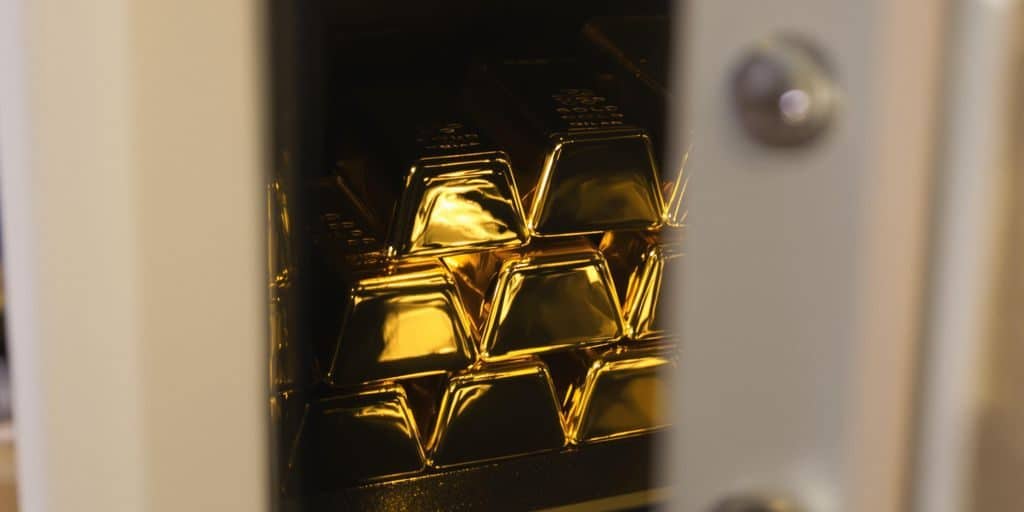
You've decided to invest in gold—an excellent way to secure your assets. But once you've acquired your coins, the essential question arises: how do you store them safely? Whether you prefer to be close to home or discreetly stored externally, there are several methods for storing your precious metals. This article guides you through the different options to answer your question: How should you store your gold coins?
Key Takeaways
- Home storage offers immediate accessibility but exposes you to risks of theft and disaster; discretion and enhanced security measures are therefore essential.
- Bank safes offer maximum security against theft and loss, but involve costs and limited accessibility.
- Third-party, bank-independent secure storage services combine high security, insurance, and easy access, representing an optimal solution for large quantities of gold.
- Handling of gold coins should be minimal and delicate, holding them by the edges to avoid scratching them or altering their value.
- Protecting gold from excessive heat and humidity is essential to preserve its integrity and market value.
Choosing the right place to store your gold coins
Choosing the right place to store your gold coins is a super important step. We all want to feel safe, and when it comes to precious metals, it becomes even more serious. So, where should you put this little treasure? This is a question that comes up often, and there's no single right answer; it really depends on your situation and your comfort level.
The Benefits of Home Storage
Keeping your gold at home means, first and foremost, having it at your fingertips. No need for an appointment or complicated procedures to access it. You are completely independent, and that's rather reassuring. It's like having your own little private bank at home. For those who like to have total control over their assets, this is ideal. You can move it around, rearrange it as you see fit, without depending on anyone. It's a significant freedom when you think about your assets.
Risks of storing gold at home
Okay, now let's talk about the downsides. The main concern when keeping your gold at home is security. Burglaries happen, and unfortunately, thieves know that gold can be very valuable. Even with a good safe, nothing is foolproof. Safes are fire and water resistant, but when faced with determined individuals, it can quickly become a problem. And then there's the matter of insurance. Finding insurance that properly covers large quantities of gold can be complicated, if not impossible. If something ever happens to you, you might not be compensated. Not to mention the stress it can cause, especially when you go on vacation. We always think about what we left behind.
You should also be aware that by keeping your gold at home, you're taking it out of the professional circuit. This can complicate resale later, as a buyer might question the quality or origin of your pieces if there's no clear traceability. This is a point not to be overlooked.
Alternatives to the personal safe
If home storage seems too risky, or if you don't have the space or the desire to install a safe at home, there are other options. For small amounts, a good, well-designed hiding place may be enough. Think of discreet places, out of sight and away from the heat. A hard-to-reach attic, or even a well-chosen garden, can do the trick. For added security, a small fireproof container can protect your gold in the event of a fire. The idea is to make it as difficult as possible for a potential intruder to find your treasure. Just remember to mark the location so you can easily find it yourself! If you have a larger investment, it might be wiser to look at third-party secure storage solutions or bank vaults, which offer a higher level of security.
Securing your golden assets: storage solutions
Once you've decided to invest in physical gold, the question of storage becomes paramount. It's not enough to just buy; you also need to know how best to protect your assets. Fortunately, there are several options available to you to secure your coins and bars.
The bank safe option
Choosing a bank safe deposit box is often the first thing that comes to mind when thinking about security. It's a solution that offers a high level of protection, as these establishments have robust infrastructures and constant surveillance. It's a bit like entrusting your gold to a fortress. Banks are generally well insured, which adds an extra layer of security. However, keep in mind that access to your safe deposit box is limited to bank opening hours, and there are annual fees to pay. Additionally, in the event of a major banking crisis, access could be temporarily blocked, although this remains an extreme scenario. It's important to check each bank's specific terms and conditions regarding insurance and access.
Third-party secure storage services
There are companies that specialize in precious metal safekeeping. These companies are designed to offer maximum security, often superior to that of a traditional bank vault. They use cutting-edge technology, such as sophisticated alarm systems, 24/24 video surveillance, and very strict access protocols. The major advantage is that these services are often insured for the full value of what you deposit, giving you additional peace of mind. You can usually access your belongings by appointment, which offers a certain flexibility. It is crucial to choose the provider carefully: check their reputation, certifications, insurance, and rates. Consider comparing several offers to find the one that best suits your needs. Choosing a good service provider is essential.
How to choose the right home safe
If you prefer to keep your gold at home, a home safe is essential. But be careful, not all safes are created equal. You should aim for a certified model that resists break-ins and, ideally, fire. Location is also very important: avoid obvious places like closets or bedrooms. A basement, cellar, or even a hiding place behind a false partition may be better options. Consider having it professionally installed to ensure a solid anchor. Don't forget to connect it to an alarm system. Discretion is your best ally when it comes to home storage. It is also wise to take out specific insurance to cover precious metals stored at home, as traditional home insurance policies often have very low limits for this type of property.
Practical tips for handling and storing gold
Once you've acquired your gold coins, knowing how to handle and store them is essential to preserving their value. Although gold is a durable metal, improper handling can leave marks that will lower its resale price. It's important to know that scratched or tarnished coins will be taken back at a lower price, while in good condition, they can even command a premium.
How to handle your gold coins without damaging them
It's tempting to try to clean your gold coins to make them shine, but be careful—this is a very bad idea. Rubbing your coins, even with a soft cloth, can create microscopic scratches or remove their natural patina. Many cleaning products can also oxidize gold or make it less shiny, which affects its value. The best approach is to touch them as little as possible. If you absolutely must handle them, hold them by the edges, which are generally less sensitive than the faces. Avoid knocking them together or rubbing them against each other. Place them gently on a clean, non-abrasive surface. For longer-term storage, consider placing them in sealed bags or coin cases. This protects them from moisture and friction, and prevents them from becoming damaged.
The importance of discretion when storing
When storing your gold at home, discretion is your best friend. Avoid hiding it in obvious or easily accessible places. Gold coins, even if they're in a safe, shouldn't be mentioned casually. The more discreet you keep your investment, the less likely you are to attract unwanted attention. Consider less conventional hiding places, away from common living areas. A hard-to-reach attic or a well-marked spot in the garden can be options, but make sure these locations aren't exposed to moisture or extreme temperature fluctuations. The security of your golden assets also depends on secrecy.
Protect gold from heat and humidity
Gold has a high melting point, but prolonged exposure to excessive heat can still be problematic, especially if stored with other materials that could degrade. Humidity is also an enemy to avoid. It can cause corrosion on coins or containers, and eventually alter their condition. Therefore, it is advisable to store your coins in airtight containers, such as sealed bags or special boxes. If you use a safe, make sure it is placed in a dry location with a stable temperature. Avoid damp basements or attics that get too hot in the summer. Proper ventilation of the storage area can also help prevent moisture buildup. If you are looking for storage solutions, you may find useful information on how to store your gold.
Understanding the Value and Liquidity of Gold Coins

Why gold is a recognized safe haven
Gold is a bit like the grandfather of investments. It's been around for millennia, and it's seen all sorts of economic crises, wars, and currency changes. And every time, it's always come through. That's why we say it's a safe haven. When everything else is failing, gold keeps its value, or even increases in value. It's a bit like insurance for your assets. Central banks around the world hold huge quantities of it, and for good reason. It serves as a guarantee, a stabilizer when things go wrong. For you, it means that if you put some of your money into gold coins, you're protecting yourself a little against the unexpected. It's a way to diversify, to avoid putting all your eggs in one basket, especially when that basket is made up of currencies that can lose value overnight. Think about the 50g gold bar, it's a format that allows you to have a good quantity of gold without it being too heavy to manage, and it remains a solid asset. Gold is an asset which has crossed the ages.
Liquidity of gold coins on the market
When we talk about liquidity, we mean how easy it is to turn your gold into cash, quickly and without losing too much value. For gold coins, this is actually good news. Some coins, like the famous 20 Francs Marianne Coq en Or, are in high demand in France. This means that if you want to sell them, you'll easily find a buyer, whether it's a professional or even an individual. They're traded very frequently, so their price is fairly stable and predictable. It's a bit like having a recognized international currency. Of course, you have to pay attention to the condition of your coins. If they're scratched or damaged, their value can decrease. That's why you have to handle them carefully, holding them by the edges for example, and keep them in sealed bags. This helps maintain their value and make them easy to resell. It's a bit of a basic principle: the easier an asset is to sell, the more liquid it is.
Tax Benefits of Investing in Gold Coins
So, let's talk about money, but not the money you're going to spend! In France, investing in gold, whether in coins or ingots, has some nice tax advantages. First, when you buy investment gold, you don't have to pay VAT. That's already a nice saving. Then, when you decide to resell your coins or ingots, you have the choice between two tax regimes. Either you pay a tax on the capital gain realized, or you opt for a flat-rate tax on the total amount of the sale. And the cool thing is that after 22 years of ownership, if you choose the capital gains regime, you are completely exempt from tax on the resale. Not bad for a long-term investment, right? It makes gold even more attractive as a way to protect and grow your assets over time. It's a bit like the state giving you a helping hand to secure your assets.
The different ingot formats and their storage
When we talk about storing gold, we often think of coins, but bars are also a very interesting option. They come in several sizes, each with its own advantages for storing and managing your assets. It's good to know these different sizes to make the best choice based on your goals.
The 50g gold bar: a strategic format
The 50-gram bar is a fairly popular size. It strikes a good balance: it's easier to handle and store than a large bar, while being more cost-effective per gram than very small quantities. It's a bit of a happy medium for those who want to diversify their assets without tying up a huge sum all at once. Its size also makes it quite discreet, which can be a plus for home storage, if that's your choice. It's also easy to resell, which is important for the liquidity of your investment. Remember to store it in a secure location, such as a safe, to avoid any worries.
The 250g gold bar: practicality and profitability
Let's move on to the 250-gram bar. This is a format that's starting to have a nice mass, while remaining manageable. It's often considered a good compromise between the flexibility of smaller formats and the profitability of larger ones. The price per gram is generally more attractive than for bars of 50g or less. If you have a slightly larger budget and are looking to build a more significant gold reserve, this format can be an excellent option. It's also well-known on the market, which makes it easier to resell. For storage, it will take up a little more space than a 50g bar, but remains quite manageable in a home or bank safe. It's important to ensure it's well sealed and accompanied by its certificate of authenticity to guarantee its value.
The 20g gold bar: a good balance
Finally, let's talk about the 20-gram bar. This is a very accessible format, ideal for starting to invest in physical gold or for giving as a precious gift. Its unit cost is lower, making it easier to buy and spread out your acquisitions. Although the price per gram is a little less advantageous than for heavier bars, its flexibility is a major advantage. It is very easy to store, even in a small safe, and its small size makes it discreet. If you are aiming for gradual diversification or simply want to hold a small amount of tangible gold, the 20g bar is a wise choice. As with all bars, ensure its provenance and purity by checking the accompanying certificate. This is a good way to familiarize yourself with investing in precious metals.
Physical money as an investment alternative
While gold is often the first thing that comes to mind when we talk about precious metals, physical silver also deserves your full attention. It's an interesting alternative for diversifying your assets, especially if you're looking for a more accessible entry point into the world of precious metals. Silver is a bit like gold's cousin, but with its own unique advantages.
Why invest in a 50g silver bar?
The 50-gram silver bar is a great entry point. It's cheaper than gold, making it a more affordable way to start investing. It's a way to build up savings in physical metal without having to shell out huge sums all at once. Plus, silver is used in many growing industries, such as renewable energy and electronics. This gives it a steady demand that can sustain its value over the long term. It's like having an asset that's both a safe haven and a key component of future technologies. You can easily buy silver bars of this type, and they usually come in secure packaging with a certificate of authenticity, which is reassuring.
The 250g silver ingot: a capitalization tool
If you have a little more capital to invest, the 250g silver bar is a logical step. It offers a better weight-to-price ratio compared to smaller formats, meaning you pay slightly less per gram. It's a format that allows for more efficient capitalization. Historically, silver has always been used as a form of currency, and it retains this function today. It is internationally recognized, often certified by standards like the LBMA, which makes it easier to resell. It is a tangible asset that can help you navigate periods of economic uncertainty, as it tends to hold its value when other assets fluctuate greatly.
Silver: an industrial and strategic metal
What makes silver particularly interesting is its dual nature. On the one hand, it's a safe haven, much like gold, protecting your savings against inflation. On the other, it's an indispensable industrial metal. Think solar panels, electronic components, medical devices—all these booming sectors need silver. This growing industrial demand is an important factor in its future value. Unlike gold, which is mainly used for investment and jewelry, silver has a concrete utility that makes it strategic. It's a bit like investing in the future, in a way.
The physical silver, it's a great option for putting your money to work. It's like having a safe store of value, especially when things get a little complicated with the economy. Think of it as a way to protect what you have. If you want to learn more about how physical silver can help you, come take a look at our website to discover all the possibilities.
In conclusion: your gold, well kept
So, now you know how to store your gold coins safely. Whether you choose the privacy of your home with a good safe, the security of a bank, or a specialized solution, the important thing is to carefully consider what best suits your situation. Always remember that discretion and protection from the elements are your best allies. Take the time to choose carefully, because peace of mind is priceless when it comes to protecting your assets.
Frequently Asked Questions
How do I handle my gold coins properly so as not to damage them?
To keep your gold coins in good condition, handle them as little as possible. If you must touch them, hold them by the edges. Don't rub them or bang them against each other. Store them in special bags or boxes to protect them from moisture and impact.
Why is it important to be discreet when storing my gold at home?
If you keep your gold at home, you must be very discreet. Don't tell anyone where you're hiding it. If you have a safe, choose an unusual location, not your bedroom or office. Also, remember to tell one or two trusted people where your treasure is located, in case something happens to you.
How do I protect my gold from heat and humidity?
Gold can melt if exposed to excessive heat. For example, a fire can reach very high temperatures. To protect your gold, avoid storing it near heat sources such as a radiator or fireplace. A cool, dry place is ideal.
Why is gold said to be a safe haven?
Gold is considered a safe investment because it retains its value even when the economy is struggling. In times of inflation or a crisis, gold is less risky than other investments. This is why many people buy gold as a safe haven.
Can I easily sell my gold coins?
Gold coins are fairly easy to sell. They can be quickly exchanged for cash. This is convenient if you need money quickly. Bullion bars are also easy to sell, especially if they are certified.
What are the tax benefits if I buy gold coins?
In France, when you resell gold, you can choose between paying a tax on the actual gain or a flat-rate tax. This is often more advantageous than for other types of investments. There is also no VAT on the purchase of investment gold.