Wondering how to track the price of gold? That's an excellent question, especially if you're considering investing in this precious metal. The price of gold can fluctuate considerably, and knowing where to look is the first step. Whether you're a seasoned investor or just starting out, understanding the mechanisms that influence its value and knowing where to find reliable information will help you make better decisions. Let's explore this together.
Key Takeaways
- To properly follow the price of gold, you must first understand how it is quoted (fixing, real time) and what factors cause it to vary (supply, demand, world events).
- You can use specialized websites, mobile applications, or even trading platforms to get live prices and charts.
- Analyzing past trends and economic indicators will help you better anticipate future movements of the gold price.
Understanding the price of gold
Before you start tracking the price of gold, it's important to understand how it's determined and what factors can cause it to fluctuate. It's not simply a matter of numbers going up or down for no reason.
The different gold quotations
When discussing the price of gold, it's important to know that there are several ways to quote it. The most well-known is the real-time price, often expressed in dollars per troy ounce (one troy ounce is approximately 31,1 grams). This price is available 24/7, 5 days a week, on major global financial markets such as London, New York, and Hong Kong. It's essentially the pulse of the market, reacting to every transaction.
There's also the 'fixing', which is a kind of reference price set twice a day in London by the LBMA (London Bullion Market Association). This is a key moment when the main market players agree on a price. This fixing serves as the basis for many international transactions.
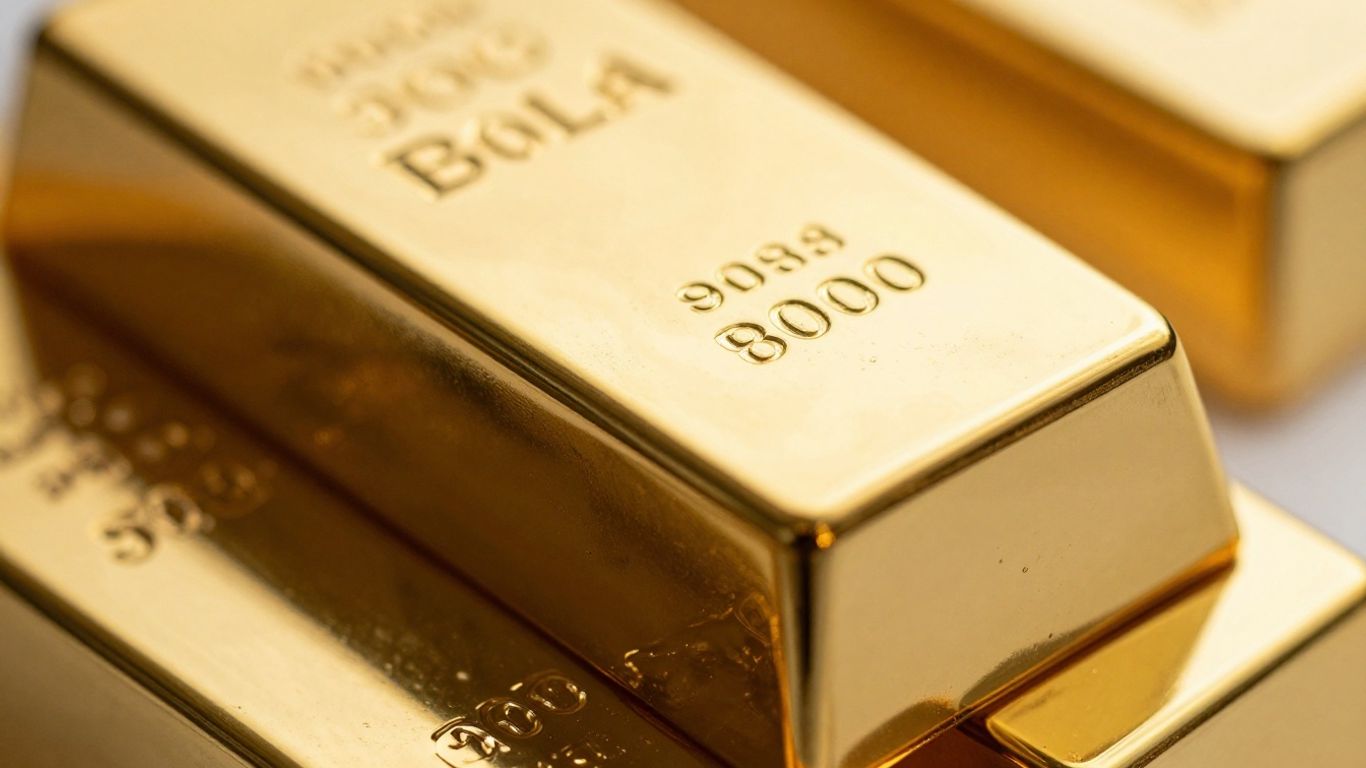
In addition, gold is bought in different forms: bars, ingots, and coins. Each format has its own price, which can differ slightly from the spot price (the real-time market price). Why? Because of the premium. This is essentially the additional cost associated with manufacturing, certification, and distribution. The smaller the bar (like one gram), the higher the percentage premium. For a kilogram, the premium is generally lower.
Here is an example of how prices can vary depending on weight, even if the price of gold is the same:
| Product | Indicative price (in €) | Indicative bonus |
|---|---|---|
| Gold Ingot 1 Kg | 65 000 | <2% |
| 100g ingot | 7 000 | ~ 7% |
| 1g ingot | 75 | ~ 8% |
It is important to note that these prices are indicative and may vary. The premium represents the additional cost compared to the pure value of the metal.
Factors influencing the price of gold
The price of gold is not fixed; it fluctuates constantly. Several factors can cause it to rise or fall. First, there are major world events. When there are geopolitical tensions, economic crises, or high inflation, gold is often seen as a safe haven. People rush to buy it to protect their money, which drives up its price. Consider the 2008 financial crisis or the Covid-19 pandemic; gold both performed well.
Then there's the US dollar. Often, when the dollar weakens, gold gains value, and vice versa. This is because gold is priced in dollars, and when the dollar loses value, it takes more dollars to buy the same amount of gold. It's also a way to protect oneself against currency devaluation.
Central banks also play a role. They hold enormous quantities of gold in their reserves. When they buy or sell gold, it can impact the market. In recent years, we have seen them increasing their reserves, which supports the price.
Finally, we must not forget the demand for jewelry or industry (for example, electronics). Even if it is less dramatic than the movements linked to crises, this basic demand also contributes to the stability or evolution of the price of gold in the long term.
Follow the evolution of the price of gold
So, you want to know how to keep an eye on the price of gold? That's a great idea, especially if you're thinking about investing or simply want to understand what's happening in the market. There are several ways to do this, and none of them are really complicated once you get the hang of it.
Use online platforms and applications
These days, it's incredibly easy to track the price of gold. All you need is an internet connection. Plenty of specialized websites update prices in real time, often every minute. You can see the price in euros, dollars, and other currencies. It's convenient because it directly reflects what's happening on major stock exchanges like London or New York, 24/7. There are even mobile apps that do the same thing, so you can check the price of gold directly from your phone, wherever you are.
- Specialized websites: They often offer interactive graphics and historical data.
- Mobile apps: Perfect for quick and on-the-go tracking.
- Price alerts: Some services allow you to set up alerts to be notified when the price reaches a certain level.
The price of gold is usually expressed in troy ounces, which is equivalent to slightly more than 31 grams. This is the standard unit of measurement in professional markets.
Analyze historical trends and indicators
Looking at the current price is good, but to truly understand, you also need to look at the past. Charts spanning several years show how the price has evolved. For example, we saw significant increases after the 2008 financial crisis or during the pandemic. This helps to understand that gold is often in demand when there is economic or geopolitical uncertainty.
To delve deeper, some use technical indicators. Moving averages, for example, help to identify the overall trend. A 50-day moving average provides insight into recent price movements, while a 200-day moving average reveals the underlying trend. When the short-term average crosses above the long-term average, it's often seen as a positive sign (a "golden cross"). It's also important to monitor support levels (where the price tends to bounce) and resistance levels (where it struggles to rise).
- Moving averages (MA50, MA200): To identify short-term and long-term trends.
- Supports and resistances: Key levels to monitor in order to anticipate movements.
- Comparison with other currencies: Observing gold against the US dollar or the Swiss franc can provide indications of its performance as a safe-haven asset.
In short, following the price of gold is a mix of looking at what is happening now with modern tools, and understanding what happened before in order to better anticipate the future.
Want to know how the price of gold changes? It's easy to track its evolution. We'll explain how it works in simple terms. Come and discover on our website how... Gold prices It moves and what influences it. This is important information for those interested in gold. Don't wait any longer, visit our site to understand everything!
To conclude
There you have it, you now have a better idea of how to track the price of gold. Whether you're looking at real-time quotes or focusing on fixings, the important thing is to stay informed. Remember that the gold market can move quickly, so keep an eye on the various platforms and don't hesitate to ask for advice if needed. It's a bit like checking the weather: you have to check regularly to know when to take out your umbrella… or when to buy gold!
Frequently Asked Questions
Where can I see the real-time price of gold?
To follow the live price of gold, you can consult specialized websites online. They often display prices that change every minute, 24 hours a day, Monday to Friday. There are also mobile apps that allow you to view these prices directly on your phone.
What causes the price of gold to change?
The price of gold isn't fixed; it fluctuates constantly! Several factors can cause it to rise or fall. For example, when the world is in turmoil (economic crises, wars), people tend to buy gold because they see it as a safe haven for their money. The amount of gold available (what comes out of the mines) and the demand (what people want to buy to make jewelry or to invest) also play a significant role.
Is the price of gold the same everywhere in the world?
The price of gold is global, but there can be slight differences between countries. Major financial centers like London, New York, and Zurich set benchmark prices. Most often, the London price is used, which is updated twice a day. Websites and apps generally show you these official prices.