

In the investment world, gold and platinum are often compared due to their value and uses. But how do these two precious metals perform in the market? This article examines the price dynamics of gold vs. platinum, analyzing their trends, differences, and future prospects.
Key points
- The historical evolution of gold price and platinum shows significant variations.
- Economic factors, such as inflation and industrial demand, strongly influence prices.
- Over five years, gold has often outperformed platinum in terms of investment performance.
- The physical properties and industrial applications differ considerably between the two metals.
- Economic crises tend to drive up the price of gold, while platinum can be more volatile.
Gold vs. Platinum Price Trend Analysis
Historical price evolution
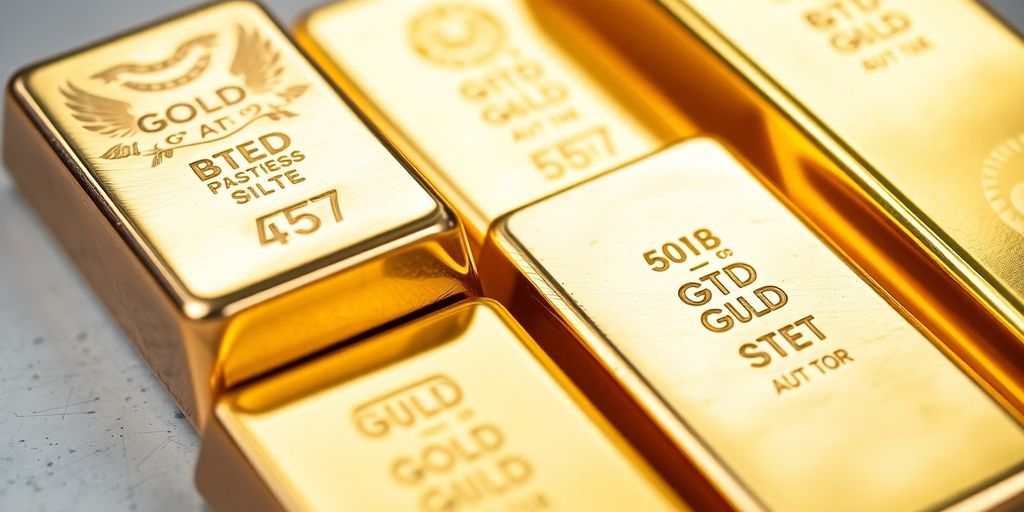
The evolution of gold and platinum prices is a fascinating subject. There are periods when gold and platinum move in tandem, and others when their paths diverge completely. Understanding this evolution requires looking at historical data, but also at the factors that influence these precious metals. It is important to follow the real-time gold price to fully understand market fluctuations.
Factors influencing prices
Several elements can move the Gold prices and platinum. We can cite:
- Supply and demand: High demand and limited supply drive up prices, and vice versa.
- Interest rates: Low rates make gold more attractive because it does not generate income.
- Inflation: Gold is often considered a safe haven during times of inflation.
- Geopolitical events: Crises and uncertainties can increase demand for gold.
It's crucial to monitor these factors to anticipate market movements. However, it's important to remember that it's impossible to predict the future with certainty. Forecasts are only guidelines, and it's essential to do your own research before making any investment decisions.
5-year performance comparison
Comparing the performance of gold and platinum over a 5-year period provides a better understanding of their respective dynamics. Gold has often been seen as a stable safe haven, while platinum has experienced more significant fluctuations, linked in particular to its industrial use.
| Métal | Average annual performance (5 years) | Volatility | Key factors |
|---|---|---|---|
| Or | 8-12% | Low | Investment demand, inflation, interest rates |
| Base Plate | Variable | Élevée | Automobile demand, mining supply, speculation |
It is important to note that these figures are given for informational purposes only and may vary depending on market conditions.
The differences between gold and platinum
Gold and platinum, while both considered precious metals, have notable differences that influence their value and uses. Let's take a closer look.
Physical and chemical properties
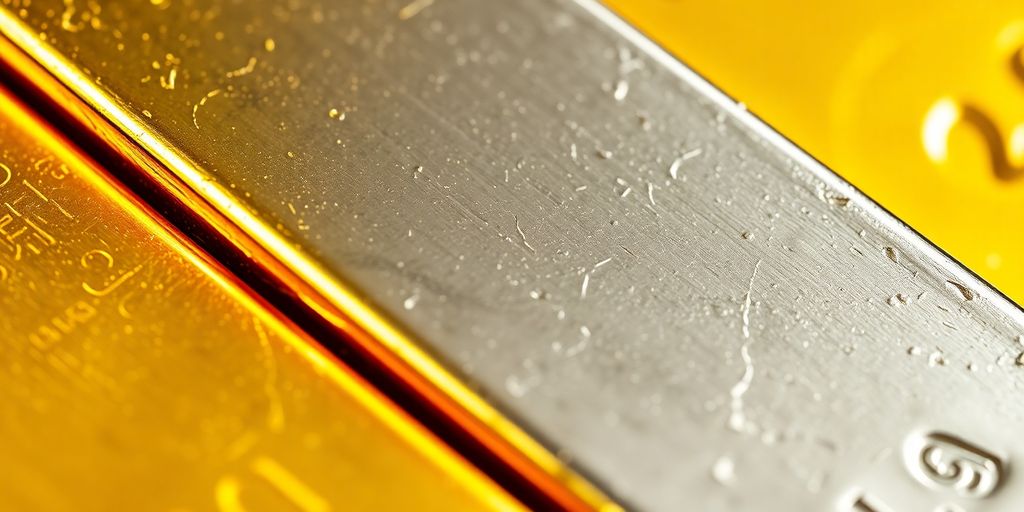
Gold, known for its distinctive yellow color, is very malleable and corrosion-resistant. It is a relatively soft metal, making it easy to work with. Platinum, on the other hand, is a silvery-gray-white color. It is harder and denser than gold, which makes it more wear-resistant. Platinum also has a higher melting point than gold, which is important for certain industrial applications.
Industrial uses
Gold is widely used in jewelry, but also in electronics due to its conductivity and corrosion resistance. It is found in computers, telephones, and other electronic devices. Platinum, on the other hand, is mainly used in the automotive industry (catalytic converters to reduce pollutant emissions), in chemistry (as a catalyst in various reactions), and in medicine (implants, surgical instruments). It is also used in jewelry, but less frequently than gold. It is possible to follow the price per gram of platinum to better understand its evolution.
Perceived value in the market
Gold's perceived value is often linked to its status as a safe haven in times of economic uncertainty. People turn to gold to protect their capital when stock markets are unstable. Platinum, on the other hand, is seen more as an industrial metal, its value being more sensitive to fluctuations in supply and demand in the automotive and chemical sectors.
Broadly speaking, gold is often seen as a safe and stable investment, while platinum is considered a more speculative investment, with higher potential returns but also greater risk. It's a bit like comparing investing in bonds to investing in a startup.
In summary, here are some key differences:
- Color: Yellow gold, Gray-white platinum
- Density: Platinum denser than gold
- Main uses: Gold (jewelry, electronics), Platinum (automobiles, chemistry, medicine)
- Market perception: Gold (safe haven), Platinum (industrial metal)
Impact of economic crises on precious metals
Economic crises, whether financial, political, or health-related, have always had a significant impact on precious metals markets. Gold and platinum, while different in their uses and market dynamics, react differently to these periods of uncertainty. Let's see how.
Reaction of the gold price in times of crisis
Gold is often considered a safe haven. In times of crisis, investors tend to turn to gold to protect their capital. This increased demand generally drives up its price. For example, during the 2008 financial crisis, the price of gold increased sharply. Similarly, the COVID-19 pandemic led to a significant increase in the price of gold as investors sought protection against economic uncertainty. It's a bit like taking shelter when there's a storm. Gold is the investor's shelter.
- Gold is seen as a stable store of value.
- It is less correlated with risky assets like stocks.
- Demand increases in times of uncertainty.
Gold tends to rise when the economy, order, and the global situation in general are disrupted by factors, whether predictable or not. Generally, it's interesting to follow the news from the FED (Federal Reserve of the United States), because inflation and key interest rates on the US dollar (the official currency of the gold price) directly impact the price of gold.
Platinum's behavior in the face of economic uncertainties
Unlike gold, platinum is more closely tied to the economy, particularly the automotive industry. A significant portion of platinum demand comes from the manufacture of catalytic converters for vehicles. During an economic crisis, car production declines, reducing demand for platinum and potentially leading to a drop in its price. However, platinum can also benefit from renewed interest as an alternative investment, but this reaction is generally less pronounced than for gold. Therefore, it's important to keep a close eye on things. the evolution of the precious metals market to understand trends.
Market Analysis in Times of Recession
During a recession, the gold and platinum markets can diverge considerably. Gold tends to outperform because it is sought after as a safe haven. Platinum, on the other hand, can suffer from declining industrial demand. However, it is important to note that central bank monetary policies can also influence precious metal prices. For example, a low interest rate policy can support the price of gold, while a tightening monetary policy can have the opposite effect. Therefore, it is essential to consider all economic factors when analyzing the gold and platinum markets during a recession. Moreover, sell your gold coins can be a good strategy in times of crisis.
Investment Strategies in Gold and Platinum
Benefits of investing in gold
Gold is a bit like the good old friend we've always known. It's there, stable, reassuring. Investing in gold is often seen as a safe haven, especially in times of economic uncertainty. But beyond that, what is there?
- Gold tends to hold its value over the long term. It's not something that's going to skyrocket overnight, but it's still solid. Kind of like a good real estate investment, in other words. In fact, you can invest in gold in several formats.
- It's a tangible asset. You can touch it, store it (well, you have to have a safe, we agree). It's reassuring to know you have something concrete.
- Gold can serve as a hedge against inflation. When the cost of living rises, gold tends to follow suit. It's not always perfect, but it helps.
Gold is tradable worldwide, making it easy to buy and sell, no matter where you are. This is a major asset when you need quick cash.
Risks associated with platinum
Platinum is gold's slightly more turbulent little brother. It has potential, but you have to know how to handle it. It's not an investment for heart patients, let's say.
- Platinum is very sensitive to fluctuations in the automotive industry. If car sales (especially diesel) decline, the price of platinum can take a hit. It's a bit like investing in a single company's stock: if it coughs, you sneeze.
- Platinum supply is concentrated in a few countries, primarily South Africa and Russia. Political or economic problems in these regions can impact supply and drive prices up (or down). This is a geopolitical risk to consider.
- The platinum market is less liquid than the gold market. This means it can be more difficult to buy or sell platinum quickly without impacting prices. You shouldn't be in a hurry, though.
Portfolio diversification with precious metals
Well, the idea isn't to put all your eggs in one basket, eh. Diversification is the key. And precious metals can have their place in a well-balanced portfolio.
- Spread the risks: Having gold and platinum (in moderation for platinum, as we have said) allows you to offset potential losses from other assets (stocks, bonds, etc.).
- Seize opportunities: Gold can perform well in times of crisis, while platinum can soar if the auto industry does well. It's a bit like having more than one string to your bow.
- Tailor your portfolio to your goals: If you're more of a cautious type, gold can be a good base. If you're more adventurous, a little dose of platinum can spice things up. But be careful, don't burn your wings!
Basically, investing in precious metals is a bit like cooking: you need the right ingredients, the right proportions, and a little know-how. And above all, don't bite off more than you can chew!
Gold and platinum price assessment
Methods of Valuing Precious Metals
When we talk about evaluating gold and platinum, we're not talking about random guesses. There are well-established methods used by industry professionals. The basic principle is to follow the precious metal prices on global markets. These prices fluctuate constantly, influenced by supply and demand, interest rates, inflation, and even geopolitical events.
Next, you need to consider the purity of the metal. Gold, for example, is rarely 100% pure. We then talk about carats to indicate the proportion of pure gold in an alloy. The higher the number of carats, the more precious the metal. For platinum, we also look at its degree of purity, often expressed in thousandths (for example, 950 for 95% pure platinum).
Finally, valuation can also depend on the form of the metal. A gold bar will have a different value than gold coins, even if they contain the same amount of gold. Coins may have additional numismatic value if they are rare or in good condition.
Importance of real-time quotes
In the fast-paced world of precious metals, real-time quotes are absolutely essential. Imagine trying to make an investment decision based on yesterday's information—it would be like driving a car while looking in the rearview mirror! Markets move fast, and gold and platinum prices can change by the minute.
Following quotes in real time allows you to:
- React quickly to market fluctuations.
- Identify buying or selling opportunities.
- Minimize risks by avoiding relying on outdated information.
Having access to real-time quotes is like having a seismograph for the precious metals market. It allows you to sense the tremors and anticipate the movements, instead of being surprised by the shocks. It's an essential tool for any serious investor.
Analysis of premiums and margins
Premium and margin analysis is an often overlooked, yet crucial, aspect of gold and platinum valuation. A premium is the difference between the spot price of the metal and the price at which it is actually sold, whether in bar, coin, or other form. This premium can vary considerably depending on several factors:
- Demand for a specific product (for example, certain rare gold coins may command very high premiums).
- Manufacturing and distribution costs.
- The reseller's fees.
Understanding these premiums is essential to avoid overpaying. Similarly, analyzing margins—the difference between the purchase price and the sale price—is important for assessing the potential profitability of an investment. Here's a sample table to illustrate this:
| Métal | Spot price | Prime | Purchase price | Margin | Selling price |
|---|---|---|---|---|---|
| Or | 1900 €/ounce | 5% | 1995 €/ounce | 3% | 2054.85 €/ounce |
| Base Plate | 900 €/ounce | 8% | 972 €/ounce | 4% | 1010.88 €/ounce |
Basically, don't just look at the sticker price. Dig a little deeper to understand premiums and margins, and you'll make more informed investment decisions. You can also look at the price per gram of platinum to better evaluate your investments.
Future outlook for gold and platinum
Now we get to the interesting part: what does the future hold for gold and platinum? It's a bit like gazing into a crystal ball, but with charts and analysis instead of mysteries. Let's try to decipher all this together.
Short-term price forecasts
Okay, let's face it, predicting short-term prices is a bit like trying to catch wind. So many factors come into play! Interest rates, inflation, geopolitical events... All of these things can send prices tumbling in the blink of an eye.
Right now, it seems like gold is doing pretty well, buoyed by economic uncertainty. Platinum, on the other hand, is more tied to the automotive industry, so its fortunes depend heavily on car sales and new engine technologies.
Long-term trends
In the long term, it's a little easier to see the big trends. Gold has always been a safe haven, and that's not likely to change. With government debt piling up and international tensions rising, it's a safe bet that demand will remain strong.
For platinum, it's more complicated. Its future will depend on its ability to remain relevant in the automotive industry. If electric cars really take off, new uses will have to be found for this metal. But hey, there are always investment opportunities to be seized, even in a changing market.
Role of new technologies in industry
New technologies are changing the game for everyone, and the precious metals industry is no exception. We're talking blockchain to trace the origin of gold, artificial intelligence to optimize mining, and new recycling techniques to recover precious metals from electronic waste.
These innovations could transform the way we produce, trade, and use gold and platinum. It's a bit like opening a new chapter, with its own set of challenges and opportunities.
Overall, the future of gold and platinum is far from certain. There will be ups and downs, surprises and disappointments. But one thing is certain: these precious metals will continue to be talked about for a long time to come. And if you want to invest in gold, you must keep yourself informed of these developments!
Comparison of the gold and platinum markets
Analysis of transaction volumes
The gold market is, without a doubt, much more liquid and deep than the platinum market. We're talking about much larger daily trading volumes, which makes it easier for investors to enter and exit, even with large positions. Platinum, on the other hand, suffers from less liquidity, which can lead to greater price volatility and difficulties in executing large orders without impacting the market. transaction volumes are a key indicator of the health and maturity of a market.
Regulations and market impacts
Regulations governing the gold and platinum markets can vary considerably from country to country, influencing their attractiveness and accessibility. For example, some jurisdictions impose higher taxes on platinum transactions than on gold, which can discourage investors. Similarly, purity and certification standards can differ, affecting the confidence of buyers and sellers. It is therefore essential to fully understand these regulations before engaging in either market.
Comparison of the main market players
The main players in the gold market include central banks, investment funds, jewelers, manufacturers, and individual investors. In platinum, the main players are manufacturers (particularly the automotive sector), investment funds, and, to a lesser extent, jewelers. This difference in the composition of the players influences the dynamics of supply and demand, and therefore prices.
It's important to note that central banks hold significant gold reserves, giving them a key role in stabilizing the market. Platinum, on the other hand, lacks this institutional support, making it more vulnerable to economic fluctuations and supply-demand shocks.
Here are some key differences between the two markets:
- Liquidity: Gold is more liquid than platinum.
- Volatility: Platinum is generally more volatile than gold.
- Request: Demand for gold is more diversified than that for platinum.
- Regulations: Regulations can vary considerably from country to country.
In summary, the choice between investing in gold or platinum will depend on your risk profile, your investment objectives, and your understanding of the specifics of each market. It is always advisable to consult a financial advisor before making a decision.
In this section, we'll examine the differences between the gold and platinum markets. While both precious metals are popular, their prices and uses vary. Gold is often considered a safe haven, while platinum is prized for its industrial applications. To learn more about these markets and how to invest, visit our website!
Conclusion
In summary, the gold and platinum markets present interesting dynamics. Both metals have their own characteristics and uses, which influence their prices. Gold, often considered a safe haven, sees its price fluctuate depending on the global economy. Platinum, on the other hand, is more closely linked to industry, particularly the automotive sector. Observing trends shows that investors should pay attention to price fluctuations. Whether for portfolio diversification or long-term investments, it is essential to understand these two precious metals before taking the plunge.
Frequently Asked Questions
What influences the price of gold?
The price of gold is influenced by demand, supply, interest rates, and economic crises.
Why is platinum generally more expensive than gold?
Platinum is rarer than gold and has more industrial uses, increasing its demand.
How can you invest in gold and platinum?
You can buy bars, coins, or invest in funds that track the prices of these metals.
What are the differences between gold and platinum?
Gold is more malleable and used mainly for jewelry, while platinum is harder and used in industry.
How do economic crises affect gold and platinum prices?
In times of crisis, investors often turn to gold as a safe haven, which drives up its price.
Is it risky to invest in these precious metals?
As with any investment, there are risks, especially with price fluctuations in the market.
