
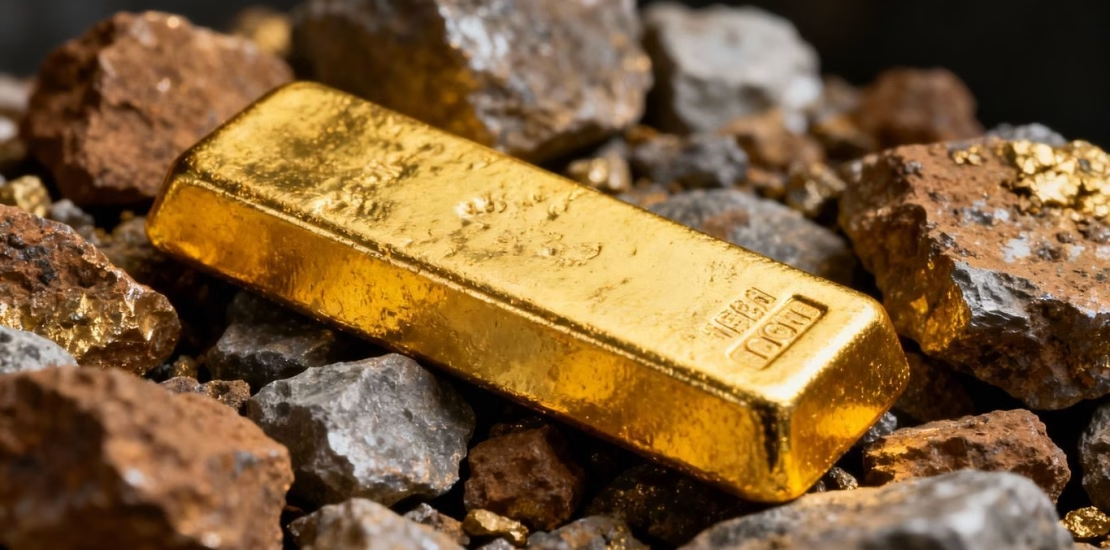
Wondering how the gold market might evolve? It's a question many people ask, especially given the fluctuations. This article will explore gold market forecasts, focusing particularly on the role of commodities. We'll examine what drives prices and what the future holds. Get ready, we're diving into the fascinating world of gold.
Key Takeaways
- Gold is much more than just a metal; it serves as a pillar of monetary stability for nations and offers protection against inflation and financial market turbulence. It is a strategic asset that central banks continue to hold in large quantities.
- Several factors directly influence the gold priceInflation and interest rates play a major role, as does the inverse relationship with the US dollar. The global geopolitical context and the health of the global economy also have a significant impact.
- The outlook for the gold market is mixed. Short- and long-term forecasts suggest a general upward trend, although fluctuations are to be expected. Technological developments and the emergence of new forms of currency could also redefine the role of gold in the future.
Gold, a strategic asset and a safe haven
Wondering why gold is generating so much interest, especially when things get a little complicated in the markets? It's simple: gold is a kind of rock-solid asset. It has this unique ability to weather economic storms and retain its value, making it a preferred choice for many.
The role of gold in the monetary stability of nations
Countries, through their central banks, are well aware of this. They have held gold for centuries, not just for show. It's a way to guarantee a certain stability to their currency and their economy. When you look at history, you see that nations with substantial gold reserves were often more stable, especially during times of crisis. It's a bit like insurance for their financial system. Moreover, even today, many central banks continue to buy gold, sometimes even selling dollars, to diversify their assets and protect themselves against risks.
- Anchoring trust: Physical gold provides a tangible basis for the value of a currency.
- Diversification of reserves: Central banks do not put all their eggs in one basket, and gold is a key asset in this strategy.
- Indicator of economic power: A country's gold reserves are often seen as a sign of its financial strength.
The accumulation of gold by states is not just a tradition; it is a deliberate strategy to strengthen confidence in their currency and economy in the face of global uncertainties.
Gold as a hedge against inflation and market volatility
When inflation rises, your money loses value—that's a fact. Prices increase, and what you could buy yesterday costs more today. That's where gold comes in. Historically, it has shown that it can maintain, or even increase, its purchasing power when other currencies weaken. That's why many people turn to gold when they feel inflation is spiraling out of control or the stock markets are on a rollercoaster ride.
| Year | Gold performance (in euros) | S&P 500 Performance |
|---|---|---|
| 2024 | + 30% | + 25% |
You see, in 2024, gold outperformed some major stock market indices. That's significant. It clearly demonstrates its role as a safe haven. When there are geopolitical tensions, economic crises, or simply a great deal of uncertainty, gold tends to perform well. It's a bit like a safe haven for your money when the seas are rough.
Factors influencing the price of gold
Wondering what makes the price of gold fluctuate? It's a bit like a cooking recipe; several ingredients come into play and can change the final taste. It's not just about supply and demand, even though that's an important foundation. Other, sometimes complex, factors influence this very special raw material.
The impact of inflation and interest rates on the price of gold
Inflation is when your money loses value. During these times, many people turn to gold because it's supposed to retain its value. It's a bit like putting your money in a safe that doesn't rust. So, when inflation rises, the demand for gold tends to increase, which can drive up its price. But be careful, it's a bit more complicated than that.
To combat inflation, central banks often raise interest rates. When interest rates rise, it becomes more attractive to invest in savings accounts or bonds, as they offer higher returns. Consequently, gold becomes less appealing. Fewer people want to buy it, and the price can fall. It's a delicate balancing act between these two forces.
The Correlation Between Gold and the US Dollar
There's a well-known relationship between gold and the US dollar, and it's often inverse. When the dollar is strong, gold tends to fall, and when the dollar is weak, gold tends to rise. Why? Because gold is generally priced in dollars. If the dollar loses value, you need more dollars to buy the same amount of gold, which drives up its price in dollars. Conversely, if the dollar is strong, gold becomes cheaper for those buying with other currencies, which can stimulate demand and therefore the price.
The influence of the global geopolitical and economic context
This is where gold truly demonstrates its "safe haven" status. When there are global tensions, wars, major political crises, or significant economic instability, people tend to panic. They look for a safe place for their money, and gold is often that place. Imagine a storm: everyone seeks shelter. Gold is, in a way, the safe haven of the financial markets. So, in times of uncertainty, the demand for gold skyrockets, and its price follows suit.
Global events, whether political or economic, create shockwaves through the markets. In these times of uncertainty, gold attracts those seeking to protect their capital from turbulence.
Here are some examples of situations that can influence the Gold prices :
- Political instability : Uncertain elections, regional conflicts, or international tensions can push investors towards gold.
- Economic crises: An impending recession, bank failures, or high stock market volatility encourage people to seek the safety of gold.
- Monetary changes: Aggressive monetary policies, runaway inflation, or a devaluation of a major currency can make gold more attractive.
- Major natural disasters: Although less direct, a major event can create a wave of global uncertainty that benefits gold.
Future outlook for the gold market
So, what does the future hold for the gold market? That's the question many are asking, and frankly, it's not so easy to predict. Gold clearly has this incredible ability to weather economic storms, a bit like an old lighthouse in the fog. Experts have differing opinions, but one trend is emerging: gold should continue to hold value.
Short-term and long-term forecasts for the price of gold
For the next few years, let's say until 2030, several analysts are predicting a significant rise. Some are even talking about prices reaching $7,000 an ounce. It's quite astonishing when you consider that gold itself doesn't generate any income—no dividends, no interest. But its role as a safe haven asset remains unchanged. Central banks continue to buy it, and that carries considerable weight. Current geopolitical tensions and economic uncertainties are all working in gold's favor. We saw records broken in 2024 and early 2025, both in dollars and euros, clearly demonstrating that demand remains strong.
In the longer term, the outlook is somewhat less clear. Some even fear a shortage of essential metals by 2050, which could drive the price of gold even higher. Others see gold, alongside cryptocurrencies, as a serious competitor to traditional fiat currencies. The idea is that gold could regain an even more central role in the global monetary system.
Here are some points to keep in mind for forecasting:
- Growing demand : Central banks, particularly in Asia, continue to increase their gold reserves.
- Geopolitical context: International conflicts and tensions reinforce gold's safe-haven status.
- Persistent inflation: If inflation remains high, gold is often seen as an effective hedge.
- Scarcity : The idea that there might be less gold available in the future is supporting prices.
Gold is a bit like insurance for your assets. You never know when you'll need it, but knowing you have it is reassuring. And in a world that seems increasingly unpredictable, this insurance is becoming more and more valuable.
Gold in the face of technological developments and new currencies
This is where it gets interesting. We hear a lot about Bitcoin and cryptocurrencies; some see them as the new "digital gold." It's true that these assets have gained significant traction, and there are parallels to be drawn with gold: a certain scarcity, and growing acceptance as a store of value. Robert Kiyosaki, for example, believes that gold and Bitcoin could eventually erode the dominance of fiat currencies. It's a bold vision, but it clearly demonstrates that the financial landscape is changing.
However, gold has millennia of history behind it. It is tangible, universally recognized, and central banks have always trusted it. Technologies evolve, that's for sure, but gold remains a safe haven. It is even used in some cutting-edge technologies, such as electronics and photovoltaics, which gives it an industrial dimension in addition to its financial role. So, even if new forms of wealth emerge, gold still has a bright future. It's not necessarily a question of competition, but rather of coexistence where each asset has its place.
The future of the gold market looks promising! Experts predict sustained demand, driven by investors and central banks. Now is the perfect time to think about diversify your investmentsTo learn more about how gold can secure your wealth, visit our website today!
In conclusion: your financial future is golden
So, we've covered everything. You see, gold isn't just a shiny metal; it's a bit like insurance for your money. Whether you're a small saver or thinking ahead, understanding how it moves and why can really make a difference. Remember that the market fluctuates, but gold retains its value. So, when you're wondering where to invest your savings, keep this in mind: gold has stood the test of time, and it will likely still be around long after we're gone. It's a way to plan ahead, to secure your future, gradually and steadily.
Frequently Asked Questions
Why is gold considered a good investment?
Gold is seen as a safe investment because it retains its value even when the economy is struggling. It's a bit like insurance for your money. When prices rise (inflation) or markets become volatile, gold tends to remain stable, or even appreciate in value. That's why many people, including central banks, buy it to protect their wealth.
What causes the price of gold to change?
The price of gold fluctuates much like the price of other commodities. If many people want to buy it and there isn't enough supply, the price rises. World news, such as wars or economic crises, can also frighten people, who then rush to buy gold, driving its price up. The state of the economy, the value of the dollar, and banks' lending decisions also play a role.
Will gold always be a good investment in the future?
Many experts believe that gold will remain important for years to come. Even as new technologies emerge, gold has a long history as a way to safeguard money. Its value may continue to rise, especially if the world faces greater economic uncertainty or if people seek alternatives to traditional currencies. It's a bit like a timeless classic.
