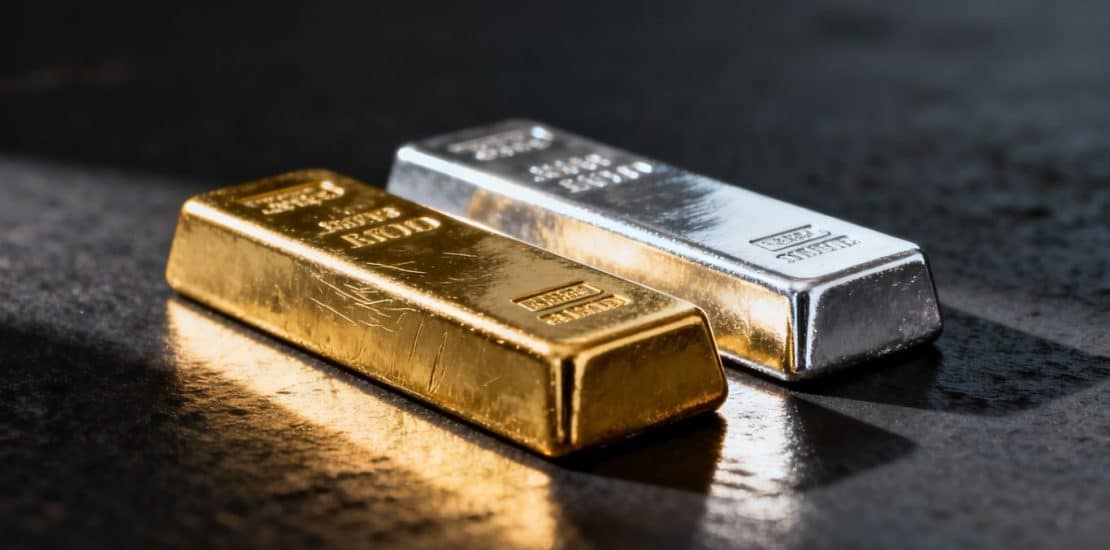
Wondering whether you should invest in gold or silver? This is a question many people ask themselves when considering diversifying their assets. These two precious metals each have their own advantages, and the choice will depend on your goals and profile. Let's take a look at the differences between them and how to make the best choice for you.
Key Takeaways
- Gold and silver have very different prices and volatility. Silver is generally more affordable and more volatile than gold.
- Both are considered historical safe havens, offering protection against inflation and economic uncertainty.
- Silver has a growing industrial role that can support its value, while gold remains a timeless symbol of stability.
- To invest, you can choose between ingots and coins, each format having its advantages depending on your objectives (diversification, transmission, accessibility).
- Diversifying your portfolio by potentially including both metals can help reduce risk and benefit from their complementarities.
Understanding the Differences Between Gold and Silver
When we think of precious metals, gold and silver often come to mind. We sometimes imagine them as twin brothers, but in reality, they have very distinct personalities, especially when it comes to investing. It's important to understand these differences before putting your money into either.
Distinct prices and values
The first thing that strikes you is the price. At the end of April 2025, it took almost 100 ounces of silver to equal the value of one ounce of gold. That's a huge gap! This ratio, often around 1 to 100, is seen by some as an anomaly. Historically, the gold/silver ratio has more often fluctuated between 1 to 15 and 1 to 70. So, has gold become too expensive, or silver not expensive enough? This is a question many investors are asking.
Higher volatility for silver
Silver tends to be more volatile than gold. Its price can jump in both directions, sometimes by as much as 40% in just a few months. Even when gold is enjoying a strong run, silver's movements are often faster and more intense over short periods. Gold, on the other hand, has certainly gained around 40% in recent months, but that's over a longer period, a rolling year.
The financial accessibility of money
This is where silver offers a distinct advantage for many. With a much lower price per ounce, it's much easier to buy beautiful silver coins or bars, even on a budget. If you want to start investing with a few dozen euros a month, silver is a simpler way to go. Gold, at its current price, requires a larger starting capital, although there are smaller formats like one-gram bars or one-tenth-ounce coins for those who still want exposure to the yellow metal.
It's important to understand that these differences in price and volatility don't make one metal inherently better than another. They simply indicate distinct behaviors and investment opportunities.
Gold and silver: historical safe havens
Gold and silver have always been considered safe havens, shields against economic storms. When things get complicated, many people turn to these precious metals. It's like going back to basics, to something concrete when everything else seems unclear.
Gold, a timeless symbol of stability
Gold is a bit like the wise grandfather of the precious metal family. It's been around for millennia, and its history is filled with stories of wealth, power, and stability. Think of the treasures of the pharaohs, the reserves of central banks, or even jewelry passed down from generation to generation. Gold has this reassuring ability to survive the ages and crises without losing its value. It's this consistency that makes it a globally recognized safe haven. Even though some greats like Keynes and Buffett have criticized gold, considering it useless or unproductive, it must be recognized that in times of fear, when the markets are panicking, gold tends to attract investors. It's a bit of a bet on general anxiety, and it often works.
Silver, a precious metal with ancient uses
Silver is the little brother, perhaps a little more turbulent, but just as important. Its history is as long as that of gold. Since Antiquity, it was used to create the first currencies, to facilitate trade, whether in Rome or China. It was the metal of the people, the one that enabled everyday commerce, unlike gold, which was often reserved for the elite. But silver is not just ancient history. Today, it is everywhere in our modern lives. It is indispensable in many sectors: solar panels, electronics, medical equipment... It is a bit like the Swiss Army knife of metals. This dual dimension, both store of value and strategic material, gives it a special place.
Correlation of prices and their divergences
Often we see the Gold prices and silver move in the same direction. This is called correlation. When one goes up, the other tends to go up too, and vice versa. It's a bit like they're holding hands. But be careful, this isn't always the case. Silver has a slightly more... let's say, skittish personality. Its volatility is more pronounced. It can jump or fall faster than gold. For example, in the 1970s, an attempt to manipulate the silver market caused its price to explode, much more than gold's. Moreover, as we've seen, industrial demand for silver can influence its price in ways that gold, which is more focused on jewelry and store of value, doesn't experience in the same way. So, while they're often linked, they each have their own way of reacting to events.
The Benefits of Investing in Silver
If you're looking to diversify your portfolio with precious metals, silver offers significant advantages. It offers attractive financial accessibility, making it easier to acquire, even on a more modest budget. Furthermore, its growing role in modern industry gives it considerable growth potential.
An industrial and strategic metal of the future
Unlike gold, which is primarily a financial asset, silver has a dual dimension: financial and industrial. It is essential in many growing sectors, such as solar panels, electronic components, medical equipment, and advanced technologies. This constant industrial demand reinforces its long-term value, especially in the current context of global energy transition. Thinking about silver also means betting on the future of these industries.
Accessibility and ease of resale
One of the first advantages that jumps out at you is its price. The price of silver is much lower than that of gold. To give you an idea, it currently takes nearly 100 ounces of silver to equal the value of one ounce of gold. This means you can acquire a larger quantity of silver for the same budget, which is perfect if you're just starting out or have limited capital. And when it comes time to resell it, don't worry, silver bars and coins are in high demand on the secondary market, both among professionals and individuals. It's a fairly liquid asset, after all.
Favorable taxation in France
In France, investing in physical silver offers a significant tax advantage: the purchase of investment silver products is generally exempt from VAT. This is an important point that reduces the acquisition cost compared to other goods. Of course, you should check the specific conditions, but overall, this is a strong argument for choosing silver. Keep in mind that the tax on capital gains upon resale is the same as for gold, with possible deductions depending on the holding period. To learn more about the different investment options, you can consult the gold formats.
Silver is a bit like gold's little brother: cheaper, but with industrial potential that could make it shine in the years to come. It offers a more accessible gateway to the world of precious metals, while also being a key component of many future technologies.
The advantages of investing in gold
Gold, this precious metal that has shone for millennia, continues to fascinate and reassure investors. If you're looking to secure your assets, you've probably already considered it. And for good reason: gold possesses qualities that make it a pillar of investment, surviving the ages and crises without losing its splendor. It's a bit like the wise grandfather of finance, always there when needed. Its value is recognized worldwide, which offers you appreciable peace of mind.
A globally recognized safe haven
It can't be said enough: gold is THE ultimate safe haven. When markets panic, currencies tremble, or inflation soars, gold tends to maintain its value, or even appreciate. It's a bit like having a golden parachute in your portfolio. Central banks around the world know this; they hold enormous amounts of gold to stabilize their economies. For you, as an individual, this means that your gold investment has a good chance of weathering economic storms without sinking. It's a tangible asset, independent of the decisions of a company or government. It has survived empires, revolutions, and financial crises, and it's still there, solid as a rock.
Favorable taxation for investors
When we talk about investing, the question of taxes quickly arises. And here, gold has a strong argument: in France, the purchase of investment gold is exempt from VAT. That's already a good point, right? Then, for resale, things are also rather accommodating. You have the choice between two tax regimes for your capital gains: either a flat-rate tax, or a tax on the actual capital gain with an allowance that increases each year. After 22 years of ownership, you are even completely exempt from capital gains tax. That's rather motivating to consider a long-term investment, don't you think?
Liquidity and flexibility of formats
One of the big advantages of gold is that it's easy to resell. Whether you choose bars or coins, there's always a market for gold. Professionals, collectors, other investors... everyone is interested. And then there's great flexibility in the formats. You can buy a small 1-gram bar to start with, or a 1-kilo bar if you have more capital. There are coins of all sizes, ingots... In short, you can adapt your investment to your budget and your goals. It's convenient because you can sell some of your gold if you need cash, without having to give it all up. It's a bit like having a tangible cash reserve, always available.
Gold is a bit like the Swiss Army knife of precious metals: it's there to provide security, it's easy to trade, and it has an incredible history behind it. When you're thinking about protecting your savings over the long term, it's hard to ignore.
How to Choose the Right Precious Metal for Your Portfolio
So, you're wondering which of the two metals, gold or silver, will fit best into your savings strategy? It's a great question, and the answer really depends on what you're looking to accomplish with your money. There's no one-size-fits-all solution; rather, it's a personalized approach.
Diversify to reduce risk
The first thing to keep in mind is that putting all your eggs in one basket is rarely a good idea, especially when it comes to investments. Gold and silver, while both precious metals and safe havens, behave somewhat differently. Gold is often seen as the pillar of stability, while silver can offer more growth potential, albeit with slightly higher volatility. By owning both, you can potentially smooth out the fluctuations. For example, if the silver market takes a dip, gold could hold its own, and vice versa. It's a bit like having insurance for your portfolio. Think of it like this: gold gives you peace of mind, and silver can give you an extra boost. The idea is to avoid relying on a single asset for wealth protection.
Adapt your choice to your investor profile
Your investor profile is a bit like your financial DNA. Are you the type who wants to sleep soundly, even if it means a potentially more modest return? Or are you willing to take a little more risk to aim for higher performance? If you're more conservative, gold might be your first choice. It's recognized worldwide for its ability to retain its value over the long term, even in times of economic uncertainty. It's a bit like choosing reason. On the other hand, if you have a slightly higher risk tolerance and are looking for greater potential gains, silver might interest you more. Its growing industrial demand, particularly in renewable energy and electronics, gives it attractive growth potential. It's also more financially accessible, making it easier to acquire, even with a more limited budget. Think about your investment horizon: is it for retirement, a medium-term project, or simply to diversify? The answers to these questions will guide you.
The Importance of Precious Metal Conservation
Once you've chosen your metals, you need to think about where to keep them safe. It's not like storing stocks in an online account. Physical gold and silver, whether in the form of bars or coins, require special attention. Gold is denser, so for the same amount invested, it takes up less space than silver. This can be a factor if you have space constraints. Silver, being bulkier, may require a little more organization for storage. You have several options: a personal safe at home, a safety deposit box at a bank, or even specialized storage services offered by certain professionals. These can offer increased security and insurance, but they come at a cost. You should weigh the pros and cons based on the value of your investment and your peace of mind. Remember to keep the certificates of authenticity safe; they are proof of the quality and provenance of your metals. It may seem like a minor detail, but it is important for future resale. Think about protect your savings against inflation, it is a smart move for the future.
Investment formats: ingots and coins
When you decide to invest in gold or silver, you have several options for acquiring these precious metals in physical form. The two most common formats are bars and coins. Each has its own specificities, and the choice will depend on your goals and investment strategy.
Gold and silver bars: safe values
Bullion bars, whether gold or silver, are a popular investment choice for their simplicity and purity. They are generally manufactured by recognized and certified foundries, thus guaranteeing their quality and compliance with international standards, such as those of the LBMA (London Bullion Market Association).
- Guaranteed purity : Silver bars are often graded at 999,9‰ (99,99% pure silver), and gold bars at 999‰ (99,9% pure gold). This high purity is a guarantee of quality.
- Size diversity : You will find bars in a wide range of weights, from a few grams (such as 1g, 5g, 10g, 20g, 50g) to several kilograms (1kg, 5kg, 12,5kg for gold). Intermediate sizes such as 100g, 250g or 500g offer a good compromise between accessibility and cost per gram.
- Financial accessibility : Silver, being less expensive than gold, allows you to acquire larger quantities for a given budget. Small gold or silver bars are perfect for beginners or for gifts.
- Storage Although more compact than coins, ingots require secure storage. For larger amounts, insurance or an external storage service may be considered.
Purchasing bullion allows you to directly own the precious metal. It's a tangible approach to your investment, offering a certain peace of mind compared to dematerialized financial assets.
Gold coins: a historical and cultural heritage
Investment gold coins, such as the Napoleon, the Krugerrand or the Maple Leaf, have a fascinating history. They are not only a store of value, but also carry a cultural and historical dimension.
- International recognition : Recognized investment coins are generally minted in pure metals and their value is closely linked to the price of gold, with a premium often lower than for collector coins.
- Liquidity : They are very liquid and easy to resell on the market, whether to professionals or individuals.
- Diversification : Owning gold coins can add a touch of diversity to your portfolio, combining the intrinsic value of the metal with the historical value of the coin.
- Tax : In France, investment gold coins benefit from advantageous taxation upon resale, often subject to the precious metals regime (exemption after 22 years of ownership).
Choose the right format according to your objectives
The choice between bars and coins, as well as weight or size, will depend on several factors:
- Your budget : Small coins or small ingots are more accessible to start with.
- Your long-term goals : Ingots, especially those of medium to heavy weight, are often preferred for building up long-term assets.
- Ease of resale : Investment coins and standard weight bars (100g, 250g, 500g) are generally the easiest to resell.
- Conservation : Think about how you will store your precious metals. Smaller formats are more discreet, but require increased security.
It's often advisable to diversify your formats to optimize your investment strategy. For example, you might hold a few bars for their intrinsic value and a few coins for their liquidity and history.
When we talk about investing in gold, we often think of bars and coins. These are classic forms of investing in this precious metal. Each type has its advantages, from the ease of storing bars to the recognition of investment coins. Want to learn more about these different options? Find out how to choose the investment format that's right for you on our website!
So, gold or silver for your savings?
So, that's it. You've seen that gold and silver each have their strengths. Gold is the classic, the safe bet that survives the ages without much flinching. It's a bit like the wise grandfather of the family. Silver is more dynamic, more industrial too, with growth potential that can be interesting, even if it's a little more restless. The simplest thing, often, is not to choose. Why limit yourself to just one? Mixing the two is a way to play it safe while keeping an eye out for opportunities. Think of it like this: one offers you peace of mind, the other a little more oomph. It's up to you to see how you want to balance your investment base, depending on what you're looking for and your own risk tolerance. Don't forget to think carefully about where you'll store your assets; that's an important detail too.
Frequently Asked Questions
Why is silver often cheaper than gold?
It's simple: there's a lot more silver on Earth than gold. Imagine gold as a very rare treasure, and silver as a somewhat more common treasure. Since gold is rarer, it costs more in small quantities. Silver, on the other hand, is easier to find, so its price is lower, making it more accessible to start investing.
Does silver move a lot in price?
Yes, the price of silver can rise and fall faster than that of gold. This is called volatility. Sometimes it can gain or lose a significant amount of its value in a short period of time. It's a bit like a roller coaster! Gold, on the other hand, is generally more stable.
Is money just for making jewelry?
Not at all! Gold is primarily used for jewelry and as a store of value. Silver, on the other hand, is incredibly useful in many industries. Think solar panels, phones, computers, and even medicine. This use in technology and green energy makes silver important for the future.
If I want to invest, is it better to choose gold or silver?
It depends on what you're looking for! If you want something very secure and that will hold its value over the very long term, gold is often the preferred choice. If you're willing to accept a little more price variation for a more affordable investment with industry-related growth potential, silver can be a good option. Many investors like to have both for added security.
Is it complicated to resell gold or silver?
Generally, no. Gold and silver in the form of bars or recognized coins are fairly easy to resell. They are in demand all over the world. Gold may be a little easier to trade in small quantities because its value is higher. But silver is also very liquid, especially the standard formats.
Where can I keep my bullion or coins?
You have several options. You can keep them at home, in a sturdy safe. But if you prefer, you can also entrust them to specialized companies that will store them in highly secure locations, such as banks or special warehouses. It's a matter of security and peace of mind.