

Do you own gold and need cash? Did you know that your precious metal can help you secure credit? In this article, we'll explore how gold, this tangible and stable asset, can serve as collateral with financial institutions. You'll discover the different facets of this process, from understanding the value of your gold to the specifics of bars and coins, and the steps to take to obtain a favorable loan. Get ready to turn your gold into a solution for your financial needs.
Essential Points
- Gold, thanks to its intrinsic value and stability, can be used as collateral to obtain a bank loan, particularly through pawnshop loans.
- Gold bars and coins, according to their purity, weight and numismatic value, are evaluated to determine the amount of credit granted.
- To maximize your chances of obtaining a favorable loan, it is advisable to have the value of your gold estimated by experts before offering it as collateral.
- Understanding interest rates, associated fees, and risks, such as losing your gold if you default, is crucial before committing.
- While gold is a safe haven, it is important to consider alternatives such as direct sales or other forms of credit depending on your situation.
Understanding the Value of Gold for Credit
Gold, the precious metal that has fascinated people for millennia, can also be a valuable ally when you need cash. But before you even consider using it as collateral, it's essential to understand how its value is determined. It's a bit like preparing your most precious possession to serve you.
The intrinsic characteristics of gold
Gold's value isn't based on simple appreciation; it's rooted in its unique physical and chemical properties. It's a rare metal, naturally resistant to corrosion and oxidation, meaning it doesn't degrade over time. This durability makes it a tangible asset that retains its intrinsic value, regardless of economic fluctuations or monetary policies. Think about it: your gold isn't going
Gold as a bank guarantee: a tangible asset
Gold is more than just a precious metal; it's a tangible asset that can help you secure a loan. Wondering how? It's actually quite simple. Banks and other financial institutions view gold as solid collateral for a loan. Because gold has a globally recognized value and is relatively stable, it poses less risk to the lender. It's like saying, "If I can't pay it back, you have this." And that reassures banks.
How gold pawnshopping works
When you put up gold as collateral, it's often referred to as a pawn loan. The principle is as follows: you deposit your gold (bars, coins, jewelry) with an institution. In exchange, this institution lends you a sum of money. The amount of the loan will depend on the value of the gold you deposit, of course. If you repay your loan within the agreed timeframe, you get your gold back. If, unfortunately, you fail to repay, the lending institution has the right to sell your gold to recover the loaned funds. This is a system that has existed for a long time and has proven itself.
Institutions accepting gold as collateral
You can't just take your gold anywhere to get a loan. Traditional banks aren't always equipped for this type of transaction. However, there are options:
- The Municipal Credit (or Mont-de-Piété) : This is the most well-known institution for this type of loan. They specialize in pawnbroking and readily accept gold.
- Some specialized banks : There are banks that have specific departments or offers for loans secured by precious metals.
- Private lenders or specialist shops : There are also private companies that offer this service. You just have to be vigilant and check their reputation carefully.
Advantages and disadvantages of using gold
Using your gold as collateral has its pros and cons. On the one hand, it's a way to get cash without having to sell your gold permanently, especially if you think its value will increase. Additionally, the process can be faster and less complicated than a traditional loan because your gold serves as primary collateral, which can sometimes bypass a stringent credit check. This is a good option if you need money quickly and own gold.
However, you should be aware of the risks. If you fail to repay the loan, you risk losing your gold. Therefore, it is essential to carefully assess your repayment capacity before taking the plunge. Furthermore, the amount you can borrow will always be less than the actual value of your gold, as the lender takes a safety margin. You should also consider the interest rates and fees that are added to the amount borrowed.
In summary, putting up gold as collateral can be a practical solution for obtaining a loan, provided you understand how it works and the associated risks. It's a way to put your assets to work, but it requires good management and careful planning. not to lose your most precious possession.
The specificities of gold bars and coins
When discussing gold as collateral for a loan, it is essential to clearly distinguish between the different forms this gold can take. Gold bars and coins, although both made of gold, have very specific characteristics that influence their value and acceptance by financial institutions.
The different formats of gold bars
Gold bars are a bit of a standard for physical investment. They are made by melting pure gold in molds. You can find everything from tiny 1-gram bars, perfect for beginners, to large 12,5-kg bars, the ones central banks keep in their vaults. So-called "Good Delivery" bars are the most internationally recognized; they weigh around 12,5 kg and must have a purity of at least 99,5%. Each bar normally comes with a certificate attesting to its characteristics: purity, weight, and serial number. It's like your bar's identity card. In France, bars are often 99,99% pure, which is even better. The most common sizes for individuals are 1g, 5g, 10g, 20g, 50g, 100g, 250g, 500g and 1kg. The choice of format can influence ease of storage and resale, as well as the price per gram. For example, a 250g ingot offers a good balance between accessibility and profitability, easier to manage than a 1kg ingot, while having a better price per gram than very small ingots.
The importance of numismatics for coins
Gold coins are another story. They have intrinsic value related to their weight and purity, but they can also have numismatic value. This is where it gets a little complicated. Numismatics is the study and collection of coins. A coin can be worth much more than the gold it contains if it is rare, old, in perfect condition, or if it has special historical significance. Think of coins from Napoleon, the Louis d'or, or even older coins like the Croesus, minted in the 7th century BC! The value of a collectible coin depends on several factors: its condition (scales like "Very Fine", "Superb", "Splendid", "Fair Coin" are used), its year of mintage, its mintage (how many were produced), and its rarity. So-called "tradable" coins are those that are recognized on the market and are generally traded based on their weight in gold, but their condition must be excellent to be considered as such. If you have coins, it is crucial to understand whether their value comes primarily from the gold they contain or from their collectible aspect.
Evaluation criteria for gold coins
To evaluate a gold coin for loan, several elements must be taken into account. First, the weight and purity of the gold, as with ingots. We look at the fineness, often expressed in carats (24 carats for pure gold, but coins are often 22 carats, or 90% gold). Then there is the condition. A coin in perfect condition, without scratches or wear, will be worth much more than a damaged one. Professionals use precise evaluation grids to grade this condition. The year of minting and the number of coins produced are also important for numismatic value. If a coin is rare, it will have more value. It is also important to know if the coin is considered "tradable," that is, if it is easily exchangeable on the physical gold market. For collectible coins, it is often recommended to consult a numismatic expert to obtain an accurate estimate. Never clean your coins yourself, as this could damage them and reduce their value. It's best to store them in a cool, dry place, ideally in their original packaging or a sealed bag to avoid scratches. If you're looking to secure a loan, it's always a good idea to have your gold, whether bars or coins, professionally appraised to determine its true value before pledging it as collateral. You might be surprised at the value of some of your assets, as the history of physical gold investing shows. since prehistory.
Get credit with your gold
Do you have gold and need cash? Did you know that your precious metal can help you get a loan? It's an attractive option, especially if you're looking for a quick solution without having to sell your assets. Gold, as a tangible asset, offers lenders a certain level of security, which can make it easier to secure a loan.
Estimate the value of your gold before pledging it
Before you start, the first step is to know exactly what your gold is worth. Don't rely on a quick estimate; it's best to consult an expert. They can assess the purity (grade) and exact weight of your jewelry or ingots. An accurate appraisal will allow you to know the potential loan amount you could obtain and avoid unpleasant surprises. Remember to check if your gold coins have numismatic value that could increase their price. It's important to know the value of your gold before using it as collateral for a loan.
Steps to a Gold-Backed Loan
Getting a loan using your gold as collateral is a fairly straightforward process. Generally, you'll need to follow these steps: First, have your gold professionally appraised. Then, find a financial institution that offers this type of loan, such as Crédit Municipal or certain specialized banks. Prepare the necessary documents, which often include proof of identity, proof of address, and proof of gold ownership (such as invoices or certificates, if available). Once your application is approved, the institution will offer you a loan based on the value of your gold.
Maximize the value of your gold with a favorable loan
There are a few tips for getting the best possible deal. Always have your gold appraised by several experts to get a fair idea of its value. Then compare offers from different institutions: interest rates and fees can vary considerably. Don't hesitate to negotiate the terms of the loan. If you have antique gold coins, inquire about their numismatic value, as this can influence the loan amount. By being well prepared and informed, you will maximize your chances of getting a favorable loan thanks to your gold. You can consult specialized websites for find trusted dealers.
Alternatives and Considerations for Gold Loan
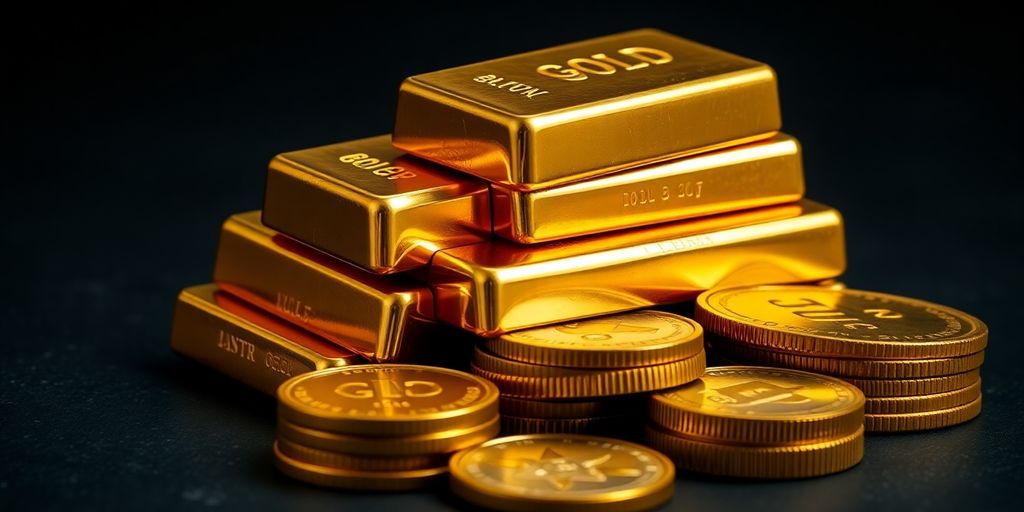
Pledging gold as collateral for a loan may seem like a good idea for quick access to funds, but it's essential to consider all the options and implications. It's not always the best solution for everyone, and it's good to know what else is out there.
Risks associated with non-repayment of the loan
When you use your gold as collateral, you agree to repay the loan according to the agreed-upon terms. If, for any reason, you fail to repay the borrowed amount, the financial institution has the right to seize and sell your gold to recover the funds. This is a fairly real risk that must be carefully considered. It is therefore essential to ensure that you can honor your commitments before you start. You should also be aware of any additional costs that may be added, such as application fees or insurance, which can increase the total cost of the loan.
Gold sale or pawnbroking: what’s the difference?
The distinction between selling your gold and pawning it is fairly simple, but it has important consequences. If you sell your gold, you receive money immediately and have nothing more to repay. It is a definitive transaction. On the other hand, with a pawn loan, you receive money, but you retain ownership of your gold. You have a deadline to recoup it by repaying the loan with interest. If you don't, you lose your gold. Selling may be more advantageous if the Gold prices is particularly high when you need cash, as you take full advantage of that value. Pawning allows you to keep a potentially valuable asset for the long term, but it involves additional costs and the risk of losing the item if repayment fails.
Understanding interest rates and associated fees
As with any loan, gold-backed loans come with interest rates and fees. These can vary considerably from one institution to another, so it's important to shop around before committing. Look carefully at the Annual Percentage Rate (APR), which includes not only interest but also all additional fees. Sometimes, a low nominal interest rate can hide high application fees or other costs that make the loan less attractive. Don't hesitate to request simulations and read the contract carefully to fully understand what you're signing. A good understanding of these elements will help you make the best choice for your financial situation.
The role of gold in the financial system
Gold, the precious metal that has fascinated people for millennia, plays a much more important role than just jewelry or personal stash. It's a discreet but solid pillar of the global financial system. You may be wondering how a metal can have such influence? Well, it's a story of trust, stability, and intrinsic value.
Gold as a safe haven and reserve of stability
Gold is often referred to as a "safe haven." What does this mean for you? It means that in times of economic uncertainty, when stock markets are tumbling or inflation is soaring, gold tends to hold its value or even appreciate. It's like a golden parachute for your wealth. It's not dependent on the decisions of one company or government policy. Its value is universally recognized, making it a reassuring asset when everything else seems to be faltering. Think of it as an anchor in the financial storm. That's why many investors, even those without gold as collateral, turn to it to balance their investments. You can learn more about the benefits of gold for diversifying your investments.
Gold in central bank reserves
Did you know that central banks—the institutions that manage your country's currency—hold enormous amounts of gold? Yes, they do! The United States, Germany, France—all these nations have considerable gold reserves. These reserves aren't just for show. They serve as a guarantee of stability for the national currency and strengthen the country's credibility on the international stage. When a central bank buys or sells gold, it can even influence the global price of the metal. It's a bit like a financial chess game where gold is a key piece. These reserves, often in the form of standardized ingots, are an indicator of a country's economic strength.
Gold and Portfolio Diversification
For you, as an investor or simply someone looking to protect your savings, gold is a great tool for diversifying your portfolio. Mixing different types of assets (stocks, bonds, real estate, and gold) helps reduce overall risks. Gold has the particularity of not always moving in the same direction as other markets. Sometimes, when the stock market goes down, gold goes up, and vice versa. This helps smooth out the performance of your assets over the long term. It's a prudent strategy to avoid putting all your eggs in one basket. By including a portion of gold, you add a layer of security and growth potential to your overall investment strategy.
Gold plays an important role in our financial system. It is often seen as a safe haven when things go wrong in the economy. Many people buy gold to protect their money. Want to learn more about how gold can help you? Visit our website to find out how. invest in gold and secure your financial future.
In conclusion: gold, an ally for your finances
So, now you have a better idea of how gold can serve as collateral for a loan. It's an interesting option, especially if you need cash quickly without wanting to part with your valuables. Think carefully, weigh the pros and cons, and see if it's right for your situation. Remember that there are also other ways to obtain funds, such as selling your gold directly. The important thing is to be well informed and choose the solution that suits you best. Gold is more than just a metal; it's a tool that can help you when you need it most.
Frequently Asked Questions
What is a gold-backed loan?
When you use your gold as collateral for a loan, it's like giving your gold to the bank so they can lend you money. If you repay the loan on time, you get your gold back. If you don't repay, the bank keeps your gold to reimburse itself.
Why is it easier to get a loan with gold as collateral?
Putting up gold as collateral is often easier to get a loan. Since gold has a secure value, banks are less concerned. As a result, they may ask for fewer documents and not look too closely at your credit history.
What are the risks if I put my gold as collateral?
The main risk is losing your gold. If you can't repay the loan, the bank will sell your gold to get back the money it lent you, plus interest. So you need to be sure you can repay it.
How do I know how much my gold is worth before putting it up as collateral?
To know how much your gold is worth, you need to look at its purity (how much gold it contains) and its weight. Ingots often have a certificate that provides this information. For jewelry, you need to have it weighed and appraised by a jeweler or expert.
Where can I get a loan with my gold?
You can go to places like Crédit Municipal (also called Mont-de-Piété), which specialize in pawnshops. Some banks or gold buying and selling stores may also offer this type of service.
What documents are required to take out a gold loan?
You'll usually need to provide ID and your gold certificate, if you have one. Sometimes, you'll also need proof of address. But since the gold is used as collateral, you won't necessarily be asked for as many documents as you would for a regular loan.
