Before embarking on the purchase or investment of gold, here is what you need to know about the evolution of the global jewelry industry.
Points to remember
- The price of gold is influenced by supply, demand, geopolitics and inflation.
- Asia, especially India and China, dominates the consumption of gold jewelry.
- In France, gold jewelry production is declining, but the sector is renewing itself with craftsmanship and exports.
- Investing in gold can be done via bars, coins, ETFs or recycling, depending on each person's profile.
- The global gold market remains stable, but trends need to be monitored to invest at the right time.
The Global Gold Market: Trends and Dynamics
Hello to all gold enthusiasts! Today, we're going to take a look at what's happening in the global gold market. It's a bit like checking the economic weather forecast; it gives us an idea of what to expect.
Global Gold Demand: An Economic Barometer
Gold demand is a bit like a barometer of the global economy. When things are good, people buy jewelry; when things are bad, they turn to gold as a safe haven. Generally, demand hovers around 4,000 to 4,700 tons per year. It took a hit in 2020 due to the pandemic—understandable, as everything was at a standstill. But since 2021, it's been slowly picking up again, even though we saw a slight dip in 2022. What's interesting is that demand comes from everywhere: jewelers, investors, manufacturers, and even central banks.
The Gold Offer: Between Mining and Recycling
To meet this demand, where does the gold come from? Primarily from two sources: mining and recycling. Mining is the historical source, with countries like China, Russia, and Australia leading the way. But be aware that recycling is becoming increasingly important. Think of old jewelry, electronic devices… all of these can be melted down. Recycling even represents a significant portion of the supply, especially when the price of gold rises or when there are economic difficulties, as people sell their jewelry to get cash.
| Source | Share of supply (approx.) |
|---|---|
| Mining production | 73% |
| Recycling | 27% |
Physical Gold vs. ETFs: A New Era of Investment
When we talk about investing in gold, we often think of bars and coins. That's physical gold, the safe haven. But there's another way: ETFs (Exchange Traded Funds). These are funds that track the price of gold. It's simpler for some, as there's no need to store gold at home. These ETFs buy and sell large quantities of gold, which impacts the market. It's a new way to approach gold, which coexists with traditional buying.
The gold market is a constant balancing act between what is mined, what is recycled, and what people want to buy. It's a bit like a large clock where every part is important for everything to function.
In short, the gold market is a complex mix of consumer demand, producer supply, and investment strategies. That's why following these trends is always a good idea if you're interested in gold.
Gold in France: Between Tradition and Transformation
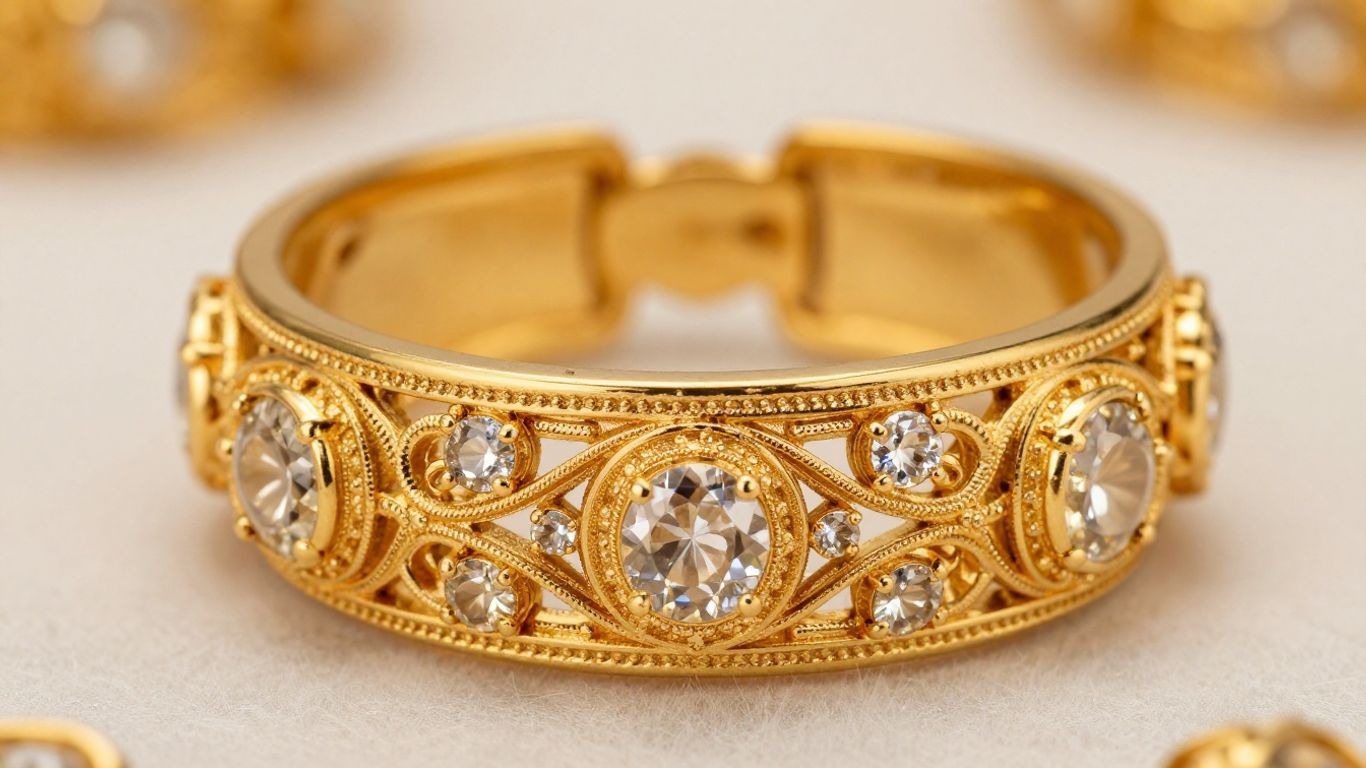
Ah, France and gold! It's a love affair that endures, but like all good stories, it has its ups and downs. One might think that France, with its reputation for luxury and craftsmanship, is at the pinnacle of gold jewelry making. Well, not quite. The figures reveal a slightly different reality, a sort of readjustment.
Gold Jewelry Manufacturing: A Marked Decline
If you thought France produced tons of gold jewelry every year, think again. The amount of gold used to make jewelry has decreased significantly in recent years. In 2017, for example, approximately 5,8 tons of gold were used, which is much less than in 2008 when it was around 12 tons. That's quite a change, isn't it? Some of it comes from recycling, but the amount of new gold from mines has also decreased considerably.
This movement is not unique to France; it's a trend affecting all of Europe. Production has shifted to Asia, particularly China, which has seen its own jewelry production explode over the same period.
Gold Consumption by the French: An Overview
So, if we produce less gold, do we buy less? Final gold consumption in the jewelry sector in France, taking into account imports, is around 13,3 tons per year (2017 figure). That might seem like a lot, but when you divide that by the population, it comes to about 0,2 grams per person per year. Basically, it's as if every French person bought a piece of gold jewelry, like a wedding band, every ten years. That seems more reasonable, doesn't it?
- In 2017: 5,8 tonnes used for jewelry manufacturing.
- In 2008: 12 tonnes used for jewelry manufacturing.
- Annual consumption per capita: approximately 0,2 g.
The French Jewelry Sector: A Renewal
Despite the decline in local manufacturing, the jewelry sector in France is far from dead! It's transforming. The overall market for fine jewelry and watches is stabilizing, or even showing slight growth. Sales in specialty stores, where customers can touch and examine the jewelry, are even on the rise. The French seem to prefer returning to physical stores rather than buying online for these types of items. And then there are the major French luxury brands that continue to shine internationally, proudly upholding the image of French craftsmanship. Luxury craftsmanship and the integration of new materials demonstrate that the sector still has a bright future.
The Main Gold Players and Consumers
Asia, the New Beating Heart of Jewelry
When we talk about gold, especially for jewelry, we have to look to Asia. That's where it's really happening. The figures clearly show it: gold jewelry production has exploded in this part of the world in recent years. While Europe, and France in particular, saw its gold jewelry manufacturing decline, China, for example, saw its gold consumption for jewelry more than double between 2008 and 2017. It's a major shift, a real turning point.
India and China: Essential Markets
These two giants are simply enormous for the gold market. India, with its culture where gold holds a special place, and China, with its rapidly growing population and economy, absorb staggering quantities of gold. We're talking tons and tons every year. Demand comes from both jewelry and physical investment, such as bars and coins. It's simple: if you want to understand where the gold is going, look to New Delhi and Beijing.
Central Banks: Strategic Players
Don't underestimate the role of central banks. They buy and sell gold, and this can have a fairly direct impact on the price. For them, gold is a safe haven, a bit like insurance against a setback for the global economy. When they decide to increase their gold reserves, it creates additional demand that doesn't go unnoticed. It's a little less visible than consumer demand, but it's extremely important for market stability.
Gold is a bit like a barometer of the global economy. When things get bad, everyone looks to it. And it's the major players, like Asian countries and central banks, who set the tone.
Understanding the Price of Gold: Influencing Factors
Supply and Demand: The Foundations of Price
As with any asset, the gold price The price of gold is primarily dictated by the law of supply and demand. If many people want to buy gold and there is little available, the price rises. Conversely, if supply is abundant and demand weakens, the price tends to fall. That's the basic principle, but other factors also come into play.
The Geopolitical Context: A Driver of Safe Haven Assets
When the world is in turmoil, whether due to conflict or political instability, gold becomes more attractive. Investors then seek a safe haven for their money, and gold is often seen as that safe-haven asset. Consider tensions in the Middle East or major political changes; these events can drive up the price of gold as people turn to it for protection.
Gold has this unique ability to attract investors in times of uncertainty, acting as a shield against global economic and political turmoil.
Inflation and Interest Rates: Key Indicators
Inflation is when prices rise and your money loses value. Gold is often considered a good hedge against this. When inflation rises, the price of gold tends to follow. Interest rates also play a role. If rates are low, it's less attractive to keep your money in the bank, and gold may seem more appealing. Conversely, high interest rates can make gold less attractive compared to interest-bearing investments.
Here are some points to remember about these factors:
- Inflation : Rampant inflation often pushes the price of gold upwards.
- Interest rate Low interest rates make gold more competitive as an investment.
- Monetary policies Central bank decisions on interest rates or the quantity of money in circulation have a direct impact.
- Confidence in currencies : If confidence in currencies like the dollar weakens, gold can benefit.
Investing in Gold: Strategies and Opportunities
Physical Gold: Bars, Coins and Safe Assets
When we think about investing in gold, we often picture shiny ingots or antique coins. This is the most direct approach, the one that provides a tangible sense of security. Owning physical gold means possessing a real asset, not just a line item on a bank statement. It's a bit like having a store of value that transcends time, regardless of financial market fluctuations or global economic turmoil. It is the oldest and most recognized form of investment.
Gold bars range from small ones weighing just a few grams to large blocks weighing several kilograms. Coins are a bit different; they often have numismatic value in addition to their gold weight. Think of Napoleons or Sovereigns. The advantage is that they're easy to understand and resell, especially if you go through professionals like us at goldmarket.fr. We can help you get a clear picture.
Physical gold offers protection against inflation and economic instability. Its value is recognized worldwide and it is easy to trade.
Gold ETFs: An Accessible Alternative
For those who prefer a more modern and less cumbersome approach, there are gold ETFs. ETFs, or Exchange Traded Funds, are funds that trade on stock exchanges like stocks. A gold ETF, essentially, seeks to track the price of gold. This is incredibly convenient because you don't have to worry about storing gold bars at home or their security. You buy shares of a fund that holds physical gold.
It's a simple way to add gold to your portfolio without having to manage the metal itself. It's also often easier to buy and sell quickly. Fees are usually quite low, making it an attractive option for many investors. You just need to choose the right ETF and understand how it works.
Gold Recycling: A Sustainable Supply Source
Recycling isn't always the first thing that comes to mind when we talk about investing in gold, yet it's a significant part of the market. The gold that's recycled includes old jewelry, broken items, and sometimes even industrial components. When you sell gold to companies like goldmarket.fr, you're participating in this cycle.
It's a way to reintroduce precious metal into the economy without having to dig new mines. It has an ecological benefit and helps stabilize the gold supply. Furthermore, when the price of gold rises, or when people need money, recycling tends to increase. It's a source of supply that demonstrates gold is a metal that circulates and is reused, much like currency.
- Old or broken jewelry: The main source of recycling.
- Dental gold: Used in small quantities, but recoverable.
- Electronic waste: Contains small amounts of gold, but the volume can be significant.
- Ingots and coins: Sometimes, investors sell their physical gold for recycling.
The Future of Gold Jewelry: Perspectives and Innovations
The Rise of High-End Craftsmanship
We're seeing more and more designers turning to unique, handmade pieces. It's a bit of a return to basics, but with a modern twist. People like knowing there's a story behind their jewelry, that it wasn't mass-produced. It adds value, you see? The major luxury brands have understood this well and are showcasing their craftsmanship. It's good news for employment too; it retains valuable skills.
The Integration of New Materials
Gold is great, but it's no longer the only material in the spotlight. We're starting to see interesting combinations with other metals, sometimes even more unexpected materials. This allows for the creation of truly new designs and appeals to a younger clientele, perhaps looking for something less traditional. It's a way to keep jewelry relevant for new generations.
The Impact of Consumer Trends
Buying habits are changing, that's clear. People want things that have meaning. Personalization, for example, has become incredibly important. Everyone wants a piece of jewelry that truly reflects their personality. And then there's this desire to consume more responsibly. This is pushing brands to be more transparent about the origin of the gold and their manufacturing methods. The market is evolving, and you have to adapt to stay in the game.
The French jewelry sector has demonstrated remarkable resilience in recent years. Despite the challenges, production has increased and exports are performing well. This is a sign that French expertise still has a bright future, especially when it knows how to reinvent itself.
The future of gold jewelry is full of surprises! Designers are creating ever more beautiful and original pieces, blending tradition and new technologiesWe are seeing the emergence of bold designs, recycled materials, and extensive personalization so that each piece of jewelry tells a unique story. It's a fascinating world that is constantly evolving.
Want to discover how these trends are transforming the world of gold jewelry? Visit our site to explore the latest creations and understand the innovations shaping the future of jewelry. Don't miss out on the new arrivals!
Conclusion
Gold is a bit like that old sweater you keep at the back of your closet: it never really goes out of style. The global gold jewelry market continues to evolve, with Asia gaining increasing prominence and France reinventing itself, blending tradition and modernity. Gold prices rise, fall, and rise again… in short, it's constantly changing. Whether you're tempted to invest in gold, buy a piece of jewelry, or are simply curious to understand why everyone's talking about it, there's always something to learn. Keep an eye on gold prices, monitor the trends, and who knows, maybe your next purchase will be a pleasant surprise!