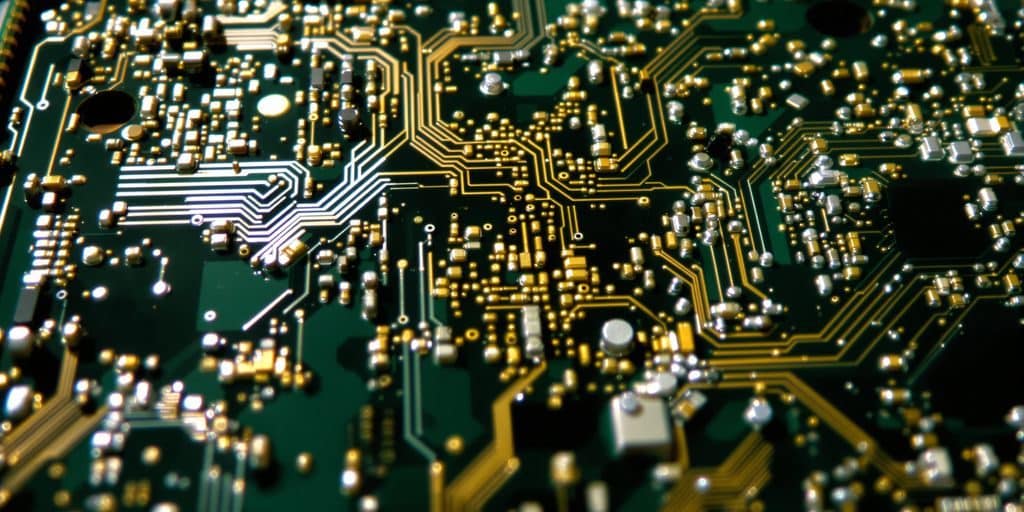
You might be wondering where all that old technology you throw away goes. Well, your old phones, computers, and other electronics are actually a potential gold mine. In 2025, the idea of urban mining makes perfect sense, especially when it comes to recovering gold and other precious metals from our electronic waste. It's a smart way to recycle and reduce our impact on the planet.
Key points
- Gold and silver, much more than just precious metals, find essential applications in industry, medicine and renewable energy, making their recovery particularly relevant.
- Electronic waste represents an increasingly important source of precious metals, the concentration of which is much higher than in traditional mining deposits.
- Methods for recovering gold from electronic waste are evolving from conventional techniques to more modern and efficient approaches such as adsorption and the use of metal-organic frameworks.
- Urban mining offers a sustainable solution for the future, reducing the environmental impact of mining and promoting a circular economy for electronic equipment.
- Investing in recycled precious metals, such as silver, offers advantages in terms of accessibility, ease of resale and wealth diversification.
Gold and silver: precious metals with many facets
Gold and silver, these metals that have always shimmered, aren't just there to look pretty in our jewelry or decorate our homes. They play much more important roles, whether in industry or even in our health. You might be wondering why we talk about them so much? It's simple: their usefulness is truly everywhere.
Gold, a metal with industrial and medical applications
We often think of gold for rings or necklaces, but did you know that it's also super useful in many other areas? For example, in electronics, its ability to conduct electricity well and not oxidize makes it an ideal component for contacts. That's why we find it in our phones and computers. And that's not all! In medicine, gold is used for certain dental prostheses or even to coat medications. It's pretty crazy to think that such a precious metal has such practical and vital functions.
Silver, a strategic metal for renewable energies
Silver is a bit like gold's cousin, but with its own superpowers. In addition to its use in electronics and medicine, it plays a key role in renewable energy, particularly for solar panels. Its conductivity makes it essential for capturing the sun's energy. It's a metal with a long history, used since ancient times for trade and as a store of value. Today, its demand continues to grow with the energy transition, making it an attractive investment and a material of the future.
Jewelry, the leading market for gold
Despite all its technical applications, it must be said that jewelry remains the largest consumer of gold. This is where the majority of mined gold is used. It is often mixed with other metals such as copper or silver to achieve different colors and greater strength. Pure gold is more fragile, so alloys are preferred for jewelry. This market has enormous cultural and economic importance, and continues to make this precious metal shine throughout the world.
Electronic waste: an open-air gold mine
We throw away so many electronics these days, it's pretty crazy when you think about it. Smartphones, computers, tablets... we're constantly changing them. But have you ever wondered what's inside these things? Well, they're full of precious metals, like a small open-pit mine in your living room.
The growing volume of global electronic waste
The thing is, the amount of this waste, which is also called
Technologies for recovering gold from electronic waste
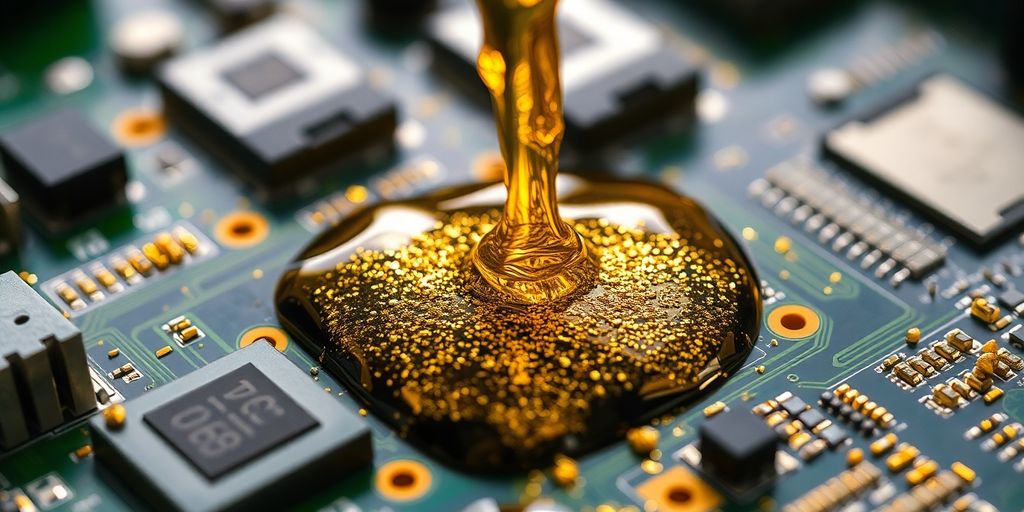
When we talk about recovering gold from our old electronic devices, we're entering a rather fascinating field, a bit like modern magic. There are several ways to do this, and they're becoming increasingly sophisticated. We can distinguish between the slightly older, let's say classic, methods, and then the newer techniques that are often more effective and more environmentally friendly.
Conventional leaching methods
These methods are somewhat pioneers in the field. They often use chemicals to dissolve the gold present in crushed electronic components. For example, acid leaching, which can be done in several stages, is quite common. Solutions based on thiourea or hydrogen peroxide, or even iodine, can also be used. Aqua regia, a mixture of nitric and hydrochloric acids, is also known for its ability to dissolve gold, but it is quite aggressive. Other approaches such as glycine or thiosulfate leaching are also being explored for their potential.
- Acid leaching: Dissolves gold in an acidic medium.
- Thiourea leaching: Uses thiourea as a complexing agent.
- Iodine leaching: Iodine can also be used to dissolve gold.
These methods have proven themselves, but they can sometimes require quite strict conditions and generate by-products that must be managed carefully.
Modern adsorption and precipitation techniques
With technological advances, finer methods have been developed. The idea here is often to separate gold more selectively. Adsorption, for example, uses materials that 'catch' dissolved gold from a solution. Then, precipitation recovers the gold in solid form. It's a bit like filtering gold very precisely.
The importance of metal-organic frameworks (MOFs)
RMOs, or Metal-Organic Frameworks (MOFs), are a fairly revolutionary category of materials. They have a highly developed porous structure, which gives them enormous absorption capacity. They can be designed to be particularly effective at capturing gold, even at very low concentrations. This is a very promising avenue for improving the yield and selectivity of gold recovery from electronic waste. Their potential for cleaner and more efficient recovery is truly enormous.
Urban mining: a sustainable solution for the future
Urban mining is a bit like rediscovering hidden treasures in what we throw away. Think about it: your old phones, computers, and other electronic devices aren't just trash. They contain precious metals like gold, silver, copper, and more. It's a much smarter and more environmentally friendly way to recover these materials than continuing to dig up the earth, which has a significant environmental impact.
Reducing the environmental impact of mining
Traditional mining is complicated. It requires a lot of energy, a lot of water, and uses chemicals that aren't always kind to the planet. Not to mention the landscapes we disfigure and the waste we produce. By recycling our electronics, we avoid all that. It's like transforming our trash into modern mines, but without the drawbacks.
Promoting a circular economy for electronic equipment
The idea is to make things last longer and to reuse materials. When you donate or sell a device that still works, or when you recycle it properly, you're participating in this circular economy. This means less waste and more reuse. It's a bit like closing the loop, ensuring that resources don't end up in the trash after just one use.
The economic and ecological benefits of recycling
Beyond the ecological aspect, there are also economic benefits. Did you know that there are many more precious metals in a ton of electronic waste than in a ton of mined ore? For example, a ton of old phones can contain up to 280 grams of gold! That's huge. Plus, recycling is often cheaper and uses less energy than primary mining. It's a win-win approach for the planet and our wallets.
Investing in recycled precious metals
You may be wondering how to turn those old devices into something tangible for your portfolio. That's where the idea of investing in recycled precious metals comes into its own. It's not just about being environmentally friendly; it's also a smart way to diversify your assets.
The accessibility of silver investment
Silver is like gold's affordable cousin. If you don't have a fortune to invest, silver is a great way to get started with precious metals. You can buy silver bars or coins without spending huge amounts of money. It's a great way to start building tangible wealth, especially considering silver's growing demand in industry, particularly for solar panels and electronics. Think about it: every time a solar panel is manufactured, silver is used. It's like investing in the future of energy.
The ease of reselling precious metals
When investing, we like to know that we'll be able to get our money back if necessary. With precious metals like gold and silver, this is generally quite simple. They are recognized worldwide, and there are always buyers, whether they are professionals or other individuals. Certified bars and coins, for example, are easy to resell because their value is well established. It's a bit like having a universal currency, but more solid.
Asset diversification through industrial metals
Beyond gold and silver, recycling e-waste also allows you to recover other metals that are essential for industry. Think copper, palladium, and even some rarer metals. These metals are used in everything from smartphones to electric cars. By investing in funds or companies that specialize in recovering these metals, you diversify your assets beyond traditional precious metals. It's a way to bet on the growth of new technologies while supporting a more circular economy. It's a bit like turning your old phones into shares in the future of industry.
Organize the collection and recycling of electronic waste
Organizing the collection and recycling of your old electronics is a key step for urban mining to truly work. You know those old phones lying around in a drawer, or that laptop that won't start anymore? They're not just scrap metal; they contain gold, silver, and plenty of other precious metals. The trick is, these devices need to get into the right hands so we can extract these treasures.
Initiatives for better e-waste management
We're seeing more and more initiatives to make recycling easier. For example, some municipalities are organizing special collection days, a bit like garage sales for electronics. Other partnerships are being formed between stores that sell new items and recycling centers so you can drop off your old devices when you buy a new one. It's a simple way to sort without too much effort. The idea is to make dropping off these items as accessible as possible for everyone.
The role of consumers in reducing electronic waste
And you, in all this? Your role is super important. Every device you keep longer is one less device that ends up as waste. Think about it: We often upgrade our phones or computers just because there's a newer, faster model, even if the old one still works. Trying to repair your devices, or reselling or donating them if they're still in working order, makes a huge difference. Not only does it save resources, but it also saves all the energy and chemicals needed to make a new device. It's a simple gesture that contributes to a more circular economy.
The challenges of global collection and recycling
Well, that's all well and good, but there are challenges. The volume of electronic waste is exploding, and we're talking millions of tons each year. The problem is that only a small portion is actually collected and recycled properly. In many places, this waste ends up incinerated or landfilled, polluting the environment and losing precious metals. Setting up effective collection systems around the world, especially in countries where resources are limited, is a real challenge. We also need to ensure that recycling is done under good conditions, without danger to workers or the planet.
Organizing the collection and recycling of electronic waste is an important step in protecting our planet. It is essential to properly manage these items that are no longer needed. By actively participating, we can make a real difference. Learn more about how to recycle properly, visit our website!
So, ready for the future?
So, that's it. You see, throwing away your old devices is a real shame. There's plenty of metal in them, even valuable stuff, that we could recover. It's cheaper and less polluting than digging up the earth, and it avoids filling up landfills. So the next time you upgrade your phone or computer, think about it. Look for collection points, or ask at your store. It's a small gesture for you, but it really counts for the planet and for having resources for tomorrow. We can all be a little more careful, right?
Frequently Asked Questions
How can I participate in recycling electronic devices?
It's a great idea to recycle your old electronics! Remember to bring them back to stores when you buy new ones, or drop them off at special collection points. Recycling centers are also there for this purpose.
Why recycle my old electronic devices?
Absolutely! Your old phone or computer contains lots of precious metals like gold or silver. It's like a hidden treasure trove! By recycling it, we avoid digging up the earth to find these metals, which is much better for the planet.
What is electronic waste?
It's super simple! Just look around you: those old phones at the bottom of a drawer, that computer that won't start anymore... all of that is electronic waste. Take it to a collection point.
What is urban mining?
That's an excellent question! Urban mining is a bit like becoming an urban detective. We look for hidden treasures, like gold and silver, in objects we no longer use, especially our electronic devices. It's a smart way to recover valuable materials without damaging nature.
Is silver as precious as gold?
It's true that gold is precious, but silver is also super useful! It's essential for making things like solar panels that help us have clean energy, and many other devices in medicine and technology. It's an important metal for our future.
Is recycling electronics cheaper than traditional mining?
Oh yes! Recovering metals like gold from your old appliances costs less and uses much less energy than traditional mining. It's a smarter and more environmentally friendly method.