

You're probably wondering how gold will fare in 2026. That's understandable; the current price of gold is a major concern for many of you, whether you're a seasoned investor or simply curious. Gold, this precious metal that has fascinated people for millennia, continues to play a significant role in our economies and portfolios. So, let's delve into what influences its value and how it stands today.
Key Takeaways
- Le Gold prices is influenced by a multitude of factors, ranging from central bank decisions to consumer demand and global geopolitical tensions.
- Historically, gold has always been considered a safe haven, a way to protect one's wealth against inflation and economic crises.
- Investing in gold can be done in various forms, whether in the form of bars, coins, or even through financial products, thus offering flexibility adapted to each profile.
Understanding the current price of gold
So, you're wondering how the gold price It's constantly changing, isn't it? It's a question many people ask, especially when considering investing. The price of gold isn't just a number that comes out of nowhere. It's influenced by many things, a bit like the constantly changing weather.
Factors influencing the price of gold
Several factors determine the value of an ounce of gold today. It's a mix of demand, supply, and also what's happening in the world.
- Global demand: Consider India and China. When these countries buy large quantities of gold, whether for jewelry or as a reserve, it drives up prices. This represents a huge share of global consumption.
- Central banks: They also play a role. When they decide to buy or sell large quantities of gold, it has an impact. They see gold as a safe haven, especially in times of uncertainty.
- The global economy: If the global economy is struggling and financial markets are unstable, people tend to turn to gold. It's what's known as a safe haven asset. Conversely, when everything is going well, gold can be less attractive.
- Interest rates: It's a bit more technical, but when interest rates are low, gold becomes more attractive. Why keep your money in a savings account that earns little when you can invest in something more tangible?
- Geopolitical tensions: An international crisis, a conflict… all of this can cause the price of gold to skyrocket. People seek security when the world becomes unpredictable.
The price of gold reflects the anxieties and hopes of the global economy. It reacts to events, political decisions, and consumer trends.
Gold Price Fixing Mechanisms
How do we arrive at the final price you see? There are key moments in the day when the price is fixed, a bit like an auction.
The price of gold is primarily determined by the law of supply and demand on international markets. Major financial centers such as London, New York, and Hong Kong play a significant role. There are two main types of gold quotations:
- The fixing: This is a procedure where the price is set twice a day (morning and afternoon) by professionals. They match buy and sell orders until they find an equilibrium. The LBMA (London Bullion Market Association) is a leading authority on this.
- The continuous course (real time): This price changes constantly, 24 hours a day, from Sunday evening to Friday evening. It reflects the transactions that take place at any given moment on global markets.
Here is an overview of prices for some common formats as of February 27, 2026:
| Product | Spot Price (€) | GoldPremium Price (€) | Prime (%) |
|---|---|---|---|
| ounce of gold | 4 385,19 | 4 525,52 | 3,20% |
| 1kg gold bar | 140 987,11 | 141 293,48 | 0,21% |
| Napoleon 20 Frs | 820,21 | N/A | N/A |
| 20 Swiss francs | 828,41 | N/A | N/A |
These prices are averages and may vary. They are updated regularly, often every 15 minutes, to give you the most accurate idea possible of the value of gold at any given time.
Gold: a historic and strategic investment
Gold as a safe haven through the ages
For millennia, gold has held a special place in human history. Long before it served as currency, it was already used for ornaments and rituals. Ancient civilizations, from the Egyptians to the Romans, recognized its intrinsic value and used it for their treasures. This perception of gold as a precious and lasting asset has not changed. Even today, in the face of economic turmoil, many turn to gold. It's almost as if, despite all our technological advancements, we return to basics when things get complicated.
Gold has weathered ages and crises, retaining its value. Think about it: stocks can fall, currencies can lose their purchasing power, but gold remains. It's there, physically, and its value is recognized worldwide. It's this constancy that makes it a safe haven. Central banks themselves hold enormous quantities to stabilize their economies. It's the ultimate safety net.
Gold does not depend on trust in a government or financial institution. Its value is universally recognized, making it unique in the world of assets.
The different forms of investment in gold
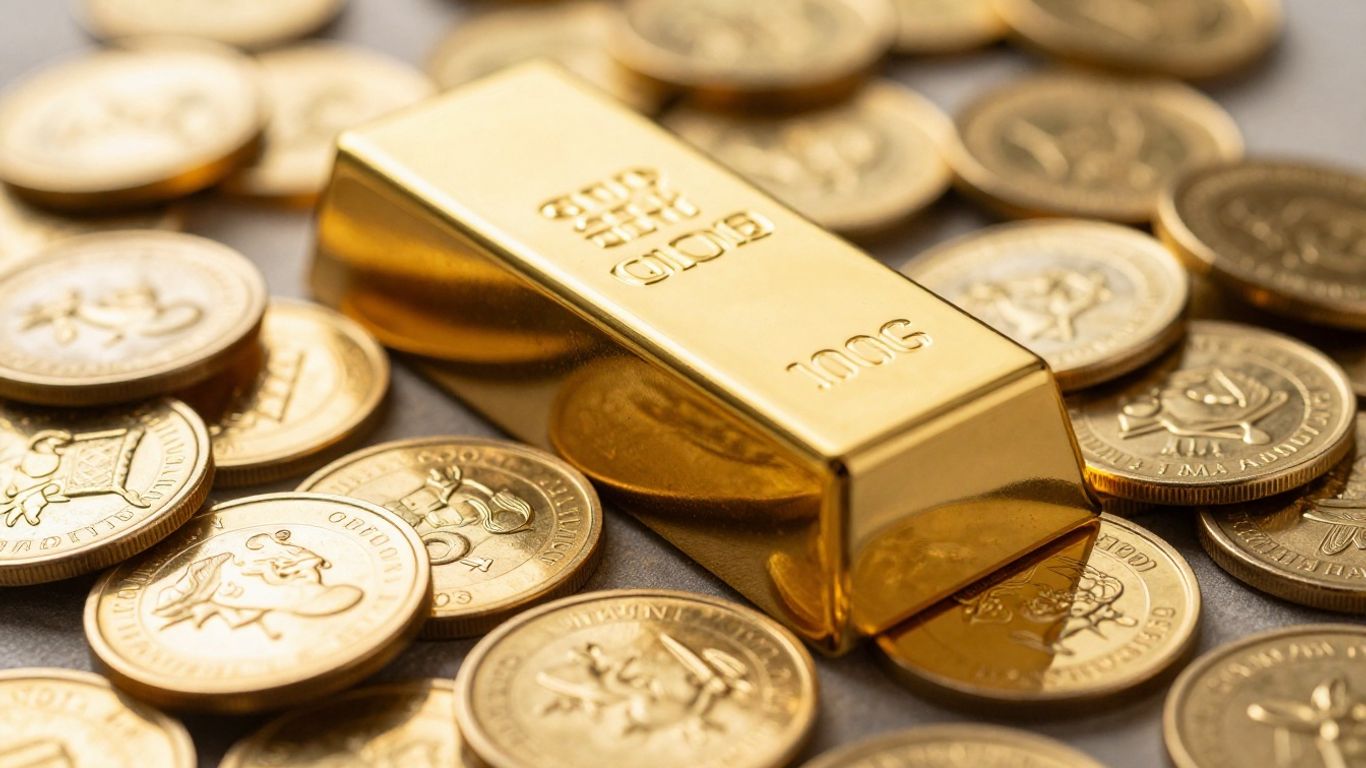
When we talk about investing in gold, we don't necessarily think of just one thing. There are several ways to do it, each with its own advantages. You can opt for physical gold, such as bars or coins. It's tangible; you can see it, you can touch it. Bars, for example, come in different sizes, from small 50-gram bars to one-kilogram bars. This is a practical way to diversify your assets without having to tie up a huge sum of money all at once. Gold coins, like Napoleons or 20 Swiss Francs, also have their appeal, combining intrinsic value with historical significance.
Here are some common options:
- Gold bars: Available in several weights (1g, 10g, 50g, 100g, 250g, 500g, 1kg). They are generally made of pure gold (999,9‰) and are valued for their purity and price per gram, which is often more advantageous for the heavier sizes.
- Gold coins: Coins such as the 20 Franc Napoleon, the British Sovereign, or the Canadian Maple Leaf have varying purities (often 900‰ or 999,9‰) and may carry a numismatic premium in addition to their intrinsic gold value.
- Ingots: These are small ingots, often from 1g to 50g, more accessible for starting to invest.
There are also more indirect ways, such as gold-backed exchange-traded funds (ETFs) or shares in mining companies. But for many, owning physical gold remains the most reassuring method. It's a bit like having your own treasure, a tangible reserve that truly belongs to you.
For centuries, gold has attracted people looking to protect their money. It's a safe haven, especially during times of uncertainty or crisis. If you want to learn more about how gold can improve your financial situation, visit our website.
So, what can we learn from this for 2026?
So, that covers everything you need to know about the price of gold in 2026. As you've seen, it's a dynamic market, influenced by many different factors. Whether you're here to invest, diversify your portfolio, or are simply curious, I hope this information has been helpful. Remember that gold has always been a safe haven, especially during challenging times. Do your research before investing, and perhaps gold will be a good option for you too.
Frequently Asked Questions
Why does the price of gold change all the time?
The price of gold fluctuates constantly because it depends on many things! Imagine you want to buy a toy that's in high demand: if everyone wants it and there aren't many available, the price goes up. It's the same with gold. If people are worried about their money because of global problems, or if central banks buy a lot of gold, its price increases. When things are going well and people prefer to invest in other things, the price might drop a little.
Is gold still a good place to put your money?
Yes, gold is often seen as a "safe haven" for your money. When the economy is struggling or prices are rising sharply (this is called inflation), gold often retains its value. That's why many people buy it when they're worried about their money. It's a kind of security for your assets.
How do you know if it's a good time to buy gold?
There's no magic answer! The best approach is not to buy everything at once. You can buy a little gold regularly, as if you were putting money aside each month. That way, if the price goes up or down, you're not taking too much of a risk. Observing world news and how people feel about money can also give you clues.
