
You might be wondering what the standard weights of gold bars are and how they compare. This is an excellent question when considering investing in this precious metal. There are several formats, each with its own characteristics, which can influence your choice. In this article, we'll examine the different weights of gold bars available on the market to help you gain a clearer understanding.
Key Takeaways
- Gold bars come in various standard weights, ranging from small 1-gram ingots to 400-ounce bars, the most common size for international trade.
- The choice of the weight of a gold bar depends on your investment objectives, your budget, your liquidity needs and your storage capacity.
- Purity (generally 999,9‰) and certification by recognized bodies such as the LBMA are guarantees of quality and international acceptance, regardless of the weight of the ingot.
The standard weights of gold ingots
When we talk about gold, we often think of those large, shiny ingots we see in movies. But in reality, the world of physical gold is much more varied than it seems. It comes in a multitude of sizes and weights, and understanding this is the first step to investing wisely.
Understanding the different sizes of gold bars
You might be wondering, "But how much does a gold bar actually weigh?" Well, the answer isn't so simple. Gold bars don't all come with the same weight label. They exist in a fairly wide range, from small 1-gram ingots, perfect for beginners, to enormous 400-ounce bars (approximately 12,4 kg) that are mostly reserved for international transactions and central banks. For individual investors, weights like the following are more common:
- 1 gram
- 10 grams
- 1 ounce (approximately 31,1 grams)
- 100 grams
- 1 kilogram (or 32,15 troy ounces)
The 400-ounce bar, often called "Good Delivery," is a sort of standard in the wholesale market. But for you, as an investor, smaller formats are generally more practical.
Factors influencing the weight of gold bars
Several factors come into play when determining the weight of a gold ingot. First, there is the purity of goldMost investment gold bars are 99,99% pure (what is known as 24-karat gold), but slight variations can occur. Furthermore, manufacturers may have production processes that result in small differences, even though reputable refiners adhere to strict standards. Finally, the target market plays a role. For example, some Asian markets use units like the tael, while Western markets prefer troy ounces or kilograms. Therefore, it is important to understand that even for bars of the same nominal weight, there can be very slight variations, usually within very small tolerances, such as +/- 0,025 oz for a 1 oz bar. These details are important for understanding a gold bar's value and acceptance in the global market. To ensure quality, it is always wise to verify that the bar meets international standards, such as those defined by the [organization name missing]. LBMA.
Understanding these different sizes and the factors that influence them helps you make informed choices for your physical gold investment. It's not just a matter of weight, but also of standardization and market acceptance.
Comparison of formats and their usefulness
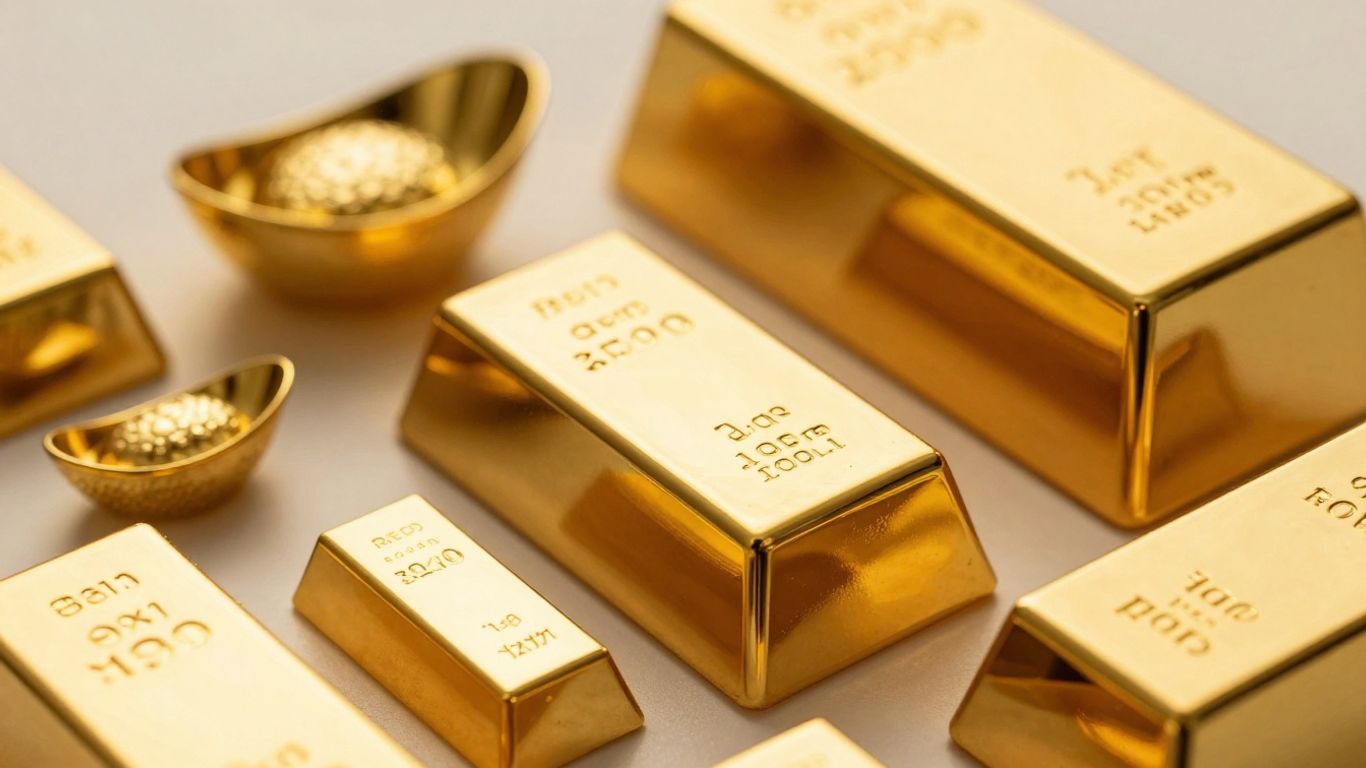
When you start to take an interest in gold, you quickly realize that there isn't just one way to own it. Gold bars come in many different sizes, and each has its own advantages. It's a bit like choosing between buying a large bag of rice or several small bags: it depends on what you want to do with it.
Ingots: accessibility and flexibility
Small bars are the smaller sizes, like 1 gram, 2 grams, 10 grams, up to 100 grams. They're great for beginners or those who just want to save a little money without breaking the bank all at once. It's easy to buy a few each month, for example. And if you ever need to get some cash, selling a small bar is less complicated than having to cut up a large one. They also make a nice gift, you know, for a birthday or a new baby. They always make a good impression.
- Easy to buy: You don't need thousands of euros to get started.
- Convenient to store: They don't take up much space, you can keep them at home without any problem.
- Resale flexibility: You can sell just what you need.
- Ideal for diversification: You can buy several small ingots of different weights or from different manufacturers.
Gold bars are often the first step for many investors. They make gold accessible to everyone, regardless of budget.
Intermediate-sized ingots: a strategic balance
Next, there are the intermediate-sized bars, such as 250 grams or 500 grams. These are more in line with serious investment strategies. They represent a good compromise between the flexibility of smaller bars and the value of larger ones. They are relatively easy to handle and store, yet still represent a significant sum. For those who want to build a solid portfolio without the burden of a massive one-kilo bar, this is often the preferred choice. They are well-regarded in the market, so reselling them is generally straightforward. It's a good middle ground, really.
| Format | Weight (grams) | Benefits |
|---|---|---|
| Ingot | 1g to 100g | Accessibility, flexibility, ideal gift |
| Intermediate | 250g, 500g | Balance, solid investment, good liquidity |
These intermediate formats are often recommended by professionals because they offer a good combination of security and ease of management. It's a bit like having a versatile car: it does everything well without being specialized in any one area. You can check out the different sizes of gold ingots to give you a more precise idea.
Standardization and quality criteria
When you buy gold, you want to be sure of what you're getting. That's where standardization and quality control come in. They guarantee that the gold bar you're holding matches what was advertised.
Purity and certification: guarantees of trust
Purity is a bit like your gold bar's pedigree. It's measured in parts per thousand (‰). For investment gold, the standard is generally 999,9‰, meaning it's 99,99% pure gold. This is what's known as 24-karat gold. High purity is essential for your investment to retain its value. Reputable refiners, often certified by organizations like the LBMA (London Bullion Market Association), ensure that this purity is achieved and maintained. Every gold bar must come with a certificate of authenticity. This document is your guarantee: it details the weight, purity, unique serial number of the bar, and the name of the refiner. It's a bit like your gold bar's identity card.
- Minimum purity: 995‰ for investment gold according to certain regulations, but 999,9‰ is the current standard for quality ingots.
- LBMA Certification: a guarantee of trust and acceptance in international markets.
- Unique serial number: ensures traceability and authenticity.
- Certificate of authenticity : essential document accompanying the ingot.
The quality of a gold ingot isn't limited to its purity. Visual appearance is also important. You should expect a smooth surface, free of major defects such as bubbles or cracks. The dimensions must also be precise, as they facilitate storage and transport and are often specified by international standards.
International standards and market acceptance
The gold market is global, but there isn't a single standard that applies everywhere in the same way. The LBMA in London is a major benchmark, but other exchanges like COMEX in New York or SGE in Shanghai have their own requirements. A gold bar that meets LBMA standards and is considered "Good Delivery" is generally accepted everywhere, but it's always good to be aware that these standards exist. They define not only the purity but also the dimensions and even weight tolerances. For example, a 1-kilogram gold bar must meet specific dimensions to be considered standard. This ensures a degree of uniformity, even if local variations may occur. For you, as an investor, this means that choosing gold bars from recognized and certified manufacturers guarantees better liquidity and easier acceptance if you decide to sell your gold.
| Market / Organization | Main criteria |
|---|---|
| LBMA (London) | Purity (≥ 995‰), weight (400 oz), strict documentation |
| COMEX (New York) | Strict tolerances on weight and dimensions |
| SGE (Shanghai) | Specifications on chemical composition and labeling |
It is important to note that for investment gold in France, for example, a purity of at least 99,5% is required to benefit from certain tax advantages. in the event of inheritanceUnderstanding these standards helps you make informed choices and ensure your investment is well protected.
To ensure everything is perfect, we follow strict quality standardsThis ensures our products are always top-notch. Want to learn more about our standards? Visit our website to discover how we guarantee the best quality for you.
To conclude
There you have it, you now have a better understanding of the different weights of gold bars available. Whether you're aiming for a small 1-gram bar to start with or a larger 250-gram bar to diversify your portfolio, each size has its purpose. Remember that the important thing is to choose wisely according to your goals and budget. Also, consider the security of your investment; it's always a good idea to carefully think about where you're going to store it. I hope this article has helped you gain a clearer understanding of the world of gold bars!
Frequently Asked Questions
What is the difference between an ingot and an ingot?
A gold bar is generally larger, often used by banks or large investors. A small gold bar is simply a smaller bar, easier to buy and sell for people like you who are just starting out or who want more flexibility. Think of a small gold bar as a smaller portion of gold, perfect for beginners.
Why are there different sizes of gold bars?
It's a bit like having banknotes of different denominations! Smaller denominations, like 1 gram or 10 grams, are great for starting out without spending too much money, or for giving a special gift. Larger denominations, like 250 grams or 1 kilo, are more for those who want to invest a larger sum. This allows everyone to find the format that suits them best, according to their budget and preferences.
How do you know if a gold bar is genuine and of good quality?
That's an excellent question! To be sure, check if there's a certificate of authenticity. This document, often issued by recognized experts like the LBMA (it's like a quality seal), tells you that the gold is pure (often 99,99%) and that the weight is correct. Gold bars are also often sealed in special packaging and bear a unique number. It's like an ID card for your gold bar!