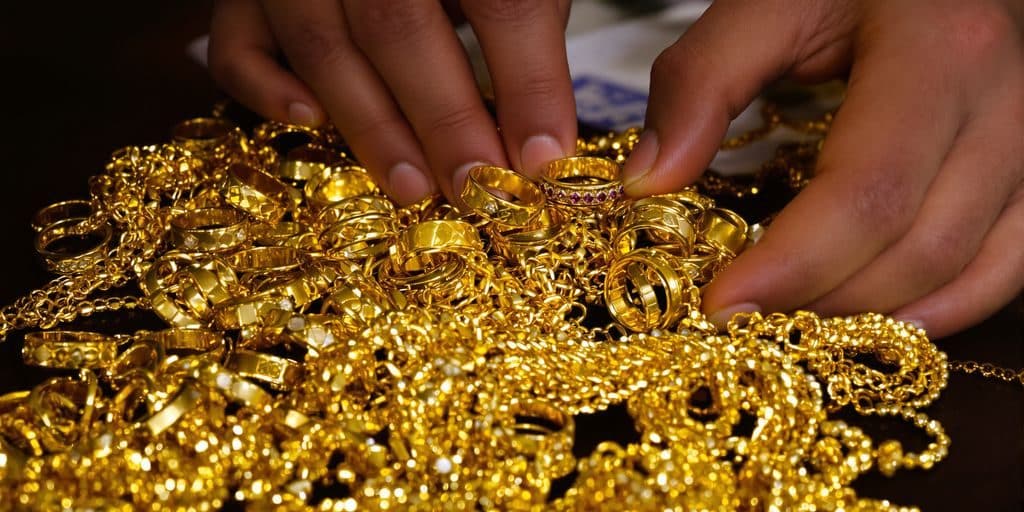
Wondering how a free appraisal of your gold jewelry works? That's a great question! Knowing how this process works allows you to better prepare your pieces and understand the value you'll be offered. Whether you're planning to sell or simply want to know the value of your treasures, here's what you need to know to get a confident appraisal.
Key Takeaways
- The free appraisal of your gold jewelry involves several steps, from identification to numerical evaluation.
- Transparency is key: make sure the expert clearly explains their methods and criteria.
- Professionals consider brand, precious metals, stones, manufacturing quality, and overall condition.
- Using specialist experts or auctioneers guarantees you a fairer valuation.
- Understand the difference between an appraisal and a buyout price before making a decision.
Understanding the Free Gold Jewelry Appraisal Process
Wondering how a free appraisal of your gold jewelry works? It's a fairly straightforward process, but it's good to know what to expect. The idea is to give you a clear idea of the value of your pieces without you having to pay a cent.
The key stages of an assessment
The process of a free appraisal generally follows a well-defined pattern. Here are the main points:
- Contact and deposit of the jewel : You contact the expert or jewelry store, often via an online form or directly in store. You then drop off your jewelry for examination.
- Visual examination and identification : The expert begins with a thorough inspection. He looks for the mark, the hallmark, and notes the general condition of the jewelry. This is where he identifies the type of gold (18 carats, 14 carats, etc.) and any precious stones.
- Weighing and analysis of materials : The jewelry is precisely weighed. If stones are present, their weight (in carats) and quality are assessed. Tests may be performed to confirm the purity of the gold.
- Reference search : The expert may consult databases or catalogs to compare your jewelry to similar pieces sold recently, especially if it is an antique or branded piece.
- Establishment of the valuation certificate : Once all the information has been collected, the expert writes a document detailing his conclusions and providing a cost estimate.
The importance of transparency in evaluation
It's really important that the process is clear to you. A good expert will explain each step, the criteria they use, and why they arrive at a particular conclusion. There should be no gray areas. For example, if your jewelry has a small imperfection that could affect its value, the expert should point this out to you. They should also explain how they determined the weight of the gold and the quality of the stones.
Trust is built on clarity. Never hesitate to ask questions if something isn't clear. A knowledgeable professional will be happy to help.
How a cost estimate is carried out
The cost estimate is the concrete result of the appraisal. It takes several factors into account:
- The weight of gold : This is often the main criterion. The weight is multiplied by the current price of fine gold.
- The purity of gold : Pure gold (24 carats) is more expensive than alloyed gold (18 carats, 14 carats).
- Precious stones : Their size, quality (color, purity, size, weight) and setting influence the value.
- The brand and rarity : A piece of jewelry from a well-known designer or a unique piece will have added value.
- The state of conservation : A piece of jewelry in perfect condition will be worth more than one that is damaged or needs repairs.
The estimate you receive is an indication of the market value of your jewelry at a given time. It may vary slightly depending on the professional who carries it out and the market.
The criteria for evaluating a gold jewel
To fully understand the value of your gold jewelry, the expert examines several elements. It's not just the weight of the gold—far from it. The first thing to look at is who made the jewelry and where it comes from. Sometimes, a well-known brand like Cartier or Boucheron adds significant value. The expert also looks for hallmarks, those small marks that indicate the purity of the gold, such as 18 carats (750/1000) or 24 carats (999/1000). It's a bit like looking at the metal's identity card. Knowing whether your jewelry is made of 18 carat or 24 carat gold is key information.
Then there are the stones. If your jewelry contains any, the expert will identify them: are they diamonds, sapphires, or emeralds? They will evaluate their quality, size, carat weight, and how they are mounted. A beautiful, well-set stone can completely change the value of a piece. The craftsman's work is also taken into account: the finesse of the engraving, the quality of the polishing, the strength of the attachments. A well-made piece of jewelry, even if it's antique, will always be worth more than a poorly finished piece. The overall condition of the jewelry is also essential. Is it damaged, scratched, or is a stone missing? All of these things impact the price.
It's important to note that a piece's history can also play a role. If a piece belonged to a famous person or has a particular historical provenance, its value can be significantly increased, far beyond the simple value of the materials. This is called collectible or sentimental value, which is difficult to quantify but very real.
Here are the main evaluation criteria:
- Identifying the brand and provenance: Search for hallmarks, goldsmith signatures, and certificates of authenticity. The reputation of the designer or jewelry house is an important factor.
- Analysis of precious metals and stones:
- Type of metal (gold, platinum, silver) and its purity (karats, fineness).
- Identification of stones (diamonds, gems), their weight (carats), their color, their purity and their cut quality.
- Taking into account the quality of production and condition:
- Fineness of the goldsmith work, type of setting, finishes.
- Condition: no major defects, normal wear and tear.
Call on professionals for expertise
When it comes to your gold jewelry, it's only natural to want to ensure you get a fair and accurate appraisal. This is where professional assistance becomes essential. They bring an expert eye, specific tools, and market knowledge to guarantee you a reliable appraisal.
Choose a jewelry expert
For a meaningful appraisal, you need to consult someone who truly understands the world of jewelry. A jewelry expert, not just a generalist, will be able to recognize the intrinsic value of your gold, as well as the craftsmanship, the quality of the stones, and the potential history of the piece. Remember to check whether the expert has a good reputation and is well-known in the industry. Sometimes, professional associations like the French Union of Professional Experts in Works of Art can be a guarantee of professionalism, as their members must pass exams and have several years of experience.
The usefulness of independent and judicial experts
Hiring an independent expert can be an excellent idea, especially if you're looking for a neutral opinion. These professionals aren't tied to a buyer or seller, allowing them to remain objective. Forensic experts, on the other hand, are recognized for their expertise and impartiality, often called upon in the context of inheritances or disputes. They provide an additional guarantee of reliability in their assessment.
The benefits of consulting an auctioneer
Auctioneers are also an option to consider, especially if you plan to sell your jewelry at auction. They often hold free appraisal days, which is a good opportunity to have your pieces appraised at no cost. They are also qualified to provide insurance appraisals, which can be helpful. If your jewelry is in good condition, it can be sold as is. Sometimes, the price obtained at auction can even exceed the initial appraisal. However, keep in mind the fees that apply, which can be quite high, and the time it takes for the jewelry to be listed in the catalog. If you're looking for a faster sale, some jewelry stores offer appraisals close to those of auction houses, with immediate payment. For information on selling specific pieces, you may find useful details on selling Queen Elizabeth II Gold Sovereign.
The different methods of jewelry appraisal
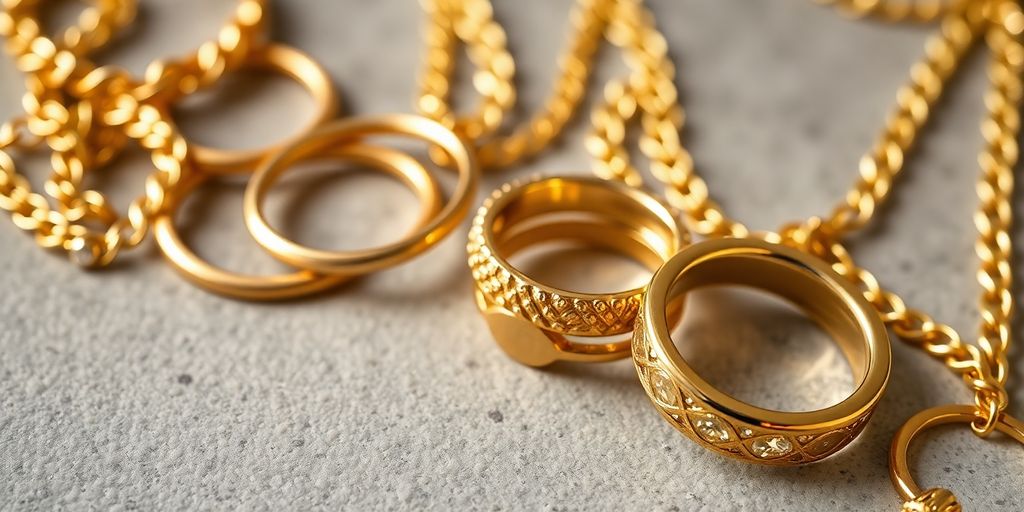
Wondering how the value of your gold jewelry is determined? There are several approaches to obtaining an appraisal, each with its own specificities. Understanding these methods will help you better understand the process and obtain an accurate valuation.
Jewelry and jewelry appraisal
Jewelry stores are often the first place people think of when considering a piece of jewelry appraisal. They generally offer this service free of charge. The appraisal is based on the current gold price and market prices for similar pieces. It's important to note that this appraisal does not directly correspond to a buyback price. A discount will be applied for pre-owned jewelry. For pieces set with stones, a gemological appraisal is necessary for an accurate assessment. Specialists can also estimate the value of antique jewelry based on their knowledge of art history and jewelry styles.
Online estimation platforms
If you're looking for a quick initial estimate, online platforms can be a solution. They allow for a preliminary estimate based on photos and the information you provide. It's a good way to satisfy your curiosity or get an idea of the value. However, keep in mind that these estimates are only indicative. For a reliable appraisal, the jewelry should always be examined by a professional.
Understanding the value of an antique or second-hand piece of jewelry
The value of a piece of jewelry isn't just about its weight in gold. For antique pieces, factors such as rarity, the jewelry's history, provenance, craftsmanship, and condition play a major role. Sometimes, an antique piece of jewelry can have historical or artistic value that far exceeds the value of the precious metal. The brand and designer should also be considered, as some signatures add significant value. Wear and tear and any repairs can also influence the final price.
Appraising jewelry is a blend of science and art. Gold weight and purity are objective factors, but beauty, history, and rarity add subjective dimensions that can radically alter perceived value.
What you need to know before selling your jewelry
Before you start selling your jewelry, there are a few things you should understand to avoid any unpleasant surprises. The idea is to get the best possible price for your pieces.
Pitfalls to avoid during an appraisal
Be careful, the term "expert" is not protected. Anyone can call themselves an expert, even without specific training in jewelry. You have to be careful, especially with those who call themselves "public auction experts." Sometimes, these are just people who occasionally help organize sales. Some professionals, called "expert dealers," may tend to undervalue your jewelry to buy it at a low price and make their business. That's why it's always a good idea to ask for a second opinion, especially if you have doubts about the first estimate. Look for gemologists who have undergone recognized training; they will be able to give you a more accurate estimate.
Understanding the difference between an estimate and a buyback price
It's important to distinguish between an appraisal and a buyback price. An appraisal is an expert's opinion on your jewelry's potential market value. The buyback price is what someone is willing to pay you immediately. Often, the buyback price will be lower than the appraisal because the buyer also has to make a margin. Never confuse these two concepts, otherwise you risk selling your jewelry well below its real value.
Documents required for a transaction
To sell your jewelry under the best possible conditions, certain documents can be very useful, even essential. If you still have the certificate of authenticity that accompanied the jewelry when it was purchased, that's perfect. The original invoice is also a key piece. These documents prove the provenance, the quality of the materials, and sometimes even the history of your jewelry, which can increase its value. Also consider gathering any other documents that could attest to the origin or value of your piece, such as gemological certificates or previous appraisals.
Knowing what you have in your hands is the first step to selling it successfully. Take the time to gather all the information and documents that can support the value of your jewelry. This will give you more leverage during negotiations and ensure a fairer transaction.
The historical value and potential of a jewel
Beyond the intrinsic value of gold, some jewelry carries a story that can significantly increase its price. Think of a piece of jewelry that belonged to a historical figure or a renowned family; its value can literally skyrocket during a sale. It's a bit like classic cars; their history and provenance play a major role in their valuation.
The history of a jewel can be read through several clues:
- Maker's hallmarks and marks: They not only provide information about the purity of the gold, but also about the time and place of manufacture, and even about the goldsmith himself. A rare hallmark or one associated with a specific period can add a historical dimension.
- Style and design: A piece of jewelry that represents a particular artistic movement (Art Nouveau, Art Deco, etc.) or that is a typical example of an era may have heritage value.
- The origin: Knowing whether the piece of jewelry belonged to a famous person, was exhibited in a museum, or was part of a famous collection can multiply its value.
It is important to understand that this historical value is subjective and will depend on the market's interest in that particular story. A piece of jewelry may be antique, but if it has no notable history or is not in an exceptionally well-preserved condition, its value will remain primarily related to its weight in gold and any precious stones it contains.
The evaluation of a piece of jewelry is therefore not limited to its material composition; it also encompasses its history, its aesthetics, and its belonging to a particular era or history. It is this combination that can transform a simple object into a sought-after collector's item.
To get a more precise idea of a piece's historical value and potential, it is advisable to consult experts who are familiar with the art and jewelry market. They can help you identify the elements that make the difference. For example, houses like Cartier or Boucheron have created iconic pieces whose value is also linked to their heritage. If you own a piece of jewelry from large jewelry house, do not hesitate to have it appraised.
Jewelry is more than just a shiny object. It tells a story, carries memories, and can even increase in value over time. It's a bit like a personal treasure that spans generations. Want to know how? estimate the value of your own treasures Or discover how they can become an investment? Come explore our site to learn more!
And there you have it, you know everything!
You now have a clearer idea of what to expect during a free appraisal of your gold jewelry. It's a simple process that can shed light on the true value of your pieces. Don't hesitate to take the plunge, whether you're selling, insuring, or simply out of curiosity. It's a great way to learn more about your assets.
Frequently Asked Questions
How can I get my jewelry appraised free of charge?
To get your jewelry appraised for free, you can visit a jewelry store. These professionals evaluate your pieces based on the current price of new jewelry and market trends. Keep in mind that this is an estimate of value, not a direct purchase price. Further expertise, particularly in gemology, is required for jewelry with stones.
What are the steps to estimate the value of a piece of jewelry?
The appraisal process often begins with an initial assessment based on photos you submit. An expert then examines the jewelry more closely to identify the brand, provenance, precious metals used (such as gold, silver, platinum), and the quality of the stones. The appraisal also takes into account how the jewelry was made and its overall condition.
Why is it important that the estimate is transparent?
The importance of transparency lies in understanding how the value of your jewelry is calculated. A good expert will explain all the criteria: the weight of the gold, its purity (in carats), the quality of the stones, the rarity of the piece, and even its history. This allows you to know if the estimate is accurate.
What is the purpose of a numerical estimate?
A valuation gives you a clear idea of how much your jewelry could be worth on the market today. It's based on objective criteria like gold weight, stone quality, and brand. It's a valuable aid if you're considering selling your jewelry.
What type of professional should I consult for an assessment?
It's advisable to choose a jewelry expert, ideally with training in gemology. Independent experts or auctioneers are good options. Be wary of terms like 'expert,' which aren't always regulated; it's a good idea to check their qualifications or seek a second opinion.
How does a piece of jewelry's history or brand affect its value?
The value of a piece of jewelry can be influenced by its history. If a piece of jewelry belonged to a famous person or has a particular historical provenance, this can significantly increase its value. Collectible jewelry or jewelry from renowned brands (such as Cartier, Van Cleef & Arpels) are also often more sought-after.