Wondering how to give your gold jewelry that aged, characterful look? That's where patina comes in. Far from being a mere fantasy, this finishing technique adds depth and history to your pieces, transforming them into true treasures with timeless charm. But how exactly do you go about achieving that sought-after aged effect? Let's dive into the art of patinating gold.
Key Takeaways
- Patina on gold jewelry is a finishing technique that simulates the passage of time to create an aged appearance and add character.
- Common methods include controlled oxidation to darken details, selective polishing to create contrast, and mechanical weathering to mimic wear.
- Certain types of jewelry, such as those with fine details, rich textures, or historical styles, lend themselves particularly well to patina.
- Gold, especially softer alloys, can be given a subtle patina that enhances the complexity of the design without masking it.
- To preserve the aged appearance, patinated jewelry should be gently cleaned, harsh products avoided, and care should be taken when storing.
Understanding the patina process on gold jewelry
Patina is a bit like grandmother's secret for giving objects character. On gold jewelry, it's a technique that aims to give them an older appearance, as if they've stood the test of time. We try to create nuances and contrasts so that the piece tells a story. It's a way to get away from the slightly too new and smooth look that freshly polished gold can have.
What is patina and its purpose?
Basically, patina is an alteration of the metal's surface, often through chemical or thermal processes, which will modify its color and texture. The main objective is to give the jewelry an aged, vintage look, or to highlight certain details. Think of the fine engravings on an antique ring: the patina darkens the hollows, which brings out the relief and gives incredible depth. It is also a way to personalize a piece, to give it a unique signature that sets it apart from others. You can obtain shades ranging from deep black to brown, including shades of gray or even bluish or greenish reflections, depending on the treatment applied.
The different methods for applying a patina
There are several ways to achieve this aged effect. The most common and controlled method is chemical patina. Specific solutions, such as potassium sulfide, react with the gold to create a dark layer of oxidation. This is fairly quick and produces fairly predictable results. Another technique is heat patina. By heating the metal in a targeted manner, reactions are triggered that change the color of the gold. This can produce some really interesting effects, a bit like an abstract work of art. There's also natural patina, but this requires months or even years of exposure to the elements. This is less common for jewelers looking for a quick and controlled result.
The importance of patina in jewelry creation
Patina is truly a plus for jewelry. It adds an undeniable aesthetic dimension. A patinated piece of jewelry often has more character, it seems more precious, more authentic. For designers, it's a wonderful tool to express their style and offer pieces that stand out from the crowd. It allows them to transform a simple object into a true work of art, with a soul. In addition, patina can also have a protective role, forming a thin layer that helps preserve the metal from daily wear and tear. It's a blend of beauty, history, and durability.
Specific techniques for aging gold
To give your gold jewelry that authentic, historical look, several specific techniques are used to simulate the passage of time. The goal is not to damage the jewelry, but rather to create a subtle illusion of wear and tear.
Controlled oxidation to darken details
This method involves applying a chemical solution that reacts with the gold, or more often with the alloying metals present in the jewelry, to create a darker color. The focus is on the hollows and corners of the jewelry. Why? Because these are the areas that naturally accumulate dirt and oxidation over time, making them darker. By darkening these areas specifically, the jewelry appears to have been worn and loved for years. It's a bit like recreating the natural shadows that form in engravings or intricate designs.
- The principle: Mild oxidizing agents are used to selectively blacken the recessed parts.
- Le résultat: Fine details, engravings and intricate patterns stand out more thanks to the contrast created.
- The application: Often, sulfur-based solutions or specific chemical baths are used, applied carefully so as not to affect the raised parts.
Selective polishing to create contrast
Once the hollows have been darkened, the next step is often to restore the shine to the raised areas. This involves gently polishing the edges, raised patterns, and flat surfaces that would naturally be more exposed to wear and therefore shinier. This targeted polishing brings out the details that were darkened just before. It's a play on contrasts between the dark of the hollows and the shiny reliefs that gives depth and realism to the aged effect. Imagine an old medal: the reliefs are often polished by rubbing, while the deep engravings remain dark.
- The goal : Create a strong visual contrast between dark and bright areas.
- The method : A precise manual polishing is carried out on the protruding parts of the jewel.
- The effect: This simulates natural wear and tear that tends to polish exposed reliefs over time.
Mechanical alteration to simulate wear
Finally, to take the illusion even further, mechanical alteration techniques can be used. This doesn't involve crudely scratching the jewelry, but rather imitating the small marks and micro-scratches that time and daily use leave on an object. This can be done with special brushes, very fine abrasives, or even controlled sandblasting techniques. The idea is to give the jewelry a slightly irregular texture, as if it had been worn and handled for decades. These small imperfections add an extra touch of authenticity and make the aged effect even more convincing.
These techniques, used in combination, transform a new piece of jewelry into a piece that appears to have stood the test of time, telling a silent story. It is a subtle art that requires precision and skill to achieve a natural and elegant result.
- Goal : Reproduce the typical signs of wear over time.
- Tools: Use of soft wire brushes, fine abrasive pads, or micro-sandblasting techniques.
- Result: A surface that presents slight irregularities, imitating micro-scratches and natural friction.
Applying patina to different types of gold jewelry
When it comes to patination on gold jewelry, it's important to know that this technique can be adapted to different types of pieces. It's not a universal method that suits everyone, but rather an art that requires precision depending on the complexity of the piece.
Finely detailed jewelry and its specificities
For jewelry featuring fine engravings, intricate chiseling, or delicate designs, applying patina requires special attention. The idea is often to darken these details to give them more relief and depth. Imagine a necklace with arabesques: the patina will settle into the hollows, making the pattern more visible and vibrant. Care must be taken not to overload the piece, as too much patina could mask the fine craftsmanship. Gentle chemical methods or targeted brushing techniques are often used to prevent the patina from accumulating on the raised areas, thus preserving the brilliance of the gold on the edges. It's a bit like painting with shadows to bring out the design.
Pieces with rich textures and their enhancement
If you have a piece of jewelry with an already pronounced texture, such as a hammered, sandblasted, or even a surface that mimics bark, patina can really work wonders. It will settle into the roughness and hollows of this texture, accentuating the play of light and shadow. Think of a ring with a surface that resembles sand: the patina will settle into the small grains, giving an impression of depth and even richer material. The result is often a more organic, natural look, which can recall antique materials or elements of nature. It's a way to give a new dimension to an already existing texture.
Historical and symbolic styles adapted to patina
Certain jewelry styles lend themselves particularly well to patination, especially those that seek to evoke a bygone era or carry a particular symbolism. Vintage-inspired jewelry, Art Deco, or even certain ethnic styles can benefit enormously from this technique. For example, a pendant with stylized floral motifs, typical of Art Nouveau, can regain an ancient soul thanks to a subtle patina that emphasizes the curves and details. Similarly, jewelry that bears religious symbols or historical representations can gain solemnity and character with a patina that gives them an aura of authenticity and lived-in authenticity. It's a way to tell a story through metal.
Metals and design styles best suited to patina
When it comes to patina on gold jewelry, it's important to know that not all metals react the same way. Gold, especially in its most common alloys like 14 or 18 karat, is quite durable. It won't develop a green patina like copper, for example. But that doesn't mean there's nothing you can do! On the contrary, gold can be given a subtle patina that will really bring out the details.
14k and 18k gold are particularly suited to a patina that darkens the indentations and engravings. This creates a beautiful contrast with the polished parts, giving the piece an older, richer look. It's almost as if the jewelry has lived and been worn for years. Lower-karat alloys, which contain more other metals, can sometimes react a little more, but caution is advised.
The design styles that benefit most from this treatment are those with a lot of relief and detail. Think jewelry with intricate floral patterns, fine engravings, or even historically inspired pieces. These elements will capture the patina and create shadow areas that add depth. Jewelry with textures, such as hammered work or granulation, also benefit greatly from this treatment. The patina will settle into the small bumps and dramatically bring out the relief.
It's also important to note that some styles don't lend themselves to this at all. Very modern jewelry, with clean lines and smooth surfaces, generally doesn't require this type of finish. Trying to apply a patina to a minimalist design could even ruin its aesthetic. Similarly, if your jewelry is loaded with very vibrant gemstones, too pronounced a patina could alter their brilliance or create an unwanted contrast. Always consider the overall harmony of the piece.
Here is a small table to help you see things more clearly:
| Type of gold jewelry | Adaptability to patina |
|---|---|
| Jewelry with fine engravings | Very good |
| Pieces with complex patterns (florals, arabesques) | Very good |
| Textured jewelry (hammered, grained) | Bonne |
| Modern and clean designs | Low |
| Pieces with lots of brightly colored stones | Average (with caution) |
Maintenance and durability of patinated jewelry
Once your gold jewelry has acquired that beautiful patina that gives it a vintage look, it's only natural to want to keep it as long as possible. After all, that's what makes it so charming.
How to preserve the aged appearance of a piece of jewelry
To keep your patinated jewelry looking vintage, a few simple steps are all it takes. Handle it with care, just as you would any other precious piece. Avoid harsh impacts and rubbing, especially in areas where the patina is more pronounced. When cleaning it, forget about harsh chemicals or ultrasonic baths. A simple, soft, dry cloth will do the trick to remove dust or fingerprints. If the jewelry is really dirty, a little mild soap diluted in warm water, applied with a very soft brush, can help, but rinse and dry it immediately and thoroughly.
Precautions to take to avoid deterioration of the patina
Patina, while adding character, can be delicate. Cosmetic products like perfumes, hairsprays, or creams can alter its color or texture over time. Try putting on your patinated jewelry last, once you're properly prepared. Likewise, avoid contact with acidic or basic substances, like vinegar or bleach, which could react with the patina and change it undesirably. Also, remember to remove your jewelry before doing activities that could expose it to moisture or chemicals, like gardening, cleaning, or swimming.
The possibility of renewing or correcting a patina
If, over time and with use, you find that your patina is fading too much or you want to change the effect, know that it is entirely possible to revive or redo it. It's a bit like giving a new lease of life to an antique piece of furniture. However, this operation requires a certain amount of expertise. It is strongly recommended that you entrust this task to a professional jeweler. They will know exactly which products and techniques to use to restore your jewelry to its desired aged appearance, without damaging it. They can even advise you on the best way to maintain this new patina.
Gold and patina: a combination for timeless charm
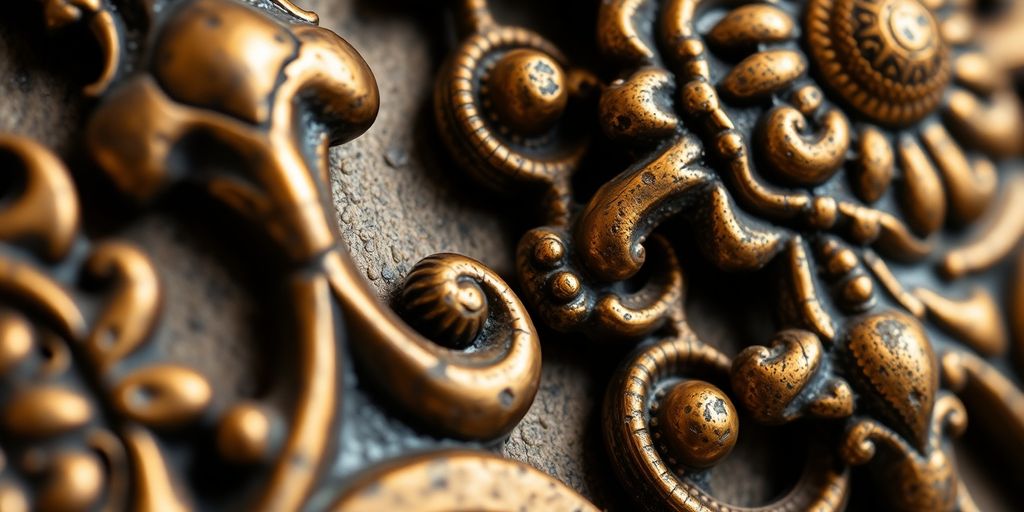
Gold, with its warm hue and malleability, lends itself wonderfully to patina. This technique, far from being a simple superficial layer, becomes a true signature that tells a story. It transforms a modern gold piece into an object that appears to have stood the test of time, giving it a unique depth and character.
How Patina Enhances the Beauty of Gold Jewelry
The patina applied to gold is not intended to mask it, but rather to accentuate its reliefs and details. By subtly darkening the hollows and nooks, it creates a play of light and shadow that highlights the finesse of the work. Imagine a finely chiseled necklace: the patina invites itself into the smallest interstices, giving life to patterns that, on polished gold, would remain discreet. It's a bit like giving your jewelry a soul, a presence that goes far beyond its simple brilliance.
Patina as a signature of authenticity and history
A patinated piece of jewelry acquires an aura of authenticity. It evokes the past, bygone eras, and gives the impression of being an inherited piece, full of stories. This lived-in feeling is particularly sought after for vintage or historically inspired jewelry. The patina then becomes a sign of character, a way to stand out with a piece that has a soul, that doesn't resemble all the other industrial creations.
The art of transforming a modern jewel into a vintage piece
The patination process is a subtle art. It's all about knowing how to apply the right amount to achieve the desired effect, whether it's a light veil of antiquity or a more pronounced contrast. Artisans master different techniques to achieve this, such as controlled oxidation or selective polishing. The result is a piece that, even if recently manufactured, possesses the timeless charm of the past. It's a clever way to combine today's craftsmanship with the timeless aesthetics of the past.
Gold and patina, it's a combination that gives a charm that never goes out of style. Imagine objects that tell a story, with a touch of the past that makes them even more beautiful. It's a bit like having a treasure that has stood the test of time. If you want to discover how gold can have this special effect, come take a look at our website!
To conclude: the art of patina on your jewelry
So, now you know how to give gold jewelry that slightly antique look. It's a technique that requires some skill, but the result is definitely worth it. It gives a unique depth and character to your favorite pieces. If you have jewelry that looks a little too new, or if you're just looking to give it a little more character, consider this method. It's a fun way to personalize your accessories and tell them a story, even if they've just left the workshop.
Frequently Asked Questions
How can you age a gold jewel?
To give your gold jewelry an antique look, you can use different techniques. For example, you can react them with special products to make them darken a little, especially in the corners. Then, you polish the raised areas to bring out the details. Sometimes, you can even deliberately damage them a little to simulate the wear and tear of time.
What is patina and why is it used on jewelry?
Patina is a type of coloring or aging that is added to a piece of jewelry. Its purpose is to give it an antique look, to make it more interesting by highlighting details and creating contrast, as if the piece had a history.
What types of jewelry are best suited for patination?
Some jewelry lends itself better to patina than others. Jewelry with lots of small details, fine engravings, or intricate designs are ideal. Jewelry with rich textures or inspired by antique or historical styles is also a good candidate. Basically, anything with raised or hollow areas so that the patina can play with the light.
Does gold patinate well?
Gold can be given a patina, but it's often more subtle than on other metals like silver or copper. The idea is to create a slight contrast to highlight the details without masking the beauty of the gold. Styles that benefit most are those with intricate patterns or interesting textures.
How to care for a piece of jewelry that has been patinated?
To maintain the aged appearance of your jewelry, handle it with care. Avoid harsh chemicals or frequent cleaning. If the patina fades, it can be reapplied, but it's best to ask a jeweler to do it so as not to damage the piece.
How does patina enhance the beauty of gold jewelry?
Patina gives jewelry a unique depth and character. It can make a modern piece appear like an antique piece full of charm and history. It's a way to add a touch of authenticity and personality to your jewelry.