You might be wondering why some traders seem to see trends more clearly than others. Often, the answer lies in the tool they use: Heikin Ashi candlesticks. Unlike traditional Japanese candlesticks, these are designed to smooth out market noise. In this article, we'll explore how this technical analysis method can help you better understand price movements and identify trends more easily. Get ready to make your charts more readable.
Key Takeaways
- Heikin Ashi candlesticks, which mean “average bar” in Japanese, use a modified formula to smooth price data, making the charts clearer than traditional Japanese candlesticks.
- This smoothing method helps filter out market noise, making it easier to visualize directional trends and stay in winning trades longer.
- Identifying an uptrend with Heikin Ashi is done by looking for a series of green candles, ideally without a lower shadow. For a downtrend, look for consecutive red candles, preferably without an upper shadow.
- Trend reversals are signaled by candlesticks with smaller bodies and long shadows on both sides, often preceded by a change in candle color.
- Although Heikin Ashi are excellent for trend following, sometimes it is better to use classic candlesticks for a more detailed view of prices, especially for short-term trading strategies or identifying specific patterns.
Understanding the basics of Heikin Ashi candlesticks
Before diving into trading strategies, it's important to understand what Heikin Ashi candlesticks are and how they work. You might be wondering what makes them so special compared to the classic Japanese candlesticks you may already be familiar with. Well, the answer lies in how they calculate price data.
Definition and origin of Heikin Ashi
The term "Heikin Ashi" comes from Japanese and literally means "average bar." The idea behind this approach is to smooth out market fluctuations to better visualize the overall trend. Unlike traditional Japanese candlesticks, which directly display the opening, closing, high, and low prices for a given period, Heikin Ashi uses a modified formula. This formula takes into account the data from the previous candlestick, which helps reduce market "noise" and make trends more apparent. It's a bit like looking at a road map where the smaller, winding roads are blurred to better highlight the main highway.
The calculation formula behind Heikin Ashi
To fully understand how Heikin Ashi smooths charts, let's take a look at their calculation formulas. They are slightly different from those of classic candlesticks.
Here are the four main calculations for each Heikin Ashi (HA) candlestick:
- HA fencing: This is the average of the highest, lowest, opening, and closing prices of the current period. The formula is:
(H + L + O + C) / 4. - HA Opening: It is calculated by taking the average of the opening and closing prices of the previous Heikin Ashi candlestick. The formula is:
(Ouverture HA précédente + Clôture HA précédente) / 2. - High HA: This is the highest price among the current period's high, HA open and HA close.
- Lower HA: This is the lowest price among the lowest of the current period, the HA opening and the HA closing.
These calculations mean that each new candlestick is influenced by the previous one, creating this smoothing effect that we will explore.
Key differences from traditional Japanese candlesticks
The most notable difference between Heikin Ashi candlesticks and classic Japanese candlesticks lies in how they represent price action. Classic Japanese candlesticks show the actual prices for each period. If you look at a Japanese candlestick chart, each candle gives you a precise picture of what happened during that specific period. In contrast, Heikin Ashi, with its averaging formula, doesn't show the exact prices for each period. It provides a broader, smoother view. This means that Heikin Ashi are excellent at identifying the general direction of a trend, but they can mask some important details such as exact support and resistance levels or very accurate trading signals based on actual opening and closing prices. It is also good to know that market liquidity, like that of gold, can influence the clarity of charts, regardless of the method used [f077].
Heikin Ashi candlesticks are designed to simplify chart reading by filtering out market noise. They don't show the exact prices for each period, but rather an average that helps to better visualize trends. This is their main advantage, but also a limitation to keep in mind for certain analyses.
How Heikin Ashi smooths graphs
Filtering out market noise for greater clarity
Have you ever felt like your price chart was a rollercoaster, constantly going up and down? That's called market "noise." Traditional Japanese candlesticks, while useful, can sometimes amplify this noise, making it difficult to distinguish between a genuine trend and mere passing fluctuations. That's where Heikin Ashi come in.
The Heikin Ashi are designed to smooth out these movements, giving you a clearer view of the overall direction of the market. They achieve this by modifying how each candlestick is calculated. Instead of relying solely on the opening, closing, high, and low prices of the current period, Heikin Ashi charts take into account the data from the previous candlestick. This averaging makes each new candlestick more consistent with the previous one, thus reducing the impact of small fluctuations.
Imagine trying to follow a road through fog. Traditional candlesticks are like trying to see the road through flashes of lightning: they illuminate at times, but they also disorient you. Heikin Ashi candles are like the fog lifting a little, allowing you to better see the path ahead.
The impact of averages on price representation
The formula for calculating Heikin Ashi candles is key to their ability to smooth charts. Each new Heikin Ashi candle is calculated using an average of the prices of the current candle and the previous candle. Here's how this works in practice:
- Heikin Ashi Opening: Average of the opening and closing prices of the previous candlestick.
- Heikin Ashi Closing: Average of opening, closing, high and low prices of the current period.
- Highest Heikin Ashi: The high of the current period, or the highest between the Heikin Ashi opening and the high of the current period.
- Further Down Heikin Ashi: The lowest of the current period, or the lowest between the Heikin Ashi opening and the lowest of the current period.
This averaging approach has several important consequences:
- Reduction of false signals: Small fluctuations that could trigger a buy or sell signal with traditional candlesticks are often ignored by Heikin Ashi.
- Visualizing trends: Trends, whether bullish or bearish, appear more clearly and last longer on a Heikin Ashi chart.
- Fewer color changes: Unlike Japanese candlesticks, which can change color several times during a single trend, Heikin Ashi maintain their color longer, indicating a more stable trend.
Using averages in Heikin Ashi candlestick calculations doesn't change the actual market prices, but rather how those prices are represented on the chart. This allows for a better understanding of the underlying trend by filtering out daily noise.
Simplified visualization of directional movements
Thanks to this smoothing, Heikin Ashi allows you to see the market's directional movements much more intuitively. You'll notice that candlesticks tend to remain the same color for extended periods when a trend is well established. For example, in an uptrend, you'll see a series of green (or blue, depending on your setup) candles with little or no lower wick. Conversely, in a downtrend, you'll observe a series of red candles with little or no upper wick.
This simplified visualization is a major advantage for several reasons:
- Rapid trend identification: It becomes easier to spot when a trend begins, when it is sustained, and when it might be about to reverse.
- Maintaining in trades: By seeing the trend clearly, you are less likely to exit a winning trade prematurely due to small corrections.
- A more serene analysis: Less of
Identify trends with Heikin Ashi
Once you understand how Heikin Ashi candlesticks smooth out market noise, the next step is to use them to identify trends. This is where their ability to simplify chart reading becomes truly valuable.
Identify a clear upward trend
To identify an uptrend with Heikin Ashi, you look for a series of green candles. What's particularly interesting is that a strong uptrend is characterized by green candles without a lower shadow. Imagine a smooth upward movement, without any significant pullbacks. The longer this series of candles without a lower shadow, the stronger the trend is considered. This is a clear signal that the market is in 'buy' mode and that prices are rising steadily. You can think of it as a consistent upward move, without hesitation.
Identify a sustained downward trend
Conversely, a downtrend is characterized by a succession of red candles. Similar to an uptrend, a particularly strong downtrend will be represented by red candles without an upper shadow. This indicates that the market is in 'sell' mode and that prices are falling continuously. A long series of these candles without an upper shadow suggests a well-established and potentially lasting downtrend. It's like a continuous descent, without any significant rebound.
Use colors and shadows to confirm the trend
The Heikin Ashi make identifying trends quite intuitive thanks to their colors and the presence or absence of shadows.
- Green candles without a lower shadow: Strong signal of an upward trend.
- Red candles with no upper shadow: Strong signal of a downward trend.
- Candles with shadows on both sides: May indicate a consolidation or slowdown in the current trend.
- Small candle bodies: Often a sign of a pause in the trend or a possible reversal.
It's important to remember that Heikin Ashi candlesticks use average data. This means they can sometimes react a bit more slowly than traditional Japanese candlesticks to sudden price changes. However, this average is precisely what helps filter out noise and better visualize the overall direction of the market. Think of it as a moving average, but in candlestick form.
To confirm a trend, you look for a majority of candles of the same color, ideally without shadows in the opposite direction to the trend. For example, a series of green candles with few or no lower shadows confirms an uptrend. If you see red candles with short upper shadows, this reinforces the idea of a downtrend. The absence of shadows is an indicator of directional strength. If you are looking to invest in assets like gold, understanding these signals can help you better anticipate market movements. Gold prices.
Interpreting trend reversals
Reversal signals with the Heikin Ashi
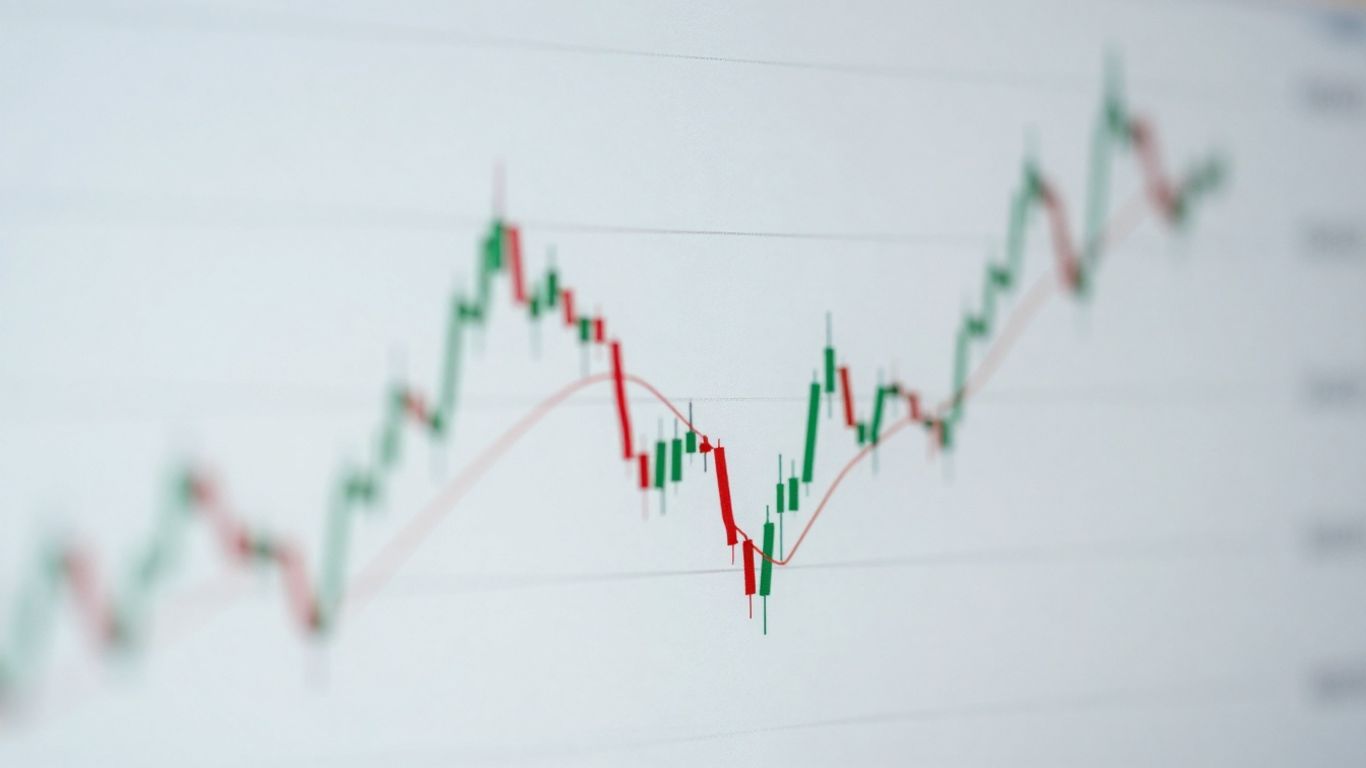
Heikin Ashi candlesticks are really good at spotting when a trend might be about to change direction. It's a bit like the market winks at you before turning around and heading back the other way. You look for signs of weakness in the current trend. For example, an uptrend that starts showing smaller candlesticks with shadows on both the top and bottom can indicate that buying pressure is waning. Conversely, a downtrend that produces shorter red candlesticks with shadows on both sides signals that sellers are losing ground.
Specific turning candlesticks
Certain types of Heikin Ashi candlesticks are particularly revealing. A small candlestick body, whether green or red, with long shadows on either side, is often a sign of confusion in the market. This is sometimes called a Heikin Ashi "doji." If you see this after a long period of candlesticks of a single color and without shadows, it is a strong signal that a reversal may occur. For example, after a series of large green candlesticks with no lower shadow, the appearance of a small candlestick with shadows on both sides, followed by a candlestick of the opposite color, may confirm the start of a downtrend. Consider looking at the history of gold; its price has seen significant fluctuations, showing that even assets considered stable can reverse [4297].
When to reassess your market position
It's wise to start questioning your position as soon as you observe these signs of weakness. If you're in a long position (you've bought), and the Heikin Ashi candlesticks begin to show smaller bodies and upper shadows, it's time to consider taking profits or placing a tighter stop-loss. For a short position (you've sold), watch for the appearance of green candlesticks with lower shadows. Don't remain stuck in a position if the market is sending you clear signals of change. It's better to walk away with a small gain or a small loss than to see a profit evaporate or a loss worsen. The key is to be attentive and not afraid to adjust your strategy when conditions change.
Trading strategies based on Heikin Ashi
Once you've mastered reading Heikin Ashi candlesticks, you can start incorporating them into your trading strategies. They're not a magic bullet, but they can really help simplify decision-making, especially in somewhat chaotic markets.
Using Heikin Ashi for trend-following strategies
One of the strengths of Heikin Ashi is its ability to clearly show the trend. When you see a series of green candlesticks without a lower shadow, it's often a sign of a strong uptrend. Conversely, red candlesticks without an upper shadow indicate a solid downtrend. These sequences help you stay in a position while the trend is strong, thus reducing the risk of exiting too early.
Here's how you can spot these trends:
- Upward trend: Look for green Heikin Ashi candlesticks with a small lower shadow, or even no shadow at all. The candlestick body should be solid and pointing upwards.
- Downward trend: Look for red Heikin Ashi candlesticks with a small upper shadow, or no shadow at all. The body should be well-formed and pointing downwards.
- Indecision: Candlesticks with short bodies and long shadows, both at the top and bottom, can signal market hesitation. This is often a time to be cautious.
The idea is to ride the wave of the trend. Heikin Ashi gives you better visibility on the strength and direction of this wave, allowing you to stay on board longer.
Easier market entry and exit
Heikin Ashi can make entry and exit points more obvious. For example, a color change in a Heikin Ashi candlestick, especially if accompanied by an absence of shadows in the opposite direction to the previous trend, can be an entry or exit signal.
- Potential Buy Signal: A green candlestick appearing after a series of red candlesticks, especially if it has a longer lower shadow, can indicate the beginning of a bullish reversal. This is a good time to consider entering a position.
- Potential Selling Signal: Conversely, a red candlestick following a series of green ones, with a longer upper shadow, may suggest a bearish reversal. This is where you might consider selling or closing a long position.
- Confirmation: It is often wise to wait for a second Heikin Ashi candlestick in the new direction to confirm the move before making a decision.
Combining Heikin Ashi with other indicators
To improve the reliability of your signals, it is strongly recommended not to rely solely on Heikin Ashi. Combining them with other technical analysis tools can make a significant difference.
- Moving Averages: Use moving averages (such as the 50-day or 200-day moving average) to confirm the overall trend. If your Heikin Ashi candlesticks show an upward trend and the price is above the moving average, this is a stronger signal.
- Oscillators (RSI, MACD): Indicators such as the RSI (Relative Strength Index) or MACD (Moving Average Convergence Divergence) can help identify overbought/oversold conditions or divergences, which, combined with Heikin Ashi signals, can provide more accurate reversal indications.
- Support and Resistance Levels: Heikin Ashi can help you identify entry or exit points near these key levels, confirming the strength of a breakout or rebound.
Advantages and limitations of Heikin Ashi
Increased readability and reliability
Heikin Ashi candlesticks, whose name means "average bar" in Japanese, are designed to make charts clearer. They do this by smoothing out market noise—the small price fluctuations that can make it difficult to perceive the overall trend. By using a formula that takes the previous price into account, each new Heikin Ashi candlestick provides a more stable representation of price action. This can help you better identify the main direction of the market and stay focused on important movements, rather than being distracted by minor variations. This ability to filter noise is undoubtedly their greatest asset.
Noise reduction and improved trend visibility
Thanks to their calculation method, Heikin Ashi significantly smooths out price fluctuations. Imagine a traditional Japanese chart with many small green and red candles that alternate rapidly. This is the "noise" of the market. Heikin Ashi transforms this into a smoother sequence of candles of the same color, clearly indicating the trend. For example, a series of green candles with no lower wicks suggests a strong uptrend, while red candles with no upper wicks indicate a solid downtrend. This gives you a clearer view of the strength and duration of a trend.
When to favor classic candlesticks
Despite their advantages, Heikin Ashi candlesticks aren't perfect for every situation. Their main drawback is that they don't show the true market price at any given moment. The open, close, high, and low values of a Heikin Ashi candlestick are calculated averages, not the exact prices for the period. This can be problematic for strategies that require absolute precision regarding price levels.
Here are some situations where traditional Japanese candlesticks might be more appropriate:
- Setting stop-loss orders and precise price targets: Because Heikin Ashi charts don't show the exact price, it becomes difficult to set stop-loss levels or profit targets based on specific prices. Japanese candlesticks, which display the actual price, are better suited for this purpose.
- Very short-term trading (scalping): Traders who make many quick trades and need to react instantly to price movements may find Heikin Ashi too slow or inaccurate.
- Analysis of specific chart patterns: Certain Japanese candlestick patterns, such as the doji or the hammer, have a precise meaning based on the actual opening and closing prices. These nuances can be lost or altered when calculating Heikin Ashi.
In summary, Heikin Ashi candlesticks are excellent for identifying and tracking medium- and long-term trends, but for decisions requiring precise price data, traditional Japanese candlesticks often remain the best option. It's often wise to use them in combination, switching between them depending on the type of analysis you're performing.
The Heikin Ashi graphics They're great for spotting trends, but they also have their drawbacks. They can sometimes obscure rapid market movements, which is important to be aware of. To learn more about these charts and how they work, visit our website!
To conclude
There you have it, you now have a better understanding of what Heikin Ashi candlesticks are and how they can help you gain clarity on charts. By smoothing price movements, they make trends easier to spot and can help you avoid making poor decisions based on market noise. Remember that, like any tool, they work best when used in combination with other analytical methods. So, feel free to incorporate them into your own trading strategy to see if it suits you!
Frequently Asked Questions
What is a Heikin Ashi candlestick and why is it different from normal candlesticks?
Imagine you're drawing candlesticks to show how a stock's price has moved. Heikin Ashi candlesticks do the same thing, but they're a bit like a 'smoothed' version. They use a special formula that blends prices from multiple periods. This helps to minimize the small zigzags in the market and to better see the overall direction, like looking at the landscape through tinted glasses that eliminate distracting glare.
How do Heikin Ashi help me spot trends?
That's their superpower! Because they smooth out the market, Heikin Ashi charts show trends more clearly. If you see a lot of green candles following one another without many 'tails' (shadows), it's probably an uptrend. The same goes for red candles for a downtrend. It's like having a simpler map to follow a path.
Can the Heikin Ashi tell me when a trend will end?
Yes, they can give clues! When Heikin Ashi candles start to change color, or when they become small with 'tails' on both sides, it can mean that the trend is losing momentum. It's a bit like a 'Caution' sign telling you to think before you continue.
Can I use Heikin Ashi to buy and sell quickly?
Heikin Ashi charts are best suited for tracking major trends over a longer period. They're less effective for very quick decisions because they smooth out prices. Think of them as a guide for long journeys, not sprints. For very rapid buying and selling, other tools might be more appropriate.
Should I stop using classic Japanese candlesticks if I use Heikin Ashi?
Not necessarily! Classic candlesticks give you the exact price at any given moment, which can be useful for seeing details. Heikin Ashi, on the other hand, gives you a broader view. Many traders use both: Heikin Ashi to see the trend and classic candlesticks to confirm specific entry or exit points.
Are the Heikin Ashi difficult for a beginner to understand?
They're designed to be easier to read than traditional candlesticks, especially for spotting trends. The formula behind them is a bit more complex, but for you, the most important thing is understanding how the colors and shadows show you the market's direction. It's a good tool for starting to analyze charts without being overwhelmed by the noise.