Perhaps you have a piece of jewelry lying around, or an inherited gold bar, and you're wondering if it's really pure gold. It's a legitimate question, as there are quite a few fakes on the market. Fortunately, you don't need to be an expert to do some checks at home. We'll look together at how to determine if your gold is genuine, how to authenticate pure gold at home, without having to use your credit card.
Key Takeaways
- Check for the presence of an official hallmark on the item. This is often the first indication of the gold's purity.
- Use simple methods like a magnet or a ceramic test for an initial assessment. Pure gold is not magnetic and leaves a golden mark on ceramic.
- For greater certainty, tests such as nitric acid or density measurement can be considered, but be aware that some require precautions or specific equipment.
Methods for authenticating gold at home
Are you unsure about the authenticity of your gold? Don't panic, there are several ways to check if your jewelry, coin, or ingot is genuine gold, all without leaving home. These methods are generally simple and don't require sophisticated equipment. The important thing is to cross-reference the tests to ensure the result.
Check for the presence of a punch
A hallmark is a small, often discreet, mark placed on precious metal objects. It generally indicates the gold's fineness (its purity) and sometimes the maker. In France, for 18-karat gold (750/1000), the most common hallmark is an eagle's head. For 24-karat gold (999/1000), a seahorse is sometimes found. Gold-plated jewelry also has its own hallmark, often a square. However, be aware that these hallmarks can wear off over time or be forged. They should therefore be considered a preliminary indicator, but not absolute proof.
Use a magnet to test for gold
Pure gold is not a magnetic metal. This is a fairly simple physical property to test. Take a strong magnet (those found in handbags or hardware stores often work) and bring it close to your gold object. If the object is attracted to the magnet, there's a good chance it's not pure gold, or that it contains other magnetic metals. Be careful, though, as some jewelry clasps may contain a small metal spring that could be attracted to the magnet, thus invalidating the test. Therefore, you should test the object as a whole.
The ceramic test to identify gold
This method is quite effective, especially for gold bars, but it can slightly alter the appearance of jewelry, so be careful. You'll need a piece of unglazed ceramic, like the underside of a plate or tile. Gently rub your gold item on the ceramic. If a gold mark appears, that's a good sign. If the mark is gray or black, your item is probably not gold. It's a fairly visual test that can give you a quick indication.
It's always best to combine several of these methods to get a better idea of your gold's authenticity. If you have any doubts, don't hesitate to consult a professional.
Chemical and physical tests for pure gold
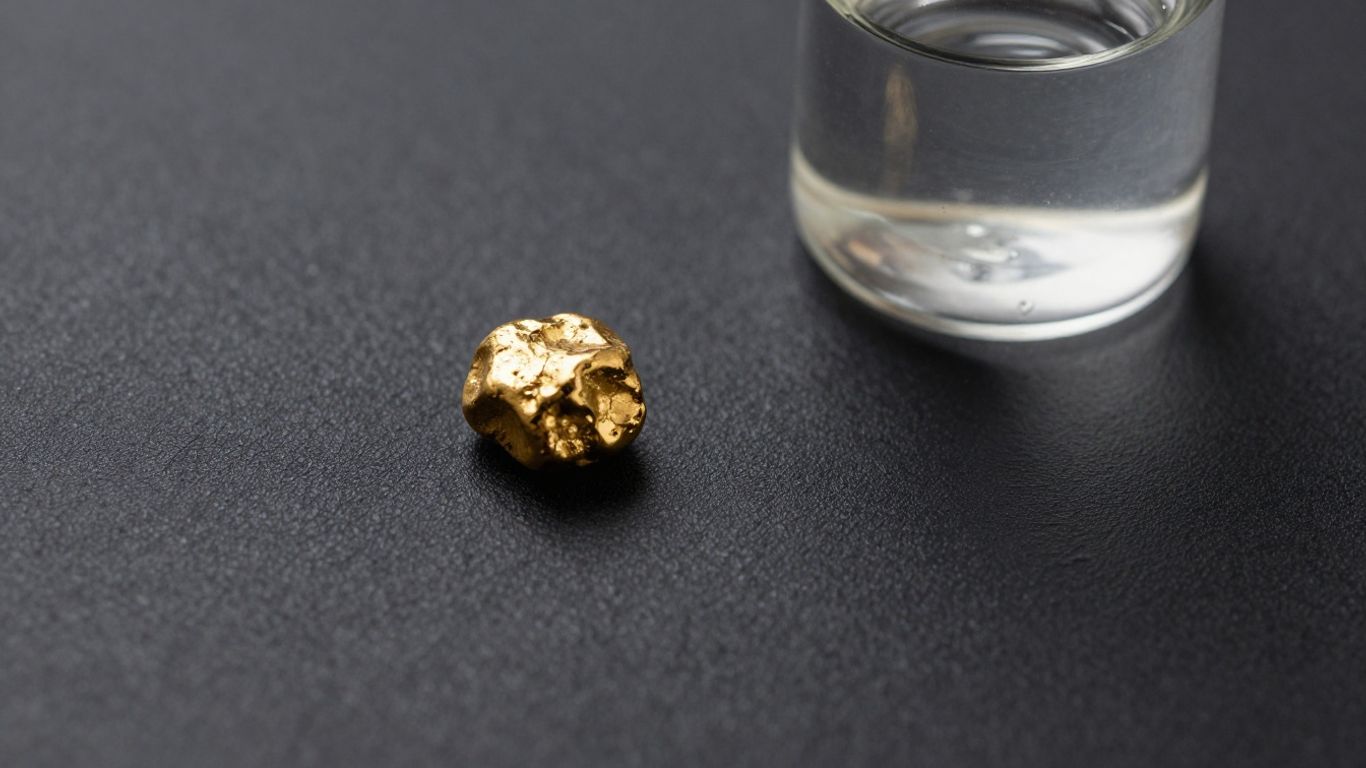
Now that you may have identified a piece of jewelry or an object as potentially gold, it's time to move on to more in-depth testing. These chemical and physical methods can help you confirm the purity of your metal, but be aware that some require caution.
The nitric acid test
This test is quite common among jewelers. It involves placing a small drop of nitric acid on an inconspicuous part of the object, such as the back of a ring or the clasp of a necklace. Pure gold does not react to the acid at all. If you see a reaction, such as discoloration or a green stain, it means your object is not pure gold, or not gold at all. It's important to know that nitric acid is corrosive, so you must be extremely careful when using it. Wear gloves and safety glasses, and perform this test on a touchstone if possible to avoid damaging your jewelry.
Testing the density of gold
Gold is a fairly dense metal, meaning it's heavy for its size. To perform this test at home, you'll need a precision scale and a graduated container filled with water. First, weigh your gold object. Then, note the water level in the container, submerge your object, and note the new level. The difference between the two levels gives you the object's volume. Dividing the weight by the volume gives you the density. Pure gold (24 karats) has a density of approximately 19,32 g/ml. If the calculated density is different, it's very likely not pure gold.
Here is a small table to help you compare:
| Gold Title | Approximate density (g/ml) |
|---|---|
| 24 carats | 19,32 |
| 18 carats | 15,2 - 15,9 |
| 14 carats | 12,9 - 13,6 |
The importance of the certificate of authenticity
When you buy gold, whether it's jewelry, a coin, or a bar, it's always best to have a certificate of authenticity. This document, issued by the seller or manufacturer, attests to the purity, weight, and origin of the item. It's solid proof that saves you a lot of trouble. If you don't have a certificate, the tests we've discussed can help, but an official document remains the best guarantee.
Remember that these home tests are only indicative. For absolute certainty, especially for large sums of money, it's always best to consult a professional with specialized equipment such as a spectrometer.
To determine if your gold is truly pure, there are simple tests you can perform. These checks allow you to verify the quality of the gold. Want to learn more about how? test gold Visit our website to discover all the tips and advice for checking the purity of your gold.
So, ready to become a gold pro?
There you have it, you now have some tips for verifying the authenticity of your gold at home. It's not always easy, and sometimes it requires a little patience. But remember, if doubt persists, the best course of action is to consult an expert. For safer investments, always remember to ask for certificates of authenticity when making purchases. This will save you a lot of trouble and ensure you're dealing with genuine value. Good luck with your verifications!
Frequently Asked Questions
How do I know if my jewelry is really gold?
To check if your jewelry is gold, you can start by looking for a small hallmark. This is like an official mark indicating the type of gold. Next, try holding it near a magnet: gold is not attracted to magnets. If your jewelry sticks to the magnet, it's probably not pure gold. You can also gently rub it on unglazed ceramic; if the mark it leaves is yellow, that's a good sign!
What tests can I do at home to test for gold?
There are several simple tricks! You can use a magnet: gold isn't magnetic, so if it's not attracted, that's a good sign. Another test is to rub the metal on a touchstone and add a drop of nitric acid (be careful, it's a chemical, so handle it with care). If a trace remains, it's probably gold. You can also test its density: pure gold is very heavy for its size and sinks in water.
Why is it important to have a certificate of authenticity for gold?
The certificate of authenticity is extremely important because it proves that your gold is indeed what it claims to be. It provides precise details such as the exact weight, purity (how much gold it contains), the name of the manufacturer, and sometimes even a unique identification number. It's a guarantee for you, especially if you're investing in gold, as it ensures its value and facilitates its resale.