

Are you wondering what gold plating techniques are used in industry? That's an excellent question! Gold, this precious metal, isn't just for jewelry or bullion. It finds its place in a multitude of industrial applications thanks to its unique properties. We'll explore together how we manage to coat other materials with a thin layer of gold, and why it's so useful.
Key Takeaways
- Electroplating uses an electric current to deposit gold onto an object, a method widely used for its precision.
- Chemical deposition, on the other hand, achieves gilding without electricity, ideal for complex shapes or when electricity is not practical.
- There are different types of plating: soft gold for aesthetics, hard gold for resistance, and duplex which combines both.
- Gold plating is essential in electronics for conductivity, in automobiles for durability, and even in the medical field.
- Preparing the surface before veneering is super important to ensure good adhesion and a flawless finish.
Electrochemical gold plating techniques
When we talk about gold plating in industry, the most common method, the one you'll encounter most often, is electroplating. It's a bit of a workhorse in the sector. It involves using electricity to deposit a thin layer of gold onto another metal. It's quite ingenious, actually.
The principle of electroplating for gold plating
Imagine a bath filled with a special solution called an electrolyte. This solution contains gold salts. The object you want to gild, say a piece of metal, is immersed in this bath. It's connected to one terminal of an electric current, usually the negative terminal (the cathode). On the other side, there's another electrode, often a plate of pure gold, connected to the positive terminal (the anode). When the current is switched on, the gold ions in the solution are attracted to the object being gilded. They move and attach themselves to its surface, forming that desired layer of gold. It's a bit like magnetic attraction, but with ions and electricity.
The result? A smooth, glossy finish, and above all, a uniform layer of gold that enhances both the appearance and properties of the object. This is the method used to gild jewelry, electronic components, and many other things.
Gold plating solutions used in electroplating
The choice of gilding solution is extremely important, as it determines the quality and characteristics of the plating. Historically, gold cyanide-based solutions were widely used. They are very effective at obtaining dense, high-quality gold deposits, perfect for electronics, for example, where conductivity and corrosion resistance are paramount. The problem is that cyanide is highly toxic, so enormous precautions must be taken when handling it and disposing of the waste. It's no small matter.
Consequently, for safety and environmental reasons, we are seeing a growing trend towards cyanide-free solutions. They are less dangerous to handle and also give excellent results, especially for applications such as jewelry or decoration, where aesthetics are as important as durability.
Here is a brief overview of the types of solutions:
- Cyanide-based solutions: Highly effective, but toxic. Ideal for thick gold plating and electronics.
- Cyanide-free solutions: Less dangerous, more environmentally friendly, and perfect for jewelry and decorative finishes.
- Specific solutions: There are also formulations adapted for very specific needs, such as gold alloys (rose gold, white gold) or particular properties.
Key steps in electroplating
Before you even think about dipping your object in the gold bath, there's a whole preparation process to go through. It's an often overlooked step, but it's absolutely fundamental for a good result. First, you have to clean the piece thoroughly. This involves degreasing and stripping to remove all traces of grease, oxidation, or dirt. If the surface isn't perfectly clean, the gold won't adhere properly, and you risk ending up with flaws, blisters, or a flaking layer.
Next comes the plating process itself. The object is immersed in the gilding solution, and parameters such as bath temperature, pH, and especially the electric current density are carefully controlled. These elements directly influence the thickness of the deposited gold layer and the quality of the finish. It's a bit like cooking: you have to respect the right proportions and temperatures.
Once the plating is complete, there's a final rinse to remove any remaining solution, followed by drying. Sometimes, if the result isn't perfect, certain steps, or even the entire process, may need to be repeated. It's a precise job that requires patience and a certain level of expertise.
Electroplating is a technique that combines chemistry and electricity to transform the appearance and performance of an object. It's a proven method, used for a long time, and continues to evolve with new, more environmentally friendly solutions.
Chemical deposition methods for gold plating
While electroplating uses electricity to deposit gold, there is another approach: chemical deposition. This method relies on chemical reactions to bond gold to the surface of your object, without the need for an electric current. It's an interesting technique, especially when you want to achieve a uniform layer of gold on somewhat complex shapes.
Chemical plating without electricity
The principle here is quite simple: the piece to be plated is immersed in a special solution containing gold salts. This solution is formulated in such a way that a chemical reaction is triggered, and the gold ions naturally deposit onto the base metal. No complicated connections are needed, just good chemistry.
- Uniformity of the deposit: One of the major advantages is that chemical plating tends to be very uniform, even on irregular surfaces or with fine details. This is perfect for small electronic components, for example.
- No electrical current: This simplifies the process and allows for the treatment of objects that would not be suitable for electroplating.
- Reaction control: Although it does not require electricity, the process requires precise control of the temperature, pH, and concentration of the solution to achieve the desired result.
Specific applications of chemical plating
This technique is particularly useful in certain fields where precision and uniformity are paramount. It is often used for:
- Electronics: For coating connectors, printed circuit boards, or other components where a thin layer of gold is needed to ensure good conductivity and prevent corrosion. Gold is an excellent conductor, and its corrosion resistance is a major advantage in this application.
- Small, complex parts: If you have parts with nooks and crannies or hard-to-reach shapes, chemical plating may be a more effective solution than electroplating.
- Costume jewelry: For decorative finishes on pieces where appearance is important, but where a very thick layer of gold is not necessarily required.
It's important to know that the solutions used for chemical plating can be cyanide-based or cyanide-free. Cyanide-free solutions are safer to handle and are often preferred for less critical applications or when toxicity is a major concern, such as in the manufacture of jewelry intended for the general public.
The different types of gold plating and their properties
When we talk about gold plating, we're not referring to a single technique. In fact, there are several variations, each with its own characteristics and advantages. Understanding these differences will help you choose the method best suited to your needs, whether for aesthetic or functional reasons.
Soft gold plating for decorative finishes
Soft gold plating is often the preferred choice when appearance is paramount. It's frequently used for jewelry and luxury items, where a smooth, glossy finish makes all the difference. It provides the high-end look desired for eye-catching pieces. It's a thin layer of gold that offers a beautiful finish, but be aware that it's more malleable and therefore less resistant to wear than other types of plating.
- Aspect : Smooth, shiny, very aesthetically pleasing.
- Usage : Costume jewelry, decorative objects, luxury finishes.
- properties: Good ductility, valuable appearance, but low abrasion resistance.
This type of veneer is ideal for pieces that won't be subjected to constant friction. Think of pendants, earrings, or decorative elements on furniture.
Hard gold plating for increased durability
If you need your part to be more resistant to impacts, wear, or corrosion, hard gold plating is probably the right solution. It's often achieved by adding elements like nickel or cobalt to the gold bath. This makes the gold layer denser and more durable. It's therefore found in more technical applications, such as electrical connectors or mechanical parts that need to last.
- Composition : Often combined with nickel or cobalt.
- properties: High hardness, excellent resistance to wear, corrosion and scratches.
- applications: Electronic components, electrical contacts, automotive parts, measuring instruments.
| Characteristic | Soft Veneer | Hard Veneer |
|---|---|---|
| Wear resistance | Low | Élevée |
| Hardness | Low | Élevée |
| Electrical conductivity | Very good | Bonne |
| Aspect | Bright | Matte or satin |
Duplex gold plating for combined properties
What if you could have the best of both worlds? That's the idea behind duplex gold plating. Multiple layers of gold are applied, often a soft layer followed by a hard one, or vice versa. The goal is to combine advantages: for example, the corrosion resistance of one layer with the hardness of another. This results in a high-performance finish, suitable for demanding environments while maintaining an attractive appearance. It's a more complex technique, but one that delivers truly impressive results for specific applications where performance is key.
Industrial applications of gold plating
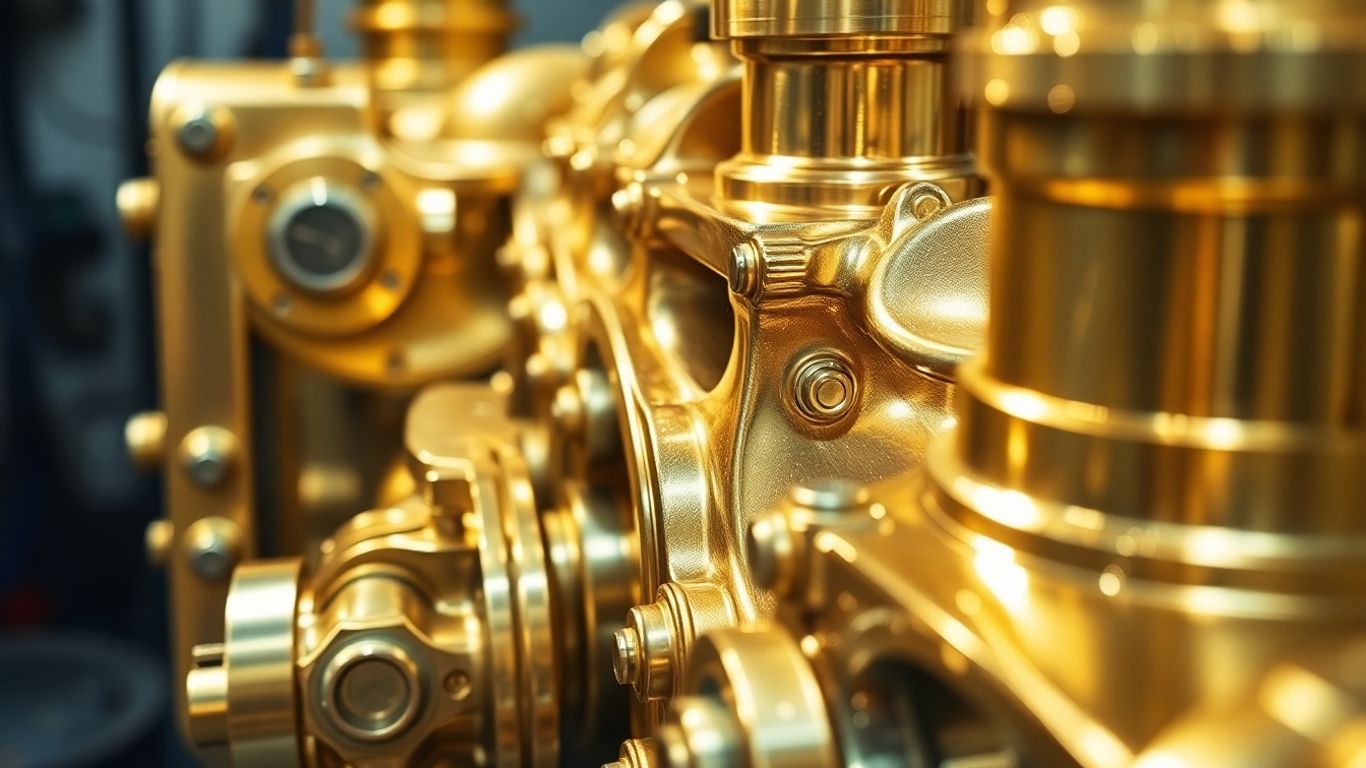
Gold plating isn't just for making jewelry or decorative objects look pretty. It has its place in many industries where its properties are truly useful. We're talking about cutting-edge sectors where reliability and performance are paramount. You'll see, gold, even in a thin layer, makes a real difference.
Gold plating in the electronics industry
In the world of electronics, gold plating is practically indispensable. Think of all those tiny components that make your devices work. Connectors, contacts, switches… they often have a thin layer of gold. Why? Because gold is an excellent conductor of electricity, that much is clear. But more importantly, it doesn't rust or corrode. This means that your electronic devices, even after years of use, will continue to function properly. This is crucial for the longevity and reliability of printed circuit boards, chips, and anything else small and complex.
The use of gold in automotive parts
The automotive industry also uses gold plating, and not just for the flashy look of dashboards, although that does happen! It's mainly found on functional parts. Electrical connectors, for example, benefit from gold's conductivity and corrosion resistance. This ensures a stable and durable connection, which is vital for the safety and proper functioning of the increasingly common electronic systems in our cars. Sensors and certain switches also benefit from it, resulting in increased reliability.
Gold plating for medical devices
This is perhaps the most impressive application. In the medical field, precision and biocompatibility are absolutely essential. Gold is perfect for this. It doesn't react with human tissues, making it ideal for implants, surgical instruments, or diagnostic equipment. Furthermore, gold withstands sterilization cycles, such as those used in autoclaves, very well, and it has natural resistance to bacteria. It is also a radiopaque material, which aids visualization during certain procedures, such as arthroscopy.
Gold, thanks to its low chemical reactivity and excellent conductivity, has become a material of choice for applications where reliability and long-term performance are critical, ranging from advanced electronics to implantable medical devices.
Here is a brief overview of the sectors that benefit from gold plating:
- Electronics: Connectors, printed circuit boards, electronic chips, switches.
- Car: Electrical connectors, sensors, switches, decorative elements.
- Medical : Surgical instruments, implants, diagnostic equipment, probes.
- Aerospace: Critical components requiring extreme reliability under harsh conditions.
- Jewelry and Luxury: Decorative finishes, watches, high-end pens.
Preparation and finishing in the gilding process
Before even thinking about applying a single layer of gold, there's one absolutely fundamental step: surface preparation. It's a bit like preparing a canvas before painting; if the base isn't right, the final result is likely to be disappointing. You wouldn't want your beautiful gold plating to flake or look uneven, would you?
The importance of surface preparation
For gold to adhere properly and form a smooth, even layer, the piece to be gilded must be impeccably clean. This means removing all traces of grease, oil, dust, oxidation, or any other impurities. Imagine trying to stick something to a greasy surface; it wouldn't last long. The same is true for gold plating. Cleaning methods can vary depending on the base material and the type of contaminants present. This may include degreasing baths, ultrasonic cleaning, or even specific chemical treatments. Proper preparation ensures that the gold layer will bond securely to the underlying metal, which is essential for the durability of the finish. This is a step that requires precision and often the expertise of professionals to achieve the best results.
Polishing and post-plating finishing
Once your piece has been gilded, the work isn't quite finished. Often, polishing is necessary to achieve that brilliant shine and smooth surface associated with gold plating. Various polishing techniques can be used, ranging from mechanical polishing with abrasive wheels and pastes to electrolytic polishing for finer finishes. The choice of finish will depend on the piece's intended use. For example, for decorative applications, a high-gloss appearance might be desired, while for electronic components, a matte or satin finish might be preferred to avoid unwanted reflections. Sometimes, additional treatments can be applied to enhance resistance to wear or corrosion. It's really the finishing touch that makes all the difference between a simply gilded piece and one with a professional and lasting finish. Think of it like the final coat of varnish on a piece of furniture; it elevates the entire piece.
The quality of surface preparation directly influences the adhesion and longevity of the gold plating. Meticulous attention to this step is therefore essential for optimal results.
To give you an idea, here are the typical steps after depositing the gold:
- Rinsing: Remove all residue of the gilding solution.
- Drying: Ensure the room is completely dry to avoid watermarks.
- Inspection: Check the quality of the veneer and the absence of defects.
- Polishing: To achieve the desired shine and softness.
- Additional finishing touches (optional): Apply specific treatments according to the application.
These steps are essential to ensure that gold plating is not only beautiful, but also functional and durable, whether for jewelry, electronic components, or automotive parts. It's a bit like crafting a piece of gold jewelry, where every step counts toward the final result [2ee1].
Gold leaf: a specific decorative technique
You may have already seen those magnificent objects, adorned with a thin layer of gold that seems almost unreal. Well, this is often the gold leaf technique. It's a fairly old method, but still widely used, especially when you're looking for an artistic and luxurious finish.
The deposition of gold plates onto surfaces
The idea behind gold leaf is to apply an extremely thin, almost translucent layer of gold to an object. These are called plates or sheets, which are so thin they can be nearly transparent. To give you an idea, these sheets can be less than a micrometer thick! It's truly gold in the purest sense of the word, but used very economically to cover a large surface area.
The process isn't as simple as it seems. First, the object's surface must be prepared so that it's perfectly smooth and clean. Then, a special type of adhesive called a sizer is used. This adhesive allows the gold leaf to adhere. The application is often done by hand, with delicate tools, especially for the details. It's a job that requires a great deal of patience and precision.
- Surface preparation: Cleaning, degreasing and sometimes sanding for optimal adhesion.
- Application of the mixture: A special glue that needs to dry just enough to be sticky but not too much.
- Application of gold leaf: Use soft brushes or stamps to gently transfer the leaf onto the surface.
- Smoothing and finishing: Gentle polishing to make the gold shine and remove excess.
This technique is particularly prized for its unique finish, which gives a look that is both precious and handcrafted. Unlike electroplating, it does not use electricity and can be used to coat a wide variety of materials, not just metals.
Artistic and luxury applications of gold leaf
When we talk about gold leaf, we immediately think of art objects, antique frames, art books, or even certain architectural elements. It's truly the preferred technique for adding a touch of elegance and refinement. Think of religious icons, illuminated manuscripts, or decorative elements on period furniture. It's what gives it that inimitable character.
In the luxury sector, gold leaf is also very prevalent. It can be found on high-end decorative objects, specific pieces of jewelry, or even on certain luxury product packaging to make a statement. It's somewhat of a hallmark of preciousness and exceptionality. If you're looking to add aesthetic value to an object, gold leaf is a path worth exploring. It allows you to transform an ordinary object into something truly special, with a story and a soul. It's a way of working with gold that has stood the test of time and continues to captivate with its timeless beauty. For decorative finishes, it's definitely a technique to consider, especially for... silver jewelry which require an extra touch of sparkle.
La Golden leafIt's a truly beautiful way to decorate objects. Thin sheets of gold leaf are used to cover surfaces and give them a unique shine. It's a technique that requires patience, but the result is truly spectacular, adding a touch of luxury and refinement. If you'd like to learn more about how this technique can enhance your belongings, visit our website to discover our services!
To conclude
There you have it, you now have a clearer idea of the different ways gold is applied to other metals in industry. Whether it's to add sparkle to jewelry, ensure the reliability of electronic components, or even for more specific applications, gold plating is a proven technique. It's fascinating to see how such a thin layer of precious metal can contribute so much in terms of both aesthetics and performance. Don't hesitate to look around you; you'll see that gold plating is much more prevalent in our daily lives than you might think.
Frequently Asked Questions
Why is gold plating used in industry?
Gold plating is like applying a thin layer of gold to another metal. It's done to make objects more attractive, but also to improve their resistance to rust and their electrical conductivity. It's incredibly useful in electronics, jewelry, and even cars.
What is the difference between soft gold plating and hard gold plating?
Soft gold plating is for aesthetic purposes, like on costume jewelry. It's more flexible. Hard gold plating, on the other hand, is much more durable. It's used when something needs to last, for example, for parts in airplanes or cars that wear out quickly.
What is electroplating for gold plating?
Electroplating is a method that uses electricity. The object to be gold-plated is immersed in a special bath, and the electric current helps the gold adhere to it. It's a very common technique for manufacturing many parts at once, such as in jewelry or electronics factories.
Is it possible to do gold plating without using electricity?
Yes, it's possible! It's called chemical plating. Instead of using an electric current, a special chemical reaction is used to bond the gold. This is practical for very intricate objects or very small parts where electricity might not reach all areas effectively.
Why is gold used in electronics?
Gold is an excellent conductor, meaning electricity flows through it very easily. Furthermore, it doesn't rust or corrode. Even a very thin layer of gold on connectors and circuits allows electronic devices to function reliably for a very long time.
What is gold leaf?
Gold leaf is a slightly different technique. It uses very, very thin sheets of gold leaf, almost like paper, which are glued onto objects. This gives an antique and luxurious look, and it's often seen on works of art, antique furniture, or high-end decorative items.
