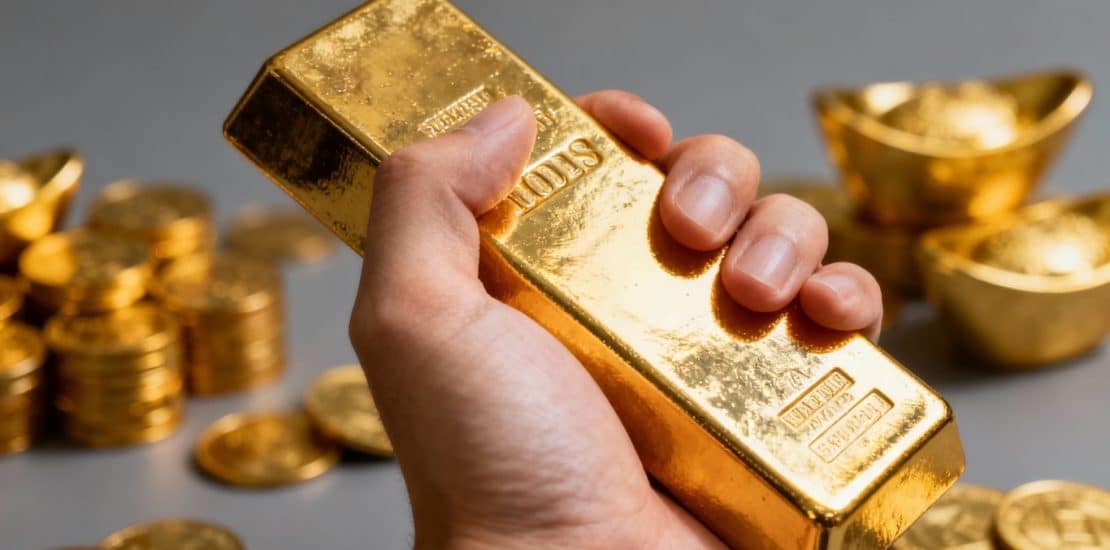
Wondering what the costs are associated with buying and holding physical gold? That's a great question, because there's more to consider than just the price of the precious metal. Between taxes, premiums, storage costs, and transaction fees, it's easy to get lost. To help you gain clarity and maximize your investments, we'll break down all of these aspects together. Get ready to understand the financial ins and outs of gold.
Key Takeaways
- When buying gold, pay attention to manufacturing fees, certification fees, and the premium added to the price of the metal, as these initial costs can vary.
- Holding physical gold involves recurring costs for secure storage and adequate insurance, expenses that should be factored into your budget.
- Gold taxation is an important factor; understand the flat-rate tax on precious metals (TFMP) and the capital gains regime to maximize your profits when reselling.
- Reselling your gold is not without costs: buyer's commissions, brokerage fees and necessary documents can influence the final amount received.
- To minimize overall costs, carefully compare fees between gold bars and coins, and review offers from different sellers to spot hidden fees.
Understanding the Upfront Costs When Buying Gold
When you decide to buy physical gold, it's important to know that the price you see isn't always the final amount you'll pay. There are several costs that add up right from the start, and you need to be aware of them to avoid unpleasant surprises. It's a bit like when you buy a car: there's the base price, but also the registration, registration, and sometimes options that add to the price. It's a bit the same with gold; there are additional costs to anticipate.
The costs of manufacturing and certifying ingots and coins
When you buy gold in bars or coins, be aware that there are costs involved in manufacturing and certifying them. These costs are usually included in the price you pay, but they do exist. For example, a bar must be refined, cast, marked with its weight, purity, and a serial number, and then often packaged in a blister pack with a certificate. All of this comes at a cost. Gold coins, especially collectible coins, may have additional premiums that aren't directly related to the value of the gold they contain, but rather to their rarity, history, or condition. So, it's important to carefully consider what you're buying and what you're paying for.
The gold premium: beyond the intrinsic value of the metal
Buying gold isn't just about the price of the precious metal itself. There's one key factor to consider: the premium. The premium represents the difference between the price of pure gold and the final price you pay for a coin or bar. It includes various factors such as manufacturing costs, market demand, rarity, and the item's condition. For example, a historical coin like the Napoleon 20 Francs Gold can command a significant premium due to its numismatic value and collector appeal. During a major financial crisis, this premium can soar far beyond the intrinsic value of the gold contained in the coin. Premiums also vary between suppliers and the products they offer. It is crucial to compare how these premiums affect the purchase price between different products and sellers.
Buying commissions and spreads applied by sellers
Most people who sell gold, whether brokers, banks, or online platforms, will charge a commission. It's their way of making a living. These commissions can be a percentage of the amount you spend, or sometimes a fixed amount. For example, a seller might charge 0,5% on each transaction. This may not seem like much, but if you buy a large amount of gold, it can quickly add up to a significant sum. Therefore, it's important to compare offers carefully before making a decision. Sometimes, if you buy a lot, you can even negotiate a better rate. Beyond direct commissions, there are also what are called spreads. Spreads represent the difference between the price at which the seller buys the gold and the price at which they sell it to you. It's a margin that allows them to cover their risks and make a profit. The lower the spread, the better it is for you. It is therefore essential to carefully compare offers from different sellers to minimize overall costs.
It's essential to understand all of these initial costs before you take the plunge. They may seem small individually, but when added together, they can represent a significant portion of your investment. Proper preparation will save you a lot of hassle.
Recurring expenses related to holding physical gold
Once you've acquired your gold, it's important to think about how you'll keep it safe. Just because you own a tangible asset doesn't mean you can just leave it lying around. There are costs to consider for storage and insurance, much like you would with a car or a house. These costs, often referred to as "carrying costs," may seem small at first, but they add up over time and can affect the overall return on your investment. It's therefore essential to understand them to avoid any unpleasant surprises.
Secure storage costs: bank safes and specialized warehouses
To keep your gold safe, you have several options. You can choose to rent a safe deposit box from a bank. This is a fairly common solution and offers a certain level of security. Prices vary depending on the size of the safe and the bank, but generally range between 100 and 500 euros per year. Another option, often more specialized, is to use companies dedicated to storing precious metals. These companies have ultra-secure facilities and sometimes offer additional services. Their rates are often calculated as a percentage of the value of the stored gold, with minimum fees ranging from 0,5% to 1,5% annually. Of course, there is also the option of keeping it at home, in a personal safe, but this involves higher risks and the cost of installing and securing your home.
The importance of insurance to protect your investment
Beyond simple storage, it is highly recommended to insure your gold. Even in a bank vault or specialized warehouse, a loss is always possible. Specific insurance can cover theft, loss, or damage to your precious possessions. Insurance premiums will depend on the value of the gold you hold and the level of coverage chosen. It is important to compare offers carefully to find insurance that suits your needs and budget. Not insuring your gold is taking a considerable risk, especially if you own large quantities.
The cost of carrying: a factor not to be neglected in the long term
Carrying costs include all the costs associated with holding your physical gold: storage, insurance, and sometimes even management or transfer fees if you use certain services. These expenses, although recurring, are often underestimated by investors. Over several years, they can represent a significant sum that reduces the profitability of your investment. It is therefore wise to integrate them from the outset into your profitability calculation and to seek the most economical solutions without compromising the security of your golden heritage.
Gold taxation: a key element to master
When you decide to invest in physical gold, it's essential not to forget the tax aspect. It's not just a matter of price per gram; taxes can have a significant impact on your profits. It's therefore important to understand the rules to avoid unpleasant surprises.
The flat-rate tax on precious metals (TFMP)
When selling gold, you have the choice between two main tax regimes in France. The first is the Precious Metals Tax (TMP). If you opt for this regime, you will pay 11,5% of the total amount of your sale. It's a fairly simple option, often chosen for its administrative ease, especially if you sell quickly and the amount is substantial. This regime is applied to the gross amount of the transaction, whether there was a gain or a loss. It's important to know that the TMP includes an 11% tax on precious metals and 0,5% CRDS, which are subject to change.
Taxation on real capital gains and allowances
Under certain conditions, you can choose to be taxed on the capital gains when selling. To do this, you must be able to prove the date and purchase price of your gold assets. You will then be taxed on the capital gain realized, i.e., the difference between the sale price and the purchase price. This regime becomes particularly attractive if you have held the gold for a long time, thanks to a system of progressive allowances that leads to a total exemption after 22 years of ownership. Here's how it works:
- After 2 years of detention: 5% reduction on capital gains.
- After 3 years of detention: 10% discount.
- After 22 years of detention: 100% exemption.
It's crucial to fully understand the tax implications of selling gold before making a decision. The choice between TMP and TPV will depend on your personal situation, the length of time you've held your gold, and the availability of proof of purchase. Don't hesitate to consult a professional to optimize your tax situation.
Possible exemptions and conditions to be met
The main advantage of the real capital gains scheme is the total exemption from capital gains after 22 years of ownership. In addition, there are other situations where you may be exempt, such as if you sell gold that was donated or inherited, provided you can provide proof of these details. It is always recommended to keep all documents relating to the purchase of your gold (invoices, certificates) in a safe place to benefit from the most advantageous regime when reselling.
The costs associated with reselling your gold
Once you've decided to sell your gold, it's important to know that fees may apply. These costs can reduce the net amount you receive, so it's important to anticipate them carefully to avoid unpleasant surprises regarding the return on your investment. It's always a good idea to contact several buyers and compare their offers before making a decision. Don't hesitate to ask questions about all the fees involved and request a written estimate. Proper preparation can help you maximize your profit from your gold sale.
Buyer's commission and brokerage fees
The buyer's premium is one of the most common fees. It's a percentage of the sale price and is charged by the buyer (often a precious metals dealer) to cover their costs and make a profit. These commissions can vary considerably between buyers, so it's crucial to shop around. Some buyers may also offer prices below the market rate to offset their fees. If you use a broker to sell your gold, expect a brokerage fee. This fee is usually a percentage of the sale price, but can also be a fixed amount. The broker acts as an intermediary between you and the buyer, facilitating the transaction and helping you get the best possible price. However, this service comes at a cost. It's important to understand how the broker is compensated before committing. For example, for €10 worth of gold sold, this could represent between €000 and €100 in fees, depending on the percentage applied.
The impact of required documents on transaction costs
Selling gold requires certain documents, and failure to provide these documents can result in additional fees or complications. Generally, ID is required to prove your identity and your right to sell the gold. If you opt for capital gains tax, you will need proof of purchase (invoice, notarial deed) stating the purchase price and a precise description of the goods (serial number, etc.). Failure to provide these documents may force you to opt for precious metals tax, which is a flat-rate tax that does not take into account any capital gains you may have. It is always recommended to keep all documents related to your gold purchase. This evidence is key to choosing the most advantageous tax regime when reselling and potentially reducing your tax. It is crucial to keep all invoices and purchase certificates. These documents are your best asset for optimizing your tax situation when reselling your physical gold.
How market prices influence resale price
Of course, the price at which you sell your gold will depend directly on market prices at the time of the transaction. These prices fluctuate constantly based on supply and demand, economic and geopolitical events, and interest rates. It is therefore advisable to carefully monitor price trends before making your decision. If you are in a hurry, you may end up accepting a less attractive price. Conversely, a little patience can allow you to wait for a more favorable period to maximize your gains. It is important to understand the taxation of gold investment to properly manage your investment. You can consult the real time gold price to make the best decision.
You should also be aware that in some cases, especially if you own rare coins or antique ingots, an appraisal may be necessary. This allows you to determine the exact value of your gold, taking into account its purity, condition, and rarity. Appraisal fees can range from a few dozen to several hundred euros. If you want official certification to reassure the buyer, this will incur additional costs. It's therefore important to carefully weigh the pros and cons.
Compare costs to optimize your investment
Investing in gold is great, but doing it wisely so that every euro counts is even better. Fees are everywhere, and gold is no exception. But with a few tips, you can reduce these costs and improve the return on your investment. It's all about using common sense and not getting caught out by hidden fees or high commissions.
Fee Differences Between Gold Bars and Coins
When buying gold, you have the choice between bars and coins. Both have their advantages, but the associated costs can vary. Bars, especially larger ones like the 1kg bar, often have a lower price per gram, which means a generally lower premium (the additional cost beyond the intrinsic value of the metal). Gold coins, such as the Napoleon 20 Francs, may have a higher premium due to their rarity, condition, or numismatic value. However, they sometimes offer better liquidity and may be easier to resell in small quantities.
- Ingots: Generally cheaper per gram, especially larger sizes. The premium is often lower.
- Parts : The premium may be higher, but they are easier to resell in small quantities and may have collectible value.
The importance of comparing offers from different sellers
Before you whip out your credit card, take the time to shop around. Prices can vary from place to place, and quite a bit. Look not only at the price of the metal itself, but also at the commissions they charge. Sometimes, a lesser-known seller may offer a better rate. Don't forget to look at transaction fees, which can quickly add up. You really need to shop around to find the best value. Don't hesitate to ask for detailed quotes and contact several suppliers.
Here are some points to consider when comparing offers:
- Transparency of fees: Make sure all fees are clearly stated and that there are no hidden charges.
- Reputation and reliability: Choose recognized professionals with good customer feedback.
- Additional services: Some may offer appraisal or certification services included in their fees, which can be beneficial.
Identify hidden fees and additional costs
It's important to understand that the price of a gold coin reflects not only its precious metal content, but also its rarity, condition, and specific demand in the collector market. Similarly, for bullion bars, the premium can vary. Don't just settle for the first price you see. Look carefully at all hidden fees, commissions, and storage costs. A good comparison can save you a lot of money in the long run. Sometimes, a seller may offer an attractive price for the metal, but make up for it with processing or certification fees that aren't always immediately obvious. Also consider the tax implications of gold investment before making a decision.
The cost of transporting and shipping gold
When buying gold, especially online, you must not forget the cost of shipping. This isn't like ordering a book; we're talking about precious goods that require special precautions. These costs are there to ensure your investment arrives safely and securely.
Secure packaging and transport insurance
Your bars or coins will be carefully packaged, often in tamper-evident seals. This is the first step in ensuring the integrity of your purchase. Then there's insurance. The higher the value of what you're buying, the more expensive the insurance will be. It's essential protection against theft or damage during transport. Think of it as a guarantee for your money.
Specialized logistics services for precious metals
For the transport of precious metals, specialized companies are involved. They are experienced in handling this type of package and implement enhanced security measures. Their rates may vary depending on the distance and the specific services requested. It's important to know that these costs are necessary to ensure reliable delivery. For example, if you're buying several thousand euros worth of gold, these fees can be a significant sum, but they're the price worth paying for peace of mind. It's always a good idea to compare prices. offers from different sellers to find the best value for money.
Consider additional costs for an online purchase
It is important to anticipate all these additional costs. They may seem secondary compared to the gold price itself, but they add to the total cost of your purchase. Proper planning will help you avoid unpleasant surprises. Remember to check whether the seller includes these fees in the listed price or if they must be added separately. Complete transparency about these costs is a sign of seriousness on the part of the seller.
Secure gold shipping is an essential component of the purchase. It ensures your investment arrives safely, but it comes at a cost that must be factored into your overall budget.
When you send gold, there are costs for transport and insuranceThese costs are important to ensure your precious metal arrives safely. We take care of everything for you. To learn more about how we handle the shipment of your gold, visit our website.
To conclude: buying gold wisely also means knowing the costs.
So, we've covered the various costs associated with buying and holding physical gold. As you've seen, it's not just the price of the metal that matters. There are fees when you buy, those for keeping it safe, and even when you resell it. Not to mention taxes, which can be a game changer. It's a bit like buying a car: there's the listed price, but also insurance, maintenance, and technical inspection. In short, for your gold investment to be a truly good deal in the long run, you need to compare offers, ask the right questions, and understand all these little details. This will avoid many surprises and allow you to make the best choices for your money.
Frequently Asked Questions
What are the initial costs when I buy gold?
When you buy gold, there are several small costs at the outset. There's the commission the seller takes, a bit like a tip for their service. Then there's the spread, which is the difference between the price the seller buys the gold for and the price they sell it to you. Also consider the fees if you go through a middleman. These costs vary, so you should research carefully before making a decision.
Does it cost to keep my gold at home?
If you choose to keep your gold at home, you need to think about security. A good safe is an investment. You also need to consider insurance in case something goes wrong. If you prefer to entrust it to a specialist company or a bank, there will be regular storage fees, which depend on the size of your safe and the level of security.
How does taxation change things when I sell my gold?
When you sell gold, you can choose between two ways of being taxed. Either a fixed tax, which is simple but can be expensive if you sell at a loss, or a tax on the actual gain. The latter is more advantageous if you've held your gold for a long time, as there are tax reductions that apply over time, up to a total exemption after 22 years. To do this, you must keep the purchase invoices.
What causes the price of the gold I buy to fluctuate?
The price of the gold you buy isn't just the price of the metal itself. There's a 'premium' added, which covers manufacturing costs, public demand, and sometimes the rarity of the coin or bar. For example, an old coin may cost more than just the weight of gold it contains. This premium can vary depending on the seller and the quantity you buy.
What are the costs if I have my gold delivered?
When you buy gold online, you have to have it shipped. This comes at a cost, as it requires special packaging to protect it, insurance in case it's lost or stolen during shipping, and specialized companies to move it safely. The more expensive your purchase, the higher these fees can be.
Are there any fees when I resell my gold?
Yes, when you resell your gold, there are also fees. The buyer takes a commission on the sale, which is a percentage of the price. There may also be fees if you go through a broker. And the price you can sell it for will depend a lot on the price of gold at the time you do so.