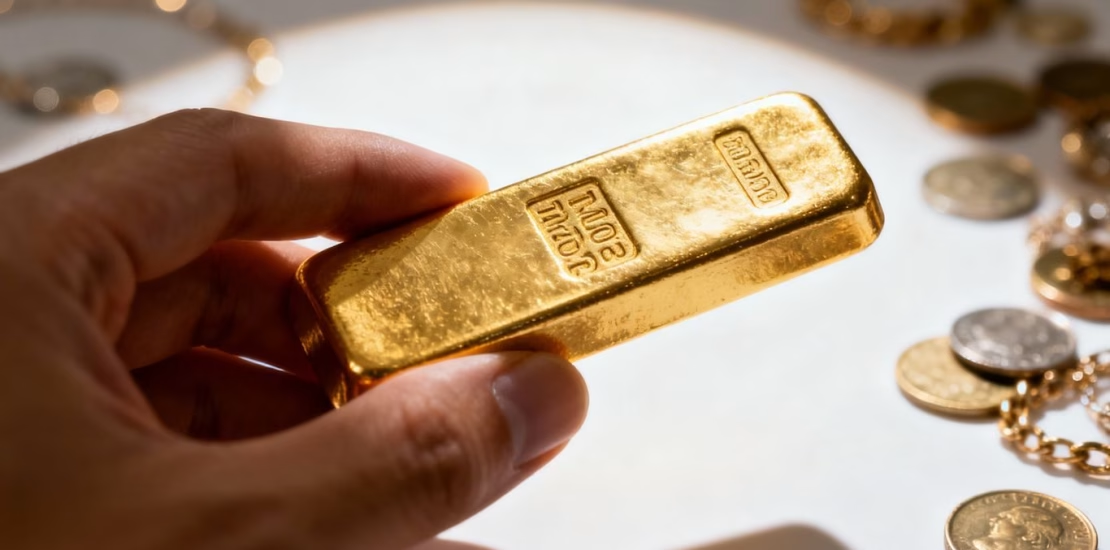
Are you wondering what the alternatives are to selling physical gold? That's an excellent question, because diversifying your investments is always a good idea to protect your wealth. Gold, while attractive, isn't the only option. Let's explore other ways to grow your savings, whether by investing in other precious metals, investing in gold-linked financial products, or even investing in companies that mine this metal. Get ready to discover a range of possibilities to protect and grow your money.
Key Takeaways
- Physical silver, cheaper than gold, represents an accessible and strategic alternative, particularly due to its growing demand in industry.
- Investing in gold can be done through bars or coins, each having its advantages in terms of security and ease of resale.
- Paper gold, in the form of ETFs or certificates, allows you to track the price of gold without having to physically own it, thus offering more flexibility.
Exploring alternatives to physical gold
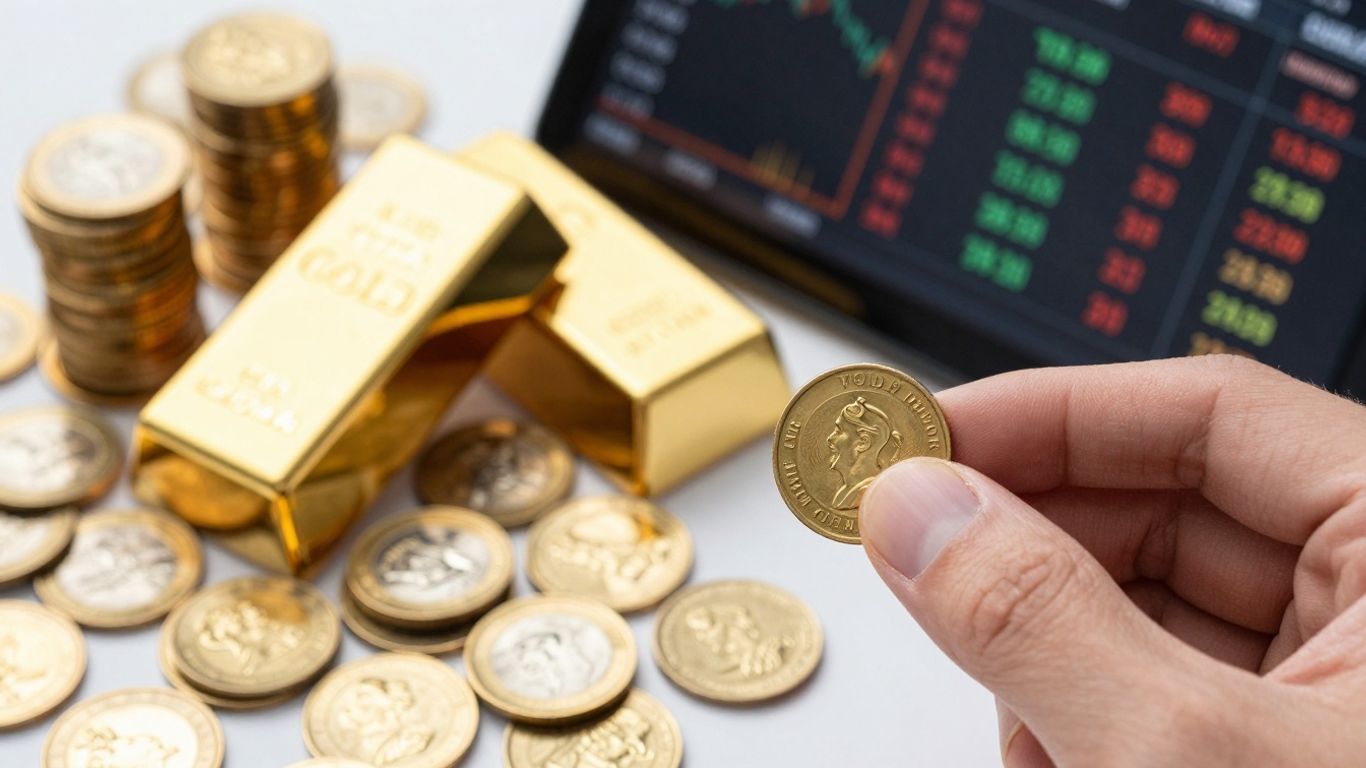
When we think about investing in gold, we often picture bars or coins that we can touch. It's reassuring, I grant you that. But let's be honest, managing the storage, security, and sometimes even the resale of physical gold can quickly become complicated. Not to mention that if you want to move quickly in the market, it's not always ideal. Fortunately, there are other ways to invest in gold without having to worry about all that. It's called paper gold, and it can really simplify things.
Investing in physical silver as an alternative
While gold is the king of precious metals, don't overlook its cousin, silver. It's much more financially accessible, which is a good starting point if you don't have a huge amount of capital to invest. And besides, silver isn't just for show. It's crucial in many booming industries today, such as solar panels, electronics, and even medicine. Demand for it continues to rise, which could be a promising sign for the future.
- Accessibility: Cheaper than gold, it allows entry into the precious metals market with a lighter budget.
- Industrial demand: Its use in green technologies and electronics gives it strategic value.
- Liquidity: Silver bars are generally easy to resell on the market.
Money has a dual nature: it is both a store of value and an essential component of many modern technologies. This duality could well make it very attractive in the long term.
Understanding the advantages of silver as a precious metal
Silver is, in a way, the people's precious metal. It has a rich history, serving as currency and the basis for trade for centuries. Today, it continues to play a key role, not only as a safe haven asset but also as an essential raw material for industry. Think of renewable energy, advanced electronics, or medical applications. This growing industrial demand adds a layer of security to its investment potential.
- Safe haven: Like gold, it protects your savings against inflation and crises.
- Industrial potential: Demand in rapidly growing sectors supports its value.
- Taxation: In France, the purchase of investment money is often exempt from VAT, which is a significant advantage.
| Ingot weight | Purity | Certification | Indicative price (subject to change) |
|---|---|---|---|
| 250g | 999.9 ‰ | LBMA | 200-250 € |
| 1kg | 999.9 ‰ | LBMA | 700-900 € |
These figures are there to give you an idea, of course. Prices change all the time depending on the market.
The different forms of investment in gold
When we think about investing in gold, we often picture bars or coins that we can hold in our hand. That's physical gold, and it's a perfectly valid option. But the world of investing is vast, and there are other ways to invest in gold without having to store it at home. This is called "paper gold." These alternatives may seem less tangible, but they offer a flexibility and accessibility that may better suit some of you or specific investment strategies.
Gold bars: a traditional choice
Gold bars are a timeless classic. They come in various sizes, ranging from small formats like 1g, 2g, 10g, 20g, 50g, to larger weights like 250g, 500g or even 1kg. Each size has its advantages, whether for a first purchase, to diversify your portfolio, or to give a valuable gift.
- Small sizes (1g to 50g): Ideal for starting out, for gifts, or for a gradual purchase strategy (Dollar Cost Averaging). They are easier to resell in small quantities.
- Intermediate formats (250g to 500g): They offer a good compromise between the price per gram, which is more advantageous than smaller formats, and a certain flexibility for resale.
- Large format (1kg): Generally, the price per gram is the lowest, making them an attractive choice for larger investments. However, reselling them can be more difficult.
These ingots are generally produced by recognized and certified refiners (such as those accredited by the LBMA – London Bullion Market Association). They are sold in blister packs, accompanied by a certificate of authenticity guaranteeing their purity (often 999,9‰, or 24 carats) and traceability. It's a very tangible way to own gold.
Owning physical gold means possessing a tangible asset that is not dependent on a financial institution. It is recognized worldwide and can serve as a hedge against inflation or economic crises.
Gold coins: a flexible option
Gold coins are another form of physical gold, but they have a slightly different history and characteristics than gold bars. There are two main types of investment coins:
- Investment gold coins: These are coins that were legal tender in their country of origin, minted after 1800, and with a purity of at least 900 parts per thousand. Their price is directly linked to the amount of gold they contain, with a slight premium over the current gold price. Famous examples include the Napoleon French, the South African Krugerrand, or the Canadian Maple Leaf.
- Tokens or medals: These coins are not necessarily issued by a single state and can have a variety of designs. In France, some transactions involving these coins may benefit from favorable tax treatment upon resale.
The advantage of coins is that they are often easier to resell than gold bars, especially smaller denominations. They can also have added numismatic value if they are rare or in mint condition. It's a flexible way to invest in gold, combining the tangibility of the precious metal with ease of transaction.
Paper gold: investing without physically owning it
If the idea of owning physical gold seems complicated, whether for storage or security reasons, know that there are alternatives. It's called "paper gold." Essentially, you invest in gold without ever having to physically hold it. It's a more modern way to profit from gold price fluctuations, without the logistical constraints.
Gold-linked exchange-traded funds (ETFs)
Gold ETFs are a bit like baskets of stocks, but they track the gold priceWhen you buy a share of a gold ETF, you are indirectly buying a small fraction of gold. These ETFs are listed on stock exchanges, so you can buy and sell them fairly easily during market hours. This is convenient if you want to react quickly to price changes. They are often managed by large financial institutions, which can reassure some investors. Just be mindful of the annual management fees, which can eat into your gains over the long term.
Certificates and receipts of stock market transactions
Gold certificates are a bit different. When you buy a certificate, you receive a document proving you own a certain amount of gold. But be aware that this gold is usually stored by the certificate issuer, often in secure vaults. It's like having the gold, but without having to worry about where to store it. You just need to make sure the issuer is reputable and carefully review the terms for retrieving your gold if you ever need it. Stock exchange transaction receipts (RTBs) are a bit more technical. They often represent a fraction of a large gold bar. The idea is to be able to invest in gold with smaller amounts, without having to buy an entire bar. The ease of reselling them depends largely on the bank or institution that offers them.
Investing in paper gold may seem less tangible, but it offers interesting flexibility. It's a good option if you prefer to manage your investments online and avoid storage hassles. However, it's important to understand that you're dependent on financial intermediaries, and that carries its own risks, especially in the event of a banking crisis.
Want to invest in gold without having to store it at home? It's entirely possible! Find out how. paper gold This allows you to benefit from market fluctuations without the hassles of physical ownership. It's a smart way to diversify your investments. To learn more about this investment method, visit our website today!
So, ready to diversify your assets?
So, now you have a better idea of the different ways you can invest your money in precious metals, without necessarily buying physical gold. Whether you opt for silver, specific coins, or even exchange-traded funds, the important thing is to understand what you're doing and choose the solution that best suits your goals. Remember that every investment carries risk, so do your research and, if necessary, seek professional advice. Making informed decisions will best secure your financial future.
Frequently Asked Questions
Why is silver a good alternative to gold?
Silver is a great option because it's cheaper than gold, making it easier to buy when you don't have a lot of money to start with. Plus, silver is super useful for lots of things like solar panels or phones, so its value could well increase over time.
What are the different types of gold bars I can buy?
You can find gold bars in all sizes, from the smallest ones like 1 gram or 2 grams, perfect for beginners or as gifts, to the largest ones like 50g, 250g, 500g, or even 1kg. Each size has its advantages, whether it's the price per gram or the ease of storage and resale.
What is paper gold and how does it work?
Paper gold is when you buy shares in funds that track the price of gold, or stocks in companies that mine gold. You don't own the physical gold, but you profit from its price fluctuations. It's a simpler way to track gold without having to store it yourself.