
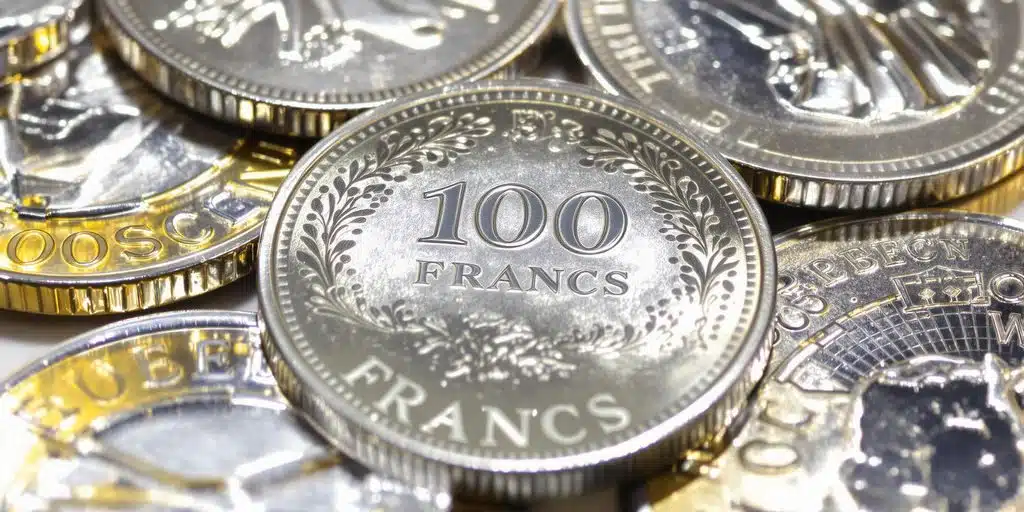
Are you interested in numismatics and wondering which French silver coins attract the most collectors? That's an excellent question! Whether you're a beginner or already a bit advanced in your hobby, knowing which coins are popular will help you better focus your research. Let's take a look at the French silver coins that collectors love.
Key Takeaways
- The 20 francs Napoleon is a very popular French gold coin, easy to resell and full of history.
- The Louis d'or, minted between 1640 and 1792, is another iconic coin with strong historical and cultural value.
- The 100 Francs is a coin which, although less detailed in the information provided, is one of the sought-after French coins.
- The 20 Francs Turin is a rare silver coin, minted as a trial in 1932, and one should be careful of counterfeits.
- The 10 Francs Turin, like its big sister the 20 Francs, is also a rare silver coin and prized by collectors.
The 20 franc Napoleon
Ah, the Napoleon! When we talk about collectible French coins, it's impossible to miss this one. It's a bit of a star among gold coins in France, and for good reason. Created in 1803 under Napoleon Bonaparte, this 20 franc coin has survived through the ages and regimes, which gives it quite a history. It weighs 6,45 grams, with a little over 5,8 grams of pure gold. It's a coin you'll easily recognize, and that's pretty handy if you ever decide to resell it one day. People are familiar with the Napoleon, so it's pretty easy to find a buyer.
History and origin
The Napoleon is truly a symbol of a desire to stabilize French currency at the beginning of the 19th century. It was minted under different governments, and we often see the portrait of Napoleon, but also of other important figures depending on the period. It's fascinating to see how one coin can tell the story of so many political and social events. It's a bit like holding a little piece of French history in your hand.
Value in the current market
The value of a Napoleon fluctuates, right? Of course, the price of gold plays a huge role. But beware, the condition of the coin also counts a lot, and some mintage years are rarer than others. Collectors are always on the lookout for coins in perfect condition or vintages that are harder to find. That's why two similar coins can have very different prices. You really have to look at all the details to estimate its true value.
Ease of resale and liquidity
This is where the Napoleon scores points. Because it was produced in large quantities and is so well-known, it's generally easier to resell than other, rarer coins. Gold dealers and investors are familiar with it, so transactions are often faster. If you're looking for a coin that you can easily exchange for cash, the Napoleon is a solid choice. It's like the Swiss Army knife of French gold coins for its ease of resale.
Protection against inflation
It is often said that gold is a good hedge against inflation, and the Napoleon is no exception. When prices rise, the gold price tends to follow. Owning pieces like the Napoleon is a bit like having insurance for your savings. It helps preserve your purchasing power over the long term. It's an investment that requires patience, but it can really pay off over time. And then there's the reassuring side of having something concrete, tangible, that doesn't depend on the ups and downs of the financial markets. It's a bit like planting a tree; it takes time, but it eventually bears fruit.
Interestingly, capital gains from the sale of these coins are tax-free if you hold them for more than 22 years. This is a significant tax advantage for those considering long-term investments.
The Golden Louis
History and Origin
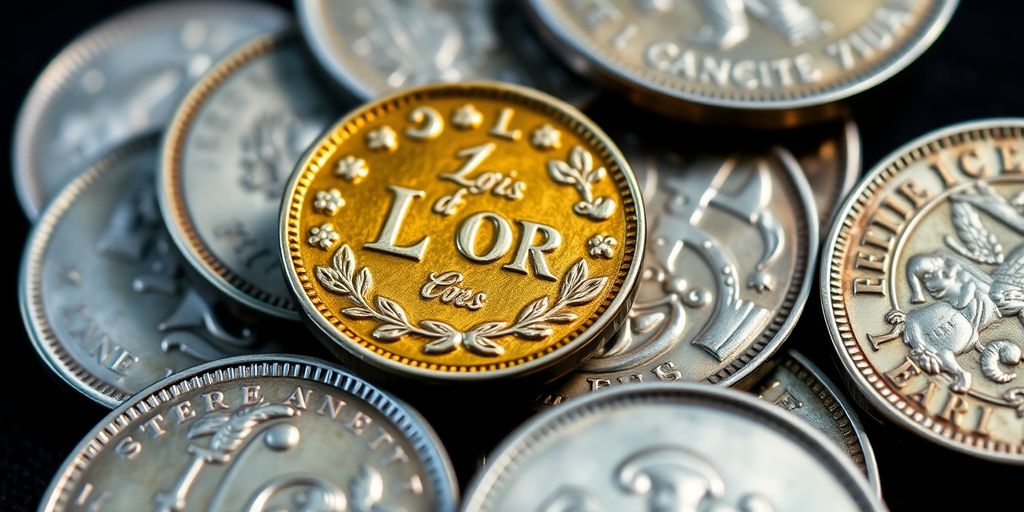
The Louis d'Or is a coin that has survived the ages, first minted under Louis XIII in 1640. Imagine, it's a coin that has seen centuries of French monarchy pass by, with designs that changed with reigns and artistic styles. Each Louis d'Or tells a small part of French history, which gives it a value that goes far beyond its weight in gold. It is truly a powerful symbol of French identity throughout time.
Why collect it?
It's no coincidence that the Louis d'Or attracts so many collectors. First, there's its history; as we just mentioned, it's a true piece of heritage. Then, its intrinsic value, linked to the purity and weight of the gold, makes it a safe investment. But what makes it particularly interesting is its rarity. Depending on the vintage and condition, some pieces can be worth much more than their weight in precious metal. It's a bit like unearthing a treasure.
Key Features
When looking at a Louis d'Or, there are a few things to check. The purity of the gold is important, often around 900 thousandths, which means 90% fine gold. The weight varies depending on the type of Louis d'Or, but it's an element to consider when estimating its value. The effigy of the king, of course, is what gives the coin its name, and its condition plays a huge role in its collectible value. A well-preserved coin, without too many signs of wear, will always be more sought-after. It's also important to know that the price of gold fluctuates, so the value of your coin may change.
The Louis d'Or as a safe haven
In times of economic uncertainty, gold has always been considered a safe haven. The Louis d'Or is no exception. When inflation rises and the value of paper money declines, gold tends to maintain, or even increase, its value. It's a way to protect your savings over the long term. Owning a Louis d'Or means having something tangible, something concrete, that doesn't depend on the vagaries of the financial markets. It's a bit like having insurance against economic contingencies. If you're looking to diversify your assets, the golden louis may be an interesting option to consider.
The 100 Francs
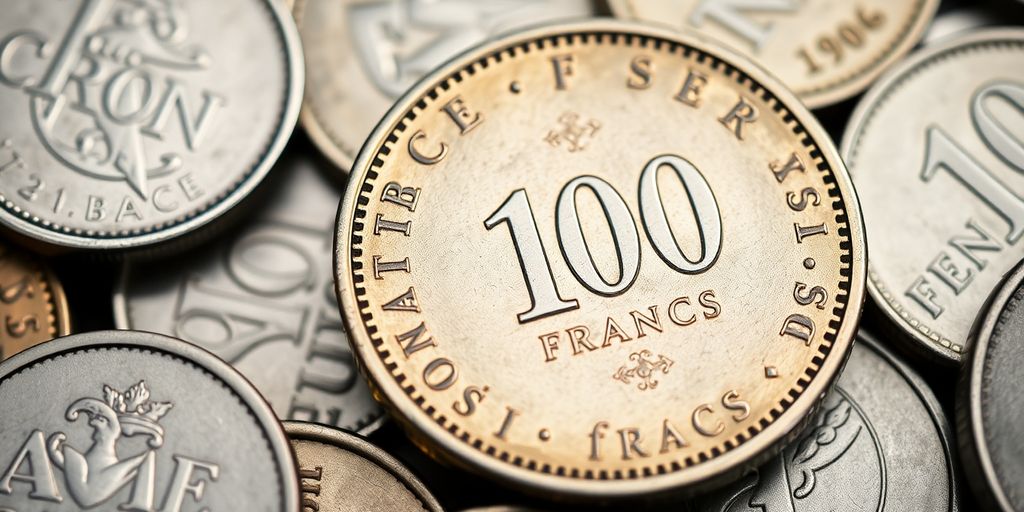
The 100 Francs: A heavyweight in the collection
When it comes to collectible French coins, the 100 Francs silver coin occupies a special place. It's a coin that impresses with its size and weight, making it particularly pleasant to hold. It's one of those coins that left its mark on its era, and its presence in a collection often demonstrates an interest in French monetary history.
The different series of 100 Francs
There are several series of 100-franc silver coins, each with its own unique characteristics. The best-known are undoubtedly those minted between 1974 and 1983, often featuring emblematic figures or national symbols. For example, there are series dedicated to historical events or prominent figures.
- 100 Francs Sower: One of the most recognizable series, featuring the iconic Sower.
- 100 Francs Hercules: An older piece, often highly sought after by collectors.
- 100 Francs Genie: Another variation that marked its time.
Why collect the 100 Francs?
There are several reasons for the popularity of the 100 Francs silver coin. First, its weight in silver gives it significant intrinsic value. Second, its history and the themes it represents make it a fascinating object of study and collection. It represents an excellent entry point for those new to French numismatics. Furthermore, its relative abundance on the collectors' market makes it accessible, even if certain years or series can be rarer and therefore more expensive. It's a bit like choosing a good bottle of wine; you have to know how to look at the vintage and the appellation to make the right choice. If you're looking for gold coins, the 20 Napoleon Francs is also a very popular option.
The beauty of the 100 Francs silver coin lies in its ability to combine metallic value, historical interest, and aesthetics. It is a coin with character that leaves no one indifferent.
The 20 Francs Turin
The 20 Francs Turin
Ah, the 20 Francs Turin! If you're interested in French coins, you've probably heard of this one. It's one of the modern coins that's really popular with collectors, and for good reason. Minted in silver, it's quite rare, especially if you're looking for examples in good condition. In fact, you should know that in 1932, only twenty of these coins were produced as a trial. That's really very few when you consider the number of coins that are usually in circulation.
Two of these coins were even sealed in the foundations of buildings, further reducing the number potentially available to collectors. This is a bit of a Holy Grail for some numismatists. It must be said that even though they were considered small change at the time, their rarity today makes them rare and quite expensive French coins.
It is important to be careful of counterfeits, as they are unfortunately quite common. You have to be careful when buying. If you are looking for more specific information on French coins, the 20 Napoleon francs is another very popular piece that might interest you.
Here are some points to remember about the 20 Francs Turin:
- Composition : Silver (68%)
- Year of main minting: 1932 (trial)
- Scarcity : Very high, only 20 known examples.
- Value : Significant because of its rarity.
Coin production is a complex process that can sometimes lead to limited editions or trials that, over time, become highly sought-after collectibles. The Turin 20 Franc is a perfect example, its small initial quantity making it particularly desirable for enthusiasts.
If you're a serious collector, you know that provenance and authenticity are paramount. For pieces like this, it's always advisable to go through recognized experts or reputable auction houses to avoid unpleasant surprises.
The 10 Francs Turin
The 10 Francs Turin
Ah, the 10 Franc Turin! If you're interested in French silver coins, you've definitely heard of this one. It's one of those coins that left its mark on their era and that today arouses keen interest among collectors. Unlike its big sister, the 20 Franc Turin, the 10 Franc Turin is a little less well-known to the general public, but it's no less fascinating.
What makes this coin particularly interesting is its history and composition. It was minted at a time when France was looking to modernize its currency, and the Art Deco-inspired design of the Turin series, with its allegorical goddess, marked a departure from more classical designs. It's a bit like discovering an old family photo and thinking, "Wow, what style!"
Here are some key points to remember about the 10 Francs Turin:
- Composition : It is usually made of silver, with a fineness of 900 thousandths, which gives it a beautiful shine. This is a good point for those who like the feel of silver in the hand.
- Design: The obverse features the figure of the Republic (often called "Turin" in reference to its engraver, Lucien Bazor, who also designed the 20 Francs Turin) wearing a Phrygian cap. The reverse features the face value and the year.
- Scarcity : Although it was produced in larger quantities than the 20 Francs Turin, certain years or vintages can be more difficult to find, thus increasing their appeal to collectors.
It's important to know that the value of a coin like this doesn't depend solely on its silver weight. Other factors come into play, such as its condition, its rarity, and collector demand. It's a bit like ancient gold coins, where history and beauty play as important a role as the precious metal they contain.
Finding the perfect Turin 10 Franc coin can be an adventure in itself. You have to pay attention to details, check authenticity, and compare prices. It's a hobby that requires a bit of patience, but the satisfaction of finding the missing piece for your collection is immense.
La 10 Franc Turin coin is a very interesting gold coin. It has a rich history and value that can attract collectors and investors. If you want to know more about this coin or other gold coins, visit our website to discover our collection.
So, ready to start your collection?
So, there you have it, an overview of the French silver coins that collectors are crazy about, with our famous 100 Francs at the top of the list. It's a fascinating world, full of history and potential. Whether you're already an expert or just starting out, I hope this article has inspired you to learn more. Remember that patience and research are your best allies. So, get out there, explore the markets, and maybe the next rare coin you unearth will be yours!
Frequently Asked Questions
Which piece should I start my collection with?
To start your collection, you might want to consider the 20-franc Napoleon. It's a fairly common coin, easy to find, and has a wonderful history. It's a great introduction to the world of numismatics.
What makes the Louis d'Or so special?
The Louis d'Or is a very old coin, dating from 1640 to 1792. It has great historical and cultural value. It's a bit like having an old family piece of furniture; it has sentimental and financial value that can increase over time.
Why is the 100 franc coin sought after?
The 100 francs is a more recent silver coin, often used for commemorative series. They are generally minted in limited quantities and with a beautiful finish, which makes them attractive to collectors who like to own original coins.
Is the 20 franc Turin coin difficult to find?
The 20 franc Turin coin is a fairly rare silver coin. You have to be careful, as there are many fakes. If you find a real one, it can be worth a lot, especially if it's in good condition.
Is the 10 franc Turin as rare as the 20 franc?
The 10 franc Turin, like its larger 20 franc sister, is a silver coin that can be rare. Its authenticity must be carefully verified. It's the kind of coin that, if authentic and in good condition, can really please a collector.
How do you know if a coin has value?
The condition of the part is super important! A scratch-free part, with all the details crisp, is worth much more than a worn part. We look to see if it still shines like when it left the factory. It's a bit like cars: a well-maintained car sells better.