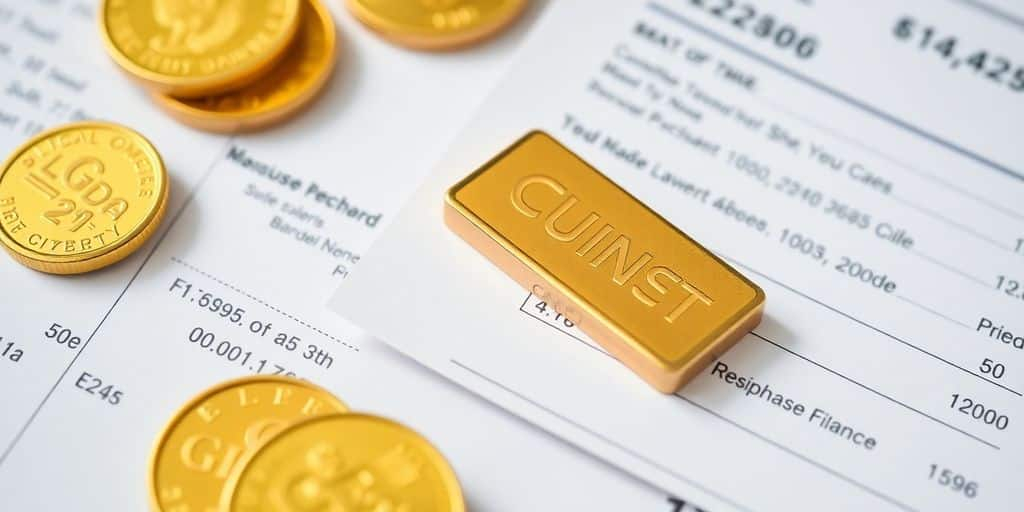
Keeping receipts for gold coins or bars isn't just a matter of paperwork. It can have a significant impact on the value of your investment, as well as your ability to resell or protect it. In this article, we'll explore why it's essential to keep these documents, the benefits they offer, and how to store them effectively.
Key points
- Invoices ensure the authenticity of your gold coins.
- They are necessary to avoid tax complications when reselling.
- Having an invoice makes it easier to resell your ingots or coins.
- Keep your invoices in a safe place to avoid losing them.
- Proper storage of gold is essential to preserve its value.
Why Keep Purchase Invoices?
It's a question we all ask ourselves, right? We buy gold, we get the receipt, and then... where do we put it? Do we really need it afterward? The short answer is yes! But let's dig a little deeper into why.
Justification of Authenticity
Imagine you have a beautiful gold coin. How can you prove it's authentic if you no longer have the receipt? This is where it gets complicated. The invoice serves as proof of purchase and authenticity. Without it, it's difficult to convince a buyer or even an insurance company of its true value. It's a bit like a birth certificate for your gold. Keep it safe! Think about it. proof of purchase as a guarantee of the quality of your investment.
Avoiding Tax Problems
Ah, taxes... You can't escape them, even with gold. The receipt is super important for the tax authorities. It helps justify the purchase date and price, which directly influences the tax calculation when reselling. Without an invoice, you're asking for trouble. You risk paying more taxes than necessary, or worse, getting into trouble with the tax authorities. Better safe than sorry, right?
Facilitating Resale
One day, you might want to resell your gold. And guess what? The invoice is your best friend. It reassures the buyer, proves that you are the rightful owner, and greatly facilitates the transaction. A buyer will always be more inclined to buy gold with an invoice than gold of uncertain origin. It's a sign of trust that can make all the difference.
Keeping your receipts is a bit like having a good medical record for your health. It may seem annoying at the time, but it can save you a lot of trouble later. So, here's a word of advice: don't throw them away!
The Benefits of Having an Invoice
Okay, let's talk about the benefits of having a receipt when buying gold. We often think it's just a piece of paper, but in reality, it can really simplify life, especially if we need to resell or if we have a problem.
Proof of Purchase
The invoice is the basis. It is the irrefutable proof that you have indeed purchased this or. Without it, it's complicated to prove that you are the rightful owner. Imagine if you have to declare it to the tax authorities or resell it, it immediately becomes more complicated. It's a bit like having the receipt for your TV, you know?
Fraud Protection
With an invoice, you have a record of the authenticity of your purchase. It proves that you purchased your gold from an official and recognized seller. This protects you against counterfeits or scams. It's a bit like a guarantee, you know.
Facilitates Transactions
When you want to resell your gold, the invoice greatly facilitates the transaction. The potential buyer will have more confidence if they see that you have a proper invoice. It proves that you have nothing to hide and that the gold was acquired legally. Plus, it can even affect the selling price. Consider buying gold in France and the tax benefits associated with it.
Keeping your receipts is a bit like having a safety net. You hope you'll never need it, but when the day comes, you're glad to have it on hand. It saves you a lot of stress and hassle.
The Risks of Not Keeping Invoices
Forgetting to keep your gold purchase receipts is a bit like throwing away the receipt for a big purchase: it may seem trivial at the time, but it can quickly turn into a hassle. We often think, "It's useless," but trust me, it can save your ass in many situations. Here's why it's best to keep them safe.
Difficulties in the event of resale
Imagine you want to resell your gold coins or bars. Without an invoice, proving their origin becomes complicated. Potential buyers might doubt the authenticity of the gold, or worse, suspect it comes from an illegal source. This can significantly decrease the resale value or even make the transaction impossible. It's a bit like trying to sell a car without a registration document, it's a pain! What's more, the date of purchase is necessary to choose the most advantageous mode of taxation.
Problems with Insurance
If you're ever the victim of a burglary or disaster (fire, flood, etc.), your insurance company will ask you for proof of the value of the stolen or damaged property. Without a receipt, it's difficult to prove the ownership and value of your gold. You risk not being properly compensated, or even not at all. Remember to take photos of your precious metals directly in the safe to prove their value in the event of a disaster.
Loss of Value
The absence of an invoice can indirectly lead to a loss of value. For example, if you can't prove the purchase date, you could be subject to less favorable taxation upon resale. Furthermore, some buyers might offer you a lower price, considering the increased risk associated with the lack of supporting documentation. It's a bit like selling a collectible without its certificate of authenticity: it loses its value, even if the item is in perfect condition. Keep your purchase invoices safe to justify the value in the event of a claim.
How to Keep Invoices?
Okay, so we bought some gold, great! Now, don't mess around with the bills. They're a bit like receipts, except this one's... beaucoup more importantly. Here are some tips for keeping them safe, because, trust me, you'll need them one day or another.
Secure Storage
The easiest thing to do is to store them in a safe place. A safe at home is ideal, but if you don't have one, a sturdy filing cabinet in a dry place will do. The important thing is that it's protected from moisture and fire. Imagine the disaster if your bills go up in smoke! Also, remember not to leave these documents lying around, especially if you have people staying at home. Discretion is key. You can also opt for external storage, such as a safe deposit box at the bank, but this involves additional costs. In short, it's up to you to see what works best for you. Remember, outsourced solutions are often the safest.
Document Scanning
Frankly, right now, not digitizing your important documents is like shooting yourself in the foot. Scan your invoices and save them to an external hard drive, a USB drive, or even in the cloud. Make sure you have multiple copies, just in case one of them dies. And most importantly, encrypt your files! You can never be too careful with sensitive data. Plus, it'll make it easier to find them the day you need them. No more digging through piles of paper; everything is just a click away. Consider storing a copy away from home, at a friend's house, or in a safe deposit box at the bank, to avoid losing everything in the event of a disaster.
Physical Preservation
If you opt for physical preservation, a few precautions are in order. Use clear plastic sleeves to protect your invoices from dust and moisture. Avoid folding or stapling them, as this could damage them. If you have old invoices, consider having them professionally restored. It can be a bit expensive, but it's worth it if you want to keep them in perfect condition. And above all, check the condition of your documents regularly. Paper yellows over time, ink can fade... In short, a quick check from time to time never hurts.
Keep in mind that combining good physical preservation and careful scanning is often the best solution. This ensures you always have a copy of your documents, even in the event of a mishap. And let's be honest, it's still more practical to find an invoice in a few seconds on your computer than to spend hours searching through boxes!
Types of Invoices to Keep

Nominative Invoices
When buying gold, it's extremely important that the invoice is in your name. A nominative invoice, meaning it has your name and address, proves that you were the one who purchased the gold. This is essential to avoid problems with the tax authorities later. Without this, it's difficult to prove that you're the rightful owner, especially if you're reselling or in the event of an inspection. Imagine having to prove that the gold belongs to you without any paperwork... a real pain!
Online Shopping Invoices
More and more people are buying gold online, it's convenient! But be careful, you need to be even more vigilant with invoices. Make sure the site is reliable and that the invoice is detailed: date, precise description of the gold purchased (ingot, coin, weight, purity), price, and the seller's contact information. Keep a digital copy (PDF) and, if possible, print it. In the event of a dispute or inspection, you'll have all the information at hand. Remember to check that your home insurance covers the value of your gold. Also check the warranty limitations to avoid unpleasant surprises in the event of a claim.
Notarized Documents for Inheritance
Gold can also be passed down! If you inherit coins or ingots, the notarized document that formalizes the inheritance is extremely important. This document proves that you are the new legal owner. It mentions the date of donation, which will be taken into account as the purchase date for tax purposes. Keep it safe, as this document will serve as proof in the event of resale or questioning by the tax authorities. In the event of death, only the notary has the authority to access the safe, and break-in fees may be charged to the heirs if the unique key to the safe remains unaccounted for. Consider a certificate of authenticity for your ingots.
The Tax Impact of Selling Gold
So, we come to the less fun part: taxes when you sell gold. It's not always easy, but we're going to try to demystify everything so you know what to expect. Basically, there are taxes to pay, but there are also tips for reducing the bill. Hang on, here we go!
Precious Metals Tax
The precious metals tax (TMP) is pretty much the basics. If you sell your gold and can't prove the purchase date and price (lost invoice, inheritance, etc.), this tax is often the one that applies. It is 11,5% (11% TMP and 0,5% CRDS)The cool thing is that the seller (the agency or gold buying counter) handles it directly. So you receive the net amount, without having to file a tax return. Easy, right?
Tax Deductions
If you've kept your purchase receipt, you can opt for capital gains tax. This is where it gets interesting, because there are tax breaks based on the number of years you've owned your gold. The longer you wait, the less you pay! The tax break is 5% per year starting from the third year of ownership. After 22 years, you're exempt from capital gains tax. Not bad, eh? It's a bit like a long-term investment, but in a bling-bling version. Remember to store your purchase invoices to benefit from these advantages.
Importance of the Purchase Date
The purchase date is truly the key. It's what will determine whether you can benefit from tax deductions, and therefore potentially significantly reduce your tax bill. If you have a notarized document following an inheritance, the donation date will be taken into account. So, keep these documents safe; they're like gold (no pun intended!).
Best Practices for Storing Your Gold
So, we've invested in gold, great! But now, don't waste your investment by storing it haphazardly. Here are some tips for keeping your gold safe and in good condition.
Use Sealed Bags
It's simple, but it makes a big difference. Humidity and air are the enemies of gold, especially for coins. A sealed bag is like a little armor. Make sure the bag is tightly closed, eh! And if you have the receipt, write the seal number on it, it might be useful.
Avoid Damp Places
The basement, the bathroom... forget it! Humidity rusts iron, and it's not great for gold either. Choose a dry, temperate place. A closet in a bedroom is often a good option. Think about where you store your investment coins and ingots.
Choosing a Secure Safe
If you have a significant amount of gold, a safe is the best option. You don't need a bank-style safe; a basic safe, securely fixed to the floor or wall, will already deter quite a few people. You can also opt for a bank safe, but that comes at a cost.
A quick tip: if you're storing your gold at home, don't put all your eggs in one basket. Spread it out across different locations. That way, if something goes wrong, you won't suddenly lose it all. And above all, don't tell anyone where you're hiding it! Discretion is key. Remember to regularly check the condition of your storage, just to be sure everything is okay.
Mistakes to Avoid When Preserving
We invested in gold, great! But be careful, conservation is no piece of cake. There are some classic mistakes that can be costly. Here's what you absolutely must avoid to ensure your investment stay on top.
Do not mix with other jewelry
This is a common mistake, but one that can really damage your coins or ingots. Gold, even though it is resistant, can scratch or oxidize when in contact with other metals. So avoid mixing it with your other jewelry, especially those made of silver or less noble metals. Each piece should have its own space, ideally in an individual bag or box.
Ignore Storage Conditions
Humidity and temperature fluctuations are the enemy! A humid environment can accelerate oxidation, and sudden changes in temperature can also alter the appearance of gold.
- Choose a dry and stable location.
- Avoid poorly insulated basements or attics.
- A safe is ideal, but a dry closet will do the trick.
Keep in mind that the storage environment directly affects the preservation of your belongings. A little vigilance can save you a lot of trouble.
Forgetting to Update Documents
It's a good idea to keep your purchase receipts safe. But it's also important to remember to update your documents in case of inheritance or donation. If you don't, it can complicate things for your heirs when it comes time to resell. Make sure that the purchase of old gold coins is well documented.
- Keep notarized documents.
- Update your will.
- Inform your loved ones of the existence of these documents.
When and How to Sell Your Gold
Prepare the Necessary Documents
Before thinking about sell your gold, make sure you have all your paperwork in order. We're talking about your ID, of course, but also the purchase invoices if you've kept them. These can be super useful for calculating taxes, especially if you opt for capital gains tax. Without an invoice, the precious metals tax applies, and it's often less advantageous. Also remember to check with your bank if you need to notify them in the event of gold sale important, especially if it exceeds 10 euros. Prevention is better than cure, as they say!
Choosing the Right Time
Le Gold pricesIt goes up, it goes down… It's a bit of a roller coaster! So, how do you know when it's the right time to sell? Well, there's no single answer. Some advise selling when the price is high, obviously. But you also have to consider your personal needs and financial goals. If you need money quickly, you may not be able to wait for the price to go back up. And then, it's also important to remember that forecasting isn't an exact science.
The important thing is to follow market developments and stay informed. Watch the news, read specialist articles, and don't hesitate to seek expert advice. They can help you make the best decision based on your situation.
Assess Market Value
To properly assess the value of your gold, several elements come into play. Weight, of course, but also purity (the number of carats). And then there is also the premium, which is the difference between the gold price fineness and the selling price of a coin or ingot. This premium can vary depending on supply and demand, but also on the rarity of the coin. Don't hesitate to have your gold appraised by several professionals to get a precise idea of its value.
Here are some things to consider:
- Gold price in real time
- The exact weight of your gold
- Purity (carats)
- The possible bonus
If you're wondering when and how to sell your gold, knowing the right time is essential to maximize your profits. Remember to check gold prices regularly and research the best selling options. For more information and helpful tips, visit our website today!
In Summary
So there you have it, keeping the purchase receipts for your gold coins or bars isn't just a matter of paperwork. It's super important to prove the origin of your gold and to avoid surprises when it comes time to resell. If you have coins in good condition, an invoice can really make a difference in their value. And then, in case of a problem, it can save your life. So, store your receipts carefully, keep them safe, and don't forget to take them out when necessary. It could earn you more than you think!