Are you wondering if gold, this precious metal, can truly withstand the rigors of industrial environments? It's a legitimate question, especially when you consider the corrosion that can attack so many materials. We'll explore together how gold behaves in the face of chemical agents and harsh conditions, and whether its reputation as an incorruptible metal is truly deserved in this context.
Key Takeaways
- Gold is exceptionally resistant to corrosion in most industrial environments due to its nature as a noble metal, not reacting easily with oxygen or water.
- Although it resists many acids, gold can be dissolved by aqua regia (a mixture of hydrochloric and nitric acid) and can tarnish on contact with certain sulfur compounds.
- Its chemical resistance, combined with its excellent electrical conductivity, makes gold indispensable in high-tech applications such as precision electronics and certain medical devices.
- Compared to more reactive metals like iron or aluminum, gold has superior durability against environmental aggressions, although stainless steel offers a good alternative in some cases.
- The purity of gold is a determining factor in its resistance; alloys can modify this property, and surface treatments can influence its protection under specific conditions.
Gold in industrial environments
When we think of gold, we often picture sparkling jewelry or ingots in vaults. But did you know that this precious metal also plays a significant role in the industrial world? It's quite fascinating to see how its unique properties make it useful even in extreme conditions. Let's explore this together.
Understanding the nature of corrosion
Corrosion is a bit like when a metal is damaged by contact with its environment. This can be air, water, or even certain chemicals. It's a natural phenomenon, but one that can be very costly in industry. Think of bridges that rust, pipes that leak, or electronic components that break down. All of this is due to corrosion. It degrades materials, reduces their lifespan, and can even cause accidents. The overall cost of combating corrosion and the damage it causes is enormous, amounting to billions of dollars every year worldwide. It's a real headache for engineers and manufacturers.
The intrinsic properties of gold
So what makes gold so special? For one thing, it's incredibly durable. It hardly reacts with most chemical substancesThis means it doesn't corrode, or corrodes very little, even under harsh conditions. It's what we call a noble metal. In addition, it's an excellent conductor of electricity and heat. And to top it all off, it's very malleable and ductile, meaning it can be drawn into very thin wires or formed into ultra-thin sheets without breaking. These characteristics make gold a material of choice for applications where reliability and longevity are paramount.
Gold versus common chemical agents
In industry, metals are often exposed to acids, bases, salts, and other aggressive chemicals. Most common metals, such as iron or copper, will react and degrade rapidly. Stainless steel, for example, is resistant, but it has its limits in certain environments. Aluminum forms a protective oxide layer, but this can be attacked. Gold, on the other hand, remains largely inert. It will not dissolve in most acids (except for aqua regia, a very strong mixture) nor react with bases. It is this chemical stability that allows it to retain its properties, even after prolonged exposure to conditions that would be fatal to other metals.
Gold's resistance under specific conditions
Behavior of gold in air and water
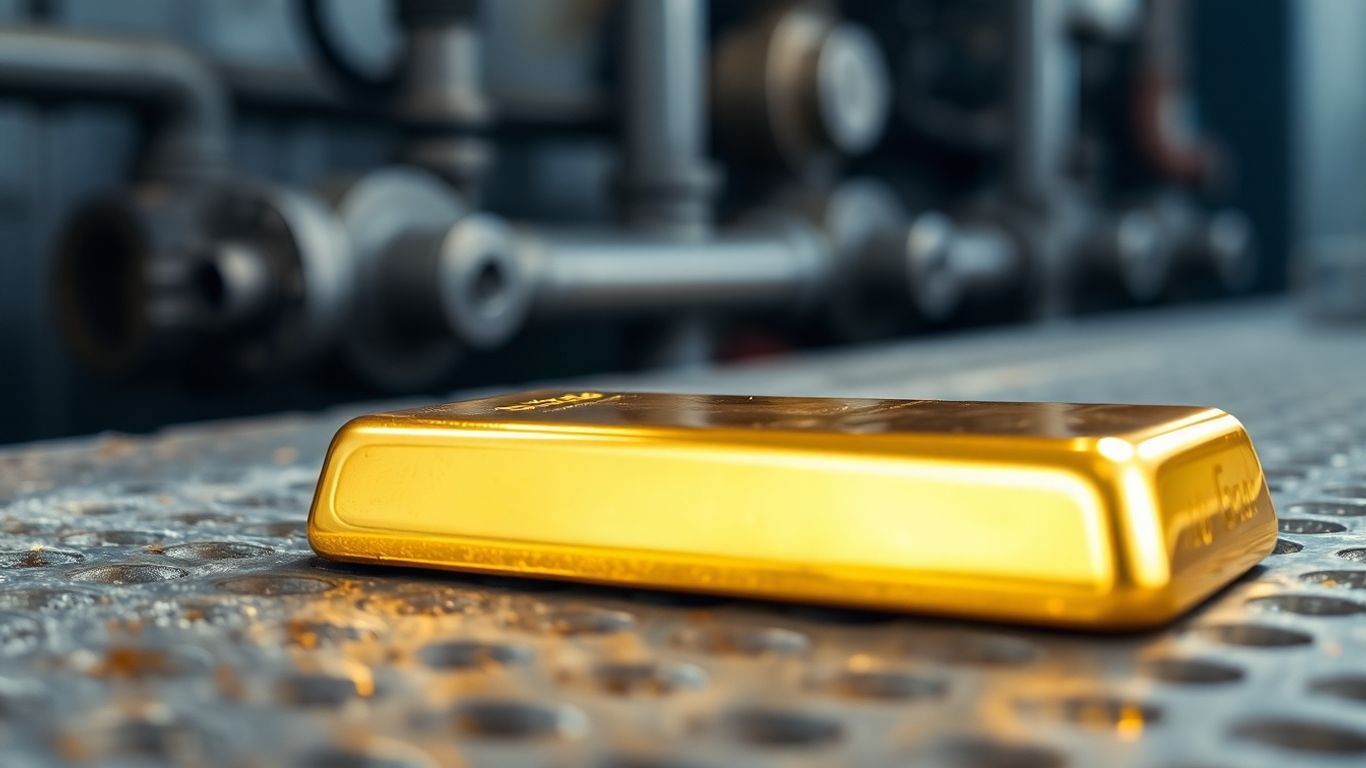
You know, gold has this reputation for being incredibly resistant, and for good reason. When we're talking about air and water, things that are super common, gold behaves really well. It doesn't react with oxygen in the air, so there's no rust, no tarnishing. It's almost as if it doesn't care about its surroundings in that respect. The same goes for water, whether it's fresh or salt, gold remains intact. This is quite different from iron, for example, which rusts at the slightest contact with moisture. This inertness is one of its greatest strengths, especially when you think about applications where the metal is constantly exposed.
Reaction of gold to acids and bases
Now, let's talk about some tougher chemicals, like acids and bases. Most acids, even those that attack other metals without any problem, don't have much of a effect on gold. It's pretty tough. There's one notable exception: aqua regia. It's a mixture of hydrochloric and nitric acids, and it can dissolve gold. But that's a pretty extreme situation, not something you encounter every day in a typical industrial setting. As for bases, gold is generally very stable as well. It's this resistance that makes it so valuable in certain situations where other metals wouldn't hold up.
Interaction of gold with sulfur compounds
Where things get a little trickier is with certain sulfur compounds. Gold, even though it doesn't rust in the strictest sense, can still react with these substances. This can lead to a kind of tarnishing of the surface, a discoloration. It's not a deep degradation like corrosion, but it can affect the appearance and sometimes the conductivity if it's used in high-precision electronics. This is something to keep in mind if your industrial environment is likely to contain sulfur fumes or residues. Therefore, you must carefully assess the specific conditions before assuming that gold is invulnerable everywhere.
Industrial applications of gold
When we think of gold, we often picture jewelry or ingots, but did you know that this precious metal plays a crucial role in many industries? It's not just for its beauty, you know. Its unique properties make it indispensable in fields where reliability and precision are paramount. You'll see, gold is much more than just a symbol of wealth.
Gold in precision electronics
In the world of electronics, especially when it comes to high precision, gold reigns supreme. Why? Because it doesn't corrode, which is a huge advantage. Imagine components that need to function perfectly for years, without fail. Gold ensures stable and reliable electrical connections, even in less-than-ideal environments. That's why it's found in so many devices, from computers and smartphones to more specialized equipment. It's often used as thin layers for contacts and connectors, guaranteeing that the signal passes through without a hitch. It's like the unsung superhero of your gadgets.
- Connectors and contacts: Gold prevents oxidation, which ensures optimal and lasting electrical conductivity. This is crucial for your devices to communicate properly with each other.
- Printed circuits: It is found on printed circuit board traces to ensure fast and lossless signal transmission.
- Semiconductors: In the manufacture of electronic chips, gold is used for its conductivity properties and chemical resistance.
The use of gold in precision electronics is not a luxury, but a technical necessity to guarantee the performance and longevity of devices under varied conditions.
Use of gold in the medical field
The medical field is another area where gold demonstrates its full potential. Its biocompatibility—meaning it's well-tolerated by the human body—makes it ideal for numerous applications. It's used in dentistry, for example, for crowns and fillings, because it's durable and doesn't cause allergic reactions. But that's not all. Gold compounds are even used to treat certain diseases, such as rheumatoid arthritis, to help reduce inflammation. And with advances in nanotechnology, gold nanoparticles are opening new avenues for medical imaging and targeted drug delivery. It's quite remarkable to think that such an ancient metal can be at the forefront of modern medicine.
- Dentistry: Gold crowns, bridges and fillings are valued for their durability and biocompatibility.
- Medical implants: In some implantable devices, gold is used for its resistance to corrosion in the body.
- Therapies: Gold salts are used in the treatment of inflammatory diseases.
- Diagnosis and imaging: Gold nanoparticles improve visualization and disease detection.
Gold in renewable energies
One might think that gold has no place in green energy, but think again! Gold has interesting applications, particularly in solar technologies. Its electrical conductivity and corrosion resistance make it a material of choice for certain solar panel components. It can be used to improve the efficiency of photovoltaic cells or to ensure reliable connections in outdoor environments where humidity and temperature variations are constant. Of course, its cost limits its use to applications where its performance is truly critical, but it contributes to making these technologies more efficient and sustainable. It's a bit like a touch of luxury that enhances overall performance.
Comparison of the resistance of gold with other metals
When it comes to corrosion resistance, gold is in a class of its own. You might be wondering how it compares to other metals you're familiar with, like steel or aluminum. That's an excellent question, because choosing the right material really depends on the environment in which it will be used.
Gold versus reactive metals
Reactive metals are a bit like iron or copper. They tend to react with their environment, especially if there's moisture or oxygen. Think of rust on an old car or verdigris on a bronze statue. Gold, however, is different. It doesn't react easily. It doesn't oxidize like iron, and it doesn't form unsightly or fragile layers. That's why it's considered so stable. Even in harsh conditions, it retains its appearance and properties. It's a bit like comparing a sturdy old oak tree to a fragile plant that wilts at the slightest breeze.
Gold is distinguished by its chemical inertness. Unlike many metals that degrade over time and with exposure, gold retains its structural and aesthetic integrity, making it ideal for applications where longevity is paramount.
Stainless steel and its limitations
Stainless steel is everywhere: in our kitchens, in tools, in construction. It is called
Factors influencing the durability of gold
Although gold is renowned for its durability, several factors can affect its longevity, especially in industrial settings. These include not only its intrinsic nature, but also how it is used and its composition.
The importance of gold purity
When we talk about gold, we often think of pure gold, 24-karat gold. It's a bright yellow metal, very malleable. However, this purity also makes it quite soft. For applications requiring a certain level of mechanical strength, pure gold isn't always the best choice. It can scratch or deform more easily.
- Pure gold (24 carat) : Very resistant to corrosion, but too soft for many uses.
- Gold alloys Gold is mixed with other metals to make it harder and more resistant to wear.
Gold alloys and their behavior
This is where things get interesting. To improve the durability of gold, it is mixed with other metals. These alloys have different properties than pure gold.
- 18-carat gold (75% gold) : More resistant than pure gold, but can still show signs of tarnishing over time, especially if the added metals (such as copper or silver) react with the environment.
- 14-carat gold (58.3% gold) Even harder and more resistant to scratches and tarnishing. It's a good compromise between the color of gold and its robustness.
These mixtures can change how gold reacts. For example, added copper or silver can, under certain conditions, react with oxygen or sulfur compounds, causing surface tarnishing. This isn't corrosion in the strict sense, but it affects the appearance and can eventually weaken the surface.
It is important to understand that even though gold itself is very stable, the other metals present in an alloy can be a source of degradation. The choice of alloy will therefore depend heavily on the industrial environment in which it will be used.
The impact of surface treatments
Sometimes, even a gold alloy may need extra protection. This is where surface treatments come in. They can improve resistance to wear and corrosion, or even modify the material's electrical properties.
- Gilding A thin layer of gold applied to another metal. It offers the corrosion resistance of gold, but its durability depends on the thickness and quality of the gilding, as well as the base metal.
- Treatment by chemical or electrolytic deposition These methods make it possible to create very thin and uniform layers of gold, ideal for electronics where precision is key.
- Polishing Good polishing can not only improve appearance, but also make the surface smoother, reducing points of attachment for potential contaminants.
These treatments are essential to ensure that gold retains its properties under harsh conditions, such as those found in many factories or industrial facilities.
Gold as a precious metal and its value
Definition and properties of noble metals
You know, when we talk about precious metals, we immediately think of gold. And for good reason! It's kind of the star of the metal world, not just for its beauty, but especially for its incredible ability to remain… itself. Unlike many other metals that eventually rust, tarnish, or react with their environment, gold remains stoic. It's this chemical inertness that classifies it as a precious metal. It isn't easily altered by oxygen in the air or even by most acids. It's a bit like a superhero of the elemental world, unperturbed by aggression.
This resistance is no accident. It stems from its atomic structure, from the way its electrons are arranged. This gives it a stability that prevents it from reacting with just anything. That's why it's found in applications where reliability is paramount, such as electronics, where it ensures perfect connections without degradation. It's also what allows it to retain its luster, that characteristic brilliance, without needing additional protective coatings, unlike other, more reactive metals.
Gold as a safe haven
Beyond its physical properties, gold has another facet that makes it so special: its value. For millennia, it has been considered a store of value, a kind of natural safe for your money. When times are uncertain, when the economy falters, or when traditional currencies lose their luster, many turn to gold. It's what we call a safe haven asset. It has the ability to maintain its purchasing power, or even gain it, when other assets collapse. It's a kind of safety net for your wealth.
Historically, gold has played a key role in monetary systems. Gold coins have been minted, and entire economies have been based on its value. Even though gold's role as a monetary standard has evolved today, it remains a highly sought-after asset for central banks and investors. They hold tons of it, in the form of ingots, to stabilize their reserves and bolster confidence in their economies. It is, in a way, a symbol of a country's financial strength.
- Stability in times of crisis: Gold tends to maintain its value, or even appreciate, when financial markets are in difficulty.
- Inflation protection: It can serve as a bulwark against the loss of purchasing power of fiat currencies.
- Portfolio diversification: Adding gold to your investments can help reduce the overall risk of your portfolio.
The role of gold in the global economy
Gold isn't just for jewelry or ingots in vaults. It has a much broader impact on the global economy. You see, its value is recognized everywhere. It's traded on major stock exchanges, and its price is closely monitored. Gold transactions, especially during times of crisis, are often seen as a barometer of overall economic health. It's a bit like a thermometer for the economy.
Furthermore, gold is used in many high-tech industries. Its electrical conductivity and corrosion resistance make it an ideal material for electronics, aerospace, and even the medical field. For example, it is used in some medical devices and even for treatments. This industrial demand, combined with its appeal as an investment, maintains a steady demand for this precious metal. It's a bit of a virtuous circle: its industrial utility supports its value, and its value makes it an attractive investment, which sustains its demand. It's a metal that has stood the test of time and continues to play an important role, both financially and industrially. It truly is a precious and versatile material which has marked and continues to mark economic history.
Gold is a precious metal, long admired for its brilliance and rarity. It is considered a symbol of wealth and stability. Its value continues to rise, making it an excellent investment choice. Want to learn more about gold and how it can be a good investment for you? Visit our website to discover all the opportunities.
So, is gold your ally against industrial corrosion?
Ultimately, if you're wondering whether gold can truly withstand the harshest industrial environments, the answer is a resounding yes. Its very nature makes it incredibly resistant to rust and corrosion. It's a bit like having a discreet superhero in your equipment. Of course, there are exceptions, such as with aqua regia, but in most situations you'll encounter, gold will get the job done without flinching. So, for applications where reliability is paramount, such as in electronics or medical devices, you can count on it. It's a sound investment, not just for its value, but also for its toughness.
Frequently Asked Questions
Can gold rust like iron?
No, gold doesn't rust at all. Rust is when iron reacts with air and water to form rust. Gold is different; it doesn't react like that, so it retains its shine without turning into rust.
Is gold resistant to all chemicals?
Gold is extremely resistant to most chemicals, even many acids. But be careful, a special mixture called aqua regia can dissolve it. It can also become slightly tarnished if it comes into contact with things containing sulfur, but this is not rust.
Why is gold used in electronics if other metals can be used?
Even though other metals like silver or copper conduct electricity well, gold has a huge advantage: it doesn't oxidize or corrode. In electronic devices, this means that connections remain reliable for a very long time, which is crucial for everything to function properly.
If pure gold is soft, how can we make it stronger?
It's true that pure gold is quite soft. To make it more durable, it's mixed with other metals, such as copper or silver. These are called alloys. For example, 18-karat gold contains 75% gold and 25% other metals, which makes it stronger for making jewelry or other objects.
Is gold still the best choice for preventing corrosion in industry?
Gold is excellent at preventing corrosion, but it isn't always the most practical or economical choice for every industrial situation. Sometimes, materials like stainless steel or special surface treatments may suffice and cost less, while still providing good corrosion protection in specific environments.
How does the purity of gold influence its resistance to corrosion?
In general, the purer the gold, the more resistant it is to corrosion. Impurities in gold can sometimes create weak points where corrosion could begin. This is why gold used in critical applications, such as electronics, is often very pure (for example, 99.99%).