Are you wondering how to optimize your gold purchases according to economic cycles? That's an excellent question, because the gold market, while often perceived as stable, experiences its own fluctuations. Understanding these movements can make all the difference for your portfolio. This article will guide you through strategies that will help you buy gold at the right time, taking into account major economic cycles and market specifics.
Key Takeaways
- To optimize your gold purchases, it is essential to understand the factors that influence its price, such as world events and the balance between supply and demand.
- Adopting strategies like Dollar-Cost Averaging (buying regularly) or identifying market correction phases can help you buy gold more profitably.
- Certain times of the year, such as autumn or the beginning of the year, as well as calendar anomalies, may present interesting buying opportunities, but it is always important to keep in mind that the market remains unpredictable.
Understanding the Factors Influencing the Price of Gold
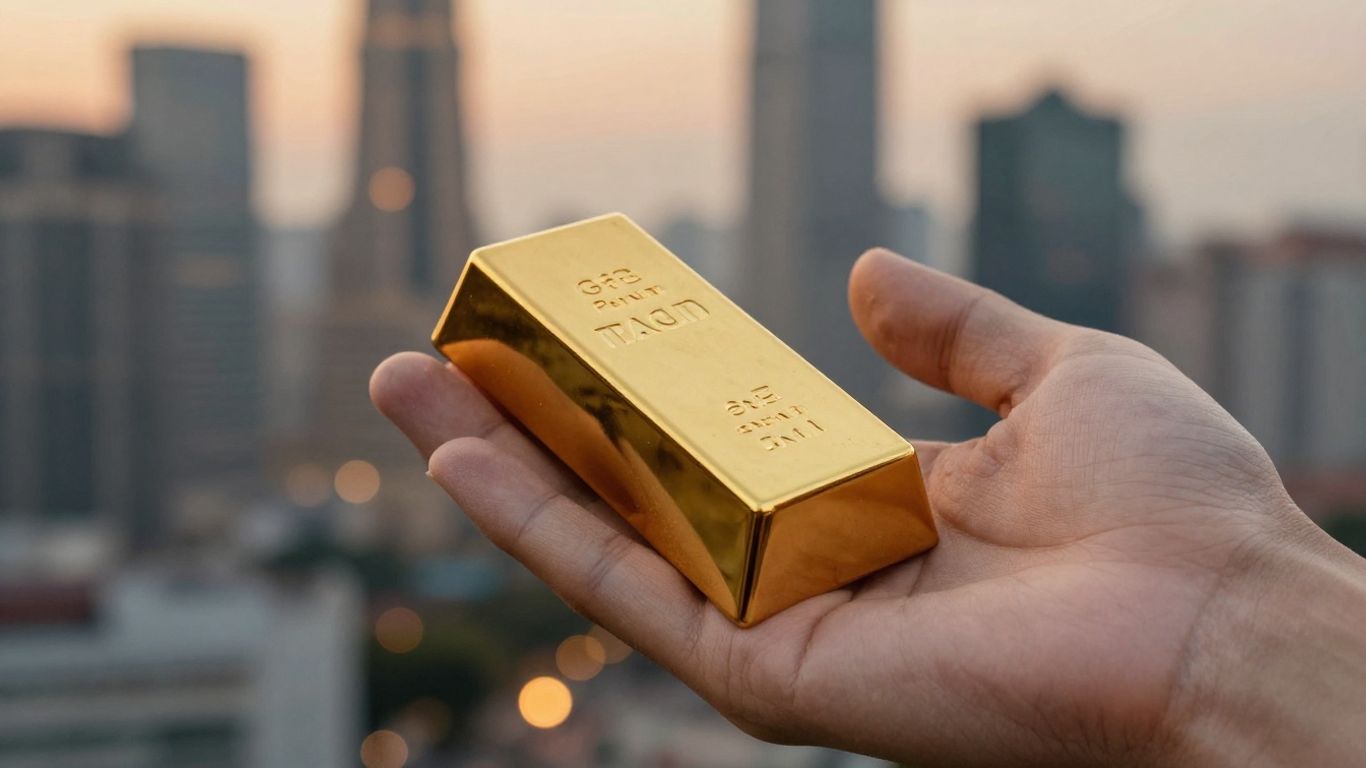
Investing in gold is a bit like trying to understand the weather: it's constantly changing, and many factors come into play. The price of gold doesn't rise or fall randomly. It's the result of a complex interplay of global and market events.
The influence of world events on gold
When there's unrest somewhere on the planet, whether it's an economic crisis, political tension, or even a pandemic, people tend to look for a safe haven for their money. Gold is something of a historical safe haven. It's seen as a secure investment. The greater the global uncertainty, the more the demand for gold tends to increase, driving up its price. Think about periods of high inflation: when your money loses value, gold often tends to gain it.
The balance between supply and demand
As with everything, the price of gold also depends on how much there is and how much people want. It's the law of supply and demand, nothing simpler.
- The offer: Finding and extracting new gold deposits is becoming increasingly difficult and expensive. Global mining production remains fairly stable, which limits the amount of newly available gold each year.
- Requirement : It comes from everywhere. Jewelers buy a lot of it, especially during major holidays or wedding seasons in some countries like India or China. Central banks also play an important role; they buy gold to diversify their reserves, which can drive up prices if they want a lot of it.
It's important to understand that the cost of gold extraction is a significant factor. If this cost increases, it can influence the selling price of physical gold on the market.
Gold buying strategies according to economic cycles
Investing in gold is a bit like navigating a sometimes rough sea. To avoid being caught off guard by the waves, you need a good strategy. And when we talk about economic cycles, we're talking about those major trends that influence markets over the long term. Understanding these cycles can really help you buy gold at the best time.
Dollar-Cost Averaging: A Proven Method
So, how do you buy gold without worrying about the ups and downs? A super popular technique is called "Dollar-Cost Averaging," or DCA for short. The idea is simple: instead of putting all your money into it at once, you buy small amounts of gold at regular intervals. Whether the price is high or low, you keep buying. This smooths out your average purchase price over time. It's a bit like buying stocks every month, regardless of the price. This reduces the risk of losing money by buying just before a big drop.
- Buy a little each month Set yourself a budget and stick to it.
- Ignore short-term fluctuations DCA is a long-term strategy.
- Take advantage of the price drops When the price falls, your fixed amount buys more ounces, which is rather a good thing for your average price.
Dollar-cost averaging (DCA) is a prudent approach that allows you to build a gold position without having to predict market movements. It's a way to stay invested without stressing over every price fluctuation.
Identify the phases of market correction
Sometimes, after a strong rise, the price of gold can experience a slight dip. These are called "corrections." This is when keen observers can find good deals. If you see the price climb and then start to fall back a bit, it could be the perfect time to buy. It's like waiting for a sale after a period of high demand. You just have to be patient and know how to recognize these moments.
| Market phase | Purchase opportunity |
|---|---|
| Rapid rise | Wait for a correction |
| Correction | Good time to buy |
| stagnation | Monitor the signals |
| New increase | Continue the DCA strategy |
Forecasting based on the economic situation
Keeping an eye on what's happening in the world is crucial for investing in gold. Central bank decisions, geopolitical tensions, inflation—all of these can influence the price of gold. By following economic news, you can sometimes anticipate market movements. For example, during periods of uncertainty, gold is often seen as a safe haven. So, if you sense a shift in the market, it might be a good time to increase your gold holdings. It's a bit like checking the weather forecast before going hiking.
Favorable seasons and calendar anomalies for investing
Key periods for buying gold
Are you wondering if there are better times than others to buy gold? Analyzing past trends suggests that certain periods of the year might be more favorable. Historically, gold prices often tend to rise between late autumn and early spring, say from October/November through April. This is a period when demand, often linked to the holiday season or a certain caution in the face of economic uncertainties at the start of the year, can support prices.
Here are some periods often cited as potentially interesting:
- End of year and beginning of calendar year: Often a period of high demand, especially for gifts, and an anticipation of the economic movements of the coming year.
- Spring : The months of March and April sometimes showed signs of dynamism.
- Mid-year: Although less pronounced, the end of June can sometimes present opportunities.
It is important to note that these trends are not absolute rules. The gold market is influenced by a multitude of factors, and these seasonal periods do not guarantee a purchase at the lowest price.
Weekly and monthly anomalies
Beyond seasonal variations, some studies have attempted to identify more subtle patterns, even anomalies, within a week or month. For example, it has been observed that certain days of the week may offer slightly better performance for buying gold. Friday is sometimes mentioned as a day when the price might be more favorable, although this remains a statistical observation and not a guarantee.
The idea behind these observations is to understand the market's micro-movements. If a trend emerges, however weak, it can help refine your entry strategy, complementing a broader analysis of economic cycles and fundamental factors.
Caution is advised when interpreting this information. It is based on historical data and does not predict the future. The market can change, and what was true yesterday may not be true tomorrow. The key is to combine these observations with your own analysis and overall investment strategy.
When is the best time to buy gold? Certain times of the year are more advantageous than others for investing, and it's helpful to know these tips to snag the best deals. Don't miss out on great opportunities! Visit our website to find out more. when to invest and how to maximize your earnings.
In conclusion: your gold buying strategy
So, we've covered the different ways to optimize your gold purchases based on economic cycles. As you've seen, there are quite a few things to consider, from seasonal trends to global events. The important thing is not to rush into anything. Remember to diversify, buy little by little if possible, and above all, stay informed. Gold is a long-term investment, a kind of safety net for your wealth. So, take the time to carefully consider your strategy, and don't hesitate to ask for advice if needed. Your financial future will thank you!
Frequently Asked Questions
When is the best time to buy gold?
There's no single perfect time to buy gold, but certain indicators can help. Consider buying when the global economy is somewhat unstable or when the price of gold falls after a sharp rise. The end of the year and the beginning of the year are also often cited as favorable periods.
Do I have to buy all my gold at once?
No, it's better not to put all your eggs in one basket, and the same goes for gold! A good tip is to buy a little gold regularly, for example, every month. This is called 'Dollar-Cost Averaging'. It helps smooth out the average purchase price and reduces the impact of large market fluctuations.
How do you know if the price of gold will go up or down?
The price of gold depends on many things! Think about world news: crises, decisions by major banks, or even the state of the economy. If people are worried about their money, they buy more gold, which drives up the price. It's a bit like watching the economic weather forecast to anticipate changes.