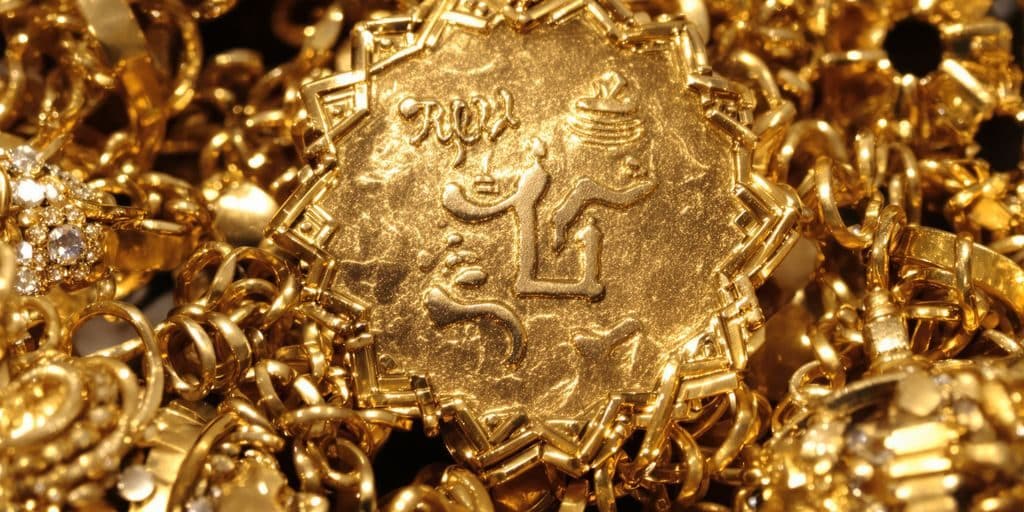
Do you own magnificent antique gold jewelry that has stood the test of time, but its shine has faded? Don't panic! It's entirely possible to bring it back to life without risking damage. This article guides you through the gentlest and most effective methods for cleaning your treasures, giving you all the keys to preserving their intact beauty. You'll discover how to identify the nature of your pieces, the natural products to favor, and above all, the essential precautions to take. Get ready to make your antique jewelry shine like the first day!
How to clean antique gold jewelry without damaging it?
- Before cleaning, carefully identify your jewelry: its composition and hallmarks will help you choose the right method. Don't hesitate to ask an expert for advice on unmarked pieces.
- Favor gentle methods like soapy water (Marseille soap) or natural tips like bread crumbs, talcum powder or baking powder for dry cleaning.
- To revive the shine, onion juice, baking soda or lemon can be used with caution, taking care not to damage any stones.
- Absolutely avoid harsh, abrasive products, or those intended for silver, which could damage the gold. Always protect precious stones during cleaning.
- For very old, fragile or valuable jewelry, it is best to entrust the cleaning to a professional who has the appropriate techniques and equipment.
Identify the nature of your antique gold jewelry
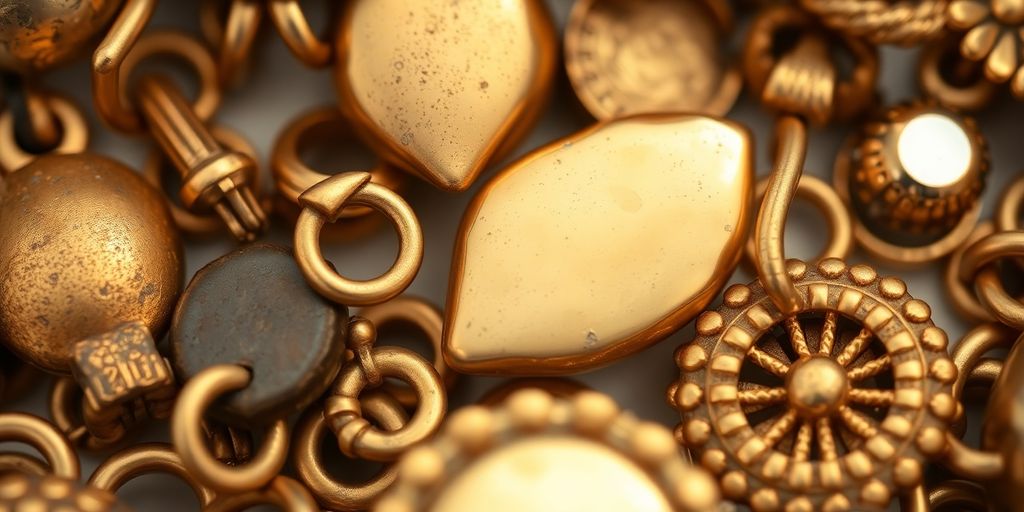
Before you start cleaning your precious antique gold jewelry, it's essential to fully understand what you're dealing with. Each piece has its own history and composition, and misidentification can lead to disaster.
Understanding the Different Types of Gold
The gold you see in your jewelry is generally not 100% pure gold. To make it stronger and give it different shades, it is alloyed with other metals such as copper, silver, or zinc. This is called an alloy. The proportion of gold in this alloy determines its purity, often expressed in carats. For example, 18-karat gold (often marked 750) contains 75% pure gold, while 14-karat gold (585) contains 58,5%. It is also possible that your jewelry is gold-plated, which is a thin layer of gold deposited on another metal. The cleaning method will vary for these different types.
Locate the punches for precise identification
Look closely at your jewelry, especially on clasps, jump rings, or inside rings. You may find small markings called hallmarks. These marks are like your jewelry's identity card. The gold hallmark (for example, an eagle's head for 18-karat gold in France, or a number like 750) tells you its purity. There may also be a maker's mark, which identifies the manufacturer. If you see a hallmark like "GF" or "GP," it's probably gold-plated.
Call an expert for unmarked parts
If you can't find a hallmark, or if you have any doubts about the nature of your jewelry, don't hesitate to seek professional advice. A jeweler or gemologist will be able to identify the exact composition of your piece, especially if it's an antique piece with a unique history or stone inlays. They have specific tools to test the purity of gold without damaging the jewelry. This is an important step in choosing the right cleaning method and avoiding any unpleasant surprises.
It's always best to take the time to properly identify your jewelry before cleaning it. A quick check can help you avoid turning a treasure into a damaged item.
Gentle and effective cleaning methods
Your antique gold jewelry has a soul, and it's only natural to want to restore its shine without risking damage. Fortunately, there's no need for miracle products or complicated techniques. Often, what you already have in your closet can work wonders.
The power of soapy water and Marseille soap
This is the gentlest and most accessible method. Take a small basin of warm water and add a few drops of liquid Marseille soap, or failing that, a little mild dish soap. Immerse your jewelry in it for a minute or two. Then, with a soft-bristled toothbrush (a new one is best!), gently scrub the nooks and crannies and any encrusted dirt. Rinse with clean water and place your treasures on a soft cloth to dry. Finally, a quick wipe with a soft cloth or chamois leather will restore their incredible shine.
Use baking powder or talcum powder for dry cleaning
For more fragile jewelry, or those with glued stones that are sensitive to water, dry cleaning is an excellent alternative. Sprinkle a little baking powder, talcum powder, or even baking soda on the jewelry. Then rub gently with a soft, lint-free cloth. This will act as a light scrub. If you use baking powder, a quick rinse with clean water followed by gentle drying is recommended. This is a method that truly respects the material.
Breadcrumbs, a surprising ally for shine
It may sound strange, but bread crumbs, especially if they're a little stale, are perfect for restoring shine to gold. Take a small piece of bread, roll it into a ball, and gently rub it over your jewelry. The texture of the bread will
Natural tips to revive the shine of gold
Sometimes the simplest tricks are the best for revitalizing your antique gold jewelry. Forget harsh chemicals, because your kitchen is full of hidden treasures to make your favorite pieces shine. These natural methods are not only gentle on the gold, but also on the planet.
Onion juice, an unexpected cleanser
It may seem strange, but onion juice is a formidable ally for degreasing and shining. If you don't have a juicer, grate an onion and press the pulp through a fine sieve. Apply a few drops of this juice to the dull parts of your jewelry with a soft cloth. Rub gently, then buff. The result is often stunning, restoring a surprising shine to the gold.
Baking soda, a gentle cleaning agent
Baking soda is a bit like the Swiss Army knife of home cleaning. For your jewelry, make a paste by mixing a small amount of baking soda with a few drops of water. The consistency should be that of toothpaste. Apply this paste to your jewelry with a soft cloth or cotton swab, paying particular attention to the nooks and crannies. It's like a gentle scrub for your gold piece. Then rinse with clean water and dry gently.
Lemon, for a revitalized glow
For the more adventurous, lemon can work wonders. Squeeze half a lemon into a small bowl and add a little water. Soak your jewelry in this mixture for just a few minutes—don't let it marinate! This solution is particularly effective for restoring gold's luster. Be careful, however, if your jewelry contains stones that are sensitive to acids; in this case, it's best to refrain or test on a discreet area.
Essential precautions to avoid damaging your jewelry
To keep your antique gold jewelry looking as beautiful as the day you bought it, you need to pay attention to a few details. It's a bit like taking care of an old car: it requires a little method to avoid disasters.
Avoid harsh and abrasive products
If there is one thing to remember, it is this: Harsh chemicals are the number one enemy of your antique gold. Forget bleach, ammonia, or even toothpaste right away. These products, while they may seem effective at first, can attack gold, especially if it's plated or contains softer alloys. They can also leave residue that's difficult to remove and dull the shine of your pieces. Think of it like using sandpaper on an old painting—the result is never good.
Do not use products intended for silver
This is a fairly common mistake. Products designed to clean silver have specific formulas that can be too harsh for gold. Silver reacts differently to chemicals, and what works for one may damage another. Gold, even though it's precious, is a softer metal. Using a silver cleaner on your gold jewelry is a bit like putting gasoline in a diesel engine: it's not going to go well.
Protecting Gemstones When Cleaning
If your antique jewelry is set with stones, you need to be even more careful. Stones like emeralds, pearls, or turquoise are particularly fragile. They can become scratched, discolored, or even broken if exposed to harsh cleaning products or vigorous cleaning. For these pieces, opt for very gentle cleaning with a damp cloth and a little diluted Marseille soap, and avoid soaking them for too long. It's often best to clean the gold setting separately from the stone. If in doubt, it's best to refrain from doing so and seek professional advice.
When to call a professional for cleaning
Some antique jewelry, due to its complexity or the fragility of its components, requires special attention. If you have any doubts about the cleaning method to adopt, or if your jewelry shows signs of fragility, it is always wiser to entrust its cleaning to a professional. Jewelers have specific equipment that can make a real difference.
Identify jewelry requiring expertise
It's not always easy to know when an antique piece of jewelry requires professional intervention. Here are some tips to help you make the right choice:
- Jewelry with fragile precious or semi-precious stones: Emeralds, opals, pearls, or turquoise, for example, can be damaged by chemicals or ultrasonic baths. A jeweler will know how to clean them safely.
- Antique jewelry with intricate inlays or moving parts: Delicate mechanisms, antique settings, or openwork elements can retain dirt and be difficult to clean without damaging them. Polishing these pieces can also be tricky.
- White gold or gold-plated jewelry: White gold requires specific care, often regular rhodium plating. Polishing gold-plated jewelry can remove the plating layer. A professional can advise you on the best approach.
- Jewelry with strong sentimental or historical value: If your jewelry has a high value, whether emotional or monetary, it is best to take no risks and entrust it to an expert.
Techniques used by jewelers
Professionals have a range of tools and techniques at their disposal to restore the shine to antique jewelry, while preserving its integrity:
- Ultrasonic cleaning: This method uses sound waves in a liquid bath to dislodge embedded dirt, even in the most inaccessible corners. It is very effective for chains, pendants, or ring settings.
- Steam cleaning: Pressurized steam removes grease and dirt without harsh chemicals. It's a gentle and effective method.
- Professional polishing: Jewelers use specific tools to polish metal and restore its original luster. They know how to adapt the technique to avoid damaging the metal, especially on antique jewelry.
- Specialized cleaning baths: There are solutions designed for different types of metals and stones, used with care by professionals.
Risks associated with unsuitable methods
Using inappropriate cleaning methods can have irreversible consequences on your antique jewelry:
Using abrasive products, harsh brushes, or overly aggressive techniques can scratch the gold surface, wear away engraved details, or even damage gemstones. On white gold jewelry, over-polishing can remove the thin layer of rhodium, dulling the color of the jewelry. It's therefore important to do your research before attempting a home cleaning, especially for valuable pieces.
Regular maintenance to preserve the beauty of your antique jewelry
To ensure your antique gold jewelry retains its shine and integrity over time, regular maintenance is essential. It's not a chore, but rather a form of respect for these pieces steeped in history. Think of it as a wellness appointment for your treasures.
Daily actions to limit wear and tear
After each use, get into the habit of wiping your jewelry with a soft cloth. This helps remove traces of skin, makeup, or perfume, which can tarnish the gold over time. Then store them individually in separate compartments in your jewelry box. Avoid letting them clink together, as even gold can get scratched. If you wear the same piece often, give it a little break from time to time.
Proper storage to avoid damage
Humidity and direct sunlight are the enemies of antique gold. Store your jewelry in a dry, dark place. A velvet-lined jewelry box or individual fabric pouches are ideal. For pieces set with stones, make sure they are not exposed to sudden temperature fluctuations, as this could weaken the setting or the gems themselves.
The importance of periodic cleaning
Beyond a simple wipe, a more thorough cleaning is necessary every two to three months. This helps remove dirt buildup in nooks and crannies where a cloth can't reach. Use the gentle methods we discussed earlier, such as warm soapy water with Marseille soap and a very soft toothbrush. Rinse thoroughly and dry thoroughly. Remember to check the condition of the stones and their settings after each cleaning.
To keep your antique jewelry beautiful and shiny, a gentle cleaning Every now and then is a good idea. This prevents dirt from accumulating and damaging them. Remember to clean them with a soft cloth and warm water. If you have any questions about how to care for your treasures, visit our website for more tips!
To sum up: take care of your treasures!
There you have it, you now have all the tools you need to restore the shine to your antique gold jewelry. Remember that gentleness is key. Avoid harsh products and opt for the natural methods we've discussed together. A quick wipe with a soft cloth from time to time, a gentle cleaning with soapy water, and your jewelry will remain beautiful for years to come. Also, remember to store it away from moisture and shock. Your antique jewelry deserves this attention, so take the time to take good care of it!
Frequently Asked Questions
What is the easiest way to clean my gold jewelry?
To clean your antique gold jewelry, you can use warm water mixed with Marseille soap. Scrub gently with a soft toothbrush, then rinse well and dry with a soft cloth. This will restore shine without damaging the gold.
How do I make my gold jewelry shine without water?
If your jewelry is a little dull, you can try baking powder or talcum powder. Sprinkle it on the jewelry, rub gently with a cloth, then rinse and dry. It helps remove streaks without water.
Are there any surprising natural tips for cleaning gold?
Onion juice may seem surprising, but it's effective! Rub your jewelry with a little onion juice, then rinse it well and polish it with a soft cloth. It restores a beautiful shine.
What products should I absolutely avoid to avoid damaging my gold jewelry?
It's essential to avoid harsh products like bleach or silver cleaners. They can damage the gold or make it dull. Also, be very careful with jewelry that contains fragile stones.
When is it best to have my jewelry professionally cleaned?
If your jewelry is badly damaged, has fragile gemstones, or has great sentimental value, it's best to take it to a jeweler. They have special tools like ultrasonic baths that safely clean deep inside.
How do I care for my gold jewelry on a daily basis so that it lasts?
To keep your gold jewelry looking beautiful for a long time, avoid wearing it while cleaning or exercising. Store them separately in a jewelry box to prevent them from scratching each other. A gentle cleaning from time to time is all it takes!