
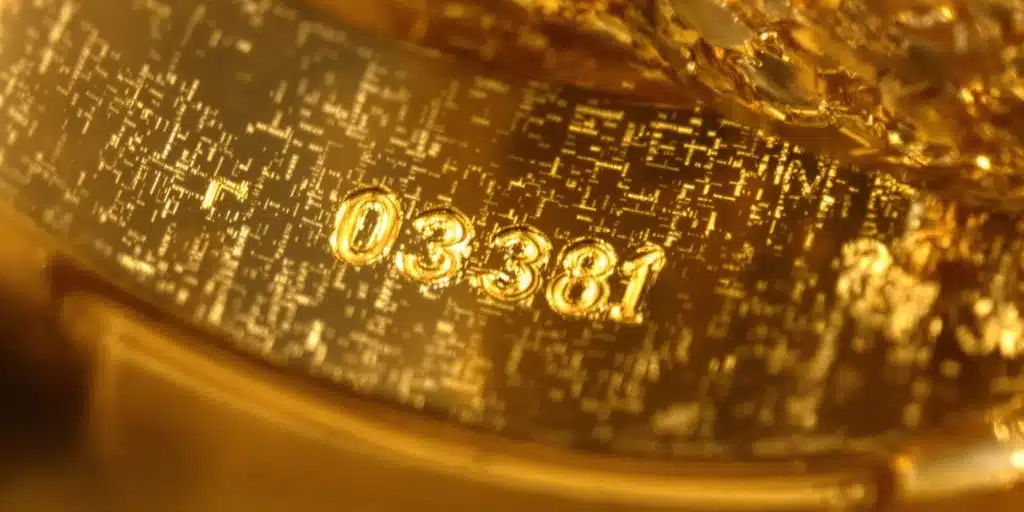
Do you have a piece of gold jewelry and are wondering how to verify its authenticity and value? Hallmarks are your best allies in this process. These small marks engraved on the metal are like certificates of origin and purity. But how can you be sure they're there and that they're telling the truth? This article guides you step by step to become an expert at reading hallmarks on your gold jewelry.
Key Takeaways
- Learn how to identify the different types of gold hallmarks and their meanings to understand the gold content of your jewelry.
- Know where to look for hallmarks on a variety of jewelry, from rings to pendants, as their placement can vary.
- Use the proper tools, such as a jeweler's loupe, to examine the hallmarks and ensure they are legible.
- Please understand that the absence or illegibility of a hallmark does not necessarily mean that the jewelry is not gold, but that professional expertise is recommended.
- Hallmarks play an important role in the second-hand market, certifying authenticity and influencing the estimation of the value of your coins.
Identify the hallmarks on your gold jewelry
To fully understand the value and authenticity of your gold jewelry, it's essential to know how to decipher the hallmarks engraved on them. These small, often discreet marks are actually reliable indicators of the quality and provenance of your piece.
The meaning of hallmarks on gold jewelry
The hallmark on a piece of gold jewelry is a bit like its identity card. It attests to the precious metal content and, by extension, its authenticity. In France, the law is quite clear: any object made of gold, silver, or platinum that weighs more than 3 grams must bear a hallmark. It's a guarantee for you, the buyer, but also for the seller during a transaction. Without these marks, it's difficult to be sure of what you're buying.
Understanding the composition of punches
Hallmarks aren't just pretty drawings. They contain precise information about the jewelry's composition. They usually contain a symbol that indicates the gold's fineness, or purity. This symbol is often surrounded by a border, called a listel if it follows the shape of the sign, or an outline if it is more rectangular. It's important to know that pure gold is 24 carats, but in jewelry, alloys are often used to make it more durable. For example, 18 carat gold contains 75% pure gold, and 14 carat gold contains 58,5%.
It is important to note that the square hallmark is often associated with gold plating. If you see this mark, it means that the jewelry is not solid gold, but coated with a thin layer of gold, which significantly changes its value.
The different types of gold hallmarks
There are several types of hallmarks, each with its own meaning:
- The guarantee hallmark: This is the official mark that certifies the precious metal content. In France, the most common hallmarks for gold are:
- The seahorse: for 24-carat gold (999 thousandths), often used for ingots.
- The eagle's head or the rooster: for 18-carat gold (750 thousandths), the most common on jewelry.
- The scallop shell: for 14 carat gold (585 thousandths).
- The clover: for 9 carat gold (375 thousandths).
- The maker's mark: This is the signature of the craftsman or manufacturer. It is often diamond-shaped and contains the creator's initials. It is a mark of responsibility that guarantees the quality of the work.
- The responsibility hallmark: It is generally oval in shape and concerns jewelry importers.
Locate hallmarks on different types of jewelry
Finding the hallmark on your gold jewelry can sometimes feel like a bit of a treasure hunt, especially when the marks are tiny and discreet. But don't worry, with a little care, you can do it.
Where to look for the hallmark on a ring?
For rings, the hallmark is usually located on the inside of the band. Sometimes it can be on the outside, but this is rarer. Remember to look carefully around the entire circumference of the band, as it can be placed in different places depending on the ring design.
Location of hallmarks on necklaces and bracelets
On necklaces and bracelets, the hallmark is often located near the clasp. Look for it on the small plate used to attach the clasp, or directly on the clasp itself. If it's not there, it may also be located at one end of the chain or bracelet.
Finding the hallmark on pendants and watches
For pendants, the hallmark is usually on the back of the piece, or near the ring that allows it to be attached to a chain. For watches, if the case or bracelet is made of gold, the hallmark is often found inside the case, or on the bracelet clasp. You sometimes have to be a little patient to find it!
It's important to note that in France, gold jewelry weighing less than 3 grams is not necessarily marked with a hallmark. If your jewelry is very light, the absence of a hallmark does not necessarily mean a problem.
The essential tools for examining a punch
To properly examine the hallmarks on your gold jewelry, you need a few simple but effective tools. Don't worry, it's not rocket science!
The Importance of the Jeweler's Loupe
This is truly your best friend for this task. The punches are often tiny, sometimes even a little faded by time or wear. A simple hand-held magnifying glass will not always be enough. You need a real jeweler's loupe, with a magnification of at least 10x, or even 20x. This will allow you to clearly distinguish symbols, numbers and any goldsmith's marks that may be present. Without it, you risk missing important details, or even mistaking a small scratch for a hallmark.
Use a magnet to check for alloys
Pure gold is a metal that is not magnetic. This is a very simple test to get an initial idea. Take a fairly powerful magnet (not the one in your fridge, but rather a salvage magnet or a neodymium magnet). If your jewelry is attracted to the magnet, it means it contains ferromagnetic metals, so it is not pure gold, or even gold at all. Be careful though, some gold alloys can contain non-magnetic metals, so this test is not absolute proof, but rather a good starting indicator. If the magnet does nothing, it is a pretty good sign for the authenticity of your gold jewelry.
The role of a punch guide
Once you've successfully read the hallmark with your magnifying glass, you still need to know what it means. This is where a good hallmark guide comes in. There are plenty of them, online or in books. They list all the symbols used over time and by country. You'll find the meaning of the numbers (which indicate purity, like 750 for 18 carats), but also geometric shapes or animals that can represent the maker's mark or guarantee mark. Having this guide on hand turns you into a true gold detective!
What to do if a punch is missing or illegible?
Sometimes hallmarks—those small marks that attest to the quality and authenticity of your gold jewelry—may become worn over time or simply difficult to distinguish with the naked eye. Don't panic, this isn't a reason to throw in the towel! If you find yourself faced with a missing or illegible hallmark, there are several options available to help you see things more clearly.
Call on a jewelry expert
The first thing to do if you have any doubts about a hallmark, or if it's missing altogether, is to consult a professional. An experienced jeweler or jeweler has the equipment and expertise to examine your jewelry closely. They often use jeweler's loupes, sometimes even microscopes, to decipher the finest marks. They may also use more advanced analytical techniques to confirm the precious metal content of your piece.
Analytical techniques for determining precious metal content
To go beyond simple observation, experts have several methods at their disposal. One of the most common is the acid test, often coupled with a touchstone. The jewel is rubbed against the stone, then acids of varying concentrations are applied to the trace left behind. The reaction (or lack thereof) makes it possible to determine the purity of the gold. Other techniques, such as spectrometry, can be used for more precise and non-destructive analysis, providing an exact composition of the metal.
The importance of appraisal before purchasing pre-owned jewelry
When purchasing pre-owned jewelry, the absence or illegibility of a hallmark should always be a red flag. This doesn't mean the jewelry isn't gold, but it does make its authentication more complicated. In this case, it's strongly recommended that you request an appraisal before finalizing your purchase. An expert will be able to confirm the gold content and give you an accurate estimate of the jewelry's value. This is a precaution that can help you avoid unpleasant surprises and ensure you can make a confident purchase.
The crucial role of hallmarks in the second-hand market
When you're looking at pre-owned gold jewelry, hallmarks are truly your best friend. They tell you everything about what you're buying, basically. Without them, it's a bit like buying a car without knowing if the engine is running.
Certification of gold content and authenticity
Hallmarks are the official guarantee that the jewelry is indeed made of gold and that it has the indicated purity. For example, a hallmark like the eagle's head in France means 18 carats, or 75% pure gold. This is super important because it assures you that you're not buying something plated or a poor-quality alloy. It's proof that the jeweler or manufacturer has met the standards. Think of it as a quality label that doesn't lie.
Influence of hallmarks on value estimation
Jewelry with a clear, legible hallmark is often worth more on the second-hand market. Why? Because it reassures the buyer and simplifies the appraisal process. An expert can easily verify the gold content and therefore calculate the metal's value. If the hallmark is missing, illegible, or even suspect, the price can drop, as there is a risk. Hallmarks, such as those indicating the origin or the master craftsman, can also add value, especially if the piece is from a well-known brand or an older piece.
Precautions when buying second-hand jewelry
So, when buying secondhand, pay attention to these small marks. If you can't see anything, or if the hallmark is barely visible, ask questions. Don't hesitate to ask to see the jewelry in good light, with a magnifying glass if possible. If the seller can't guarantee its authenticity or if the hallmark seems questionable, it's best to move on or ask for an appraisal before paying. It's always better to be safe than sorry about a purchase that turns out to be a bad deal.
Alternative tests to verify the authenticity of gold

If you're unsure about the purity of your gold jewelry, there are a few simple methods you can try at home. These tests aren't a substitute for professional expertise, but they can give you a good indication.
The Acid Test and the Touchstone
This is a fairly reliable method, but it requires a bit of equipment. You'll need a gold testing kit, which usually includes several acids and a touchstone (or rubbing stone). Here's how it works:
- Rub your jewelry on the touchstone. It will leave a small mark. Try to do this on an inconspicuous area to avoid damaging the jewelry.
- Place a drop of acid on the mark. The kit contains acids for different gold grades (9, 14, 18 carats, etc.). Choose the one that matches the supposed grade of your jewelry.
- Observe the reaction:
- If the trace disappears or changes color, it's probably not gold.
- If the trace turns red, the strength may be lower than that of the acid used.
- If nothing happens, the jewelry is probably gold of the tested grade.
Be careful, these acids are corrosive. Wear gloves and safety glasses. And use a real touchstone for reliable results.
The simple white vinegar test
This one is really easy to do. Take a little white vinegar and pour it over your jewelry. If the color changes, especially if it darkens, there's a good chance it's not pure gold. You can also submerge the jewelry in a small glass of vinegar for a few minutes. The result is the same: a color reaction indicates the metal isn't real gold.
Bleach immersion
Another home remedy is to use bleach. Soak your jewelry in a small container filled with bleach for at least 24 hours. If, after this time, the jewelry shows no signs of oxidation or discoloration, that's a good sign. Gold resists bleach well, unlike other metals that may react.
Understanding Gold Purity Through Karats
You might be wondering what the term "karat" actually means when it comes to gold. It's actually a pretty simple measurement. It's used to indicate the purity of the gold in a piece of jewelry. The higher the karat number, the purer the gold. It's that simple.
Pure gold, that is, 100% gold, is called 24-karat gold. But be careful, in real life, it is very rare to find absolutely pure gold in jewelry. Why? Because pure gold is quite soft, it is easily damaged. To make it more resistant, it is mixed with other metals, such as copper, silver, or zinc. These mixtures are called alloys.
So, when you see a piece of jewelry marked "18 carats," it means it's made up of 18 parts pure gold and 6 parts other metals. That's 18/24, which is 75% pure gold. That's why we also say that 18 carat gold is 750 thousandths gold. It's just another way of saying the same thing.
For 14-karat gold, it's a bit the same principle. It contains 14 parts pure gold out of 24, or about 58,5% gold. It is also called 585 thousandths gold. It is a very common alloy for jewelry because it offers a good compromise between the color of gold and its strength.
You should know that the term "carat" is also used to weigh precious stones, but that has nothing to do with it. In this case, one carat is equal to 0,2 grams. It's just a coincidence of names, don't get confused!
Here is a small table to help you see things more clearly:
| Title in Carats | Purity in Gold (approximately) | Purity in Thousandths |
|---|---|---|
| 24 Carats | 99,9% | 999 ‰ |
| 18 Carats | 75% | 750 ‰ |
| 14 Carats | 58,5% | 585 ‰ |
| 9 Carats | 37,5% | 375 ‰ |
Understanding the meaning of karats is important when assessing the quality and value of your gold jewelry. A clear hallmark will give you this essential information.
Understanding gold purity is easy with karats! This system helps us know how much pure gold is in an object. The higher the karat number, the purer the gold. For example, 24 carats, it's 100% pure gold, the most precious. Want to know more about the value of your gold? Visit our website to find out how we value gold and to get a free estimate!
In conclusion: be vigilant!
There you have it, now you know how to spot those little marks that make all the difference on your gold jewelry. Remember that these hallmarks are there to guarantee the quality and authenticity of what you're wearing. If you ever have any doubts, or if the marks are too worn to read, don't hesitate to ask a professional for advice. This is often the best way to be sure of what you own. Take care of your treasures!
Frequently Asked Questions
Where should I look for the hallmark on my gold jewelry?
To find the hallmark on your gold jewelry, look inside the ring, near the clasp of a necklace or bracelet, or on the back of a pendant. Sometimes you need a magnifying glass to see it clearly because it's very small.
What is the hallmark on a gold jewel and what does it mean?
The hallmark is like a small signature on your jewelry. It tells you how much gold it contains. For example, a hallmark with an eagle's head means it's 18-karat gold, which is quite pure.
What should I do if I can't find a punch or if it is illegible?
If the hallmark is missing or too faded to read, it's best to seek the advice of a jeweler or expert. They have special tools to check if your jewelry is gold.
Are there any easy ways to test gold at home?
Yes, there are tricks! You can rub your jewelry on a special stone and put a drop of acid on it to see the reaction, or even try biting it gently (but be careful, this can damage the jewelry!). Gold does not react to a magnet, so if your jewelry is attracted to a magnet, it is probably not gold.
How to understand the purity of gold with carats?
Karats are a measure of how pure gold is. 24-karat gold is the purest (almost 100% gold), 18-karat gold contains 75% gold, and 14-karat gold contains 58,5% gold. The higher the karat number, the purer the gold.
Why is the hallmark so important when buying pre-owned jewelry?
When you buy a piece of second-hand jewelry, the hallmark is extremely important. It tells you if the piece is really gold and what quality it is. If it doesn't have a hallmark or if it's questionable, you should be careful and seek professional advice before buying.
