
Do you own a piece of gold jewelry or an object that appears to be gold, and you're wondering if it's truly pure? Don't panic, you don't need to be an expert or have a high-tech laboratory to get an idea of its quality. We'll see together how to assess the purity of gold without specialized equipment. It's simpler than it seems, and it can save you a lot of disappointment.
Key Takeaways
- Inspect the hallmarks and markings: these are the first indications of the purity of the gold.
- Observe the color and shine: pure gold has a characteristic hue and brilliance.
- Use simple tests like the touchstone or magnet test for quick clues.
- Beware of gold-plated or gold-filled items, and understand the limitations of home tests.
- Always prioritize certificates of authenticity and traceability for maximum assurance.
Understanding the Basics of Gold Purity
Before you begin assessing the purity of gold, it's helpful to understand a few basic concepts. This will save you from many surprises and help you better appreciate the value of this metal.
Pure gold is gold in its most natural form, without any mixtures. It is recognizable by its intense yellow color and malleability. However, pure gold is quite soft, making it impractical for crafting jewelry that needs to withstand daily wear and tear. This is why it is often mixed with other metals, such as copper, silver, or zinc. These mixtures, called alloys, make the gold stronger, more durable, and also allow for changes in its color. The purity of gold therefore indicates the proportion of pure gold in an object.
The different ways gold purity is measured: carats and thousandths
To describe the purity of gold, two main systems are used: carats and thousandths. It's a bit like measuring height in centimeters or inches; it gives the same information but in a different form.
- The Carat (K) This is the most well-known system, especially for jewelry. 24-karat (24K) gold is considered pure gold, meaning it contains 24 parts gold out of a total of 24. When we talk about 18-karat (18K) gold, it means the item is composed of 18 parts pure gold and 6 parts other metals. Therefore, 18K represents 75% pure gold (18/24 = 0.75).
- The Thousandth (‰) This system is more precise and often used by professionals and for gold bars. It indicates the quantity of pure gold per 1000 units of metal. For example, an object marked 750/1000 contains 750 parts pure gold out of a total of 1000. This is exactly the same as 18-karat gold (750/1000 = 0.75 = 18/24).
Here is a small table to help you see things more clearly:
| Purity in Carats (K) | Purity in Thousandths (‰) | Percentage of Pure Gold | Current Description |
|---|---|---|---|
| 24K | 999 or 1000 | 99.9% - 100% | Pure gold, fine gold |
| 18K | 750 | 75% | 18k gold |
| 14K | 585 | 58.5% | 14k gold |
| 10K | 417 | 41.7% | 10k gold |
The importance of purity for the value of gold
The purity of gold has a direct impact on its value. The more pure gold an object contains, the more valuable it is. Makes sense, right? Pure gold is rare and its intrinsic value is high. When you buy gold, whether in the form of jewelry, coins, or bars, you're paying for the amount of pure gold it contains. A 24-karat gold piece of jewelry will therefore be more expensive than a piece of jewelry of the same weight made of 14-karat gold, because it contains significantly more gold.
It is important to know that even objects marked as
Visual and tactile assessment methods
Before bringing out the big guns, there are things you can do yourself, just by looking and touching. It's a bit like getting to know someone: you start with appearance and touch.
Examination of hallmarks and markings
The first thing to do is to carefully examine your gold item. Look for small markings, often called hallmarks. These are usually engraved on jewelry, watches, or even some decorative objects. These hallmarks are like signatures that indicate the purity of the gold. For example, you might see "999" or "24K," which means it's pure gold. If you see "750" or "18K," it's 18-karat gold, which contains 75% pure gold. It is important to know that these markings can be falsified, so this is only a first step. Valuable items, especially those purported to be investment gold, should have certificates of authenticity and conform to international standards such as those of the LBMA.
Here are some common hallmarks you might encounter:
- 999 / 24K: Very pure gold (often called fine gold).
- 916 / 22K: 22-carat gold, used for certain coins and jewelry.
- 750 / 18K: 18-carat gold, a common alloy for jewelry.
- 585 / 14K: 14-carat gold, another popular alloy.
- 375 / 9K: 9-carat gold, less pure but more resistant.
Observing color and brightness
Pure gold has a very distinct yellow color and a fairly intense shine. Compared to other metals, it has a particular warmth. If you have an object that appears to be gold, but its color is somewhat dull, too red, too pale, or fades in places, be wary. Gold-plated objects, for example, can show a different color beneath the gold layer, especially if they are worn. The shine of pure gold is also quite unique; it shouldn't be too reflective like a mirror, nor too matte. It's a kind of deep luster.
The color of gold can vary slightly depending on the other metals added to create an alloy. For example, adding copper gives it a pinker hue, while silver can make it paler.
Weight and density assessment by comparison
Gold is a dense metal, meaning it's quite heavy for its volume. If you have a gold object and another object of similar size that feels much lighter, chances are the lighter object isn't solid gold. To get a better idea, try comparing the weight of your object with another object whose composition and weight you know. For example, if you have an 18-karat gold ring and a brass ring of the same size, the gold ring will be noticeably heavier. This is a fairly intuitive method, but it becomes more accurate if you have reference objects for comparison. The density method, which uses Archimedes' principle, is a more scientific way to do this, but it requires a bit more equipment, such as a precision balance.
Simple tests to assess the purity of gold
Even without sophisticated equipment, you can perform some tests to get an idea of your gold's purity. These methods, while less precise than professional analyses, can help you spot the most blatant forgeries or confirm a suspicion.
The touchstone test: an ancient method
It's a technique that requires a bit of practice, but it has been used for centuries. You will need a touchstone (a kind of dark, abrasive rock) and a set of
Identifying counterfeits and common alloys
Sometimes, what glitters isn't pure gold. It's important to know how to recognize imitations or alloys that could fool you. Fortunately, there are simple ways to spot these differences without needing a laboratory.
Recognizing gold-plated or gold-filled objects
Gold-plated items have a thin layer of gold over another metal, while gold-filled items have a thicker layer. They may look like solid gold, but their value is much lower. Here's how to spot them:
- Examine the signs of wear: Look closely at the edges and areas that frequently rub against each other. If the gold color is flaking off or another metal is showing underneath, it's probably plated or filled.
- Look for the specific hallmarks: Gold-plated items often bear markings such as "GP" (Gold Plated), "GF" (Gold Filled), "HGE" (Heavy Gold Electroplate), or "RGP" (Rolled Gold Plate). Solid gold, on the other hand, will have hallmarks indicating its purity (such as 750, 916, 999).
- The color test: Sometimes, the color of gold plating can appear too yellow or artificial compared to real gold. It's subtle, but with practice, you can notice it.
Detecting sub-carat gold or gold mixed with other metals
Pure gold (24 karats) is very soft. To make it more durable and less expensive, it is often mixed with other metals such as copper, silver, or zinc. This is called an alloy. The karat indicates the percentage of gold in the alloy.
- 18 carats (750/1000): It is a common alloy, containing 75% pure gold. It is more durable than pure gold.
- 14 carats (585/1000): Contains 58,5% gold. It is often found in costume or mid-range jewelry.
- 10 carats (417/1000): Contains 41,7% gold. This is the minimum to be legally called "gold" in some countries.
The lower the number of carats, the less pure gold there is in the object. The visual and tactile tests mentioned earlier (color, weight) can help to suspect a lower quality alloy.
Understanding the limitations of in-house testing
To be honest, these simple methods are not foolproof. They are useful for getting a first idea, but they do not replace professional expertise.
The tests you can perform at home are indicators. They can alert you to a possible counterfeit or a poor-quality alloy, but they cannot guarantee 100% gold purity. For an accurate appraisal, especially for significant sums, it is always best to consult a professional.
- False positives: Some alloys can mimic the appearance of pure gold, and some tests can give misleading results.
- False negatives: A high-purity gold object could be misidentified if the test is not performed correctly.
- Potential damages: Some tests, such as the touchstone test, can leave a mark on the object, especially if it is plated.
The importance of certificates and traceability
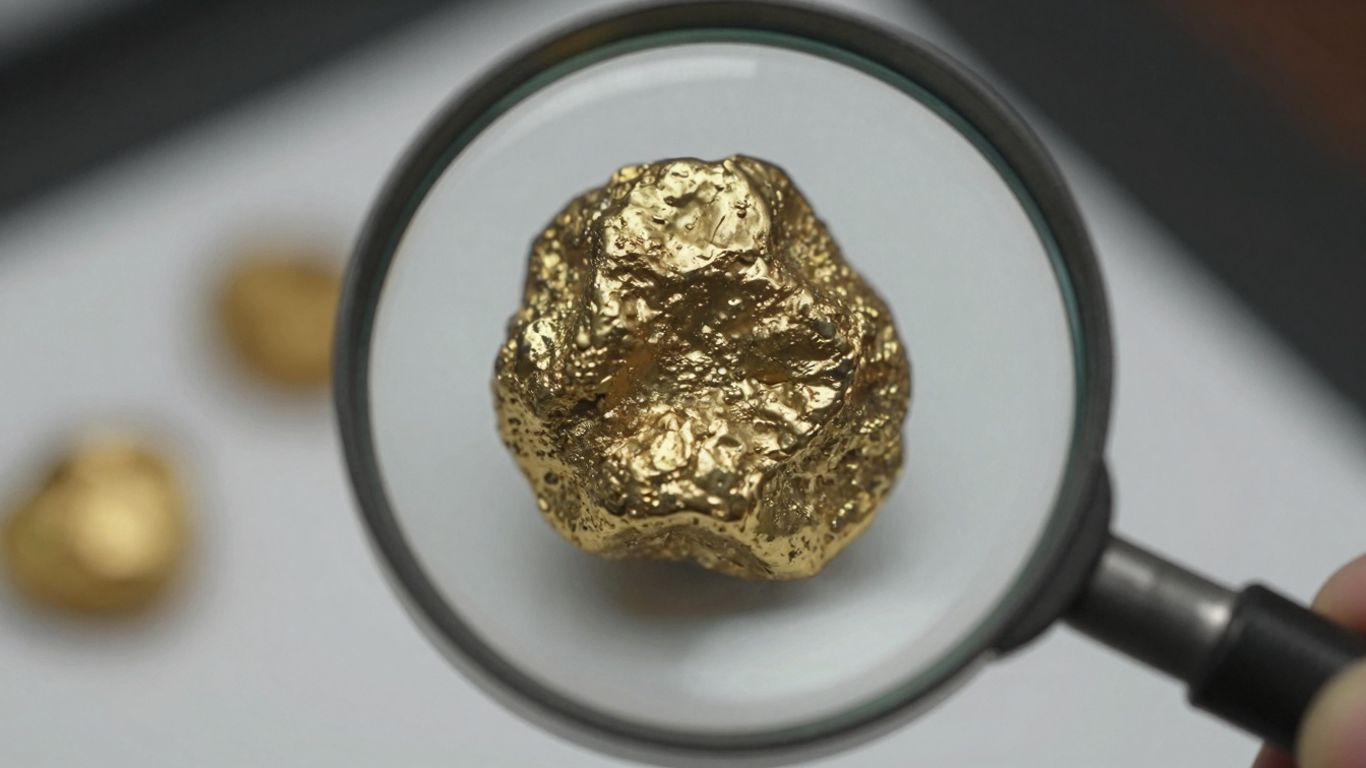
When it comes to gold, especially if you're considering investing, certain documents become incredibly important. You can't just rely on appearances, even if you've had every possible test done. That's where certificates and traceability come in. They're like your gold's identity card, proving its true nature.
What does a certificate of authenticity guarantee?
A certificate of authenticity is essentially a written promise that what you have is indeed pure gold, or at least of the stated purity. It is usually provided by the manufacturer or seller. Inside, you'll find key information:
- The exact weight How much does the coin or ingot weigh?
- Purity (the title) : Expressed in carats or thousandths (for example, 999‰ for pure gold).
- The unique serial number : Each coin or ingot has its own number, which allows it to be tracked.
- The name of the manufacturer or founder Who produced this gold? That's important for trust.
- The date of manufacture or testing : To find out when it was certified.
This document is your first line of defense against unpleasant surprises. It assures you that you're buying what you think you're buying, which is great for resale later. Without a certificate, a serious buyer will hesitate a lot.
The role of international standards such as the LBMA
When dealing with large volumes of gold, such as investment bars, there are standards that are widely accepted. The LBMA (London Bullion Market Association) is one of the best known. It establishes very strict rules for gold refiners and producers. Bars that meet these standards, often called "Good Delivery," are accepted on international markets without question.
LBMA-certified gold bars, for example, are manufactured by recognized refiners who follow rigorous production processes. This guarantees not only the purity, but also the quality and ease of resale of the gold, no matter where you are in the world.
For you, as the buyer, knowing that your gold meets these standards is a guarantee of quality and liquidity. It's a bit like buying a car with a recognized safety certification.
Why foundry traceability is essential
Traceability means being able to trace your gold back to its source. Knowing who melted it and where it was refined adds a layer of security. If you buy gold from a reputable refiner, whose name is listed on the certificate and who is recognized by organizations like the LBMA, you're more likely to be dealing with genuine, high-quality gold. It's a bit like knowing the history of a work of art before you buy it. It avoids unpleasant surprises and strengthens your confidence in the value of your investment.
Knowing where your precious metals, like gold, come from is incredibly important. It's like having a guarantee that what you're buying is genuine and responsibly sourced. This gives you confidence and protects your investment. To learn more about how we ensure quality and the origin of our products, visit our website today!
In Summary
There you have it, a few tips for getting an idea of gold purity without needing a factory in your living room. It's not as precise as a laboratory, of course, but for a quick assessment, it can do the trick. Remember that these methods are meant to give you a first impression. If you have any doubts or if the stakes are high, it's always best to consult a professional. After all, it's better to be sure of what you're dealing with, especially when it comes to gold!
Frequently Asked Questions
How can I tell if my jewelry is really gold without going to a jeweler?
To get an idea without special equipment, you can first look for small markings, called hallmarks, on the piece of jewelry. These often indicate its purity. Next, carefully observe its color: pure gold has a bright, yellow hue. You can also compare its weight to a similar object you know to be made of gold; gold is quite heavy. Keep in mind that these tips aren't foolproof, but they can give you a starting point.
What is the difference between 18 karat and 24 karat gold?
Imagine gold as a cake. 24-karat gold is like a 100% pure cake; it's very, very pure gold, as pure as possible. 18-karat gold is like a cake with 18 parts gold and 6 parts other ingredients (like copper or silver). So, 18-karat gold is less pure than 24-karat gold, but it's often more durable for making jewelry.
Is the magnet test reliable for determining if something is gold?
The magnet test is quite simple and can help. Gold is not attracted to magnets. So, if your gold object is attracted to a strong magnet, it likely contains other magnetic metals, and therefore it's not pure gold. However, some non-magnetic metals can also be mixed with gold, so if the object isn't attracted, it doesn't guarantee 100% that it's pure gold.
Can we rely on home tests to determine the purity of gold?
The tests you can do at home, such as the color test, the weight test, or even the magnet test, are useful for getting a first impression. They can help you spot obvious fakes. But to be absolutely certain of the exact purity of the gold, especially for valuable items, it's best to consult a professional. These home tests have their limitations.
What is a 'gold-plated' object?
A gold-plated object is a bit like a candy with a thin layer of colored sugar. The object itself is made of another, less expensive metal. A very thin layer of gold has been applied on top to make it look precious. But if this layer is damaged, you'll see the metal underneath. So it's not solid gold.
Why is it important to look at certificates when buying gold?
The certificate is a bit like an identity card for your gold item. It tells you exactly what it is: its weight, its purity (how much gold it contains), who made it, and when. It's a guarantee that you're buying what you're supposed to buy. Without a certificate, especially for gold bars, it's harder to be sure of the quality and value of your investment.