Wondering how gold is taxed in France? It's a legitimate question when considering investing in this precious metal. From buying and holding to selling, there are things you should know to avoid any unpleasant surprises. Let's take a look at it together, at your own pace.
Key Takeaways
- Purchasing investment gold (bars, coins) is generally exempt from VAT in France, which is an advantage. Holding gold, however, does not incur any specific tax.
- When reselling gold, you have a choice between two systems: a flat tax of 11,5% on the total amount, or a capital gains tax which is degressive and can lead to total exemption after 22 years.
- Some cases are specific: jewelry and collectibles have their own taxation, and non-residents may benefit from exemptions under certain conditions.
How is gold taxed in France?
When discussing gold in France, it's important to understand that its taxation isn't as complicated as it might seem, especially if you're a French tax resident. The key is to clearly distinguish between buying, holding, and selling, as the rules differ for each.
The purchase and holding of investment gold
Good news to start with: buying investment gold is generally exempt from VAT. Yes, you read that right! This applies to gold bars, ingots, and coins that meet specific criteria. To be considered investment gold, these products must meet purity standards and, for coins, must have been minted after 1800 and have been legal tender. This is a significant advantage that makes physical gold more accessible.
As for ownership, it's even simpler: there is no specific wealth tax that applies to gold since the replacement of the ISF (Wealth Tax) with the IFI (Real Estate Wealth Tax). Therefore, owning gold will not cost you anything extra each year in wealth tax.
Here are the criteria for gold to be considered 'investment' and therefore exempt from VAT on purchase:
- Ingots, bars, tablets: They must have a purity of at least 995 thousandths (i.e. 99,5% pure gold) and a weight greater than 1 gram.
- Gold coins: They must have a purity of at least 900 parts per thousand (i.e., 90% pure gold), have been minted after 1800, have been legal tender in their country of origin, and their premium (the difference between their face value and the value of their weight in gold) must not exceed 80% of their weight in gold. The European Commission publishes an official list of eligible coins.
It is important to carefully check that the products you purchase meet these definitions to benefit from VAT exemption. Older items, for example, may be considered collector's items and subject to different taxation.
Taxation when reselling gold
This is where things get a little complicated, because reselling your gold may be subject to taxation. In France, you have a choice between two tax regimes. The choice will depend on your situation, the length of time you have held your gold, and its resale price. Most often, you will have to declare the sale and pay a tax.
Here are the two main options:
- The Flat-Rate Tax on Precious Metals (TFMP): This system applies a flat tax rate of 11,5% to the total transaction amount (11% tax + 0,5% CRDS social security contribution). It is straightforward because it does not require proof of the purchase date or the acquisition price. It is often the default system if you are not filing a specific tax return.
- Capital Gains Tax (TPV): This tax regime applies to movable property. It is more complex because you must be able to prove the purchase date and the acquisition price to calculate the actual capital gain. There are allowances based on the holding period. After 22 years of ownership, the capital gain is completely tax-exempt. This regime can be more advantageous if you bought your gold a long time ago and its value has increased significantly.
If you sell your gold through a VAT-registered intermediary (such as a professional dealer), they will often handle the declaration formalities and tax payment. If you sell privately, you are responsible for contacting the tax authorities within one month of the sale.
Tax regimes specific to gold
When you decide to invest in gold, it's good to know that specific tax regimes apply. It's not a single tax for everyone, and it depends somewhat on how you sell your gold. Basically, you have a choice between two main approaches.
The flat rate tax on precious metals
Before 2014, this was the only option for taxing the resale of investment gold. Today, you can still choose this path. It consists of a fixed tax of 11,5% applied directly to the total amount of your sale. Yes, you read that right, 11,5% on the sale price, whether you made a profit or not. It's simple to understand, but it can quickly add up if you resell a large quantity.
If you use a professional who is registered for VAT, they will handle all the paperwork and pay the tax to the government. If you sell the item yourself, you will need to fill out a specific declaration (form 2091-SD) and file it with the tax authorities, paying the tax at the time of filing. This means a bit more paperwork for you.
Capital gains tax
Since 2006, you've had the option of choosing a different system: capital gains tax. This is where it becomes a bit more advantageous if you've held your gold for a while. To be eligible for this system, you must be able to prove when you bought your gold and at what price. Without this documentation, you won't be able to benefit from it.
The principle is as follows: the difference between the selling price and the purchase price is calculated (this is your capital gain), and the tax is applied to this profit. Since 2018, the overall rate has been 36,2% (19% income tax + 17,2% social security contributions). But be aware, there's a significant advantage: a 5% annual allowance is applied to the capital gain starting from the third year of ownership. This means that the longer you hold your gold, the less tax you'll pay when you sell it. After 22 years, the exemption is total! And if you ever sell your gold at a loss (for less than you bought it for), you pay no tax, regardless of how long you've held it. This is an important point to remember.
Choosing between these two options will depend on your personal circumstances, how long you plan to keep your gold, and your ability to justify your purchases. Don't hesitate to run simulations to see which option is most advantageous for you.
Here is a small table to summarize the two options:
| Tax Regime | Tax base | Applicable rate (default) | Benefits |
|---|---|---|---|
| Flat-Rate Tax on Precious Metals | Total amount of sale | 11,5% | Simple, no proof of purchase required. |
| Capital Gains Tax | Realized capital gain | 36,2% (after deductions) | Total exemption after 22 years, no tax in case of capital loss. |
To benefit from the capital gains tax regime, it's highly recommended to keep all purchase invoices and ensure the gold is properly identified (for example, if you buy coins, it's best not to have them delivered loose without a corresponding proof of purchase). It's a small inconvenience, but it can save you a significant amount of money when you resell.
Special cases and tax exemptions
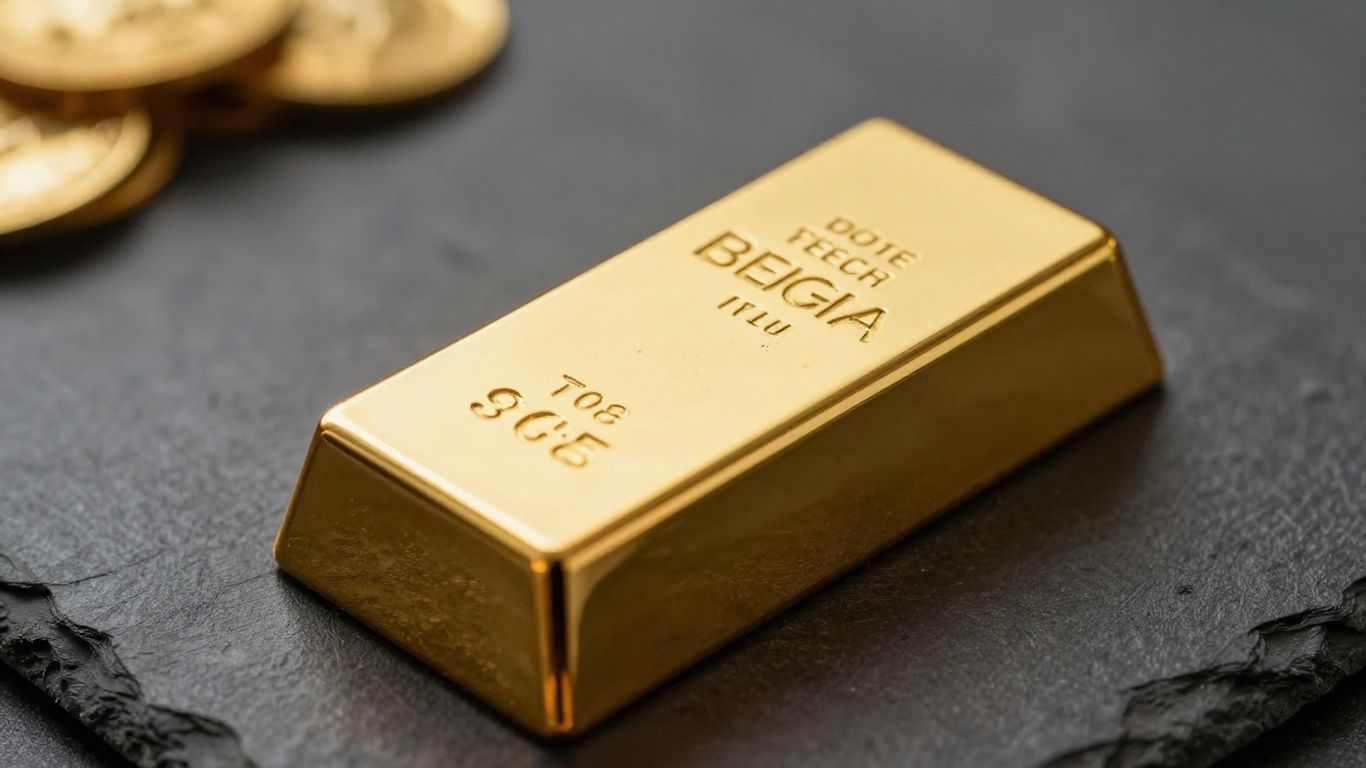
Gold in the form of jewelry and collectibles
When we talk about investment gold, we often think of bars and coins. But what about the gold you might already have at home, such as family heirlooms or old coins that aren't necessarily considered investment gold in the strictest sense? The tax treatment can be slightly different in this case.
For jewelry, works of art, collectibles, or antiques, the general rule is that the sale is subject to value-added tax (VAT) at the standard rate, unless you can prove that they are over 22 years old. If so, they fall under the category of movable property, and you have a choice between two tax regimes when reselling them:
- The flat-rate tax on precious metals (TMP) It amounts to 11,5% of the total selling price (including 0,5% CRDS). It's often simpler if you don't have specific purchase invoices.
- The capital gains regime on the sale of movable property Here, it's the difference between your selling price and your purchase price that is taxed. The rate is 37,6% (including 18,6% social security contributions) since January 1, 2026. Note that this system allows you to benefit from a 5% allowance per year of ownership starting from the third year. After 22 years, you are completely exempt from capital gains tax. To benefit from this, you must be able to prove the purchase date and the acquisition price.
It is important to keep all proof of purchase, even for jewelry or antiques. An invoice, a notarized deed, or even a certificate of authenticity can make all the difference in optimizing your tax situation when reselling.
Exemption for non-residents
If you are not a tax resident of France, the situation is generally simpler for you. Gold transactions you carry out in France are not subject to French tax. Your country of tax residence will apply its own legislation. So, if you live abroad and sell gold you own, you will not have to pay any taxes in France on this transaction. However, you should carefully check the tax regulations in your country of residence, as you could be taxed there. This is an important distinction to make to avoid unpleasant tax surprises, whether you have purchased gold bars, coins, or even gold jewelry.
In summary, for non-residents, France does not levy tax on the sale of gold, but you should inquire about the local tax laws of your country of residence.
Sometimes there are special situations or rules that allow you to avoid paying certain taxesThese cases are important to understand for managing your money effectively. Want to learn more about these exceptions? Visit our website for full details and how they might apply to you.
To summarize, what about the taxation of gold?
So, to put it simply, when you buy investment gold, whether it's bars or coins, you don't have to pay VAT in France. That's a plus, isn't it? Selling it is a bit more complicated. You have two options: a flat tax of 11,5% on everything you sell, or a capital gains tax. The latter is a little more complex; it's applied to the profit you've made, and it decreases over time. If you keep your gold for 22 years, you're even completely exempt. Not bad, eh? Keep that in mind when you're doing your calculations.
Frequently Asked Questions
Do I have to pay taxes when I buy gold in France?
Good news! In France, when you buy gold considered 'investment gold' (like bars or certain coins), you generally don't have to pay Value Added Tax (VAT). This is an advantage that makes the purchase more attractive.
What happens when I want to sell my gold?
When you sell gold, there are two main tax options. You can either pay a fixed tax on everything you sell (this is the Flat Tax on Precious Metals), or you can pay a tax only on the profit you made (the capital gains tax). This second option becomes advantageous if you have held your gold for a long time, as the tax decreases each year and can even disappear after 22 years!
Are my gold jewelry pieces taxed in the same way as gold bars?
No, it's not the same for jewelry! If you buy gold jewelry, you'll pay VAT on it, just like with most purchases. However, when you resell it, the tax treatment is slightly different than for gold bars. It's always a good idea to check the specific rules for jewelry or collectibles.