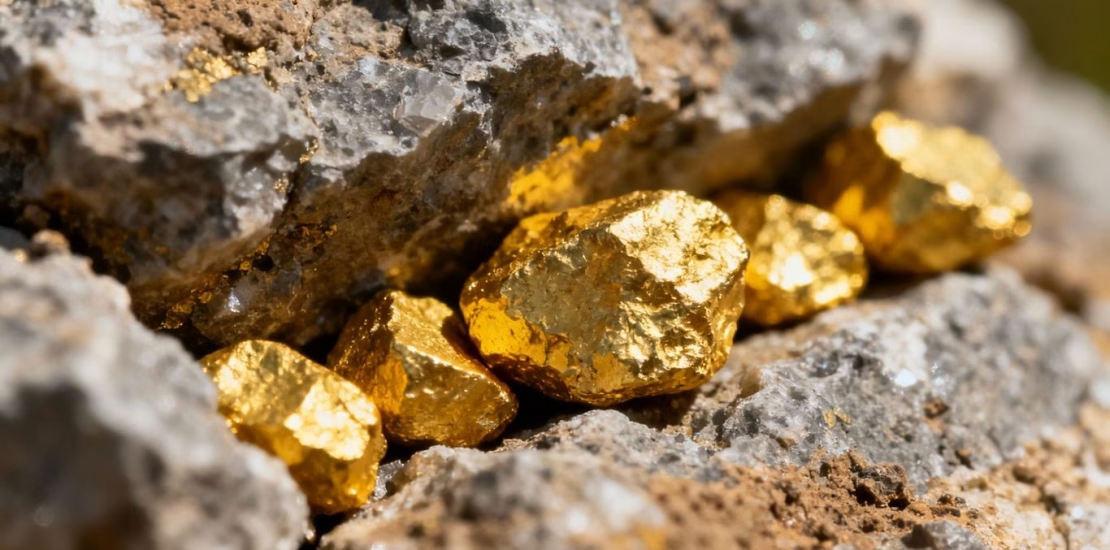
Wondering how we manage to isolate this precious gold from rocks and other elements? It's an interesting question, because gold isn't just there, all shiny and beautiful, ready to be picked up. Very specific methods are needed to separate it from the other minerals that accompany it in the earth. Let's take a closer look; you'll see, it's quite fascinating.
Key points to remember
- The separation of gold from other minerals is based on their differences in physical and chemical properties.
- Gravity is often the first ally, because gold is very dense, which allows it to be separated from lighter elements.
- For more complex ores, techniques such as flotation or chemistry, particularly cyanidation, are used.
- Some ores are 'refractory' and require preparation steps before they can release their gold.
- Sometimes gold is just a bonus recovered during the processing of other metals, such as copper.
Methods for separating gold from ores
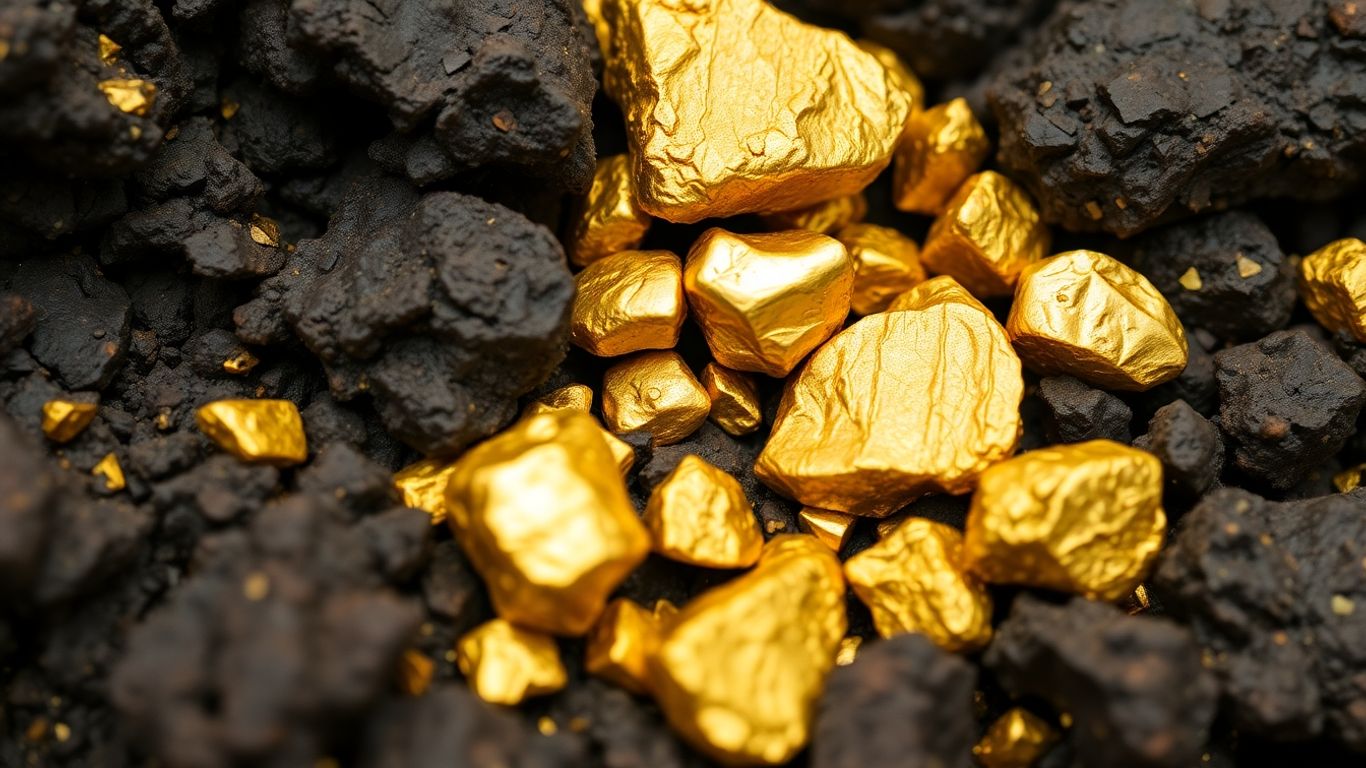
When we talk about gold mining, the first thing that often comes to mind is the image of gold prospectors panning the earth. And you know what? That image isn't so far from reality for some methods! Separating gold from other rocks and minerals is a bit like looking for a needle in a haystack, but with much more sophisticated techniques. There are several ways to do it, and the choice depends largely on the type of ore and the amount of gold it contains. Let's take a closer look.
Gravity separation: an age-old technique
This is probably the oldest and most intuitive method. The idea is simple: gold is incredibly dense, much more so than most other minerals. Think about it, its density is around 19,3 g/cm³, while quartz, for example, is around 2,6 g/cm³. This enormous difference is our greatest asset. So we use gravity to do most of the work.
- Panning This is the gold prospector's trick. Sand and water are stirred in a kind of flat pan. Lighter materials float away with the water, while the heavier gold remains at the bottom.
- Shaking tables Here, vibrations and water are used on an inclined surface. The heavier gold settles in special grooves, while the waste is removed.
- Centrifugal concentrators More modern machines use centrifugal force to 'crush' the gold against the walls, separating it from less dense materials. It's a bit like a super-powerful salad spinner.
This method is great for free-floating gold, the kind that isn't trapped in other rocks. It's economical and doesn't pollute too much because it doesn't use chemicals. However, it becomes less effective for very small gold particles.
Gold, with its density far exceeding that of most surrounding minerals, is particularly well-suited to gravity-based separation methods. This fundamental physical property makes the technique both ancient and still relevant today.
Flotation: for complex ores
When gold is mixed with other minerals, especially sulfides like pyrite, gravity alone isn't enough. That's where flotation comes in. The ore is transformed into a kind of mud with water, then special chemicals are added. These chemicals cause the gold particles to cling to air bubbles. These bubbles rise to the surface, forming a foam that can then be collected. This chemical technique requires a bit more expertise and is particularly useful when the gold is very finely dispersed or bound to sulfide minerals. It's a method that allows the gold to be concentrated before proceeding to other recovery stages.
Cyanidation: an effective chemical method
Cyanidation is the most common chemical method for extracting gold, especially when there is little of it in the ore (low grade). A cyanide solution is used to dissolve the gold. Yes, you read that right, cyanide! It's a toxic substance, so extreme caution and strict protocols must be followed to avoid any danger to the environment and people. The crushed ore is mixed with this solution, and the gold dissolves in it. Then, the gold is recovered from the solution, often using activated carbon or zinc. There are variations, such as heap leaching (the ore is piled up and sprayed with the solution) or stirred tank leaching (which is faster). It's a very effective method, but it raises significant environmental concerns. To verify the purity of the gold obtained, chemical tests can be used, but it's important to know that even the hallmarks on the ingots are not always an absolute guarantee. verify the authenticity of a gold coin.
The fundamental principles of gravity separation
Harnessing the density of gold
You know, gold is kind of like a star in the mineral world: it's much heavier than most of its neighbors. It's this difference in weight, or more precisely, density, that's the key to separating it. Imagine you're shaking a bag full of marbles of different sizes and weights. The heavier ones will sink to the bottom more easily, right? Well, it's a bit like that here, but on an industrial scale.
Pure gold has a density of approximately 19,3 grams per cubic centimeter. Compare that to the gangue, the worthless ore that surrounds it, whose density can vary but is often much lower, say between 2,5 and 4,5 g/cm³. This enormous difference is our greatest asset. Gravity separation methods exploit this characteristic to ensure that the gold settles or concentrates where it can be easily recovered, while the rest is removed.
The success of gravity separation depends on a sufficiently significant density difference between the desired mineral and the unwanted materials. The greater this difference, the more efficient the separation and the lower the losses.
The different gravity separation techniques
There are several ways to take advantage of this difference in density. The method used will differ depending on whether you are dealing with large nuggets or fine gold dust.
- Panning: This is the oldest and simplest method, the one you might have seen in movies. You use a kind of flat pan (a gold pan) to stir the sand and water. The heavier gold stays at the bottom while the lighter materials are rinsed away. It's perfect for small quantities or for prospecting.
- Shaking tables: Imagine a large, tilted table that vibrates and moves back and forth. Ore mixed with water is poured onto this table. The denser gold particles tend to stay on the table and move to one end, while the lighter material is washed away to the other. This is a fairly effective method for recovering gold in the form of flakes or small particles.
- Spirals and centrifugal concentrators: These systems use centrifugal force to enhance separation. The ore and water flow through spiral channels or a rotating cone. Centrifugal force pushes the particles outward, but gold, being heavier, remains closer to the center or settles in specific areas. This is a more modern and efficient technique for processing large volumes.
Advantages and limitations of gravity
Like any method, gravity separation has its pros and cons.
Advantage:
- Ecological: Few or no chemicals are used, which is a big plus for the environment.
- Economic : Often less expensive in terms of equipment and operation than other methods.
- Easy to understand: The basic principle is quite intuitive.
- Large volume processing: Certain techniques allow for the processing of enormous quantities of ore.
Boundaries :
- Density dependence: If gold is mixed with other minerals of similar density, separation becomes difficult.
- Particle size: Very fine gold particles or those that are malformed can be carried along with the gangue, reducing the yield.
- Variable effectiveness: Performance depends heavily on the quality of the equipment, the particle size of the ore, and the difference in density.
In short, gravity separation is a super useful method, especially for gold, but you have to choose the right technique for your ore and be aware of its limitations.
Advanced chemical and physical techniques
Cyanide leaching and its variants
When gravity isn't enough, chemistry is used. Cyanide leaching is a highly effective method for extracting gold, especially when it's in the form of fine particles or trapped in complex ores. Essentially, a cyanide solution is used to dissolve the gold from the ore. It's a bit like making a very special tea, but with gold and cyanide instead of leaves and hot water.
The process takes place in several stages: first, the ore is crushed to increase the contact surface area. Then, it is mixed with a cyanide solution and oxygen. The gold dissolves, forming a gold-cyanide complex. After this, the gold solution is separated from the rest of the ore. To recover the gold, activated carbon, which absorbs it, is often used, or sometimes zinc, which precipitates it. There are variations such as heap leaching (for low-grade deposits), where the ore is piled up and then...
The processing of refractory ores
Understanding the resistance of minerals
Have you ever encountered ores that seem to keep their gold tightly locked away, refusing to release it easily? These are called refractory ores. They present a particular challenge because conventional methods, like simple cyanide leaching, aren't enough to extract all the gold they contain. The reason? Often, these ores contain sulfide minerals or organic carbon. Sulfides can literally trap the fine gold particles, making them inaccessible to cyanide. As for organic carbon, it acts like a sponge, absorbing the dissolved gold before you can even collect it. It's a bit like trying to empty a swimming pool with a sieve that's too big.
The necessary pretreatment steps
To extract these stubborn ores, pretreatment stages are necessary. The goal is to make the gold accessible. Here are some common techniques:
- The wire mesh: The ore is heated to a high temperature in the presence of air or oxygen. This eliminates sulfur and organic carbon, which are responsible for refractoriness.
- Bio-oxidation: Here, bacteria are used that naturally oxidize sulfur or carbon compounds. It's a gentler method, which takes place in an aqueous environment.
- Oxidation under pressure: This slightly more intensive process takes place in an autoclave under high pressure and temperature. It also aims to eliminate sulfur.
- Ultrafine grinding: Sometimes the problem simply stems from the size of the gold particles. Grinding the ore very finely allows the gold to be better freed from its matrix.
The importance of appropriate cyanidation
Once you've prepared your ore with these pretreatments, cyanidation can finally do its job more efficiently. But be aware that even then, the process sometimes needs adjusting. For example, if the ore contains a lot of copper or silver, it may be necessary to wash the gold precipitate with sulfuric or nitric acid to remove these impurities before the final melting. Choosing the right pretreatment method and adapting the cyanidation process are therefore key to maximizing gold recovery in these complex cases.
Gold as an industrial by-product
Recovery from base metal concentrates
You know, gold isn't always extracted from deposits where it's the main component. Sometimes, it's found in small quantities in ores of more common metals, like copper. In those cases, it's recovered during the production process of the main metal. It's a bit like finding a gold coin in an old pair of jeans: you weren't looking for the coin, but you're happy to find it! For example, during the electrolytic refining of copper, gold can end up in what's called anodic sludge. This sludge is then processed to extract the precious gold.
Gold in electrolytic refining
Electrolytic refining is an extremely useful technique for purifying metals. When we talk about copper, for example, the raw metal is placed as the anode in an electrolytic solution. When an electric current is passed through it, the pure copper is deposited on the cathode. But be aware that not all the elements present in the raw metal behave the same way. Metals less noble than copper will dissolve and remain in the solution, while more noble metals, such as gold, silver, or platinum, will settle to the bottom as residue. This residue, called anodic sludge, is a goldmine (literally!) for refiners. They collect this sludge and then process it specifically to recover these precious metals. This method allows for the recovery of elements that would otherwise be lost, making the overall process more profitable and environmentally friendly. It's a great example of how industry can optimize its resources.
The importance of certification and standards
When it comes to gold, especially when it's separated from other minerals or considered in ingot form, trust is paramount. That's where certification and standards come in. They're not just for show; they guarantee that what you have is indeed what you're told it is.
The role of the LBMA in ingot quality
The London Bullion Market Association, or LBMA for short, is essentially the quality watchdog of the gold market. They've established extremely strict rules for gold refining. When a gold bar is produced by an LBMA-certified refiner, it means it has passed all the tests and meets very high standards of purity and quality. It's a bit like having a globally recognized quality label.
'Good Delivery' standards for the international market
These 'Good Delivery' standards are directly linked to the LBMA. For a gold bar to be accepted on the international market, it must meet these criteria. This concerns purity (often 99,99% for gold), weight, and also the way it is marked. A 'Good Delivery' gold bar is therefore a guarantee of confidence for buyers, whether they are central banks or investors.
Traceability through numbering and certificates
How can you be sure a gold bar hasn't been swapped or counterfeited? Through traceability. Every high-quality gold bar is marked with a unique serial number. This number is then printed on a certificate of authenticity that accompanies the bar. This certificate is like the bar's identity card. It details its weight, purity, the name of the refiner, and sometimes even the date of manufacture. This is extremely important to prove that you own genuine, high-quality gold.
Ultimately, these certifications and standards are not just administrative formalities. They are the foundation of trust in the gold trade. Without them, it would be difficult to know whether you are buying pure gold or a fake, and the market as we know it would not exist.
Here are the key elements that guarantee the quality and authenticity of a gold ingot:
- Purity: Generally 999,9‰ (or 24 carats) for investment gold.
- Weight: Standardized according to formats (ingots, 1kg ingots, etc.).
- Unique numbering: Engraved on the ingot for precise identification.
- Certificate of authenticity : Document accompanying the ingot, detailing its characteristics and the manufacturer.
- LBMA certified manufacturer: The assurance that the ingot was produced according to strict standards.
- Packaging: Often sealed in blister packs to guarantee integrity and traceability.
Having certifications and adhering to standards is like having a quality seal for what we do. It shows that our products or services are reliable and comply with specific rules. It's proof of our commitment that reassures our customers. To learn more about how we guarantee quality, visit our website !
So, what do we remember?
So, now you know how to isolate this precious metal from rocks and other impurities. It requires very specific, sometimes rather complex, techniques, but the result is worth it, isn't it? Whether using gravity, chemicals, or other methods, the important thing is to recover the gold. It's a bit like a treasure hunt, but on a large scale and with much more sophisticated tools. I hope this has shed some light on the subject!
Frequently Asked Questions
How is gold separated from other rocks in the ground?
To separate gold from other rocks, gravity is the primary method used. Gold is very heavy compared to most other materials. Imagine shaking soil into water: light materials wash away easily, while heavy materials like gold remain. It's a bit like that, but with more sophisticated techniques to recover as much as possible.
Are all methods for finding gold environmentally friendly?
Some methods, like gravity separation, are quite environmentally friendly because they don't use chemicals. However, other methods, like the one using mercury (amalgamation), are very harmful to the environment and to health. That's why we try to avoid these techniques today and favor those that are gentler on the planet.
Why is gold sometimes difficult to extract from rocks?
Sometimes, gold is so small or so mixed with other minerals, especially those containing sulfur, that it is difficult to separate. These rocks are called 'refractory ores'. To extract the gold, the rock must first be prepared with special treatments before using conventional methods.
What is cyanidation and why is it used?
Cyanidation is a chemical process that uses a special solution (cyanide-based) to dissolve gold in rock. It is very effective, especially when the gold is very fine. Once the gold is dissolved in the liquid, it is then recovered using activated carbon or zinc. This is a common method because it allows for the recovery of large quantities of gold.
Can gold be found in other metals?
Yes, absolutely! Sometimes, gold isn't extracted on its own, but is found in small quantities in ores of other metals, such as copper. In this case, the gold is recovered during the manufacturing or refining process of these other metals. It's a way to avoid waste.
How can you tell if a gold ingot is of good quality?
To ensure the quality of a gold bar, you should check if it meets international standards, such as those of the LBMA (London Bullion Market Association). These standards guarantee the purity of the gold and its origin. High-quality bars often have a unique serial number and a certificate of authenticity that proves they comply with the standards required for sale on the global market.