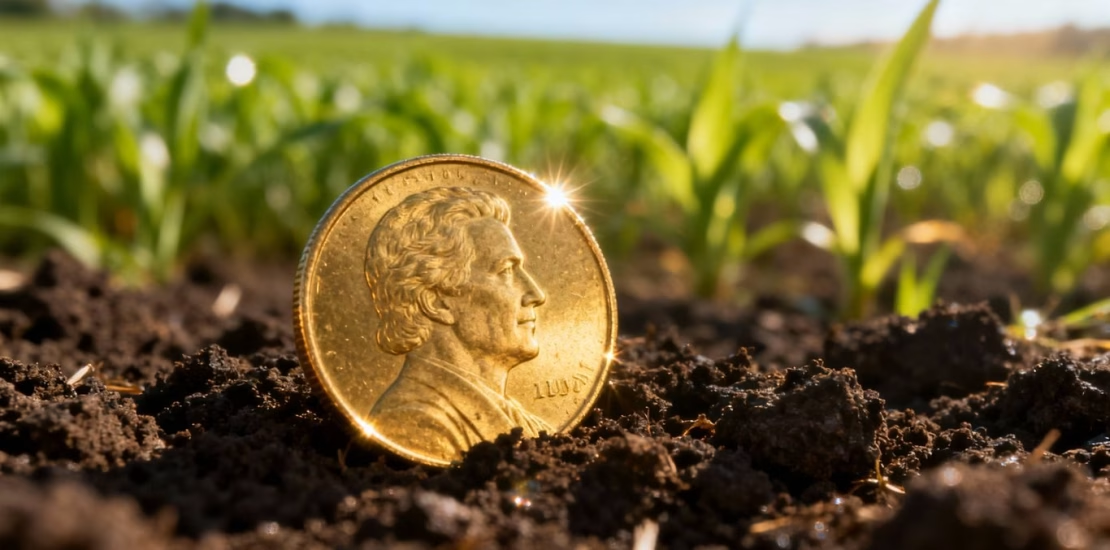
In a world where economic and geopolitical uncertainties seem to be multiplying, you may be wondering how best to protect your wealth. The idea of investing in tangible assets like gold or farmland often comes up. But is this really a sound strategy to shield yourself from inflation and crises? Let's explore together what these two options have to offer.
Key Takeaways
- Gold, a historically precious metal, is often considered a safe haven asset. It tends to perform well when inflation rises or financial markets are volatile, as its value is less tied to government monetary policies.
- Farmland represents a tangible investment. Its value can increase over time, and it fulfills a fundamental need: food. It can therefore offer a degree of stability, even in times of economic uncertainty.
- Combining gold and farmland can be a way to diversify your portfolio. These real assets have the potential to better withstand economic and geopolitical shocks than more traditional investments, thus offering you protection against inflation and crises.
Gold, a historical asset in the face of crises
Gold has always had a reputation as a safe haven, especially when times get tough. You know that little voice that tells you to put some money aside when the markets are in turmoil? Gold is often the first thing that comes to mind. And for good reason. Historically, when inflation rises and currencies lose purchasing power, gold tends to maintain, or even increase, its value. It's a bit like a shield for your money.
Gold, a safe haven against inflation
When prices rise everywhere, whether it's for gas or bread, your cash is worth less. That's inflation. In times like these, many people turn to gold. Why? Because the amount of gold on Earth isn't increasing as fast as central banks can print money. This relative scarcity is what keeps gold valuable. Think about it: thousands of years ago, gold was already being used as currency. It has survived empires, revolutions, and economic crises, and it's still here, precious.
Gold is not a stock that depends on a company's performance, nor is it a government bond that can default. Its value is intrinsic, linked to its scarcity and global demand.
Look at what has happened in the past. For example, during the 2008 financial crisis, the gold price It's climbed quite a bit. That's no guarantee for the future, of course, but it shows a trend. Investors seek to protect their capital when they sense a change in the market, and gold is often their first choice.
Gold and its role in monetary reserves
It's not just individuals who see gold as a safe haven. Central banks around the world also hold enormous quantities. It's a kind of safety net for them. Having gold reserves lends credibility to a country's currency and helps stabilize the economy in times of crisis. The United States, for example, has substantial gold reserves, as do many other countries. When we talk about monetary stability, gold plays a discreet but important role behind the scenes. It's traded on major global financial markets, and its price is closely monitored, especially during periods of uncertainty. It's a sort of barometer of confidence in the global financial system.
Farmland: A tangible and resilient investment
Gold, a safe haven against inflation
When we talk about protection against inflation, gold often comes to mind. This is understandable; it's a precious metal that has withstood the test of time and crises without losing its intrinsic value. Its price tends to rise when the purchasing power of our currencies decreases. Consider this: during periods of economic uncertainty, gold is often the first asset people turn to for safekeeping. It's not tied to a company's performance or the health of a government, which makes it quite unique.
Gold and its role in monetary reserves
Central banks around the world hold enormous quantities of gold. And for good reason! This gold, often in the form of bars, represents a significant portion of their reserves. It provides them with a kind of guarantee, a stability that reassures them about a country's financial strength. Even though we no longer operate on the gold standard as we once did, gold remains a symbol of wealth and security for nations. For you, as an investor, knowing that financial institutions trust gold can be yet another reason to consider it.
Let's now turn to another type of asset that's gaining popularity: farmland. Unlike gold, it's something tangible, something you can see and touch. And that's important when you're looking to protect your wealth. Farmland is the foundation of our food supply, a fundamental need that never disappears, even in times of crisis. That's what makes this investment particularly attractive.
The advantages of investing in agricultural land
Investing in land offers several significant advantages. First, it generates regular income. How? Well, you can lease your land to farmers. These rents, known as farm leases, provide you with a steady flow of money, much like passive income. Second, the value of land tends to increase over time. This is called capital appreciation. In the long term, this can represent a substantial capital gain. And then there's the more human aspect: by investing in land, you support local agriculture and create jobs in rural areas. It's an investment that makes sense.
Here are some key points to remember about the benefits:
- Regular income: Thanks to the rents received, you benefit from a stable source of income.
- Capital appreciation: The value of agricultural land tends to increase over the long term.
- Diversification: It is a real asset, different from stocks or bonds, which can better withstand fluctuations in financial markets.
- Positive impact: You contribute to the dynamism of rural areas and to food security.
The challenges and prospects of agriculture
Of course, investing in land isn't without its challenges. It's important to know that buying land requires a significant initial investment. Prices vary considerably depending on the region and soil quality. You also need to be aware of the risks associated with the climate. A poor harvest due to weather can impact yields. Furthermore, owning land requires a certain level of management; it's not always a completely passive investment. You need to be interested in agriculture and understand the issues at stake.
However, the outlook is quite positive. With a constantly growing global population, the demand for food is increasing. Arable land is becoming scarcer, which tends to drive up its value. Technological advances in agriculture, such as precision farming, also promise to improve productivity and sustainability.
Now that you have a clearer understanding of gold and farmland separately, let's look at how they can work together to help you secure your wealth. The key is not to put all your eggs in one basket, especially during uncertain times.
Diversification and stability of real assets
Gold and farmland are both considered real assets. This means they have intrinsic value, independent of financial markets. By combining these two types of assets, you create strong diversification. If the stock markets crash, your gold and farmland can retain, or even increase, their value. This is a way to smooth out risk and bring stability to your portfolio. Think of them as two solid pillars supporting your wealth.
The impact of economic and geopolitical crises
Economic crises, geopolitical tensions, rampant inflation… all of these can shake up financial markets. In such times, gold has often proven its ability to maintain its value, or even appreciate. Farmland, on the other hand, fulfills a vital need: food. As long as people eat, land will have value. It offers particular resilience in the face of economic and social uncertainties. By combining these two assets, you equip yourself with a robust protection strategy, capable of weathering economic and geopolitical storms with greater peace of mind.
Gold and farmland: a combination to secure your assets
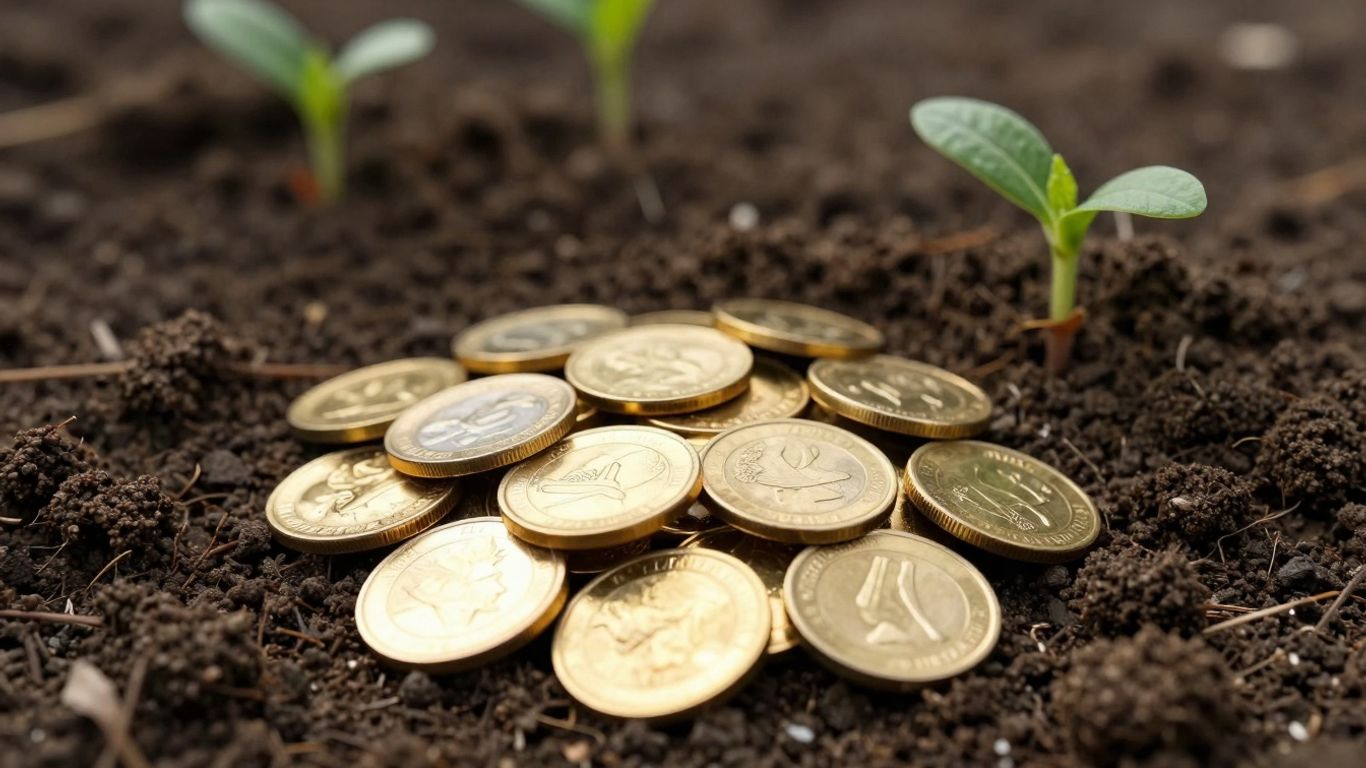
Looking to protect your money from economic fluctuations? Consider combining gold and farmland. It's a proven strategy, even if it requires some thought. These two very different assets have one thing in common: they are tangible. This means they physically exist, unlike stocks on the stock market, which can disappear in an instant. And that's reassuring when times are uncertain.
Diversification and stability of real assets
The idea is not to put all your eggs in one basket. Gold, as we know, is the ultimate safe haven. When inflation rises or markets falter, gold tends to maintain its value, or even increase. It's a bit like a safe for your money. But gold alone isn't always enough. That's where farmland comes in.
Investing in land means investing in something tangible that produces. The rents you receive from farmers (called farm leases) are generally stable and regular. And over time, the value of the land itself tends to increase. It's a bit slower than gold, but it's a more predictable growth. By combining the two, you have a portfolio that can react differently to crises. If gold rises, all the better. If farmland appreciates, that's also good news. The goal is to have a solid base that is more resistant to shocks.
Here are some points to consider for this combination:
- gold It acts as a shield against inflation and currency devaluation. Its value is recognized worldwide and it is easy to resell.
- Agricultural land They offer a regular income through rentals and long-term capital appreciation. Furthermore, they are less sensitive to stock market fluctuations.
- Diversification By holding both types of assets, you reduce the overall risk of your portfolio. If one underperforms, the other can compensate.
The impact of economic and geopolitical crises
Looking at history, we see that gold has often fared well during major crises. For example, its price rose during the 2008 financial crisis. Farmland, however, is a bit different. It fulfills a fundamental need: food. Even during economic crises, people need to eat, so agricultural activity continues. This makes farmland quite resilient. The rents paid by farmers often remain stable because their work is essential.
Economic and geopolitical crises create uncertainty. In these times, tangible assets like gold and farmland become more attractive. They offer a security that more volatile financial assets cannot guarantee. It's a way to stay grounded when everything around you is in turmoil.
In short, combining gold and farmland is a bit like building a fortress for your money. Gold protects you from monetary storms, and the land ensures a stable income and steady growth. It's a strategy that requires some initial capital, but it can truly help secure your wealth in the long run.
Gold and the farming lands These are two excellent options for protecting your money. Think of them as safes for your wealth. Gold is precious and stable, while land can appreciate in value over time. This combination can help you feel more financially secure. To learn more about securing your future, visit our website today!
So, shall we get started?
So, that's it. Gold is all well and good, and it shines, but farmland feeds people and can also appreciate in value. You see, it's not so complicated to think about protecting your money, whether it's in a gold bar or in a field. Think about it, it might be worth taking a closer look. After all, who knows what tomorrow will bring? Better to be prepared, right?
Frequently Asked Questions
Why is gold considered a good investment when the economy is doing badly?
When times are tough and money loses value (that's inflation), gold is often seen as a safe haven. Think of it as a treasure that retains its value. Banks and countries also keep it in their vaults. This is because, unlike printed money, you can't create as much as you want. So, when other currencies weaken, gold tends to remain stable, or even appreciate in value.
Is owning farmland a good way to protect your money?
Investing in land is a bit like buying a piece of nature that produces food. Even if the economy is down, people will always need to eat. Land's value can increase over time, and it can generate income through harvests. It's a tangible investment that doesn't disappear, unlike stocks that can plummet.
Why would combining gold and farmland be a good idea for my money?
Putting your money into different assets is like not putting all your eggs in one basket. Gold is there to protect your money when economic crises hit, while farmland offers stability because it fulfills a basic need: food. By combining the two, you create a stronger asset base that can better withstand unforeseen events, whether economic or geopolitical.