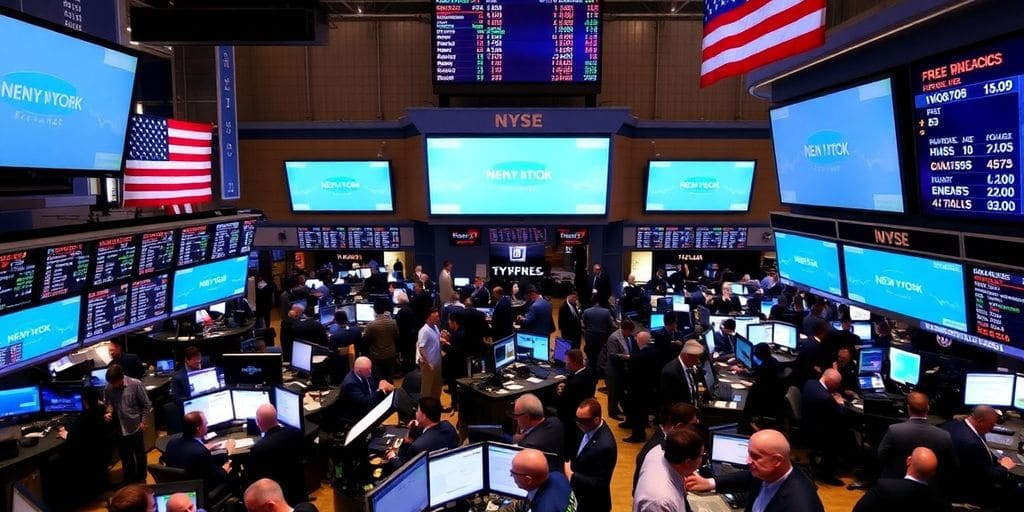
The New York Mercantile Exchange, known as NYMEX, is one of the world's leading markets for commodities. Founded in 1872, it has evolved over the years to focus on energy and metals. This article explores its history, how it works, its impact on global markets, and how investors can participate.
Key points
- NYMEX was founded in 1872 and changed its name in 1882 to include other commodities.
- It has become a major platform for trading energy and metals contracts.
- NYMEX has been part of the CME Group since 2008, expanding its product offering.
History and Evolution of NYMEX
The Origins of NYMEX
The NYMEX, or New York Mercantile Exchange, was founded in 1872 under the name “Butter and Cheese Exchange of New York”. Originally, it was an exchange to standardize the trading of dairy products. In 1882, the exchange expanded its offerings to include other agricultural products, leading to its renaming to NYMEX.
The Merger with the COMEX
In 1994, NYMEX merged with the New York Commodities Exchange (COMEX). This merger allowed NYMEX to focus on industrial products, including energy and metals, such asor and money. This development has been crucial to its development as a leader in the commodities market.
The Acquisition by CME Group
In August 2008, NYMEX was acquired by the Chicago Mercantile Exchange (CME Group). This acquisition strengthened NYMEX's position in the global marketplace, allowing it to offer a broader range of products and reach an international audience.
Recent Changes
Since its acquisition, NYMEX has undergone several changes. It has modernized its trading methods, moving from an open outcry method to electronic platforms. Today, NYMEX is recognized for its key role in setting global commodity prices, particularly through its energy and metals futures contracts.
| Year | Key event |
|---|---|
| 1872 | NYMEX Foundation |
| 1994 | Merger with COMEX |
| 2008 | Acquisition by CME Group |
NYMEX plays a vital role in global markets, influencing energy and metals prices. Its benchmark prices are crucial for investors and market participants.
How NYMEX works
Exchanged Products
The NYMEX is a place where you can buy and sell contracts on various commodities. Most popular products include:
- Crude oil
- Natural gas
- Gasoline
- Fuel oil
- Charcoal
In addition to these energy products, there are also contracts on metals such as gold and silver. These raw materials are essential for many industries.
Negotiation Methods
Trading on the NYMEX is done in two main ways:
- On the floor : Brokers exchange contracts using gestures and shouts.
- Online : Thanks to platforms like Clearport, transactions can take place 24 hours a day, from Sunday evening to Friday afternoon.
Opening Hours
NYMEX opens at 6:30 a.m. Trading hours are flexible, allowing traders to react quickly to market changes. It's a very active market!
The Role of Clearport
Clearport is a clearing and trading platform that facilitates trading. It allows traders to manage their contracts efficiently and securely. With Clearport, transactions are faster and less risky.
The NYMEX plays a crucial role in setting global commodity prices. The prices set there influence international markets.
In short, the NYMEX is a dynamic market where supply and demand for raw materials meet. Market participants, whether producers or consumers, use this venue to protect themselves against price fluctuations. It is a key element of the global economy.
Impact of NYMEX on Global Markets
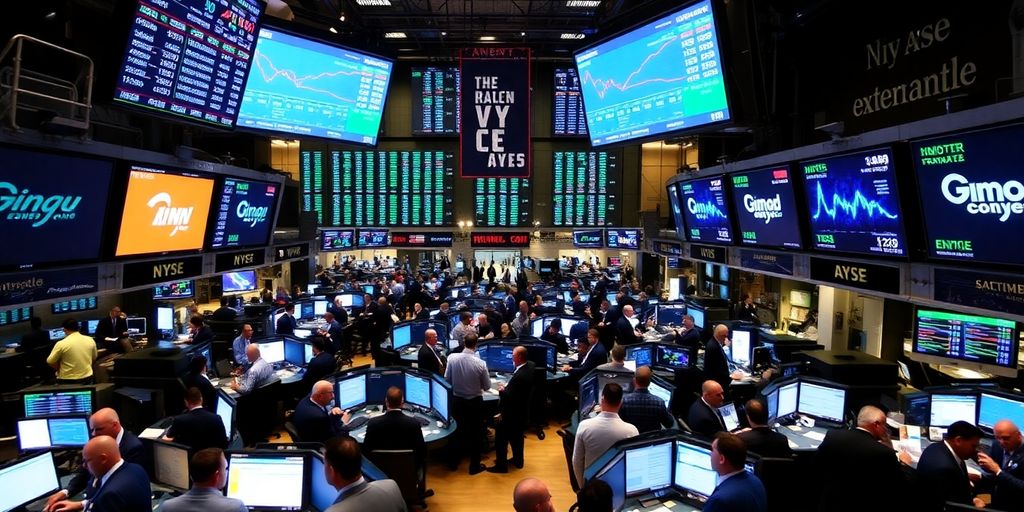
The New York Mercantile Exchange, or NYMEX, has a huge impact on global markets. Its Reference prices influence international markets and play a key role in setting global prices for energy commodities.
Influence on Energy Prices
NYMEX is the leading market for oil, natural gas and other energy products. Here are some key points:
- Crude oil prices are often determined by futures contracts traded on the NYMEX.
- Price fluctuations on the NYMEX can affect energy costs globally.
- Market participants, such as governments and businesses, closely monitor these prices to make strategic decisions.
Regulation and Transparency
NYMEX is known for its transparency. This means that:
- Transaction information is easily accessible.
- Regulations help maintain a fair market.
- This attracts investors who seek to minimize risk.
The Major Actors
Several major players play a role on the NYMEX:
- Energy producers who use the NYMEX to hedge against price fluctuations.
- Institutional investors who are looking to diversify their portfolios.
- Governments who monitor prices for economic reasons.
Current Challenges
Despite its success, NYMEX faces challenges:
- Growing competition from other markets, such as those in Asia.
- Concerns about price volatility.
- The impact of new technologies on the way transactions are carried out.
In summary, NYMEX is a key player in the world of commodities, influencing not only prices, but also the way markets operate globally. Its role is essential to ensure stability and transparency in the energy sector.
How to Invest on NYMEX
The Different Types of Contracts
Investing on the NYMEX is all about choosing the right type of contract. Here are some options:
- Futures contracts : They allow you to set a price to buy or sell a raw material at a future date.
- Options : These contracts give the right, but not the obligation, to buy or sell at a specified price.
- Contracts for Difference (CFDs) : They allow you to speculate on price movements without actually owning the asset.
Investment Strategies
To be successful on the NYMEX, it is essential to have a strategy. Here are some ideas:
- Analyze technique : Use charts and indicators to predict price movements.
- COVER : Protect your investments against price fluctuations using futures contracts.
- Diversification : Don't put all your eggs in one basket, invest in multiple commodities.
Risks to Consider
Investing in the NYMEX involves risks. Here are some things to keep in mind:
- Volatility : Prices can change quickly, which may result in losses.
- Liquidity risk : It can be difficult to sell a contract at a desired price.
- Regulation : Changes in laws may affect your investments.
Resources for Investors
To get the most out of your information, here are some useful resources:
- Financial news sites : Follow market trends.
- Trading platforms : Use tools to analyze markets.
- Investment Forums : Exchange ideas with other investors.
Investing in energy and metals can be exciting, but it is crucial to be well prepared and understand the risks.
Remember, NYMEX is a dynamic market, and it is important to stay informed to make informed decisions!
Investing on the NYMEX may seem complicated, but it is a great opportunity to diversify your portfolio. Whether you are a novice or an experienced investor, it is essential to understand the market. To learn more and discover our advice, visit our site !
Conclusion
Basically, the New York Mercantile Exchange, or NYMEX, is a super important place for trading commodities, especially in the energy and metals space. Since its inception in 1872, it has evolved a lot, from a dairy exchange to a giant in oil, gas, and gold trading. It is a place where traders can buy and sell contracts to hedge against price fluctuations. Basically, the NYMEX plays a key role in setting prices globally and remains a major player in the business world. If you are interested in economics or investing, this is a place to know!