
Wondering what gold to buy to save? It's a question many people are asking, especially with everything going on in the world. Gold is a bit of a safe bet, the one that doesn't move too much when everything else is in turmoil. But be careful, there are several ways to invest in gold, and not all of them are equal. Whether it's to protect your money from inflation, diversify your assets, or simply have some security in case of a hard time, gold can be a good idea. Let's take a look at what you need to know before taking the plunge, so that your gold savings are as effective as possible.
Key Takeaways
- Gold is a solid hedge against inflation and economic crises, a true safe haven.
- There are different forms of physical gold: bars, coins, and ingots. Choose according to your budget and goals.
- The quality of gold is important: purity, condition of the pieces, and marketability are criteria to look at.
- Buy your gold from reliable sources, such as specialist agencies or recognized online platforms.
- Investing in gold benefits from tax advantages, including the absence of purchase tax and specific taxation on capital gains.
Why choose gold for your savings?
Gold, this precious metal that has stood the test of time, continues to fascinate and attract savers. But why, exactly, should you consider including gold in your savings portfolio? This is a question many people ask, especially as we see the financial markets on a roller coaster ride. In fact, gold offers some rather unique advantages that set it apart from other investments. It's a bit like having a solid anchor when the seas are rough. You don't choose it to get rich overnight, but rather to sleep soundly.
A safe haven against inflation
Inflation is like the silent thief of your purchasing power. Every year, if the money you have in your account doesn't earn at least as much as inflation, well, you're losing money. Frustrating, isn't it? Gold, on the other hand, has always been considered a safe investment in the face of this phenomenon. When prices soar and money loses its value, gold tends to maintain, or even increase, its own value. It's a kind of shield. Historically, it has proven its ability to protect capital against monetary erosion. This is why many people turn to gold when they see prices soar. It's a way of telling themselves that, whatever happens, part of their savings will remain intact.
A way to diversify your assets
We often hear that you shouldn't put all your eggs in one basket. This is especially true when it comes to savings. Diversification means spreading out your investments to reduce risk. Gold is an excellent tool for this. It doesn't react the same way as stocks or real estate. When the stock market falls, gold can very well rise. This is called a low or negative correlation. By adding gold to your assets, you create a balance. If one part of your investments suffers, gold can compensate. It's a simple but effective strategy for securing all of your savings. For start saving well, diversification is a key step.
Here are some examples of diversification:
- Actions (companies)
- Bonds (States, companies)
- Real estate (housing, offices)
- Raw materials (oil, metals)
- Physical gold (bullion, coins)
Protection against economic and banking crises
We don't like to think about crises, but they happen. Whether it's a major economic crisis, political instability, or even a banking crisis, gold has always played a protective role. Why? Because it's a tangible asset, existing outside the traditional financial system. If a bank fails, your physical gold is still there. It's not subject to the same risks as bank deposits or financial securities. It's a bit like having a water reserve in case of a general outage. In times of uncertainty, demand for gold often increases, which can drive up its price. It's a financial survival reflex for many. It's a security, a kind of safety net when everything seems to be collapsing around us.
In what form can I buy physical gold?
When we talk about investing in physical gold, we often think of bullion, but there are actually several options, each with its own advantages. The choice really depends on your budget and what you're looking to do with your investment.
Gold bars for large investments
Gold bars are a bit like the Holy Grail of gold investing. They're perfect for those looking to invest large sums. We're talking about one-kilo bars, but there are also smaller sizes, such as 500 grams. The main advantage is their purity, generally greater than 99,5%, which makes them highly sought-after on the international market. Each bar has an engraved serial number, weight, and fineness, guaranteeing its authenticity. It's a significant investment, so careful thought should be given to secure storage. You can keep them at home, but a bank safe or a professional safe is often a wiser option.
Investment gold coins
Gold coins are a different story. They're more affordable for mid-range budgets and offer flexibility that bullion doesn't. Think of coins like the Napoleon 20 francs, the Sovereign, or the Krugerrand. Their purity must be at least 90% to be considered investment gold. The good thing about coins is that they are easier to resell in small quantities if you need cash. Some also have numismatic value, which can add a little extra to their intrinsic gold value. This is an interesting option for diversify your wealth without breaking the bank.
Physical gold, whether in the form of bars or coins, represents a tangible asset. It's a bit like having some of your savings outside the traditional banking system, which can be reassuring in times of economic uncertainty. It's a personal choice, but many see it as a security.
Ingots for small budgets
For those just starting out or on a more limited budget, gold bars are an excellent alternative. These are mini-ingots, ranging from 1 gram to a few dozen grams. They allow you to invest in physical gold with smaller sums, without the storage constraints of larger bars. Their purity is the same as that of gold bars, making them a valuable investment product in their own right. It's a simple and effective way to start building your gold portfolio, little by little. They're also easier to transport and store discreetly.
How to assess the quality of investment gold?

When we talk about investment gold, we're not talking about just any old piece of jewelry found at the bottom of a drawer. No, there are very specific criteria that must be met for your gold to be considered a real investment. It's a bit like choosing a good bottle of wine; you need to know the labels and what they mean.
The importance of purity and titration
Purity is everything. For an ingot or bar to be classified as investment gold, it must have a purity of at least 995 thousandths, which means 99,5% pure gold. For coins, it's a little less strict; we're talking about a minimum of 900 thousandths. This is called assay. The higher the number, the more pure gold it contains. Simple, right?
- Ingots and ingots: Purity greater than 995 thousandths.
- Investment coins: Purity equal to or greater than 900 thousandths.
- Each ingot is stamped with its fineness, weight, serial number, and refiner's seal. It's your gold's identity card.
It's really important to verify this information. Gold that doesn't meet these standards won't be considered investment gold, and its resale value could be much lower. Don't be fooled by overly attractive offers without these guarantees.
The role of the state of conservation of the pieces
For coins, condition is extremely important. A damaged, scratched, or worn coin loses its value, even if it's made of pure gold. Collectors and investors look for coins in perfect condition, or at least in very good condition. There are even classifications for this, such as FDC (Fleur de Coin) for perfect coins, or TTB (Très Très Beau) for those that are near perfect. It's a bit like the condition of a used car; it affects the final price.
Here are some common classifications for coin condition:
- FDC: Fleur de Coin (perfect condition, like new)
- SPL: Splendid (near FDC, with very slight imperfections)
- SUP: Superb (a few small marks, but overall very beautiful)
- TTB: Very Very Fine (signs of wear, but details are still clearly visible)
The marketability of coins and ingots
Marketability refers to your gold's ability to be easily bought and sold on the international market. For a coin or bar to be marketable, it must meet several criteria. First, it must be in impeccable condition, as we just saw. Second, it must have an official price, recognized by the markets. For example, some coins like the 20-franc Napoleon or the Krugerrand are highly marketable. This guarantees that you will be able to resell your gold investment hassle-free and at the best price, anywhere in the world. It's a bit like the liquidity of your investment. If your gold is not tradable, you risk selling it for the weight of the gold it contains, without the premium linked to its rarity or its collectible status.
Where to buy gold safely?
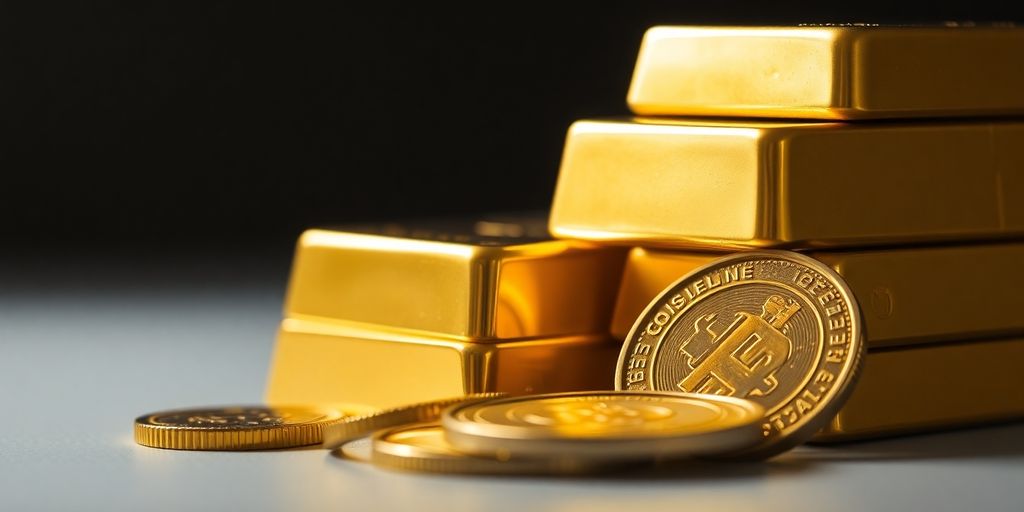
When it comes to investing in gold, the importance of safe purchasing is paramount. It's not about rushing into the first offer that comes along. Caution is advised to avoid counterfeits and scams. You have to choose your purchasing channel carefully, whether online or in person, and ensure the seller's reliability. It's a bit like buying a used car: you don't buy it from just anyone, anywhere.
Specialized physical agencies
Physical agencies are often the first instinct for many. It's true that there's a reassuring side to being able to touch the product and speak to someone face to face. These agencies, often located in major cities, offer a range of products from ingots to coins. The advantage is the personalized advice and the ability to verify the authenticity of the gold on site. However, prices can be a little higher due to overhead costs. You should also make sure the agency is well-established and has a good reputation. Always ask for a detailed invoice and a certificate of authenticity. This is your guarantee.
Online shopping platforms
Buying gold online has grown in popularity in recent years. It's convenient, you can compare prices from multiple sellers in just a few clicks, and the fees are often lower. But beware, the downside is the increased risk of coming across unscrupulous sites. You have to be vigilant. Always check the site's reputation, customer reviews, and make sure it offers secure payment methods and guaranteed delivery. A good site will clearly display its terms of sale and delivery. For buying physical gold, this is an option to seriously consider, but with a healthy dose of caution.
Buying gold, whether online or in a retail store, requires careful verification by the seller. A reputable professional will always provide an invoice, a numbered, sealed bag for coins and ingots, and guarantees on the purity of the metal. Don't be tempted by overly tempting offers that could hide traps.
The importance of authorized dealers
Regardless of the channel chosen, the key is to use authorized dealers. These are recognized professionals, often members of gold market associations or federations. They adhere to strict quality and traceability standards. An authorized dealer guarantees the authenticity of your gold and offers better protection in the event of a dispute. This is a sign of trust. Here are a few points to check to ensure a dealer's reliability:
- History and reputation: How long has the company been in business? What are the customer reviews?
- certifications: Is it approved by recognized organizations (like the LBMA for ingots)?
- Price transparency: Are prices clearly displayed and updated according to the Gold prices ?
- Customer service : Are they reachable and responsive in case of questions or problems?
- Terms of sale : Are the delivery, insurance and return terms clear?
By following these tips, you'll maximize your chances of achieving a gold purchase safely and thus protect your savings.
The Tax Benefits of Investing in Gold
Investing in gold also means benefiting from tax advantages that are often more favorable than other investments. This is an aspect that can really make a difference in the long run, especially when it comes to savings. You just need to understand the rules to avoid any unpleasant surprises.
The absence of purchase tax
This is one of the first pieces of good news when we turn to physical gold for investment: there is no VAT on purchaseThis is a direct advantage over other goods or services that are subject to this tax. It means that from the outset, your capital is fully invested in the precious metal, without being reduced by an entry tax. This is a significant point for optimizing your investment from the first euro.
Capital gains tax
Resale taxation is where things get a little more technical, but also potentially very interesting. In France, there are two main regimes for physical gold:
- The Precious Metals Tax (TMP) : If you don't have a nominative invoice or if your gold is not traceable, this regime applies. It is a flat tax of 11,5% on the total sale price (11% tax and 0,5% CRDS). The disadvantage is that this tax applies even if you don't make a capital gain, or even if you have a capital loss. This is why it is crucial to keep all proof of purchase.
- The real capital gains regime : This is the most advantageous regime if you have kept a nominative invoice and your gold is traceable (for example, a numbered ingot or sealed coins). In this case, you are taxed on the capital gain realized (difference between the sale price and the purchase price) at the rate of 36,2% (19% tax and 17,2% social security contributions). But the big advantage is the 5% annual tax reduction from the third year of ownership. This means that after 22 years of ownership, you are completely exempt from capital gains tax. This is a key point for secure your precautionary savings over the very long term.
It's really important to keep all proof of purchase, such as invoices and certificates of authenticity. Without these documents, you risk falling under the Precious Metals Tax regime, which is less favorable. Keeping your paperwork in good order can save you a lot of money when it comes time to resell.
The specificities of investment coins
Investment coins, such as Napoleons or Krugerrands, generally follow the same tax rules as bullion bars. However, their small size and divisibility can provide additional flexibility for resale. If you're selling a small quantity of coins, tax management may be simpler than for a large bar. Additionally, some coins may have a numismatic value in addition to their gold value, but be aware that this numismatic value is not subject to the same tax rules and can be more complex to assess. It's therefore advisable to research the exact nature of the coin before buying or selling.
Gold, a stress-free long-term investment
Savings that can be passed on to future generations
Physical gold, whether it is gold ingots or coins, is a tangible asset that is easily passed on. Unlike other forms of savings that can be subject to complex procedures or high inheritance fees, gold can be passed down from generation to generation with disconcerting simplicity. It's a way to build a lasting legacy for your children and grandchildren, without the administrative hassle often encountered with financial assets. Imagine being able to offer your descendants a share of your wealth, concretely, in the form of a precious metal that has stood the test of time.
Gold is an asset that does not depreciate over time and retains its intrinsic value, making it a wise choice for savings intended for inheritance. It represents a form of financial security that can be a real asset for future generations, providing them with a solid foundation in times of need.
Gold's stability in the face of market fluctuations
We often hear about the volatility of financial markets, stocks soaring one day and crashing the next. Gold, however, is different. It's recognized as a safe haven, especially in times of economic uncertainty. When everything else is rocking, gold tends to remain stable, even increasing in value. It's a bit like an anchor in a storm. Sure, its price can fluctuate, but over the long term, it has proven its ability to maintain its purchasing power. It's this stability that attracts so many investors looking to protect their capital from economic upheavals.
- Gold is less sensitive to central bank decisions.
- It is not directly impacted by interest rates.
- Its value is universally recognized, regardless of currency.
A tangible asset outside the traditional banking system
Owning physical gold means having a real asset in your hands, something you can touch and store outside the banking system. In a world where financial crises can occur, having part of your savings in the form of gold protects you against the risks associated with bank failures or restrictions on withdrawals. It's a form of financial independence that offers significant peace of mind. You're not dependent on an institution to access your money. It's an additional safety net, a safety net that can prove invaluable in the event of a hard blow.
Here's a look at how gold has performed compared to other assets over the past 20 years (fictitious data for the sake of illustration):
| Active | Average Annual Yield (2005-2025) |
|---|---|
| Or | + 8.5 % |
| Shares (broad index) | + 6.2 % |
| Government bonds | + 3.1 % |
| A booklet | + 1.5 % |
Gold is a good way to keep your money safe over the long term, without worry. It's a safe investment that doesn't lose its value easily. If you want to know more about how buy gold, visit our website.
In summary: gold, a choice that stands up to criticism
Well, after all that, we can say that gold isn't just some old thing from Grandma. It's a bit like good old jeans: they never go out of style and they last. Whether it's to protect yourself from hard times, keep a little money aside for the kids, or just to have something tangible when everything goes to hell, gold has its advantages. Of course, you shouldn't put all your eggs in one basket, but a little bit of gold in your savings can really make a difference. So, are you ready to take the plunge and add a little gold to your assets?
Frequently Asked Questions
Why is it a good idea to put your money into gold?
Investing in gold is like having a shield for your money. When prices rise everywhere (inflation) or the economy is doing badly, gold retains its value. It's a safe way to protect what you have, even when everything else is in flux.
In what form can gold be purchased?
There are several ways to buy physical gold. For larger amounts, there are bars. If you have a smaller budget, you can purchase gold coins or ingots. There's something for every budget!
How do I know if the gold I buy is good quality?
To be sure your gold is of good quality, look at its purity (how much pure gold it contains) and its condition (whether it's in good condition, without too many scratches). Also, check whether the coin or bar is easy to sell anywhere.
Where to buy gold without risk?
To buy gold safely, go to established, reputable dealers or use reliable websites. It's important to choose reputable sellers to avoid problems.
Are there any tax benefits to investing in gold?
Buying gold is often straightforward from a tax perspective: there are no taxes when you buy it. When you resell it and make money (capital gain), there are specific tax rules, especially for investment coins.
Is gold a good investment for the future?
Yes, gold is a good long-term investment. It's an asset you can give to your children. It doesn't fluctuate much even when the financial market is volatile, and it's a real asset, outside the banking system. This gives you peace of mind.