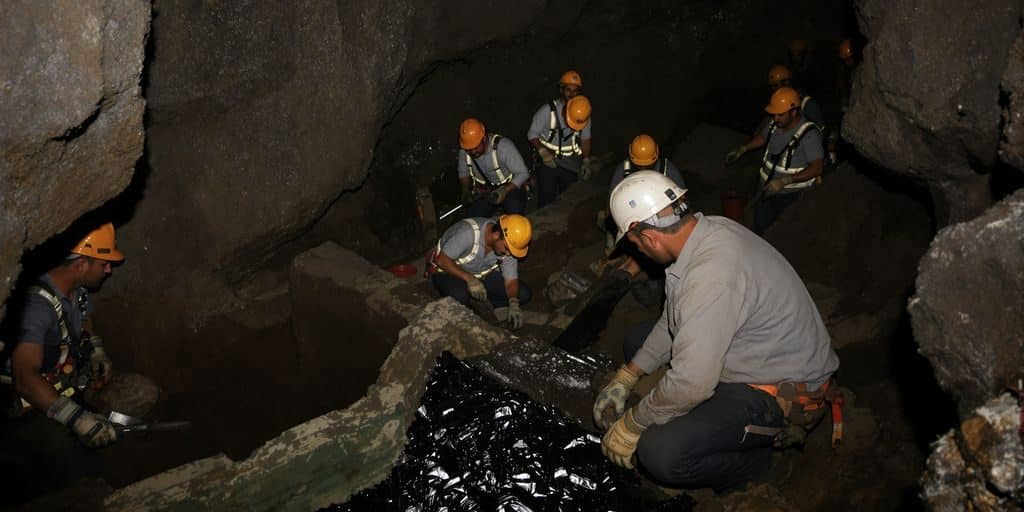
Wondering how underground mines work and what safety regulations apply? It's a complex subject, but essential for understanding how we extract the precious resources beneath our feet. Together, we'll explore the different methods used, the necessary infrastructure, and, most importantly, how we ensure the safety of those working in these sometimes difficult environments. Get ready to go behind the scenes of underground mining.
Key Takeaways
- Underground mines use a variety of mining techniques such as room and pillar, longwall, or backfill, each suited to specific types of deposits.
- Infrastructure such as shafts, tunnels and efficient ventilation are vital for access and safety in underground operations.
- Although less visible on the surface, these mines present challenges such as high costs and worker safety risks, which require rigorous management.
- Automation, robotics and advanced monitoring systems are increasingly being used to improve the safety and efficiency of operations.
- Seamless safety, including regular inspections and emergency preparedness, is the top priority to protect miners in underground environments.
Extraction techniques in underground mines
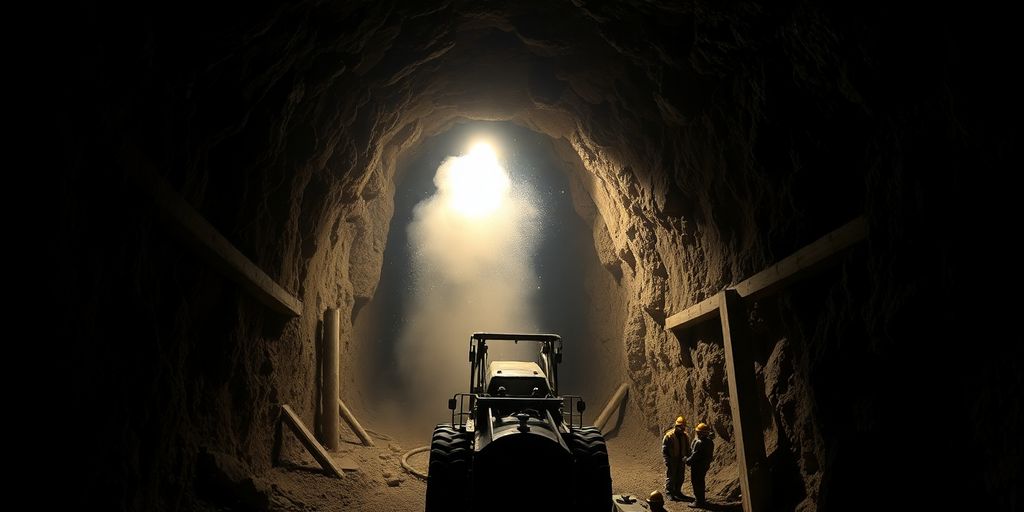
When it comes to extracting resources underground, there are several ways to go about it. The method you choose really depends on the shape of the deposit, its depth, and the type of rock you encounter. It's a bit like choosing the right tool for a specific job.
Room and pillar mining
Imagine digging large rooms, "chambers," into the rock to extract the ore. Meanwhile, you leave intact blocks of rock, the "pillars," to support the ceiling and prevent everything from collapsing. This is a fairly common method, especially for minerals like salt or potash. The advantage is that it remains relatively safe. However, the big disadvantage is that some of the ore is left in place in these pillars, which means you don't get all of it back. It's a bit like leaving crumbs on your plate.
Longwall mining
This technique is often used for coal. A long gallery is dug, and special machines cut through the coal. The roof is supported by props that advance as the coal is removed, and once the coal is removed, the roof collapses behind it. This is a method that allows a lot of coal to be removed quickly. But be careful, it requires very efficient support systems, and the controlled collapse can sometimes cause problems on the surface.
Backfill mining on the rise
For deposits that are sloping or nearly vertical, upfilling is often used. The ore is extracted from the bottom, and as the ore is extracted, the voids are filled with material, often waste from the extraction itself. This helps stabilize the mine and prevent rockfalls. This method requires good backfill management, as if it's not done properly, it can be expensive and pose safety problems.
Cut and fill mining
Here, the deposit is cut into several sections, the "cuts." One cut is extracted, then filled with backfill to stabilize it before moving on to the next. This is a technique often used for precious metals. It allows for targeting high-grade zones, but it is also more complex and expensive to implement. It's a bit like cutting a cake into slices and eating one slice at a time, making sure the rest doesn't fall out.
Choosing an extraction method is a complex decision that takes into account not only the geology of the deposit, but also economic and safety factors. Each technique has its advantages and disadvantages, and the goal is always to maximize ore recovery while ensuring worker safety and the stability of the mine.
It is important to note that these methods are often adapted and combined to meet the specific requirements of each mining site. The goal is always to optimize extraction while minimizing risks. To learn more about the different types of deposits, you can consult information on gold mining.
Critical infrastructure of underground mines
To access the riches buried beneath our feet, solid, well-designed infrastructure is absolutely essential. Without it, it's impossible to descend safely or extract the ore efficiently. Think of it like the arteries and veins of an underground mine: they're vital to its operation.
Access shafts and tunnels
These are the gateways to your underground world. Shafts, often vertical, are dug from the surface to the depths where the ore deposit is located. They are used to transport personnel, equipment, and the extracted ore, thanks to sophisticated elevator systems. Tunnels, on the other hand, are dug horizontally or at a slight slope at different levels of the mine. They allow access to the areas where the ore is located and connect the different parts of the operation. Ramps are also used to allow access for vehicles and heavy equipment, which is extremely important for logistics. All of these access points must be designed to withstand the pressure of the rocks and the sometimes difficult conditions you will encounter.
The importance of ventilation
Imagine working in a deep, enclosed space without fresh air. Not great, right? Ventilation is therefore essential. It ensures a constant renewal of air, removing potentially dangerous gases (like methane or carbon dioxide) and fine dust that can be harmful to your health. A good ventilation system also maintains a bearable temperature, which is far from negligible when working several hundred meters underground. It's a bit like the respiratory system in a mine; it has to work perfectly.
Methods of supporting galleries
Once you've dug a tunnel, you need to ensure it doesn't collapse. This is where support comes in. This involves reinforcing the walls, roof, and floor of the tunnels to counter the pressure exerted by the surrounding rock. Different techniques are used: anchor bolts fixed into the rock, wire mesh, shotcrete (also called 'gunite'), or metal arches. The choice of method depends on the nature of the rock, the depth, and the overall stability of the ground. Good support is the guarantee that your workplace will remain stable and safe over time. This is a technical aspect that requires constant attention, as the slightest weakness can have serious consequences. Remember to check the condition of these supports regularly, much like you would for the maintenance of your car, to avoid unpleasant surprises. Exploring new areas, like gold mining, requires careful planning of these infrastructures. modern gold exploration.
Underground infrastructure is the backbone of the mine. Without it, no operation is possible. It is therefore essential to give it critical importance from the design phase and never neglect its maintenance.
The Challenges and Benefits of Underground Mining
Underground mining is a bit like exploring the depths of the Earth to bring back treasure. But be warned, it's no walk in the park! There are undeniable positive aspects, but also obstacles that must be overcome.
Less visual and environmental impact on the surface
One of the biggest advantages of underground mines is that they don't disfigure the landscape as much as their open-pit counterparts. There are no gigantic craters to change the face of the world. This means that nature—animals, plants, and all that—can continue their little lives peacefully above ground, or at least be less disturbed. This is a significant advantage when we think about preserving our environment.
Access to deep deposits
Thanks to these techniques, we can extract minerals that are buried very, very deep underground. Deposits that would simply be impossible to reach using surface methods. It's like having a key to unlock resources that we couldn't otherwise exploit. This opens up great prospects for the supply of raw materials.
High operating costs
Now, let's talk about the annoying things. Digging underground is expensive. Very expensive, in fact. You have to build shafts, tunnels, and ventilation systems that work perfectly, and all of this requires huge investments upfront. And then there are higher labor costs, because working underground is more complicated and often more dangerous.
Worker Safety
Safety is paramount in underground mines. The risks are very real: rockfalls, gas explosions, flooding, and even exposure to harmful gases. Even with the best technology, an accident is always possible. That's why strict safety protocols and constant monitoring are required to protect those working down there. It's a bit like navigating uncharted waters, where every careless step can have serious consequences—a bit like discovering sunken treasures.
It is essential to remember that every technological advance in this field aims above all to minimize these risks and ensure the safest possible working environment for miners.
Technological innovations in the service of mining safety
Technological advances are radically transforming safety in underground mines. You may be wondering how these concrete advances improve your daily life underground. Well, they aim to anticipate hazards and reduce your exposure to risks.
Automation and robotics in operations
Imagine machines that work alone, without anyone on board. It's already a reality. Autonomous trucks and drills, as well as specialized robots, are taking on the most arduous and dangerous tasks. This means less time spent in potentially hostile environments. Moreover, remote control systems allow you to operate these machines from a secure, above-ground command center, keeping you away from immediate danger.
Advanced surveillance systems for risk detection
Thanks to advances in sensors and the Internet of Things (IoT), it's now possible to monitor what's happening in tunnels in real time. This includes the quality of the air you breathe, the stability of the walls, and even the presence of dangerous gases. These systems, such as those using wireless temperature sensors [f43e], send immediate alerts. If a risk is detected, you're informed quickly, allowing you to take action before an incident occurs.
3D printing for equipment maintenance
You know how a missing spare part can delay an operation, or even create a dangerous situation if equipment malfunctions. 3D printing is a game changer. Instead of waiting weeks for a part ordered from halfway around the world, it can be manufactured locally, quickly. This reduces downtime and ensures that the machines you rely on are always in good working order, which is an additional guarantee of safety.
Safety: a top priority in underground mining
The Importance of a Complete Safety Checklist
Deep underground, safety isn't an option; it's an absolute necessity. For you, a miner, every day spent underground is a demonstration of your commitment, but also a test of safety protocols. A well-designed safety checklist is like your best friend. It helps you ensure you don't forget anything, ensuring you double-check every point before starting your task. It's the foundation for avoiding unpleasant surprises, whether it's the condition of a machine or the quality of the air you breathe. Think of it as your personal guide to returning home safely.
Rigorous inspection and maintenance of equipment
Your work tools, from the largest machines to the smallest devices, must be in perfect condition. It's not enough to just use them; you have to make sure they're reliable. Regular inspections are the way to spot a problem before it becomes serious. A machine that makes a strange noise, a lamp that flickers, a ventilation system that seems less efficient... all of these must be reported and checked. Preventive maintenance is what allows you to work with peace of mind, knowing that your equipment won't let you down at the worst possible moment. It's also a matter of respecting your own safety and that of your colleagues. Remember that equipment reliability is directly linked to accident prevention. Knowing how gold works in industry, for example, can sometimes give you ideas about the robustness required for certain tools. understanding gold geology.
Emergency Preparedness
Despite all the precautions, you must always be prepared for the unexpected. Whether it's a rockfall, a fire, or a communication problem, knowing what to do can make all the difference. This includes regular drills to ensure evacuation and response procedures are clear in your mind. Emergency equipment must also be accessible and in good working order. Communication is also essential: ensuring that radios and other means of contact are working is an additional safeguard in case of need. In short, being prepared means being one step ahead of potential problems.
Environmental issues and sustainability of underground mines
Underground mining, while reducing the visual impact on the surface compared to open-pit mining, presents its own environmental challenges. It is therefore essential to consider the sustainability of these operations to minimize their environmental footprint.
Groundwater management and pollution prevention
When you dig deep, you inevitably interact with groundwater, so this water must be managed carefully. Pumping large quantities of water is often necessary to keep tunnels dry, but this water can contain heavy metals or chemicals from the rocks being drilled through. It's imperative to treat it before discharge to avoid contaminating waterways or local drinking water supplies. Think of it as a large-scale filtration system, but for the planet.
Reducing carbon emissions through energy optimization
Underground mines consume a huge amount of energy. Tunnels need to be ventilated, materials need to be hauled up, water needs to be pumped, and heavy machinery needs to be operated. To reduce its carbon footprint, the industry is increasingly turning to cleaner solutions. Using electricity from renewable sources, such as solar or wind power, and switching to electric vehicles and equipment are serious options. It's a bit like switching from an old, polluting car to a modern electric vehicle.
Rehabilitation of mining sites
Once an underground deposit has been mined, the question of site rehabilitation arises. This is often more complex than for an open-pit mine. It is necessary to ensure that access shafts are properly sealed to prevent any future risks, that tunnels do not pose a risk of collapse, and that any residual pollution is managed. The goal is to make the site as safe and stable as possible, or even to restore the ecosystem if feasible. This is an often overlooked step, but one that is fundamental for the planet.
The underground mining industry must constantly innovate to reconcile the extraction of resources needed by our society with environmental protection. This requires rigorous planning and long-term commitment.
Underground mining has an impact on our planet. It is important to think about how we can exploit these resources without damaging the Earth for future generations. It is a challenge that requires finding smart solutions to make mining more environmentally friendly.
To learn more about how to make mining greener, visit our website!
Explore more!
So, now you know a little more about how underground mines work and the precautions to take. It's a fascinating world, but one that requires a lot of rigor, whether for the extraction itself or for everyone's safety. If you ever have a project or a more specific question, don't hesitate to ask professionals. You never know, maybe it will give you some ideas or simply a better appreciation for this complex work. Think about it the next time you see a piece of gold jewelry or an everyday object that uses precious metals!
Frequently Asked Questions
What are the different ways to extract ore underground?
In underground mines, several methods are used to extract ore. Imagine digging a cake: you can make large slices, leaving chunks to support the top (rooms and pillars), or dig in a long strip, being careful not to let the ceiling collapse (longwall). Sometimes, the holes are filled with earth or rubble as you go, especially if the vein is sloping (upward backfill). And you can also cut the ore into slices and fill it behind you (cut and fill).
What are the important infrastructures in an underground mine?
For an underground mine to function, access points such as elevators (shafts) and tunnels are needed for movement. The air also needs to be renewed, otherwise it becomes unpleasant to breathe due to gases; this is the role of ventilation. And to prevent the tunnels from collapsing, props, anchors, or voids are used to fill the tunnels with backfill to keep everything solid.
What are the pros and cons of underground mining?
Underground mines have the advantage of less change to the surface landscape, making them less visible. They also allow them to reach very deep deposits that would otherwise be impossible to exploit. On the other hand, they are more expensive to build and operate, and great care must be taken for the safety of miners because the risks of accidents (landslides, gas) are greater.
How does technology help make mines safer?
Robots and self-driving machines are increasingly being used to perform even the most dangerous jobs. Sensors everywhere monitor air, vibrations, and gases to prevent hazards. And 3D printing helps quickly manufacture replacement parts for machines, preventing long downtimes.
Why is safety the most important thing in an underground mine?
Safety is super important! You always need to check that everything is in order with a checklist. Machines need to be inspected and repaired very regularly so they don't break down or cause accidents. And you need to be ready to react quickly in case of a problem, like a fire or a rockfall, with emergency plans.
How can underground mines be more environmentally friendly?
We must be careful with the water coming out of the mines so that it doesn't pollute rivers or groundwater. We also try to consume less energy, for example by using electric machines rather than those that make noise and pollute. When the mine is closed, we must try to restore the site to its original state, or at least make it safe and less damaged.